
The Beatles were the group that, more than any other, accelerated the transformation of rock and roll into an open
musical language capable of absorbing pop, rhythm & blues, country, folk, Indian music, psychedelia, avant-garde ideas and studio experimentation without losing the power of the song. This profile explores the Beatles’ musical evolution and influence within The Great Rock and Roll History, tracing the path from American rock and roll and skiffle roots to the compositional and production revolution that changed the role of the rock band itself.
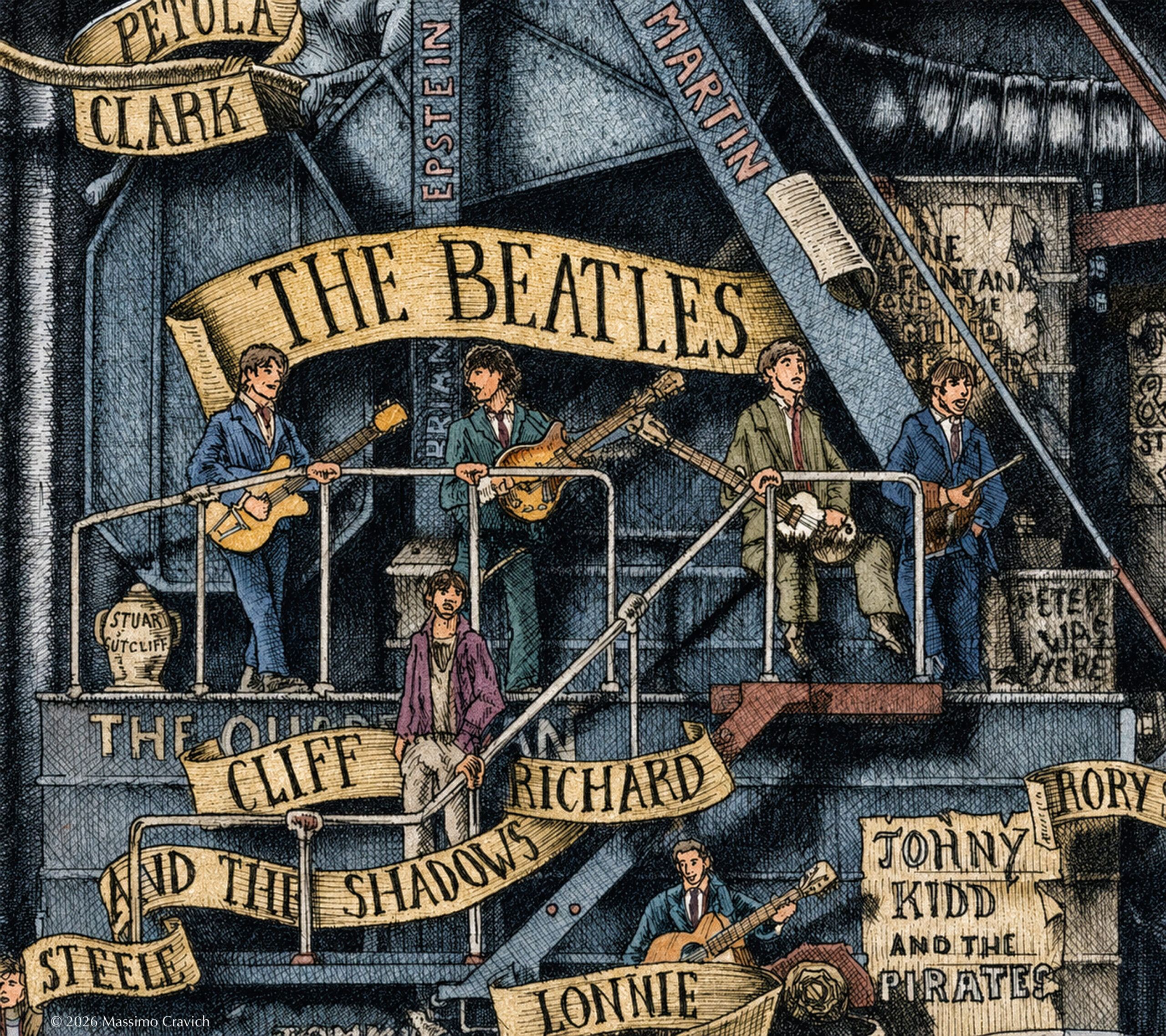
Rock Icons: The Beatles

Four musicians raised on American rock and roll who, in less than a decade, transformed the pop song, the album and the recording studio.
From Liverpool skiffle and the models of Chuck Berry, Buddy Holly, Little Richard and the Everly Brothers to Rubber Soul, Revolver, Sgt. Pepper’s Lonely Hearts Club Band and Abbey Road, the Beatles continually expanded rock’s vocabulary through songwriting, vocal harmony, arrangement and sonic experimentation.
Formed: 1960, Liverpool (U.K.)
Disbanded: 1970
Classic Line up: John Lennon, Paul McCartney, George Harrison, Ringo Starr
Key Figures: Brian Epstein (manager), George Martin (producer)
Genres: Rock, Pop, Beat
ARTIST OFFICIAL SITE: www.thebeatles.com
LISTEN
More to discover…
From rock and roll to the sonic laboratory: the band that changed the rules
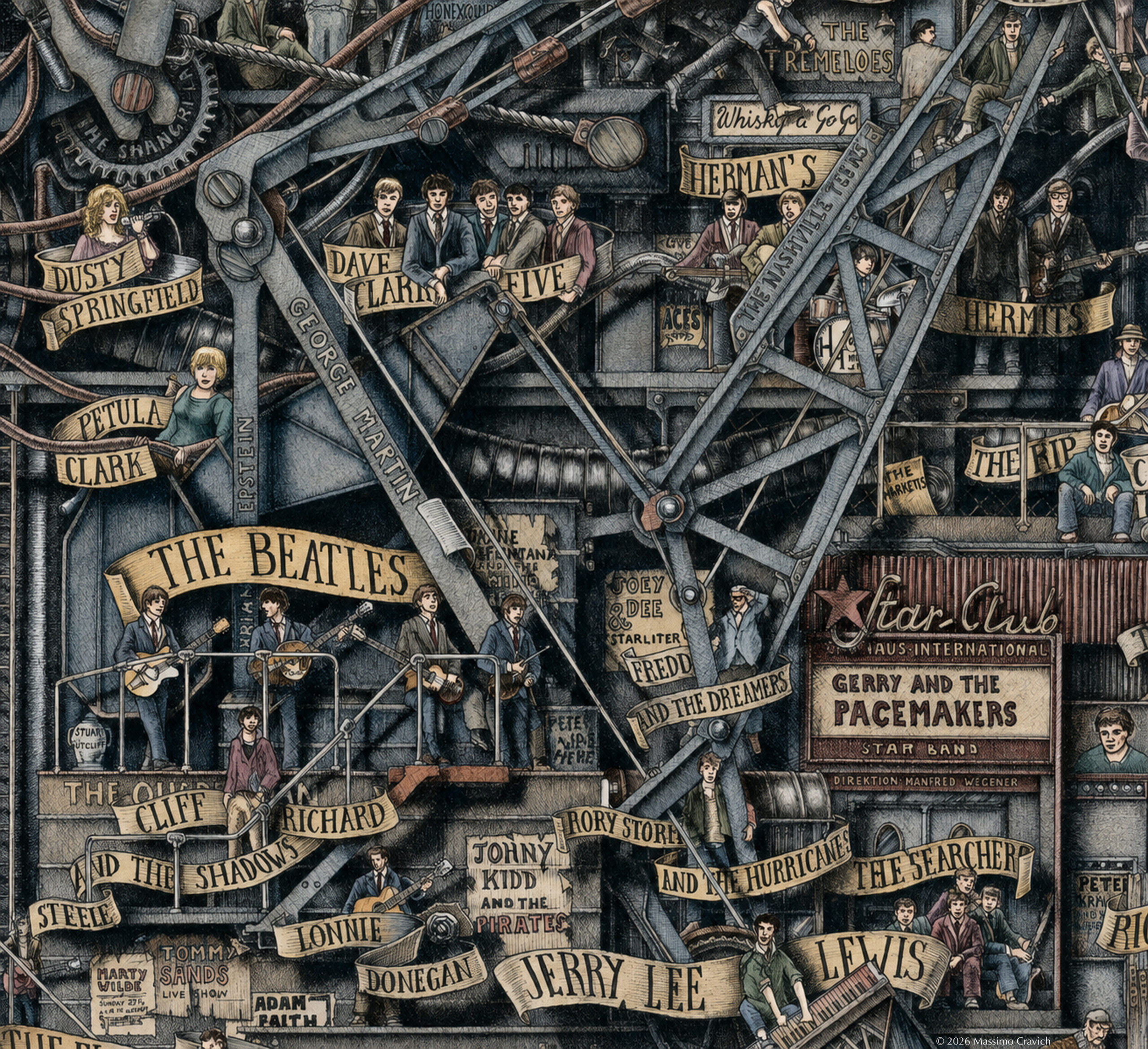
The Beatles’ revolution initially grew from an extraordinary ability to absorb influences. Lennon, McCartney, Harrison and Starr belonged to the British generation raised on American rock and roll: Chuck Berry, Little Richard, Buddy Holly, Carl Perkins, Elvis Presley and the Everly Brothers formed part of their original vocabulary, alongside skiffle and rhythm & blues.
The Liverpool and Hamburg years turned that repertoire into stage discipline. By the time success arrived, however, Lennon and McCartney had already developed a songwriting language capable of reshaping those roots into instantly recognizable pop songs, while vocal harmonies and the interplay of two guitars gave the group an identity of its own.
The studio became part of composition itself
The second transformation came when the Beatles increasingly stopped treating records as simple documents of a performing band. Bob Dylan helped broaden their lyrical horizon; folk, soul, Indian music – especially through George Harrison’s interests – classical music and contemporary ideas entered the laboratory.
With George Martin and the Abbey Road engineers, the studio became part of composition itself: manipulated tape, reversed sounds, speed changes, overdubbing, orchestral instruments and techniques impossible to reproduce simply onstage.
They carried everything they had learned with them
From Rubber Soul through Revolver and Sgt. Pepper, the grammar of the rock group was radically enlarged. Their genealogical importance, however, does not depend on one innovation. The Beatles connect early rock and roll to album culture, crafted pop to experimentation, folk to psychedelia, orchestra to electric guitar, and avant-garde ideas to mass music. Even when they returned to more direct forms in their final period, from Get Back to Abbey Road, they carried everything they had learned with them.
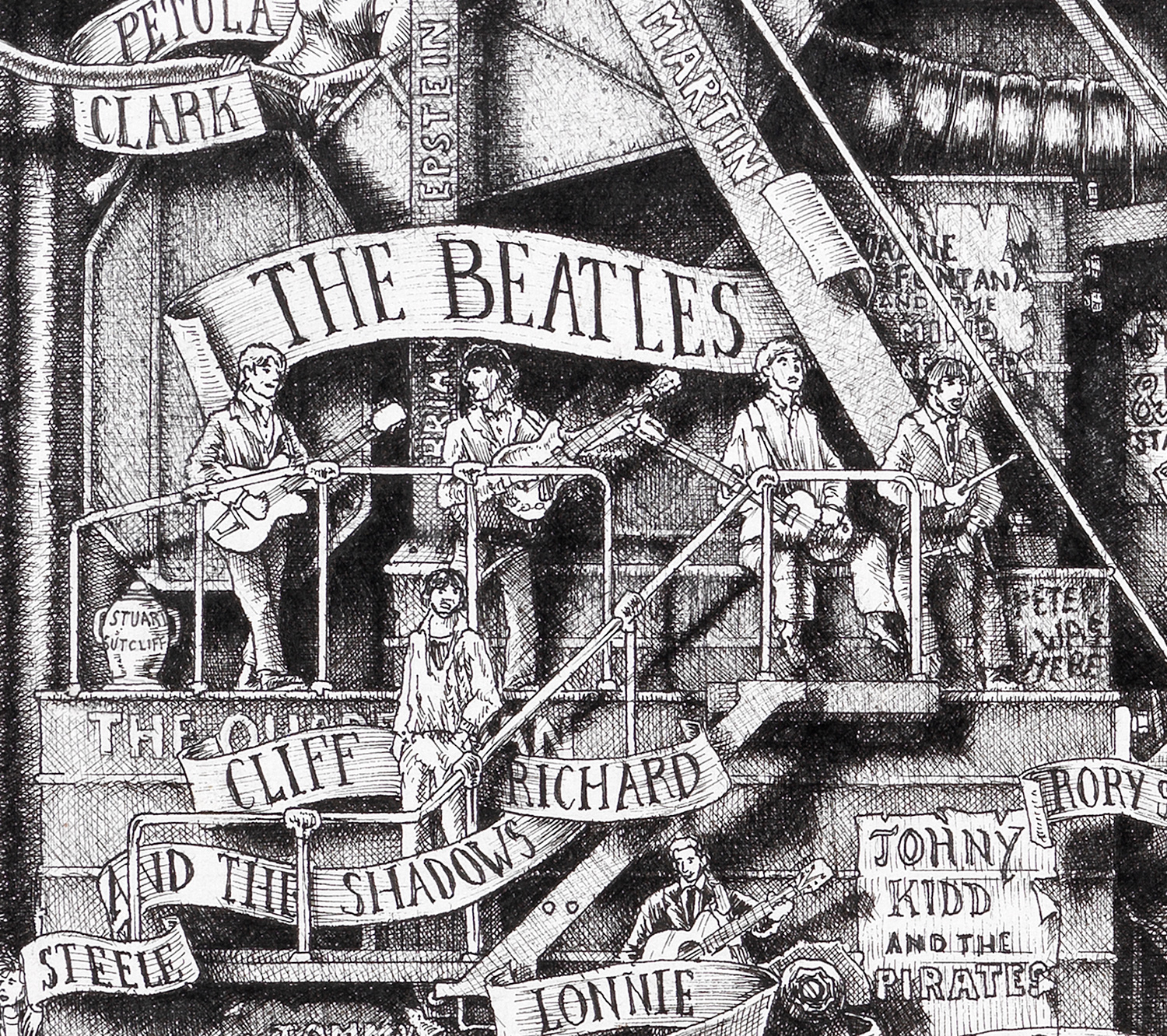
Their example normalized the idea that a rock band could evolve rapidly, write its own material, use the studio creatively and change language from one album to the next. Progressive rock, hard rock, power pop, psychedelia, art rock, singer-songwriter rock and much later alternative music developed in a world the Beatles had helped make possible.
Albums and songs such as Rubber Soul, Revolver, A Day in the Life, Strawberry Fields Forever and Abbey Road show how the Beatles transformed songwriting, production and the album format, becoming a central reference for psychedelic rock, progressive rock, power pop and art rock.
Within The Great Rock and Roll History, the Beatles form one of the major branching points: rock and roll, skiffle, R&B; and vocal harmony -> British beat and original songwriting -> folk, soul, Indian music and experimentation -> psychedelia and the studio as instrument -> progressive rock, hard rock, power pop, art rock and modern album culture.
Influenced by
- Elvis Presley, Chuck Berry, Little Richard, Buddy Holly, Carl Perkins.
- Motown and Girl Groups: The Shirelles, The Ronettes, The Miracles, Mary Wells.
- Contemporary Folk/Rock Artists: Bob Dylan (crucial for the evolution of the lyrics), The Beach Boys (for the production).
Influent For
- They have inspired countless artists, including The Byrds, Traffic, Oasis, Nirvana, Foo Fighters, Queen, Elton John, David Bowie, America and members of the “British Invasion.
- Young Generations and Popular Culture: They gave an identity to the youth of the 1960s
- Music Industry: They revolutionized the way music was produced and recorded, shifting the focus from singles to albums, experimenting in the studio (use of feedback, complex arrangements), and normalizing the bands’ composing of their own songs.
- Global Culture: They influenced the collective imagination, the perception of “rock stars,” and the aesthetics of the 1960s, introducing elements of Eastern spirituality and psychedelic art into popular culture.
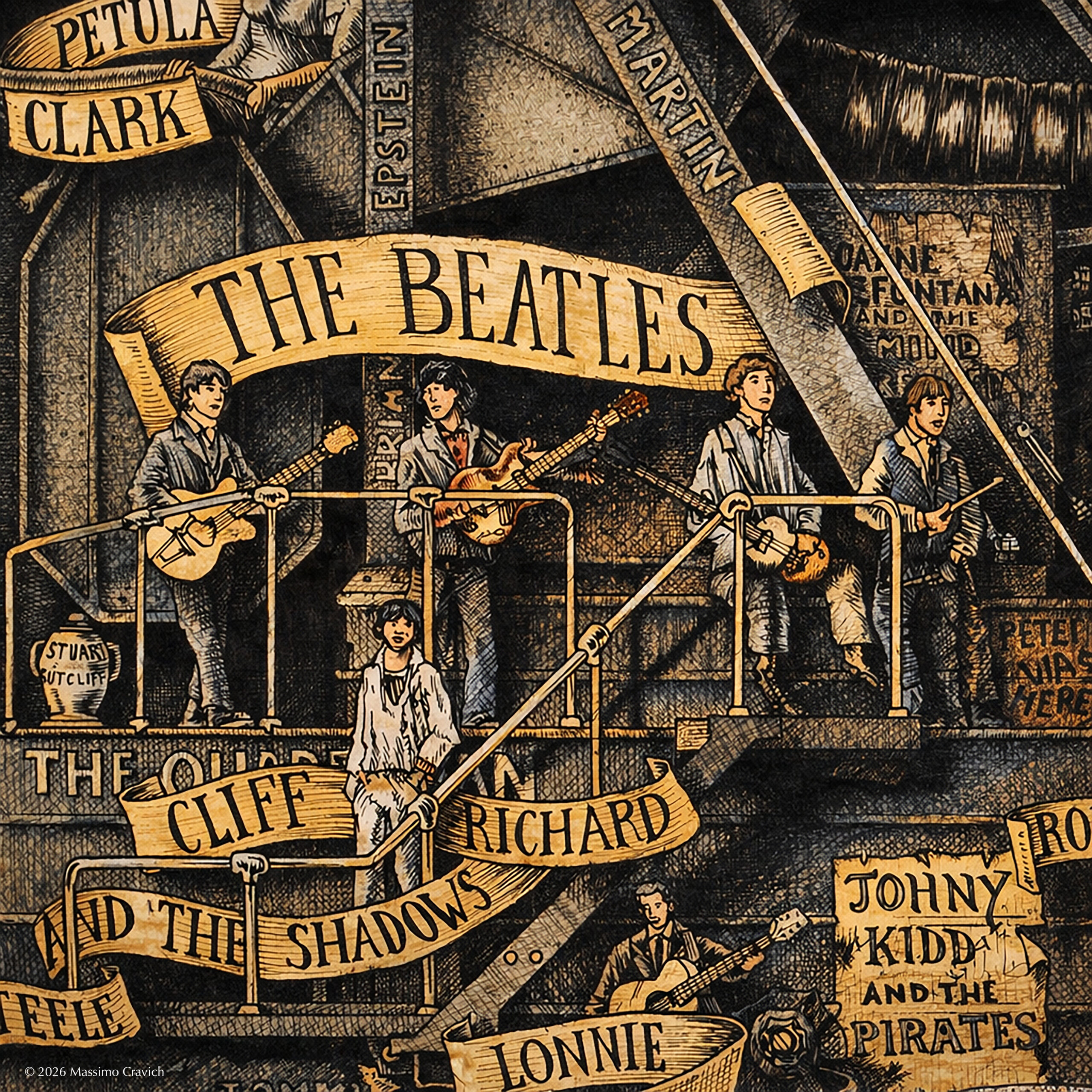
Related Artists
Table of Contents:
Key themes explored in the book (Content may change upon publication)
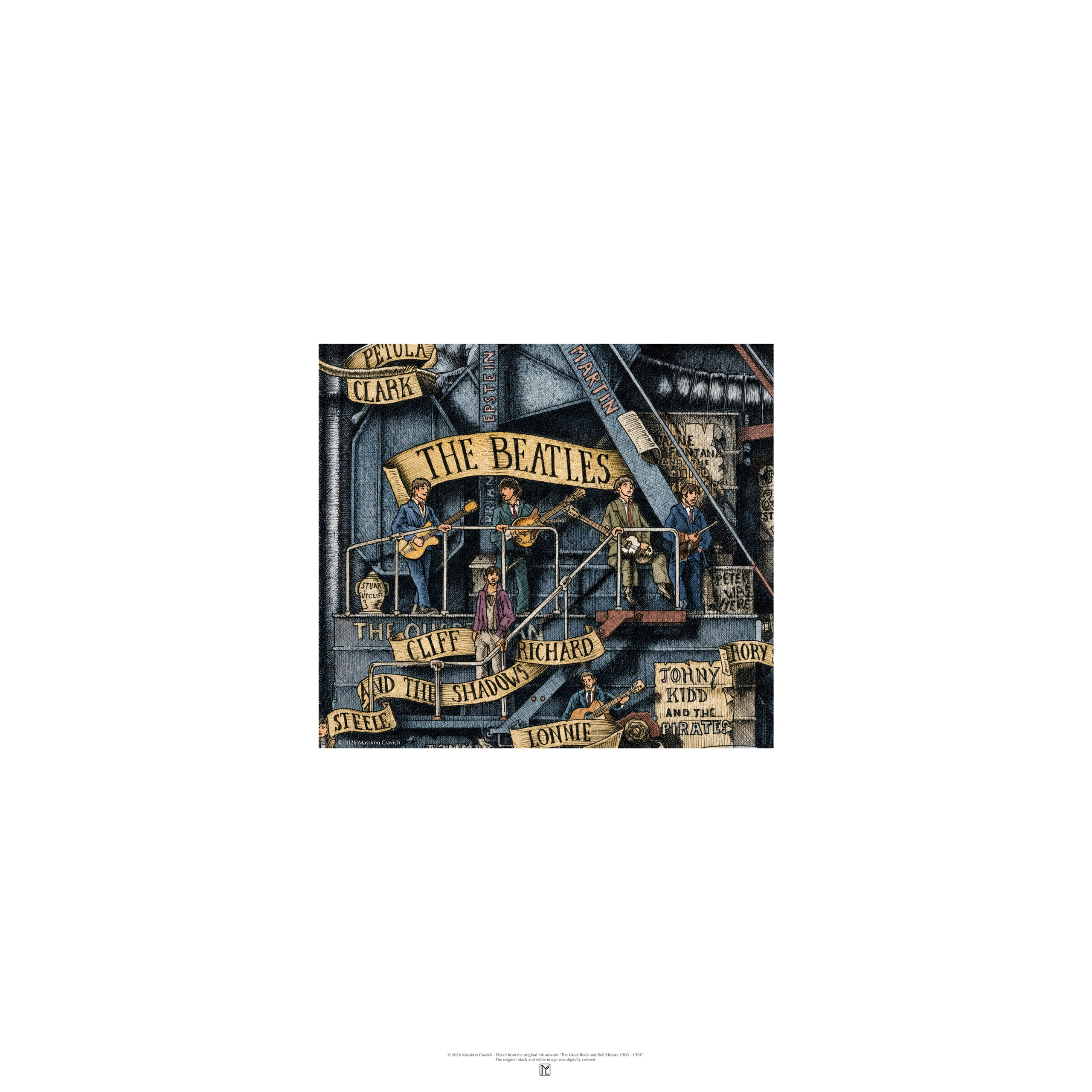
Get Your Rock Icon
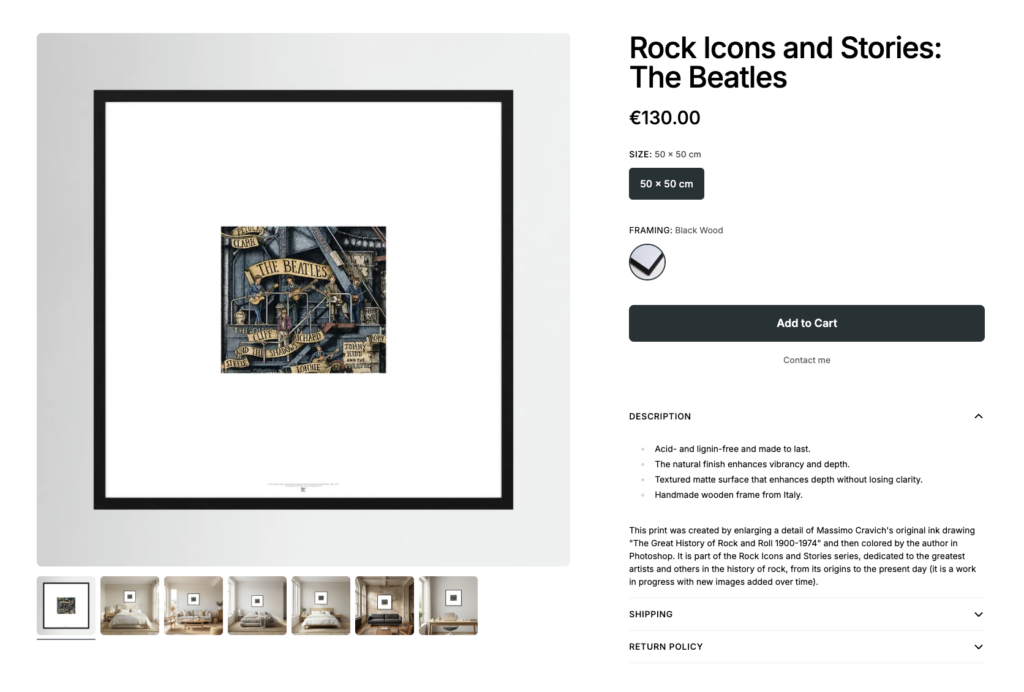
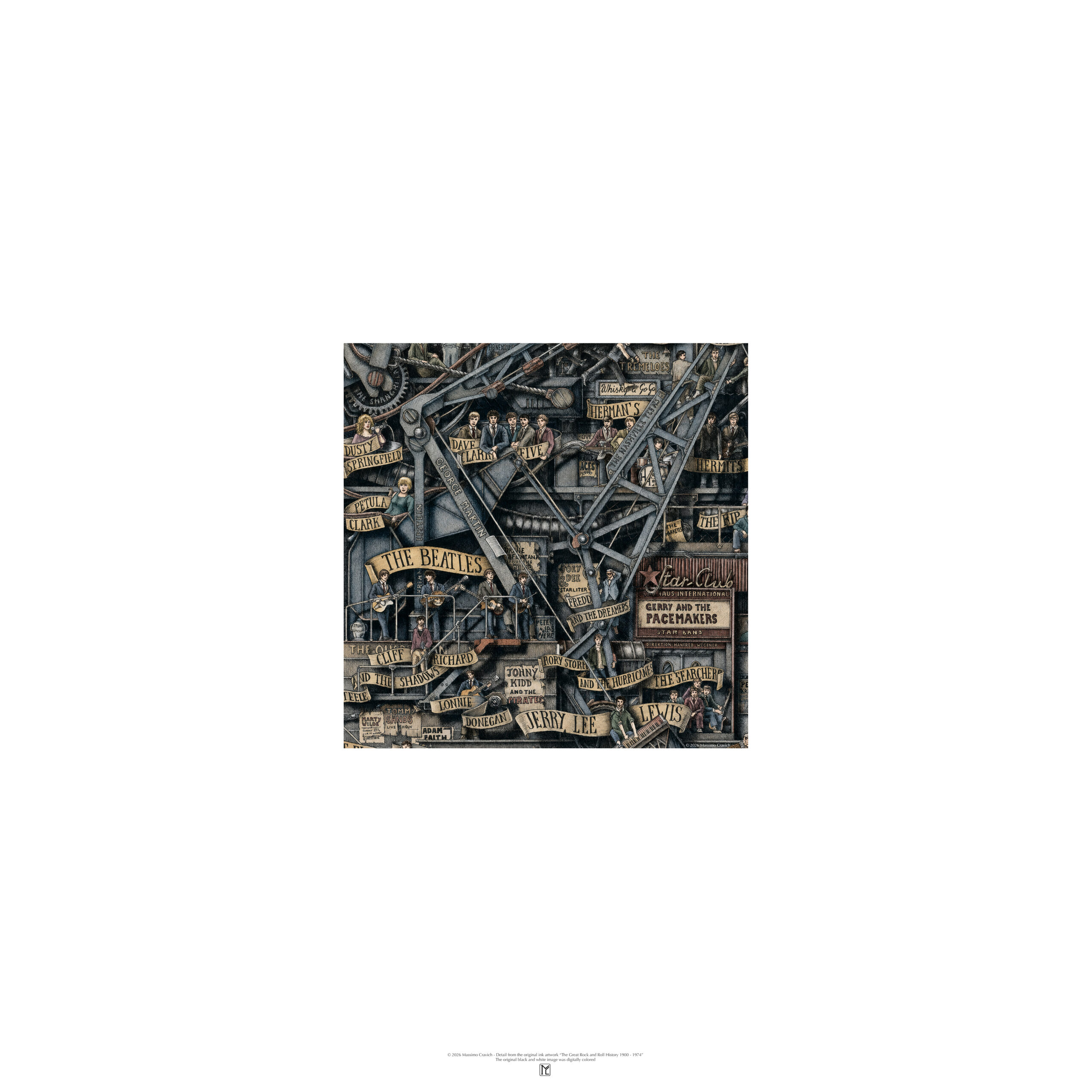
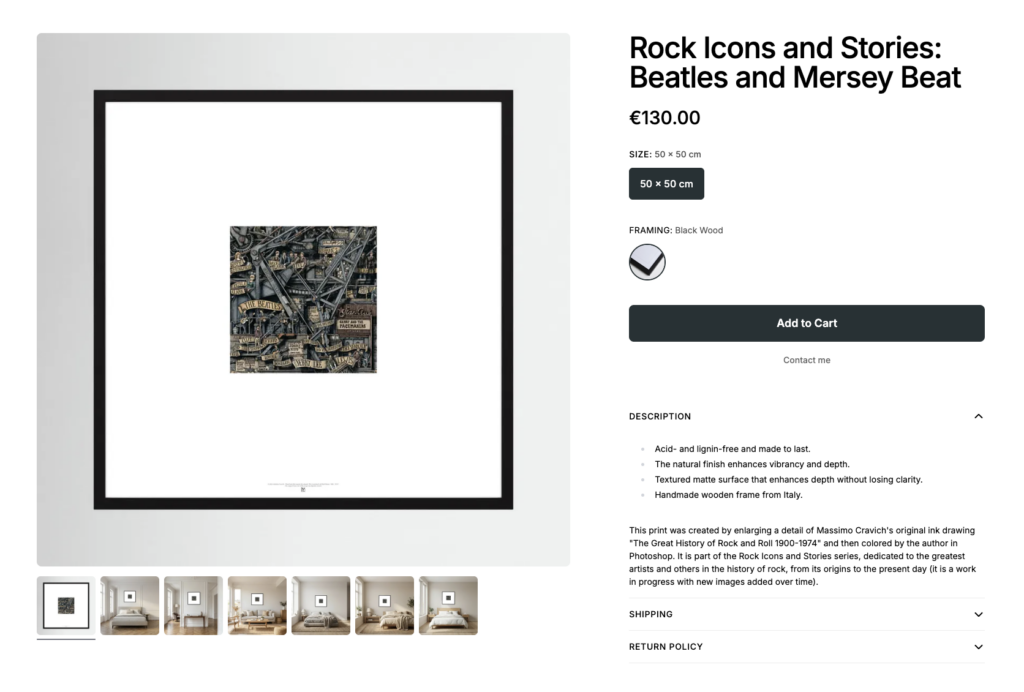
Selected artworks from Rock Icons and Stories are available as high-quality framed art prints. Printed on premium 230 gsm matte paper with excellent detail and colour reproduction, each print is professionally framed and delivered ready to hang.A carefully selected, high-quality alternative to the museum-grade Fine Art Giclée editions, offering an accessible way to own and display a reproduction of the original artwork. Printing, framing and worldwide fulfilment are handled by our specialist printing partner.
There are Two Different Prints Available
In the history of rock, the Beatles represent an unprecedented acceleration in the language of popular music. Beginning with American rock and roll, within a few years they transformed songwriting, arrangement, recording and the conception of the album, absorbing diverse influences and returning them in immediately accessible forms. Their legacy is not a single genre: above all, it lies in demonstrating that a popular band could simultaneously interpret its roots, function as an experimental laboratory and remain a continuous engine of change.