
David Bowie was one of the most mutable, intelligent and culturally decisive figures in modern music history. Far more than a rock singer, Bowie transformed popular music into theatre of identity, aesthetic laboratory, emotional science fiction and permanent machine of reinvention.
Bowie transformed rock into a space where music, identity and performance could continually change. From London’s mod culture and music hall to glam, American soul and Berlin experimentation, each turn emerged from artistic ambition, collaboration and personal necessity. This profile places David Bowie within The Great Rock and Roll History, tracing the evolution of his music and the people who helped shape it.
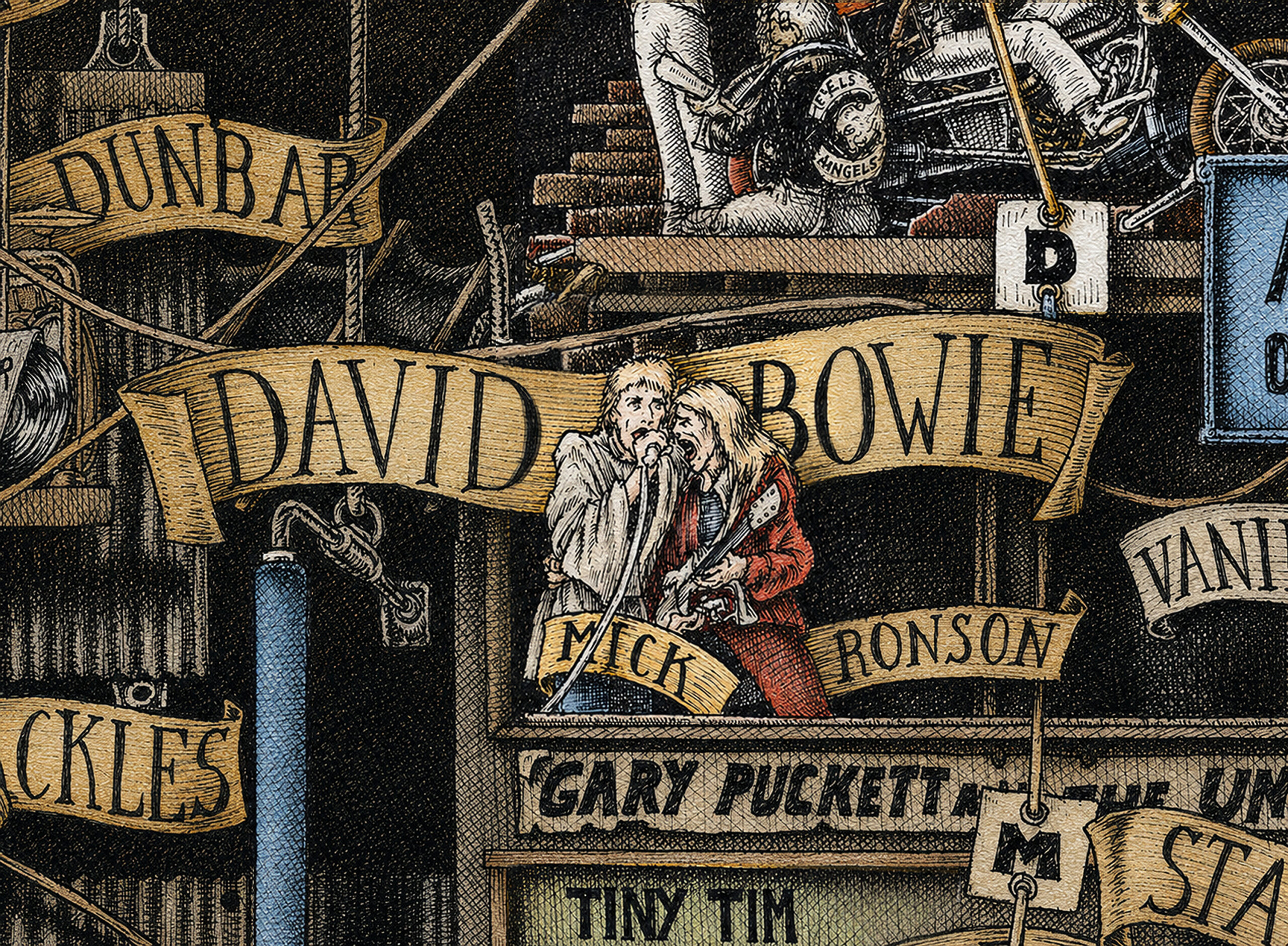
Rock Icons: David Bowie
One voice, many identities: reinvention as a dialogue with the times.

English art-rock icon blending glam, soul, electronic experimentation, theatrical identity and modern pop mythology
By combining theatrical reinvention, experimental songwriting and radical visual identity, David Bowie became one of the defining architects of modern popular culture. From Space Oddity and The Rise and Fall of Ziggy Stardust and the Spiders from Mars to Young Americans, Station to Station and the Berlin trilogy, David Bowie connected folk, glam rock, soul, electronics and art rock.
Name David Robert Jones; stage name David Bowie
Born January 8, 1947, Brixton, London
Died January 10, 2016, New York
Roles Singer, songwriter, musician, actor
Genres Art rock, glam rock, pop, soul, electronic music, experimental rock
Key collaborators Mick Ronson, Tony Visconti, Brian Eno, Carlos Alomar, Iggy Pop
Core period 1969-1980: breakthrough, Ziggy, soul and Berlin experimentation
ARTIST OFFICIAL SITE: www.davidbowie.com
LISTEN
• Starman
• “Heroes”
• Lazarus
More to discover…
The Artist Who Turned Identity into Sound
A London teenager searching for a voice
Before becoming Bowie, David Jones moved through mod groups, rhythm & blues, theater, mime and music hall without immediately finding a stable direction. Training with Lindsay Kemp gave him a physical and theatrical vocabulary that would remain as important as the music. Adopting the name Bowie also distinguished him from the Monkees’ Davy Jones, but anticipated a deeper question: how could an artist create an identity without becoming trapped inside it? Space Oddity brought him public attention in 1969, while professional uncertainty and an uneasy relationship with fame fed songs where alienation, desire and invented characters overlapped.
Ziggy Stardust: the character and the people behind the myth
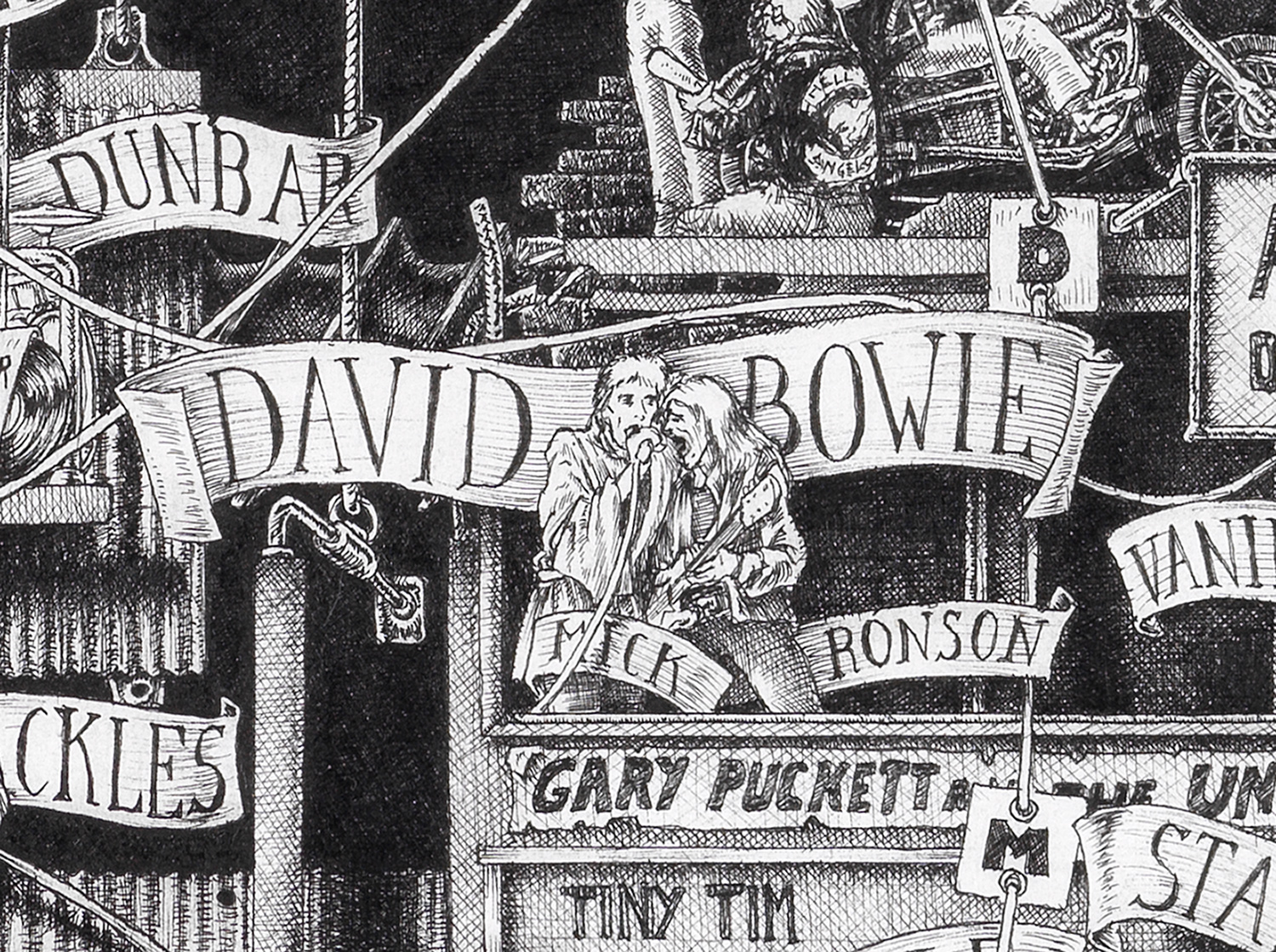
With Mick Ronson and the Spiders from Mars, Bowie found a band able to give physical force to his ideas. Ronson’s guitar brought weight and theatricality to melodies that still carried traces of folk and pop songwriting. Hunky Dory and Ziggy Stardust intertwined music, costume, sexuality and science fiction at a time when British culture was debating new ways of appearing in public. Bowie did not work alone: Ronson was a crucial arranger and creative partner, while producers, photographers, designers and fellow performers helped construct the image. Success, however, made the character increasingly difficult to separate from the person. Retiring Ziggy onstage in 1973 was both an artistic decision and a way to escape an identity that had become too demanding.
From America to Berlin: success, crisis and collaboration
The move toward Philadelphia soul and American R&B; on Young Americans reflected both an encounter with another musical tradition and a wish to move beyond glam. Carlos Alomar became a key collaborator. During Station to Station, American success coincided with isolation, heavy cocaine use and an increasingly troubled public image. Relocating to Europe and working with Tony Visconti and Brian Eno accompanied a profound shift: Low, Heroes and Lodger incorporated electronics, ambient textures, fractured rhythms and less conventional writing methods. His relationship with Iggy Pop also became a creative exchange between two musicians attempting torebuild their lives and work.
The legacy: transformation as a method
Bowie’s trajectory was never simply a sequence of genres. With Scary Monsters he reconsidered some of his own inventions; later decades brought mass-market pop, rock bands, electronics and renewed engagement with contemporary sounds. Genealogically, his work connects theatrical rock and glam to post-punk, new wave, art pop and later electronic music. Yet his most enduring contribution may be methodological: listening to music at the margins, choosing collaborators who challenged his habits and treating each persona as a temporary instrument rather than a permanent mask. His story also reveals the human cost of that freedom: reinvention brings separation, expectations and the recurring need to begin again.
Albums such as The Rise and Fall of Ziggy Stardust and the Spiders from Mars, Station to Station, Low and Blackstar became defining landmarks of art rock, glam, electronic experimentation and modern pop identity
Within The Great Rock and Roll History, Bowie illustrates the shift from the rock single and stage persona toward the album, music video and an artistic identity constructed across multiple media.
Influenced by
- Little Richard
- Lou Reed and Velvet Underground
- Iggy Pop
- Mime and Kabuki theatre
- science fiction and German electronic music.
Influent For
- Glam rock
- Punk
- New wave
- Post-punk
- Synth-pop
- goth
- alternative rock
- visual pop culture
- electronic music and queer pop identity.

Related Artists
- Iggy Pop
- Lou Reed
- Brian Eno
- Marc Bolan
- Klaus Nomi
- Nile Rodgers
- Scott Walker
SOURCES
David Bowie official archives
Rock and Roll Hall of Fame
Songwriters Hall of Fame
AllMusic
BBC archives
Saturday Night Live historical archives
David Downing, A Dreamer of Pictures: Neil Young, the Man and His Music, Bloomsbury, 1994.
In rock genealogy, David Bowie connects glam, soul, electronics and art rock without belonging permanently to any one language. His partnerships with Mick Ronson, Tony Visconti and Brian Eno reveal that his transformations were collective achievements as well as personal decisions. His legacy lies in making reinvention a compositional and human method: a way of questioning his era, absorbing its sounds and repeatedly challenging the boundary between artist and character.