
After the Beatles, John Lennon turned his solo career into a public confrontation with his own contradictions: love, anger, political commitment, vulnerability and the wish for ordinary family life. From primal therapy and his creative partnership with Yoko Ono to radical New York and his years away from the spotlight, his music often stripped away the protections of the studio to reveal the person beneath the icon. This The Great Rock and Roll History profile follows Lennon after the Beatles without separating the songs from the choices and relationships behind them.
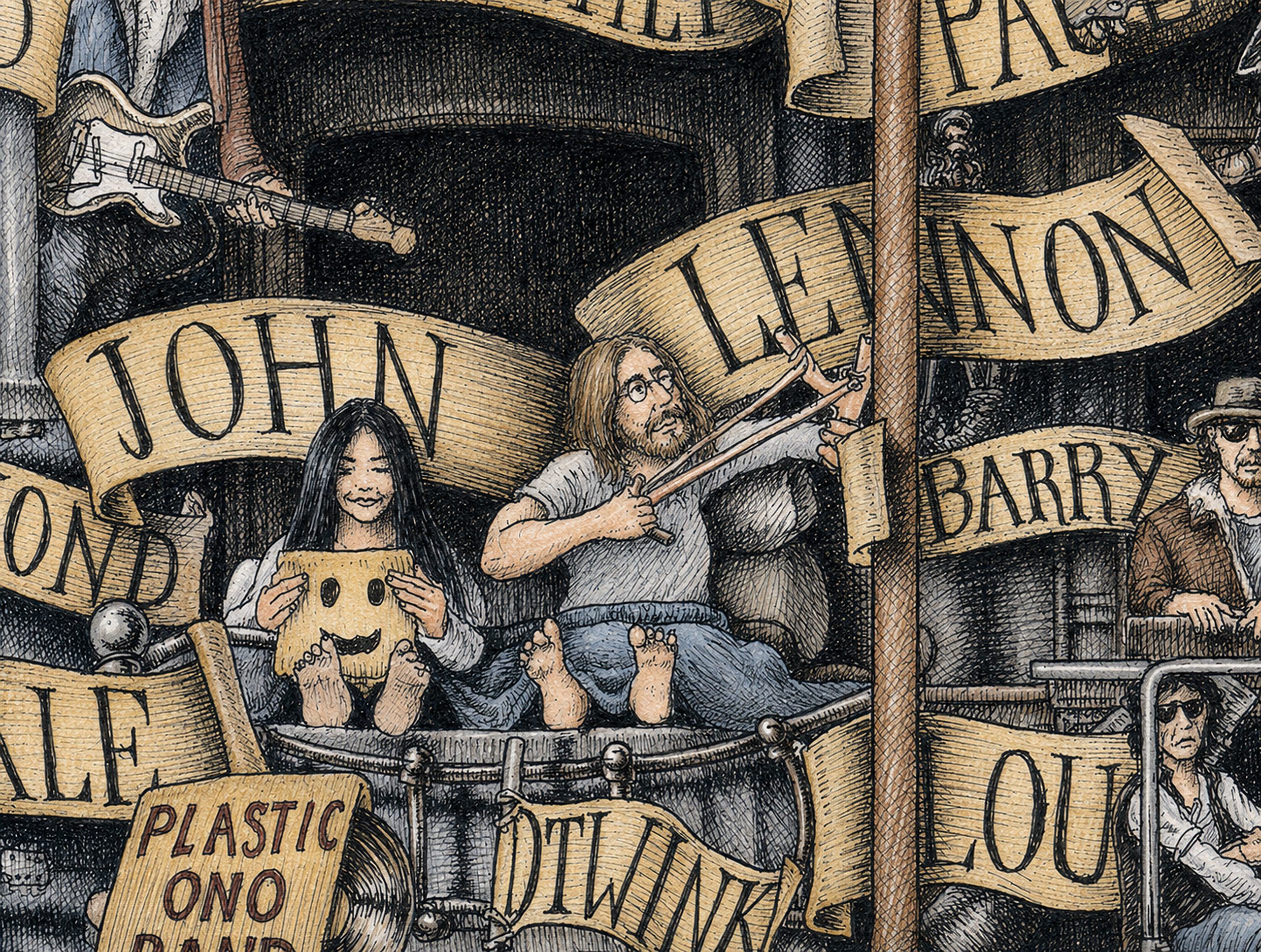
Rock Icons: John Lennon
Beyond the myth: his voice, Yoko, politics and the difficult business of being John Lennon.

British songwriter and cultural icon blending political activism, confessional rock and experimental post-Beatles artistry. Across John Lennon/Plastic Ono Band, Imagine, Walls and Bridges and Double Fantasy, Lennon explored stripped-down rock, autobiography, pop balladry and political protest, often alongside Yoko Ono.
Name John Winston Ono Lennon
Born Liverpool, October 9, 1940
Period 1969–1980: post-Beatles work
Roles Songwriter, singer, guitarist, activist
Genres Rock, pop, confessional rock, protest music
ARTIST OFFICIAL SITE: johnlennon.com
LISTEN
More to discover…
From Beatle Mythology to Public Self-Destruction
Leaving the Beatles: removing the armor
For Lennon, leaving the Beatles was more than changing bands. He and Yoko Ono had already explored art that merged experimental recordings, performances and public interventions; together they also challenged expectations that a celebrity’s private life should remain hidden. Primal therapy in 1970 gave Lennon a language for confronting maternal abandonment and other family wounds, though it offered no magical cure.
On John Lennon/Plastic Ono Band, the sound is exposed: piano, guitar, Klaus Voormann’s bass and Ringo Starr’s drums leave space for a voice moving between anger and vulnerability. Rejecting idols in God was also a personal attempt to survive the weight of being a Beatle.
Yoko, Imagine and politics as everyday life
His relationship with Yoko Ono was an artistic partnership and a marriage, but it also became a target for a press that frequently and unfairly blamed her for the Beatles’ breakup. Lennon himself swung between aspirations toward universal peace and far less peaceful personal reactions. Imagine (1971), produced with Phil Spector, sets its famous title song beside intimate writing and a bitter attack on Paul McCartney in How Do You Sleep?.
After moving to New York, Lennon and Ono joined antiwar campaigns and radical political causes. Some Time in New York City documents that period with immediacy, while revealing the risk of reducing complicated political and musical questions to slogans. US authorities sought to deport him: his activism carried real consequences.
The Lost Weekend: freedom, excess and friendship
Lennon’s temporary separation from Ono in 1973–74 began the so-called Lost Weekend, spent partly in Los Angeles with May Pang. The caricature of Lennon as permanently drunk captures only part of the story: these were months of excess and difficult behavior, but also of work, friendship and attempts to repair family ties.
He spent time with Harry Nilsson, collaborated with Elton John and recorded Mind Games and Walls and Bridges; Whatever Gets You thru the Night became his first US solo number one. Pang also encouraged renewed contact with his son Julian and with McCartney. The period exposes a recurring tension: Lennon sought independence but struggled to reconcile it with emotional responsibility.
Silence, return and an interrupted legacy
After Rock ’n’ Roll (1975), a tribute to the music of his adolescence, Lennon sharply reduced his public activity. With Ono and their son Sean, born in 1975, he chose a domestic life that contrasted with his image as an irrepressible provocateur, without erasing its ambiguities. In 1980, Double Fantasy, conceived as a dialogue between the couple’s songs, marked his return to recording and explored the fragility of a hard-won balance.
His murder on December 8 ended that new chapter. Musically, Lennon brought the intimacy of confessional folk, the urgency of stripped-down rock and the public dimension of protest music into his solo work. As a person, he left songs in which contradictions are not flaws to hide but part of the material itself.
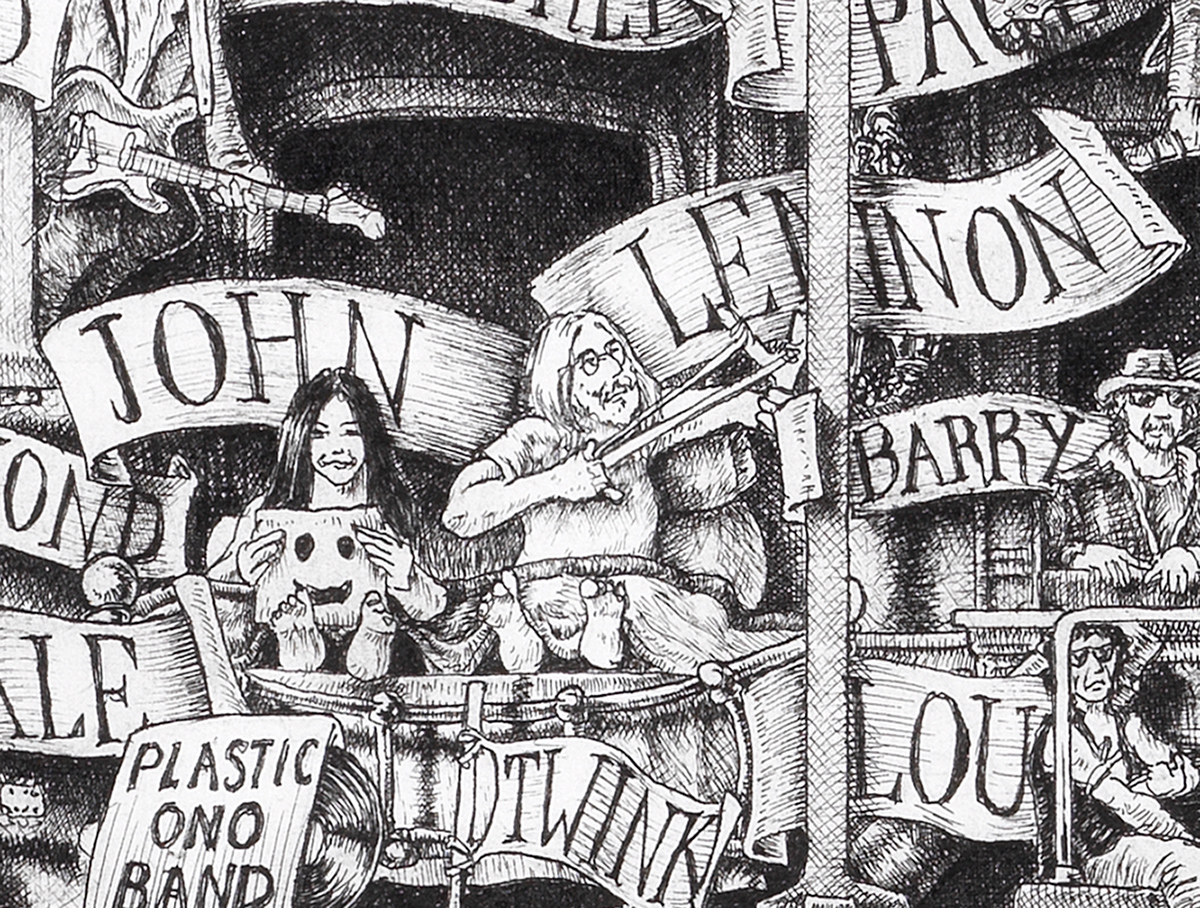
From Mother to Watching the Wheels, Lennon used his voice and direct songwriting to connect rock with personal confession, protest and reflections on family life. Albums such as Plastic Ono Band, Imagine and Mind Games became defining landmarks of confessional rock and post-Beatles songwriting culture.
Within The Great Rock and Roll History, post-Beatles Lennon illustrates the shift from the band as the center of pop identity to the songwriter who exposes private conflicts and political convictions in public: a defining change in 1970s rock.
Influenced by
Influent For
- David Bowie
- Elvis Costello
- Liam Gallagher
- Kurt Cobain
- Bono
Related Artists
- Yoko Ono
- Paul McCartney
- Ringo Starr
- Harry Nilsson
- Elton John
Get Your Rock Icon
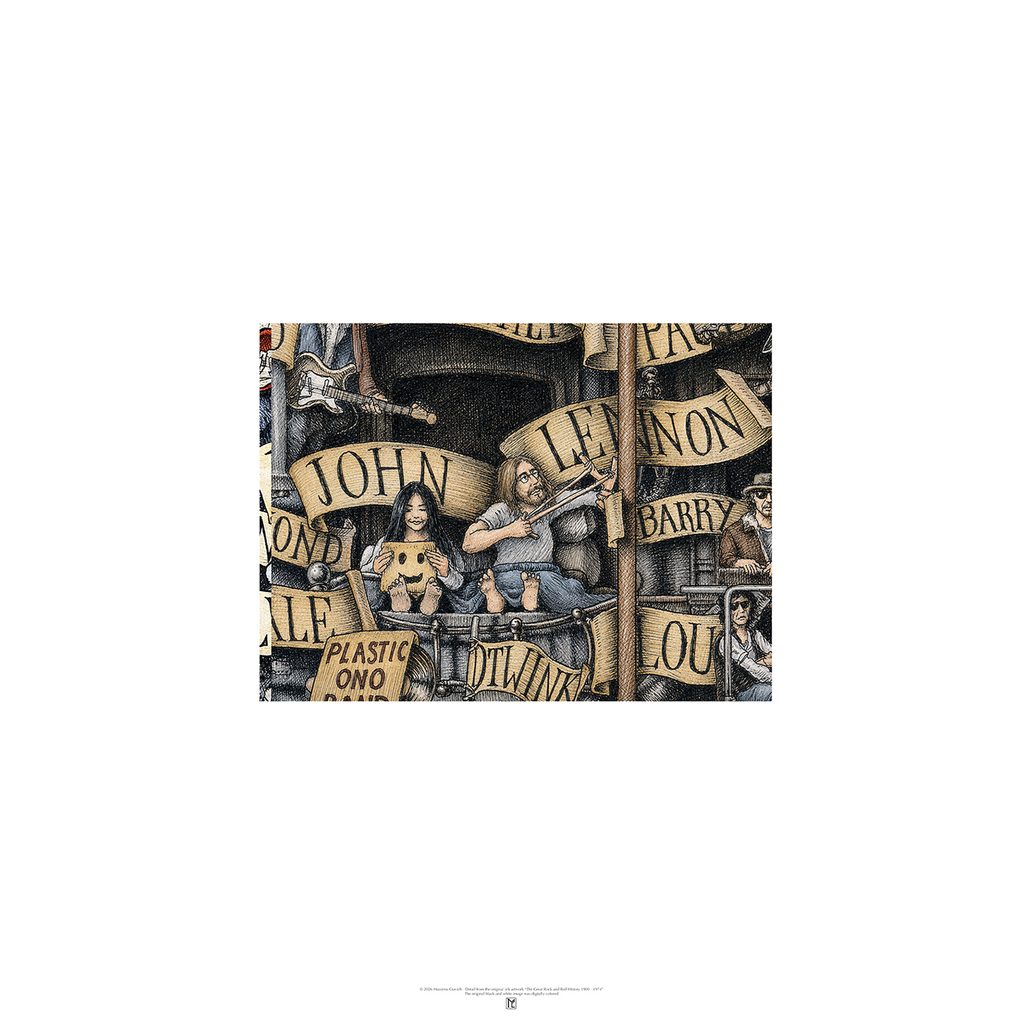
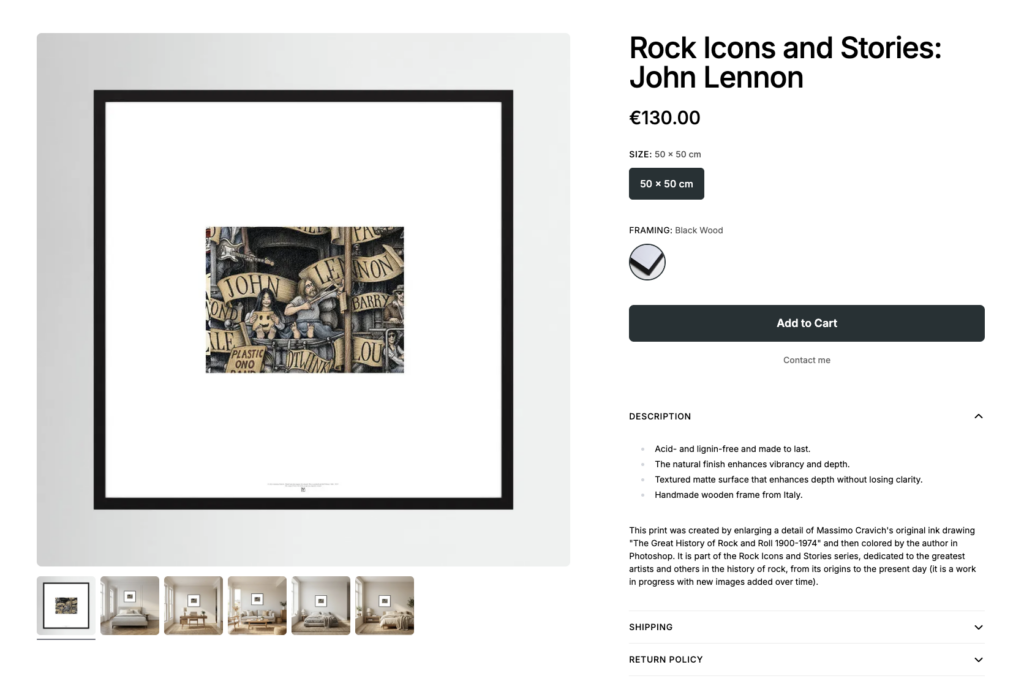
Selected artworks from Rock Icons and Stories are available as high-quality framed art prints. Printed on premium 230 gsm matte paper with excellent detail and colour reproduction, each print is professionally framed and delivered ready to hang.A carefully selected, high-quality alternative to the museum-grade Fine Art Giclée editions, offering an accessible way to own and display a reproduction of the original artwork. Printing, framing and worldwide fulfilment are handled by our specialist printing partner.
Key sources
John Lennon, official website: https://www.johnlennon.com/
Rock & Roll Hall of Fame, John Lennon: https://rockhall.com/inductees/john-lennon/
The Beatles, official website: https://www.thebeatles.com/
Contemporary John Lennon and Yoko Ono interviews and recordings
Solo Lennon was not simply an extension of the Beatles: he tested his own mythology through exposed songs, political gestures and complicated relationships. From the rawness of Plastic Ono Band to the search for balance on Double Fantasy, his journey connects rock, confession and activism, reminding us that music history is also the story of people who change, make mistakes and try to begin again.