
Bob Dylan is one of the figures who most profoundly transformed the language of modern song. Beginning with the American folk revival and the traditions of Woody Guthrie, blues and ballads, he brought a new literary density to popular music and then fused that writing with electric rock. This profile explores Bob Dylan’s roots, transformations and legacy within The Great Rock and Roll History, tracing the path from Greenwich Village to his electric turn and onward to folk rock, country rock and the modern rock singer-songwriter.
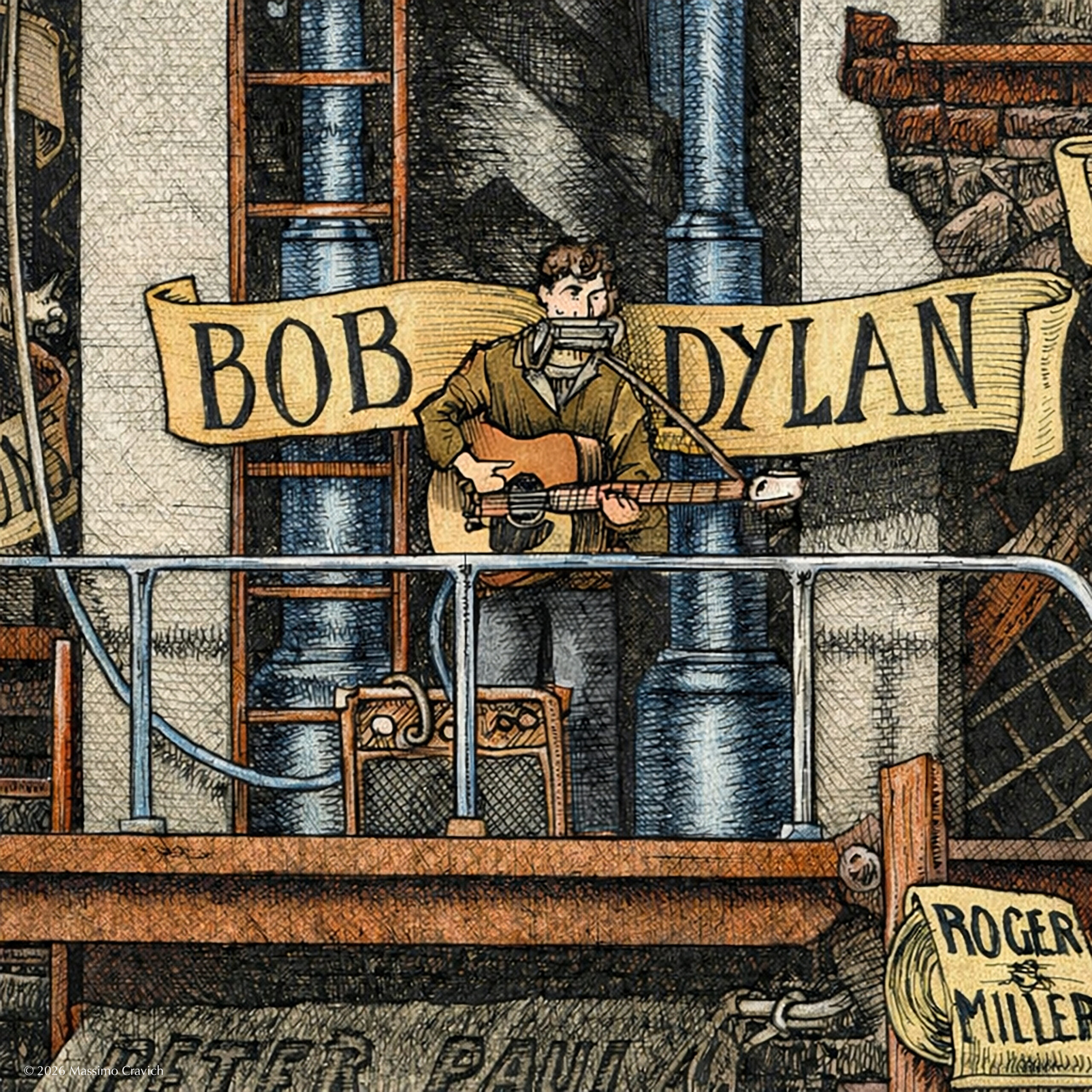
Rock Icons: Bob Dylan
The man who changed what a rock song could say – and then changed the way it could sound.

From the folk ballads and protest songs of the early 1960s to the electric turn of Bringing It All Back Home, Highway 61 Revisited and Blonde on Blonde, Bob Dylan joined American tradition, poetry, blues and rock, redefining the role of the songwriter in popular music. By blending folk, rock and poetic lyricism, Dylan played a key role in redefining songwriting and expanding the expressive possibilities of popular music.
Name: Robert Allen Zimmerman
Birth: 1941, Duluth (Minnesota)
Active: 1961–Today
Genres: folk, rock, blues, country, gospel, songwriter
ARTIST OFFICIAL SITE: www.bobdylan.com
LISTEN
More to discover…
From folk to rock: when popular song becomes electric literature
Dylan arrived in New York at the beginning of the 1960s carrying a musical archive much older than rock and roll. Woody Guthrie was the most obvious reference, but behind him stood Anglo-American ballads, spirituals, country, rural and urban blues, gospel and the songster tradition. I
n Greenwich Village Dylan absorbed the folk revival and rapidly became its most original voice. Blowin’ in the Wind and The Times They Are a-Changin’ showed that a simple song could carry political and social themes without losing popular force; soon his writing became more personal, symbolic and ambiguous, breaking beyond protest song itself.
The decisive turn came in 1965. With Bringing It All Back Home, the electric Newport performance and especially Highway 61 Revisited, Dylan brought that verbal complexity into a rock sound driven by blues, organ, electric guitar and more aggressive rhythms. Like a Rolling Stone demonstrated that a long, narratively open single could become central to mass culture. With Blonde on Blonde the fusion became still more fluid: folk, blues, country and
rock became materials within a single songwriter’s language.
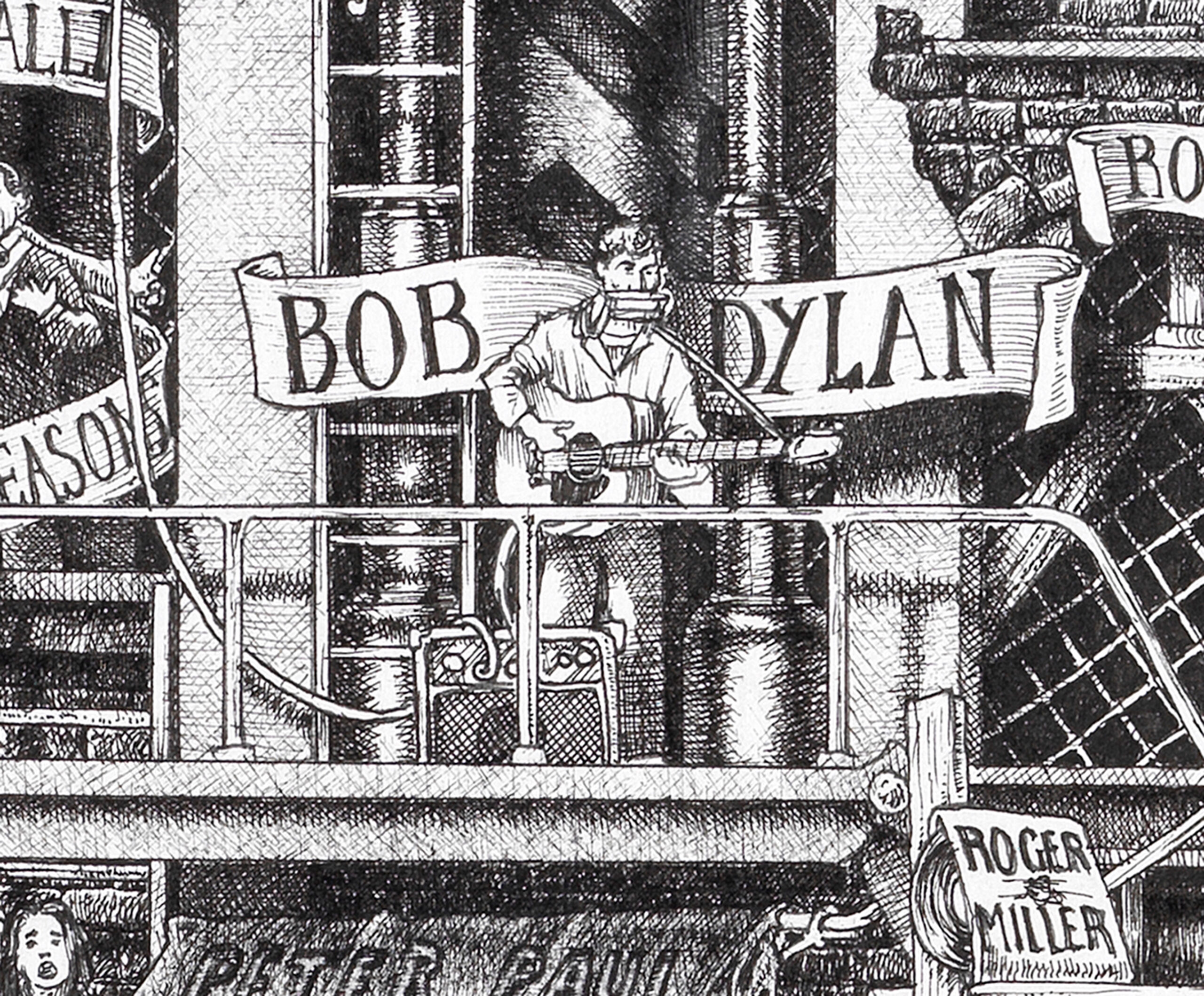
The genealogical consequence was enormous. The Byrds turned Mr. Tambourine Man into a defining folk-rock statement; the Beatles and other writers expanded their lyrical ambitions; John Wesley Harding and later country explorations contributed to the return toward roots and country rock. Dylan normalized the idea that a rock musician could be a writer first, use an unconventional voice, change style and treat the song as an open narrative space.
Woody Guthrie and folk revival -> acoustic Dylan -> electric Dylan -> folk rock -> singer-songwriters, country rock and songwriter-centered rock.
Albums such as The Freewheelin’ Bob Dylan, Bringing It All Back Home, Highway 61 Revisited and Blonde on Blonde transformed the relationship between lyrics, folk tradition and rock sound, making Bob Dylan a foundational source for folk rock, singer-songwriters and songwriter-centered rock.
Within The Great Rock and Roll History, Bob Dylan occupies a central genealogical junction: ballads, blues, country and Woody Guthrie -> folk revival -> Dylan -> electric turn -> folk rock -> singer-songwriters, country rock and the modern rock songwriting tradition.
Influenced by
- Woody Guthrie
- American folk/blues tradition
- Beat Generation
Influent For
- Global singer-songwriter culture
- Lyrical rock
- Folk revival
- Contemporary indie;
- Poetic punk
- Narrative hip hop
- Literary songwriting
Related Artists
Key sources
Bob Dylan — Wikipedia (Bob Dylan) for basic chronology.
Entertainment Weekly interview on fact vs fiction in Dylan narratives (A Complete Unknown).
The New Yorker profile using the phrase ‘rode freight trains’ in a hobo-romance framing.
In the genealogy of rock, Bob Dylan represents the moment when popular song radically expanded its expressive field. Drawing on folk, blues, country and ballads, he first transformed acoustic songwriting and then carried that freedom into electric rock. His influence lies not only in lyrics, but in the idea that a songwriter can change language, voice and form without losing identity. From folk rock to singer-songwriters, from country rock to alternative songwriting, a vast part of later rock developed inside the space Dylan helped open.