
Hank Williams was one of the foundational songwriters of American popular music, transforming country music through a rare combination of emotional directness, blues feeling, gospel intensity and melodies that seemed both ancient and immediately unforgettable.
This illustrated profile explores Hank Williams’ songwriting, musical roots and enormous influence within The Great Rock and Roll History, where his short career forms one of the essential bridges between Southern vernacular music, modern country and the emerging language of rock and roll.
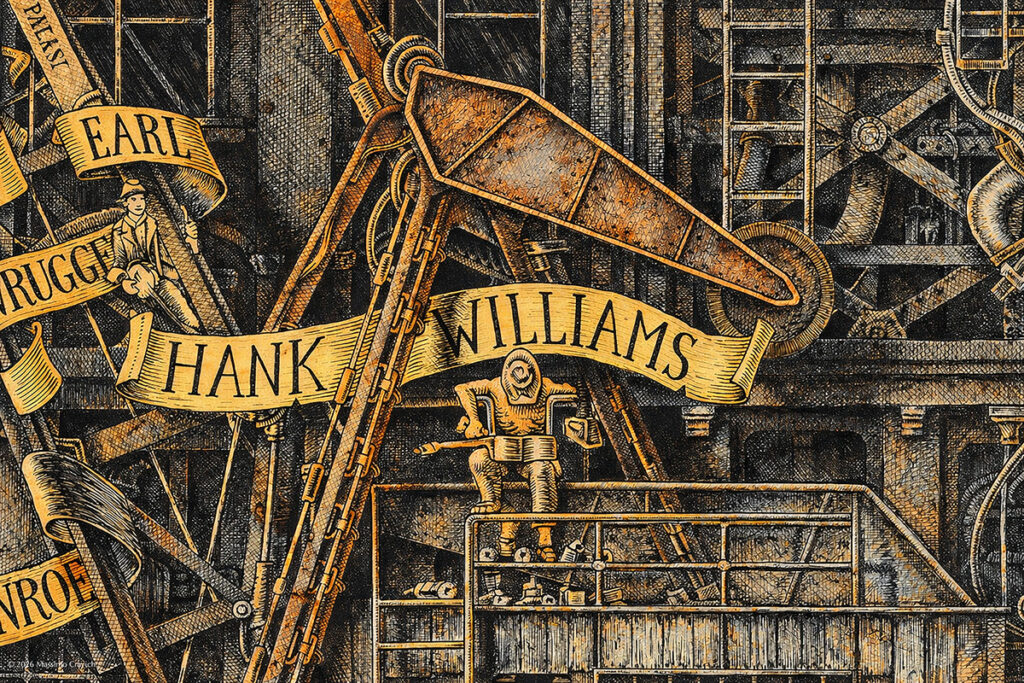
Rock Icons: Hank Williams
The voice that turned loneliness, desire, faith and heartbreak into the common language of country music, helping prepare the emotional vocabulary of rock and roll.
By combining honky-tonk country with blues inflection, gospel memory and exceptionally concise songwriting, Hank Williams created a body of work that reshaped country music and became a fundamental source for rockabilly, rock and roll, folk, singer-songwriters and later roots music.

Full name: Hiram King Williams
Birth: September 17, 1923 – Mount Olive, Alabama (USA)
Death: January 1, 1953 – Oak Hill, West Virginia (USA), aged 29
Genres: Country, honky-tonk, American folk, gospel
Key ensemble The Drifting Cowboys
ARTIST OFFICIAL SITE: there’s no official site, you can visit this https://www.thehankwilliamsmuseum.com
LISTEN
More to discover…
The songwriter who made simplicity devastating
Hank Williams belongs to the prehistory of rock and roll not because he played rock music in the later sense, but because so many of the elements that would feed it are already present in his work. His songs are economical, rhythmically direct and built around phrases that lodge immediately in memory. Beneath the country surface lies a strong relationship with the blues.
As a young musician in Alabama, Williams learned from the Black street musician Rufus ‘Tee Tot’ Payne, an important figure in accounts of his musical education. That encounter symbolizes a broader Southern reality in which Black and white vernacular traditions continually crossed paths despite the racial segregation surrounding them.When Williams reached national prominence through radio, records and the Grand Ole Opry, he brought an unusual emotional nakedness into mainstream country music.
Songs such as ‘I’m So Lonesome I Could Cry’ and ‘Your Cheatin’ Heart’ reduce grief to simple images and plain language without making it smaller. Others, including ‘Hey, Good Lookin” and ‘Jambalaya’, show his gift for immediacy, humor and rhythmic momentum. His voice could sound fragile, nasal, conversational and haunted, while the Drifting Cowboys framed it with an uncluttered honky-tonk sound in which steel guitar, fiddle and rhythm left the words room to strike.
His career lasted only a few years at its peak, and his life was marked by chronic pain, alcohol, unstable relationships and dependence on medication before his death at twenty-nine. Yet the brevity of the story amplified rather than limited its musical consequences. Williams helped establish the singer-songwriter as a figure whose authority came from making private experience sound universal.
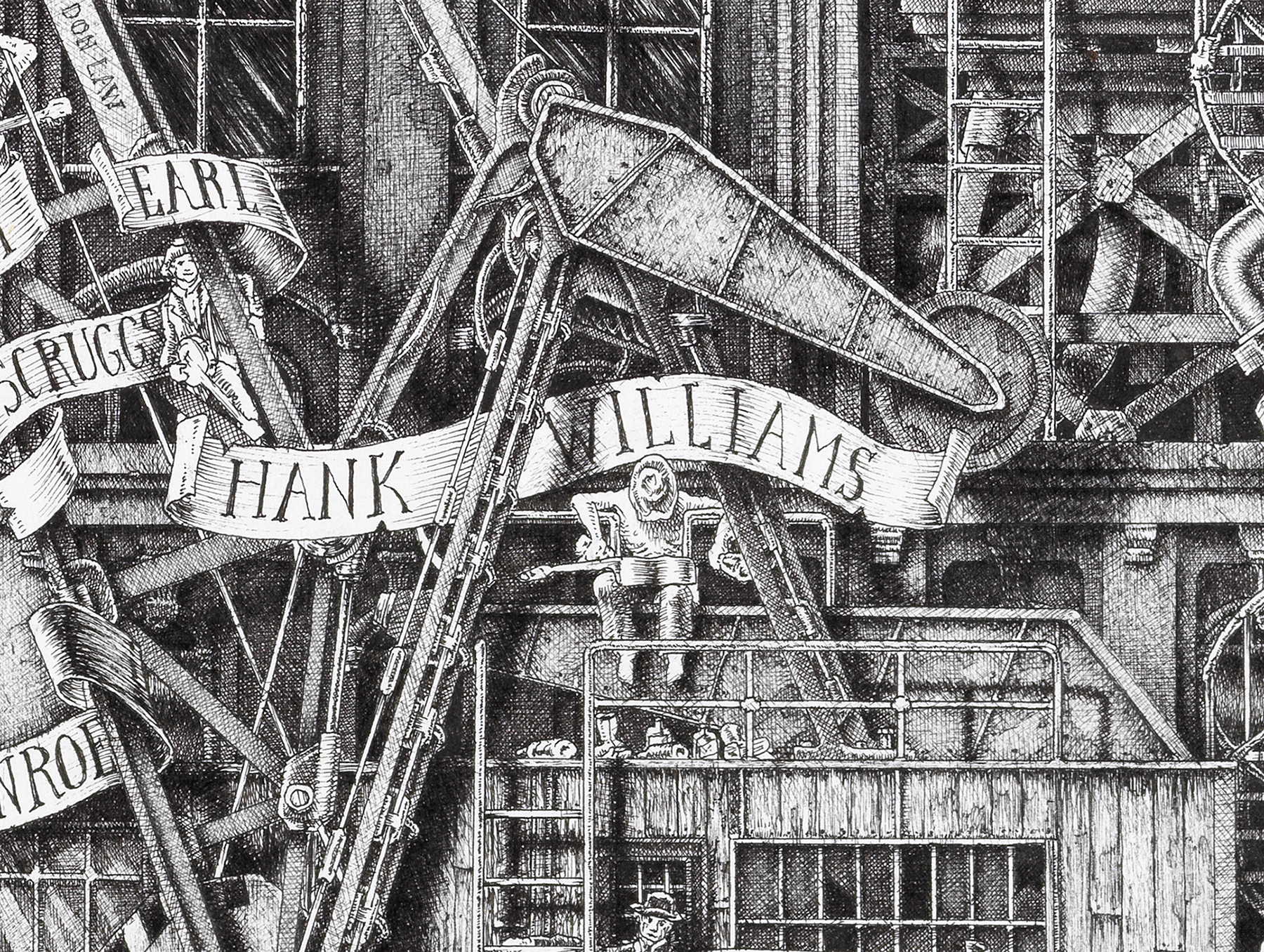
Country artists inherited his songwriting almost immediately, while early rock and roll performers recognized the propulsion and emotional economy in songs such as ‘Move It on Over’. Through Elvis Presley, Jerry Lee Lewis, Bob Dylan, Johnny Cash and generations of roots musicians, Hank Williams became one of the deepest ancestral voices in modern American songwriting.
Songs such as Move It on Over, Lovesick Blues, I’m So Lonesome I Could Cry, Hey, Good Lookin’ and Your Cheatin’ Heart made Hank Williams a defining figure of honky-tonk and one of the most important songwriting ancestors of rock and roll.
Within The Great Rock and Roll History, Hank Williams occupies a crucial genealogical position: old-time country, Southern gospel and blues converge in modern honky-tonk songwriting, while his rhythmic directness and emotional candor flow into rockabilly, early rock and roll, folk revival, country rock and the singer-songwriter tradition.
Influenced by
- Southern American folk and gospel traditions.
- Rural blues and hillbilly music.
- Anglo-American narrative ballads.
- Rufus ‘Tee Tot’ Payne
- Roy Acuff
- Ernest Tubb
- The Carter Family
Influent For
- Johnny Cash
- Bob Dylan
- Elvis Presley
- The Beatles (song concision)
- Townes Van Zandt
- Gram Parsons
- Neil Young
- Dolly Parton
- The entire Americana / alt-country tradition
Related Artists
Get Your Rock Icon
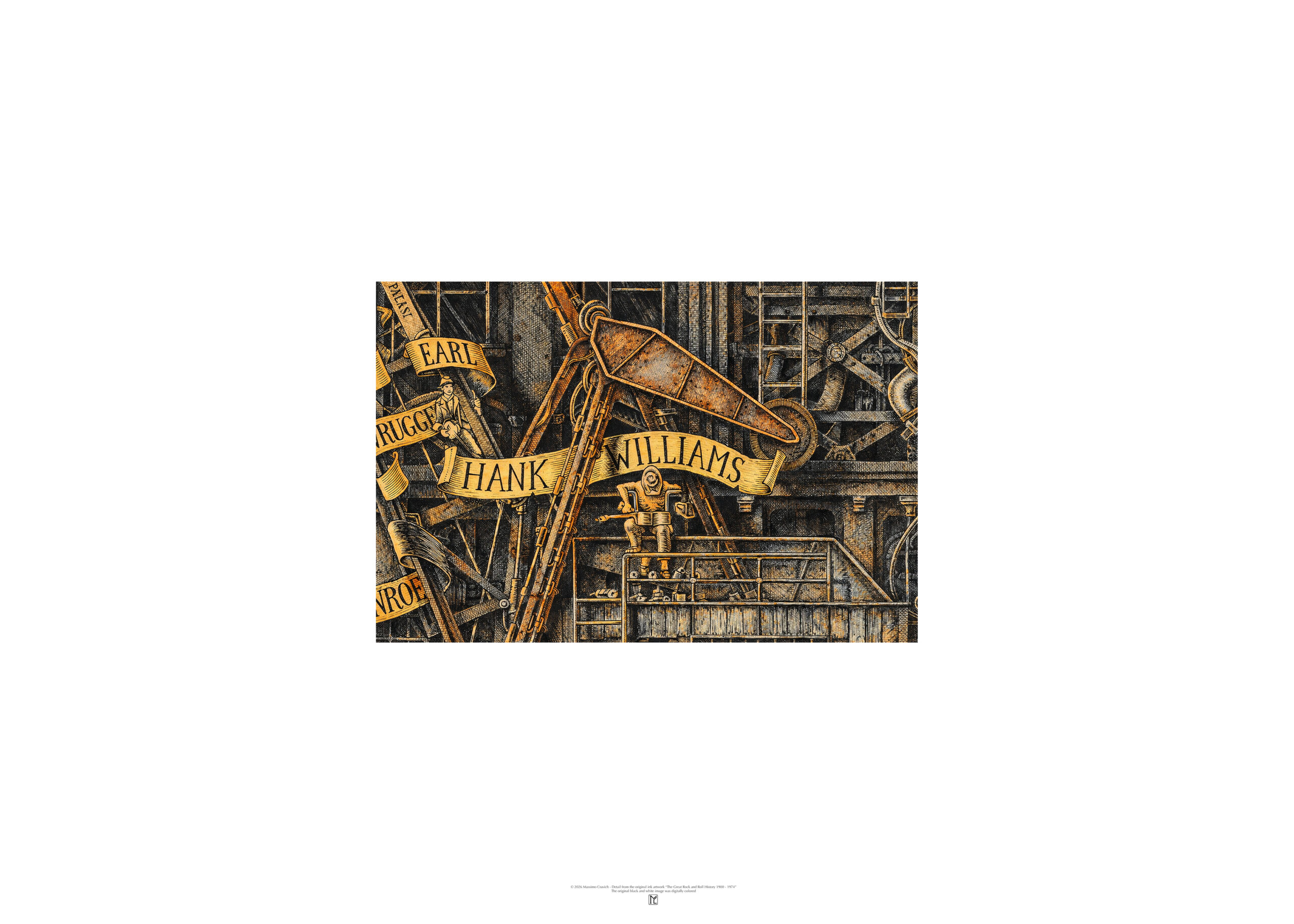
Selected artworks from Rock Icons and Stories are available as high-quality framed art prints. Printed on premium 230 gsm matte paper with excellent detail and colour reproduction, each print is professionally framed and delivered ready to hang.A carefully selected, high-quality alternative to the museum-grade Fine Art Giclée editions, offering an accessible way to own and display a reproduction of the original artwork. Printing, framing and worldwide fulfilment are handled by our specialist printing partner.

SOURCES
• Hank Williams – official legacy website: hankwilliams.com
• Country Music Hall of Fame – Hank Williams profile and historical materials
• Rock & Roll Hall of Fame – Hank Williams, Early Influence inductee profile
• Colin Escott with George Merritt and William MacEwen, Hank Williams: The Biography.
Within the broader history of rock and popular music, Hank Williams is a foundational link between older Southern traditions and the modern idea of the personal song. His synthesis of country, blues and gospel, together with an extraordinary ability to express pain and desire in direct language, influenced not only country music but rockabilly, rock and roll, folk, country rock and generations of singer-songwriters.