
Dolly Parton is one of the great writers and performers in American music. Emerging from the mountains of Tennessee, she turned Appalachian country into a personal language that could reach pop audiences without surrendering memory, humor or identity. Within Great Rock and Roll History, her story connects rural tradition, the Nashville industry, female self-determination and an extraordinary ability to shape her own destiny.
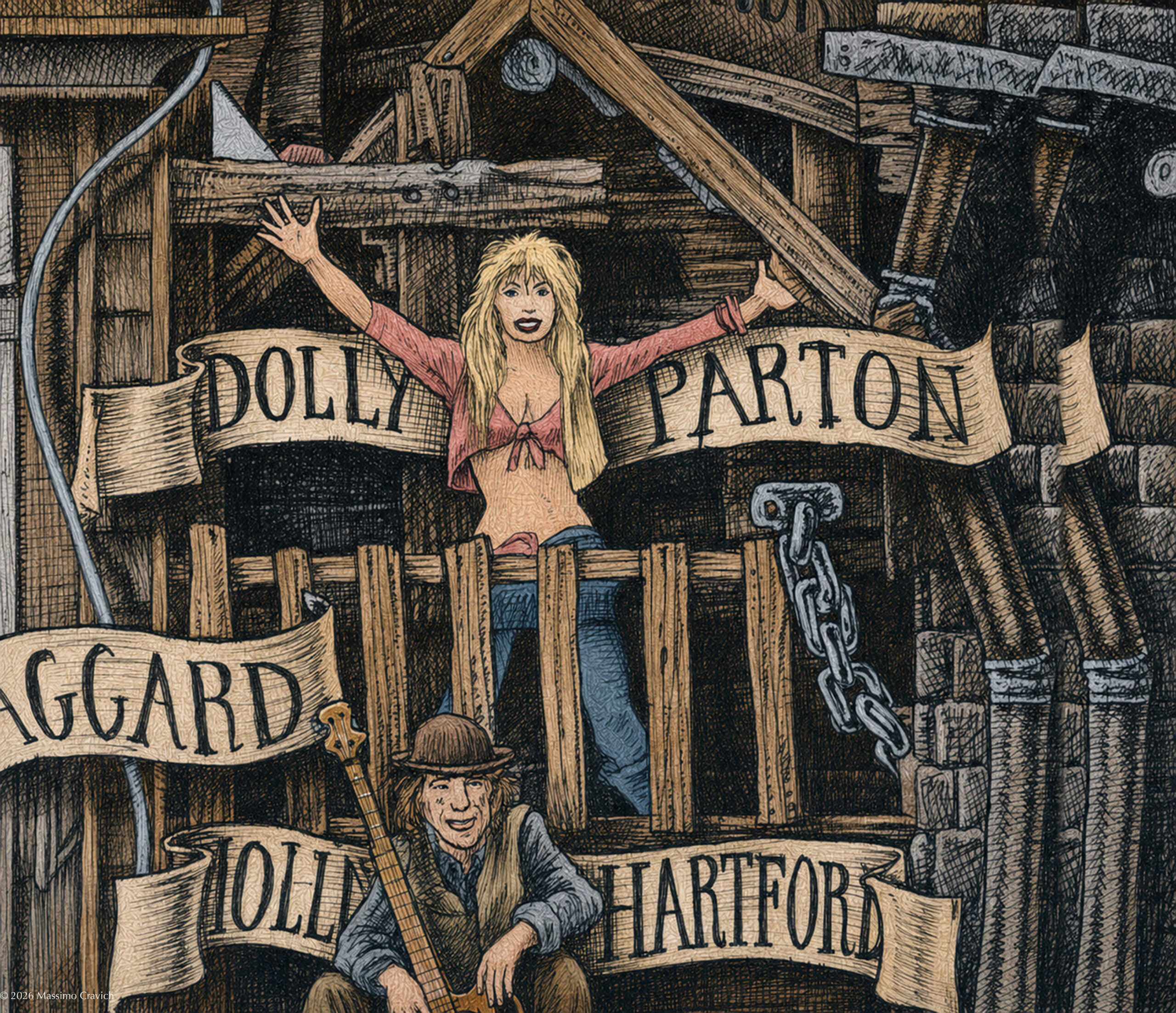
Rock Icons: Dolly Parton
From the Smoky Mountains to Nashville: talent, self-determination and an unmistakable identity.

Writer of Jolene, Coat of Many Colors and I Will Always Love You, Dolly Parton carried country tradition beyond its boundaries, turning autobiography, humor and independence into a modern popular language.
Full name Dolly Rebecca Parton
Born January 19, 1946, Sevier County, Tennessee
Dead August 25, 2026, Nashville, Tennessee
Roots Great Smoky Mountains, Appalachia
Roles Singer-songwriter, singer, musician, actress, entrepreneur
Genres Country, country pop, bluegrass, gospel
Crucial partnership Porter Wagoner, 1967-1974
Instruments Voice, guitar; also banjo and other string instruments
ARTIST OFFICIAL SITE: www.dollyparton.com
LISTEN
More to discover…
A house full of children, songs and mountains
Dolly Parton was born into a very large, poor family in eastern Tennessee. The Smoky Mountains would never become merely a nostalgic backdrop: they remained a reservoir of stories, melodies, religious faith and characters throughout her life.
She sang in church and on local radio as a child, began writing remarkably early, and understood that music might provide a way out without requiring her to reject where she came from. The day after graduating from high school, she left for Nashville. Her strength as a songwriter appeared before her full fame as a performer.
Behind the flamboyant image she would consciously construct was a writer acutely attentive to everyday speech, poverty, social shame, love and dignity.
Porter Wagoner: the open door and the cage to leave
In 1967 Porter Wagoner brought her onto his popular television show and made her his musical partner. The collaboration was decisive: Dolly entered country households, recorded duets and won over an audience that initially missed the singer she had replaced. Yet the professional relationship also became a struggle for autonomy.
Parton wanted to write, choose and build a career that would not forever depend on being somebody else’s partner. When she decided to leave Wagoner, she translated the farewell into I Will Always Love You: not revenge, but an affectionate and resolute goodbye. Beneath the song’s tenderness lies a defining aspect of her character: gratitude and determination can coexist, but gratitude does not require surrendering freedom.
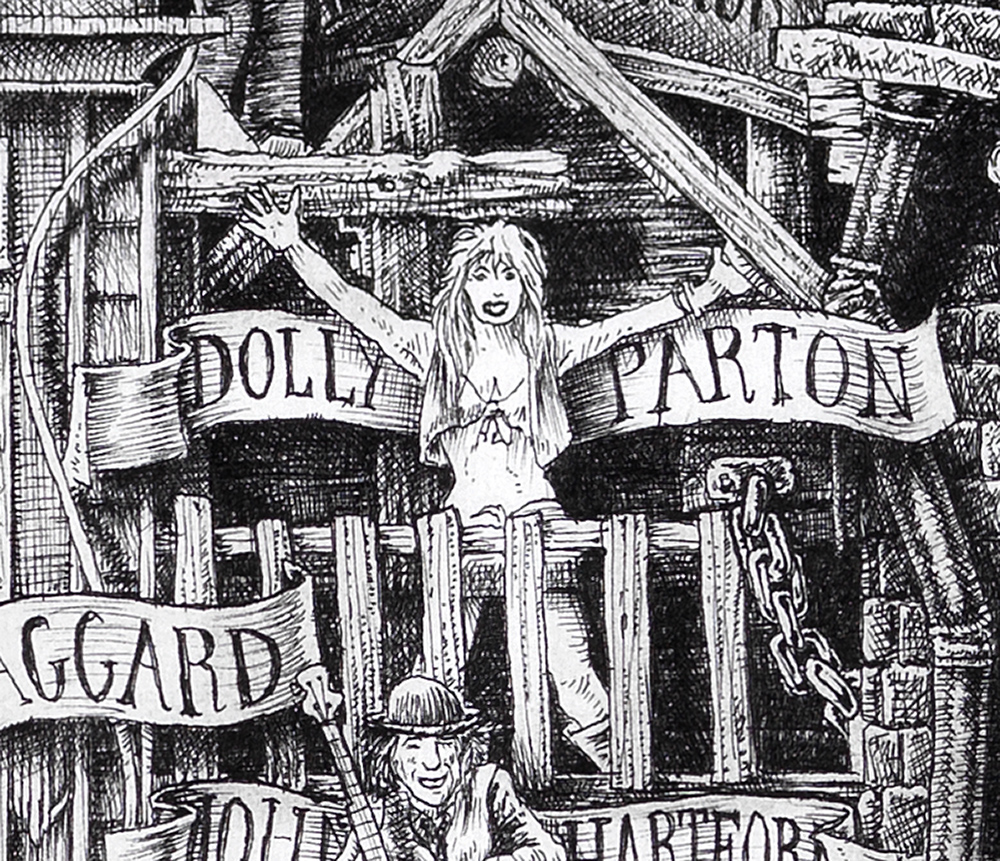
Jolene, the image and control of her own story
With Jolene and Coat of Many Colors, Parton showed how powerful a simple story can become when told with emotional precision. Her image – enormous hair, glittering clothes and self-mocking humor – was also far less naive than it appeared. Dolly understood exactly how people looked at her and often delivered the joke before anyone else could. In a conservative, male-dominated industry, she turned potential vulnerability into an instrument of control.
Her marriage to Carl Dean, deliberately kept away from the spotlight, protected a private zone while the public character became enormous. That separation between person and icon helped her survive fame and stereotypes without being entirely possessed by either.
Beyond Nashville: pop, film and a freedom earned
During the 1970s Parton deliberately began widening her audience, a decision that aroused suspicion among guardians of traditional country. Her movement toward pop, film and later successes such as 9 to 5 did not erase her Appalachian foundation; it made it portable. Her business intelligence is an essential part of the story.
Retaining control of her songwriting, making independent financial decisions and turning her image into an enterprise meant achieving a degree of freedom unusual for a woman emerging from 1960s Nashville. Even after becoming a national institution, Parton continued using humor to puncture her own mythology. The result is almost unique: an artist deeply rooted in tradition who repeatedly changed scale without losing her center.
Dolly Parton turned autobiographical country songwriting into a universal form, proving that rural roots, commercial ambition and female autonomy did not have to exclude one another.
Within The Great Rock and Roll History, Dolly Parton represents the thread connecting Appalachian balladry, gospel and classic country to the modern singer-songwriter: a genealogy parallel to rock, yet constantly intertwined with it.

Influenced by
- Kitty Wells
- Hank Williams
- Mother Maybelle Carter
- Appalachian gospel
- Traditional mountain music
Influent For
- Emmylou Harris
- Reba McEntire
- Shania Twain
- Alison Krauss
- Kacey Musgraves
Related Artists
- Porter Wagoner
- Linda Ronstadt
- Emmylou Harris
- Willie Nelson
- Kenny Rogers
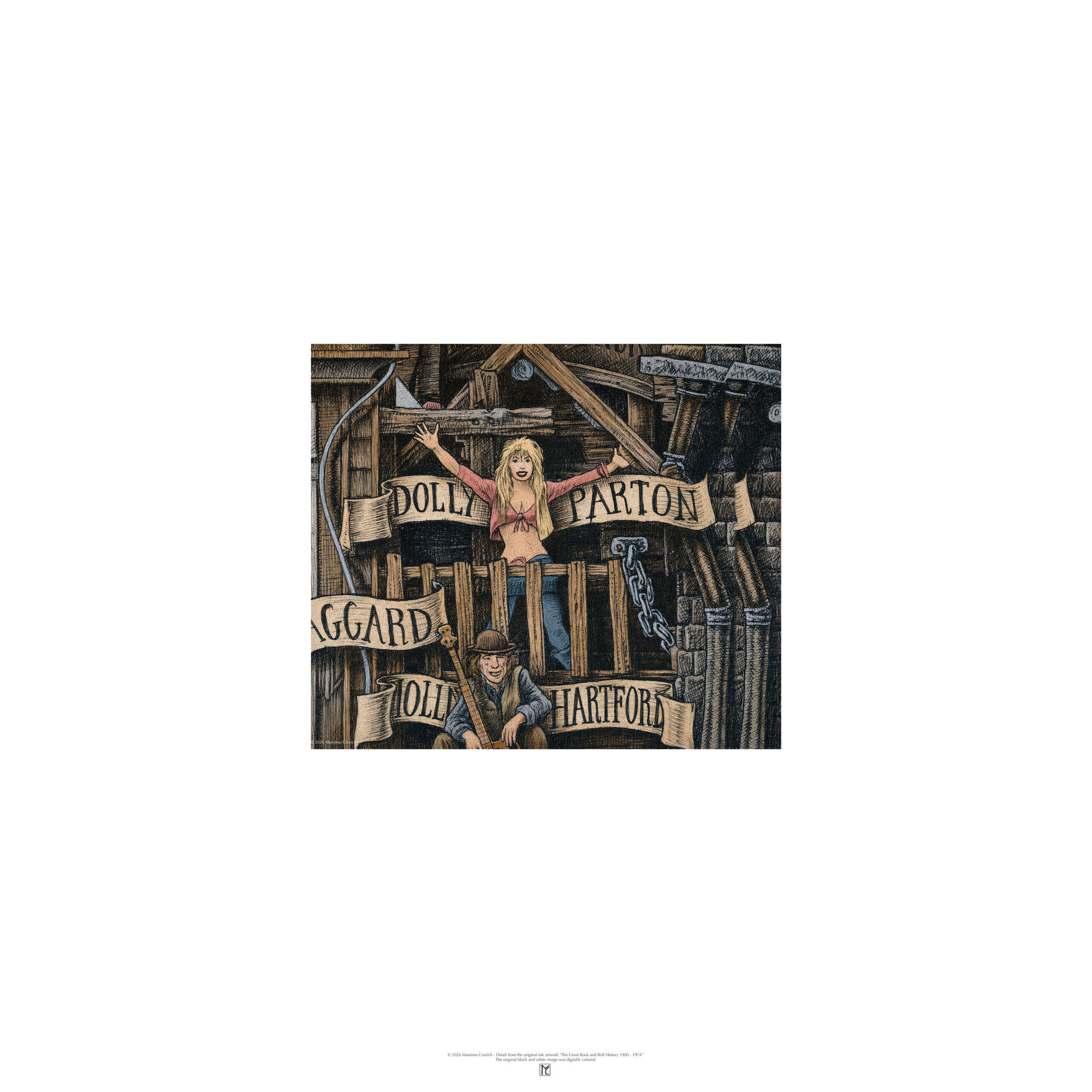
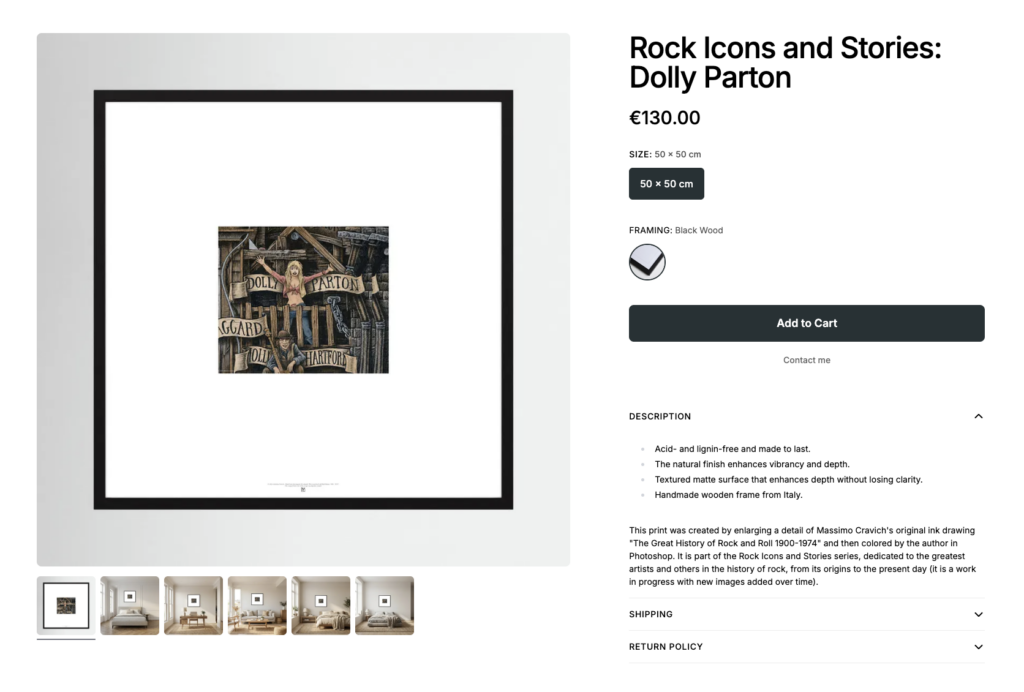
Get Your Rock Icon
Selected artworks from Rock Icons and Stories are available as high-quality framed art prints. Printed on premium 230 gsm matte paper with excellent detail and colour reproduction, each print is professionally framed and delivered ready to hang.A carefully selected, high-quality alternative to the museum-grade Fine Art Giclée editions, offering an accessible way to own and display a reproduction of the original artwork. Printing, framing and worldwide fulfilment are handled by our specialist printing partner.
Sources
Country Music Hall of Fame – Dolly Parton
Songwriters Hall of Fame – Dolly Parton
Rock & Roll Hall of Fame – Dolly Parton
Dolly Parton became an icon not by escaping her origins but by learning to control their story. In her songs, poverty, desire, jealousy, faith and pride retain the concreteness of the Tennessee mountains even when they reach a worldwide audience. Behind the glittering construction of the star remains one of country’s sharpest songwriters and a woman who made artistic and economic independence part of the work itself.