
Robert Johnson stands at a crucial junction in the genealogy of blues and rock: from Mississippi Delta traditions to postwar electric blues and British blues rock. His brief recording career and poorly documented life inspired a legend often better known than the man himself. This profile for The Great Rock and Roll Historyseparates evidence from myth while exploring the musical and human power of his recordings.
Rock Icons: Robert Johnson
Twenty-nine recorded compositions, a difficult life and a legacy larger than the legend.

Robert Johnson’s 1936 and 1937 recordings, including Cross Road Blues, Terraplane Blues and Hellhound on My Trail, distilled Delta blues into a voice-and-guitar language that profoundly influenced modern blues and rock. His Delta blues style, characterized by expressive guitar playing and emotional intensity, became a key reference point for the development of rock music.
Born: Usually given as May 8, 1911, Mississippi; some biographical details remain disputed
Dead: August,16 1938 (Greenwood area, Mississippi)
Core genres: Delta Blues
ARTIST RELATED SITE: www.robertjohnsonbluesfoundation.org
LISTEN
More to discover…
Where it all began
The man behind the crossroads
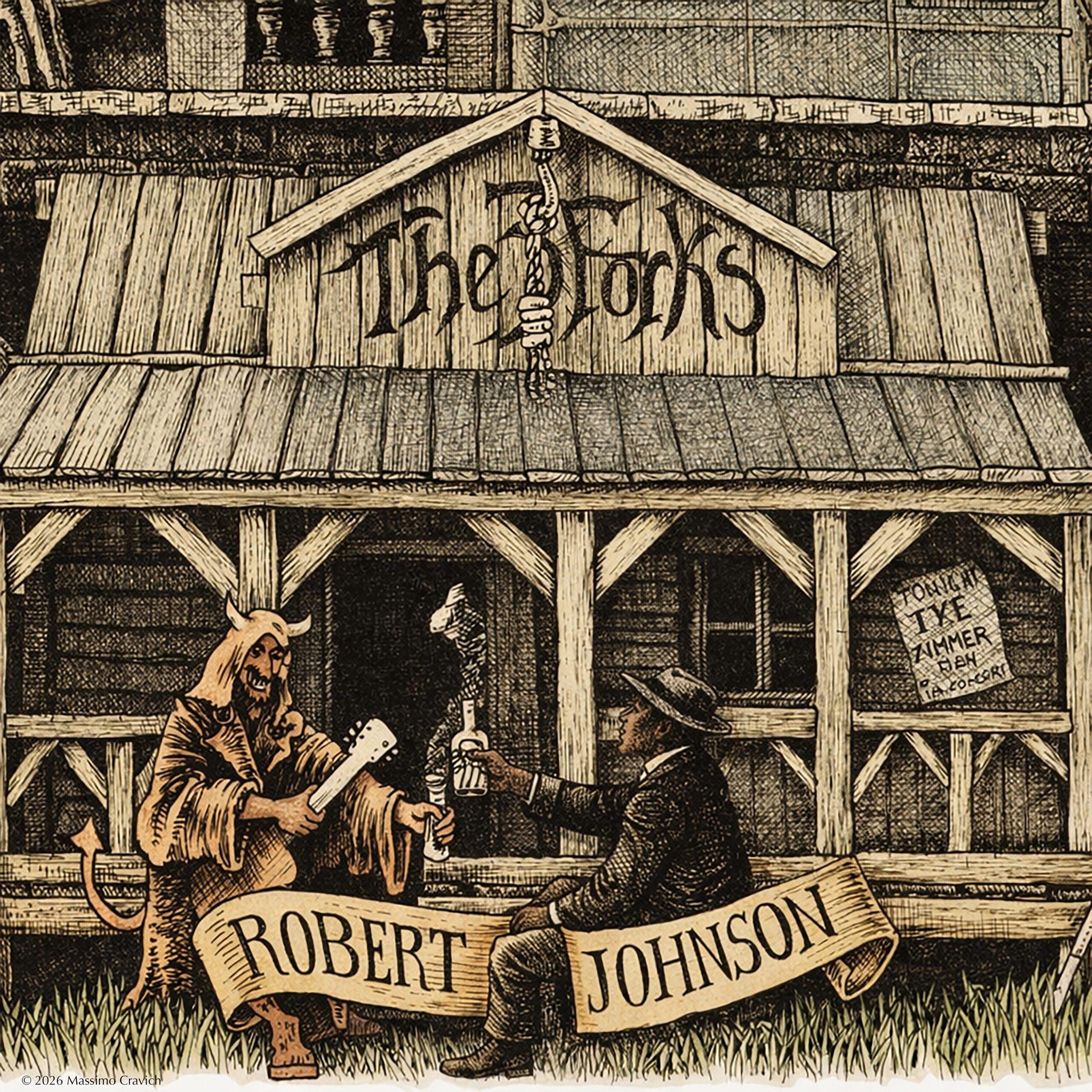
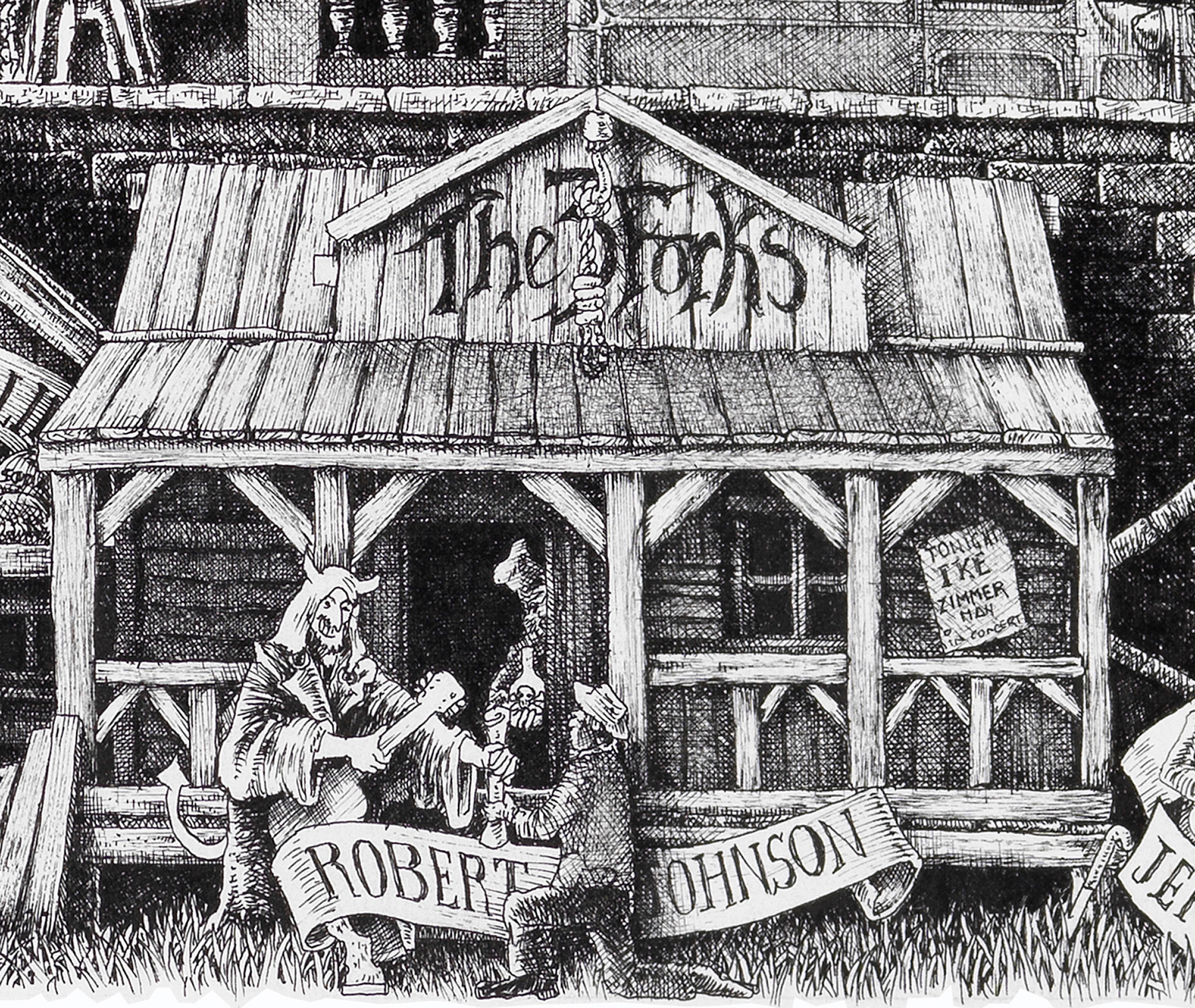
Robert Johnson lived in segregated Mississippi, moving between precarious work and venues where music offered income and a measure of freedom. Accounts of his life are fragmentary and sometimes contradictory. His youthful marriage to Virginia Travis ended tragically when she died in childbirth; family hardship and the life of a traveling musician belong to a real story too often eclipsed by the tale of a deal with the devil. The crossroads bargain is not a documented biographical event: it is a legend that grew around an artist who left relatively few personal traces.
Learning, leaving, returning: a guitar like an orchestra
Johnson listened to and reworked musicians including Son House, Willie Brown and especially Lonnie Johnson, alongside other popular styles. Accounts describe his remarkable improvement after time away from the local scene, but provide no basis for supernatural explanations. On record, his guitar combines moving bass lines, melodic responses and rhythmic figures, while his voice shifts tone and intensity with striking freedom.
He did not invent these techniques alone; he shaped them into a personal, flexible and dramatic language. Songs such as Come On in My Kitchen and Love in Vain reveal that longing, abandonment and vulnerability matter as much as instrumental skill.
Two sessions and a life told by others
In November 1936 in San Antonio and June 1937 in Dallas, Johnson recorded the repertoire we know today. Terraplane Blues circulated notably for a blues record of its time, but Johnson did not become a national celebrity. He continued performing in juke joints and other Southern venues.
He died in 1938 at twenty-seven, in circumstances that remain uncertain: poisoning is a widely repeated theory, not an established fact. Even his precise burial site is disputed. The gap between his actual life and later accounts is central to understanding his story.
Rock Icons: Robert Johnson
Rediscovery and rock: a legacy beyond the myth
The 1961 release of King of the Delta Blues Singers helped bring Johnson to new listeners. Eric Clapton, the Rolling Stones and many other musicians found models of tension, phrasing and storytelling in his songs. Love in Vain and Cross Road Blues entered rock through new interpretations.
Yet this genealogy is not exclusive: Johnson was a major interpreter within a collective African American tradition. Delta blues and other blues currents helped shape Chicago blues and rhythm and blues, which in turn fed rock and roll and blues rock.
Cross Road Blues, Love in Vain and Hellhound on My Trail reveal the relationship between guitar, voice and storytelling that made Robert Johnson a central figure in Delta blues history.
Within The Great Rock and Roll History, Robert Johnson also raises a question about how musical history is written: a collective, orally transmitted tradition shaped by segregation has often been retold as the myth of a single, solitary genius.
Influenced by
- Son House
- Willie Brown
- Lonnie Johnson
- Charley Patton
- Leroy Carr
Influent For
- Muddy Waters
- Elmore James
- Eric Clapton
- Keith Richards
- Robert Plant
Related Artists
Johnny Shines
Son House
Skip James
Honeyboy Edwards
Sources
Robert Johnson, original recordings (1936-1937)
Elijah Wald, Escaping the Delta: Robert Johnson and the Invention of the Blues
Barry Lee Pearson and Bill McCulloch, Robert Johnson: Lost and Found
Encyclopaedia Britannica: https://www.britannica.com/biography/Robert-Johnson
Robert Johnson was neither the lone inventor of blues nor the supernatural figure of crossroads mythology. He was an African American musician of exceptional expressive sensitivity who transformed shared experiences, repertoire andtechniques into powerful recordings. His influence on Chicago blues and blues rock, magnified by his rediscovery in the 1960s, makes him an important figure in rock genealogy without erasing the collective tradition from which he emerged.