
Muddy Waters was one of the most decisive, primal and revolutionary figures in modern music history. If rural Mississippi blues represented earth, dust and survival, Muddy Waters was the man who transformed that ancient language into urban electricity, volume and physical force.
Without Muddy Waters there would probably be no Rolling Stones, Led Zeppelin, Eric Clapton, Deep Purple or much of 1960s and 1970s British rock. More than simple musician, Muddy feels almost like geological force inside American music history.
This illustrated profile explores his electric blues revolution, Mississippi roots and cultural influence within The Great Rock and Roll History, a large-scale illustrated timeline of modern music.
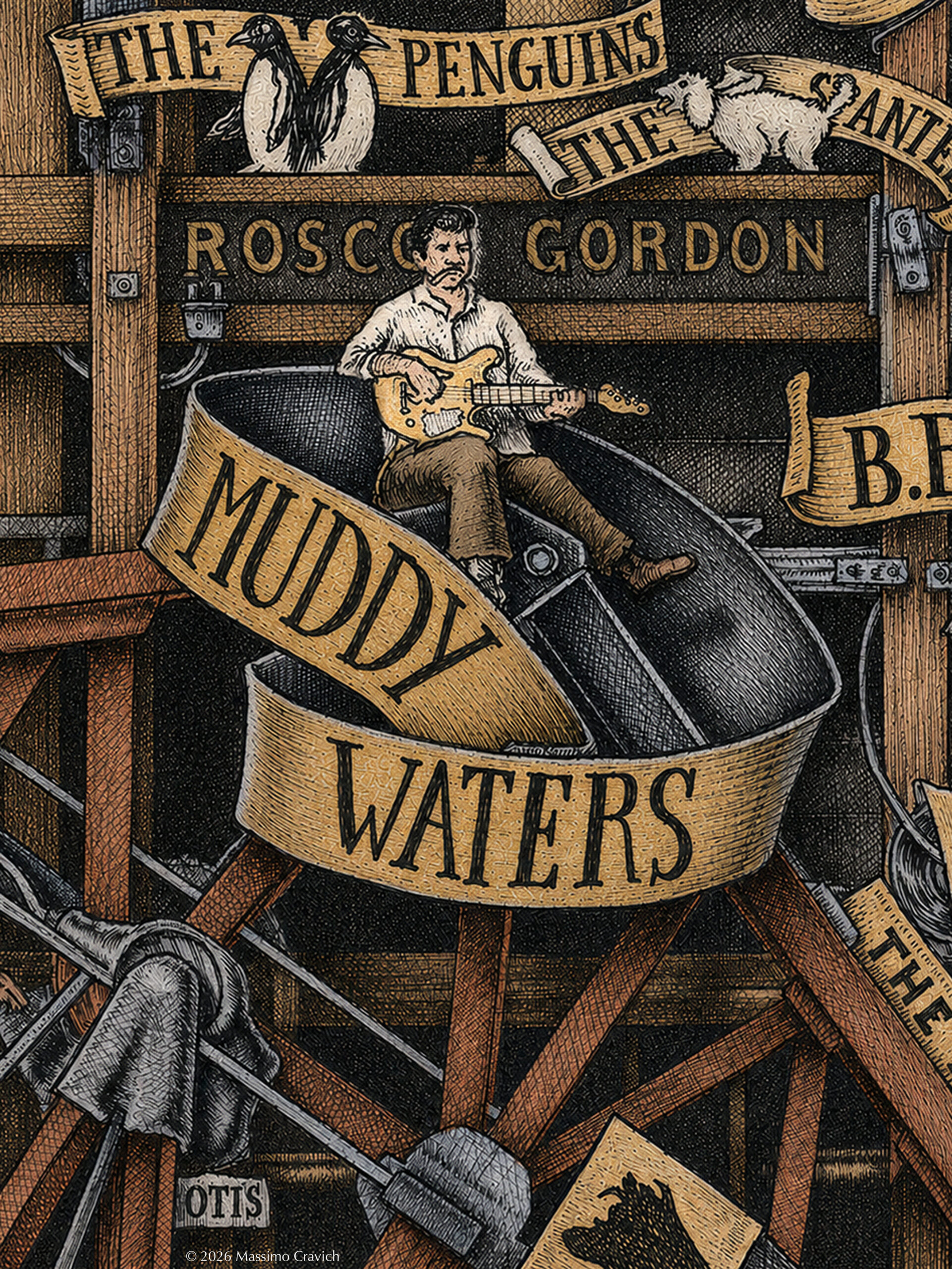
Rock Icons: Muddy Waters
From the Mississippi Delta to electric Chicago: a voice that changed blues and rock

American blues giant blending Delta tradition, electric Chicago blues and the foundations of modern rock music.
By transforming Delta blues into amplified urban electricity, Muddy Waters became one of the defining architects of modern blues and rock music. Muddy Waters brought Mississippi Delta blues into postwar electric Chicago, transforming a rural language into one of rock’s foundations. His commanding voice, slide guitar and work with musicians including Little Walter and Willie Dixon made his band a model. With songs including Hoochie Coochie Man, Mannish Boy and Got My Mojo Working, Muddy Waters made Chicago blues a crucial language for rhythm and blues and rock and roll.
Name: McKinley Morganfield
Birth: April 4, 1913 — Mississippi, USA
Died: April 30, 1983 — Illinois, USAork City, USA
Main instruments: vocals, slide guitar, harmonica
Genres: Chicago blues, Delta blues, electric blues
ARTIST OFFICIAL SITE: muddywatersfoundation.com
LISTEN
• I Just Want to Make Love to You
More to discover…
The Man Who Electrified the Delta
The Delta: music as the possibility of another life
McKinley Morganfield grew up in the Mississippi Delta, amid agricultural labor and racial segregation. His nickname, Muddy Waters, came from childhood; music gradually became a means of expression and independence. He listened to Son House and Robert Johnson, played harmonica and then guitar, and developed direct singing and slide guitar that retained the storytelling character of rural blues.
When Alan Lomax recorded him in 1941 and 1942 for the Library of Congress, Waters heard his own voice on record: a significant experience for a musician still outside the commercial recording industry.
Chicago: a band, a city and a new volume
Moving to Chicago in 1943, Waters entered an industrial city transformed by African American migration from the South. Amplification was not simply an artistic choice: musicians needed to be heard in noisy clubs. Recordings for Aristocrat, later Chess, and collaborations with Jimmy Rogers, Little Walter, Otis Spann and others gradually produced a band in which guitar, harmonica, piano and rhythm section answered one another. Willie Dixon supplied songs that became classics. Waters emerged as singer and leader, yet the power of the sound also came from his bandmates and from a competitive urban scene where collaboration and rivalry coexisted.
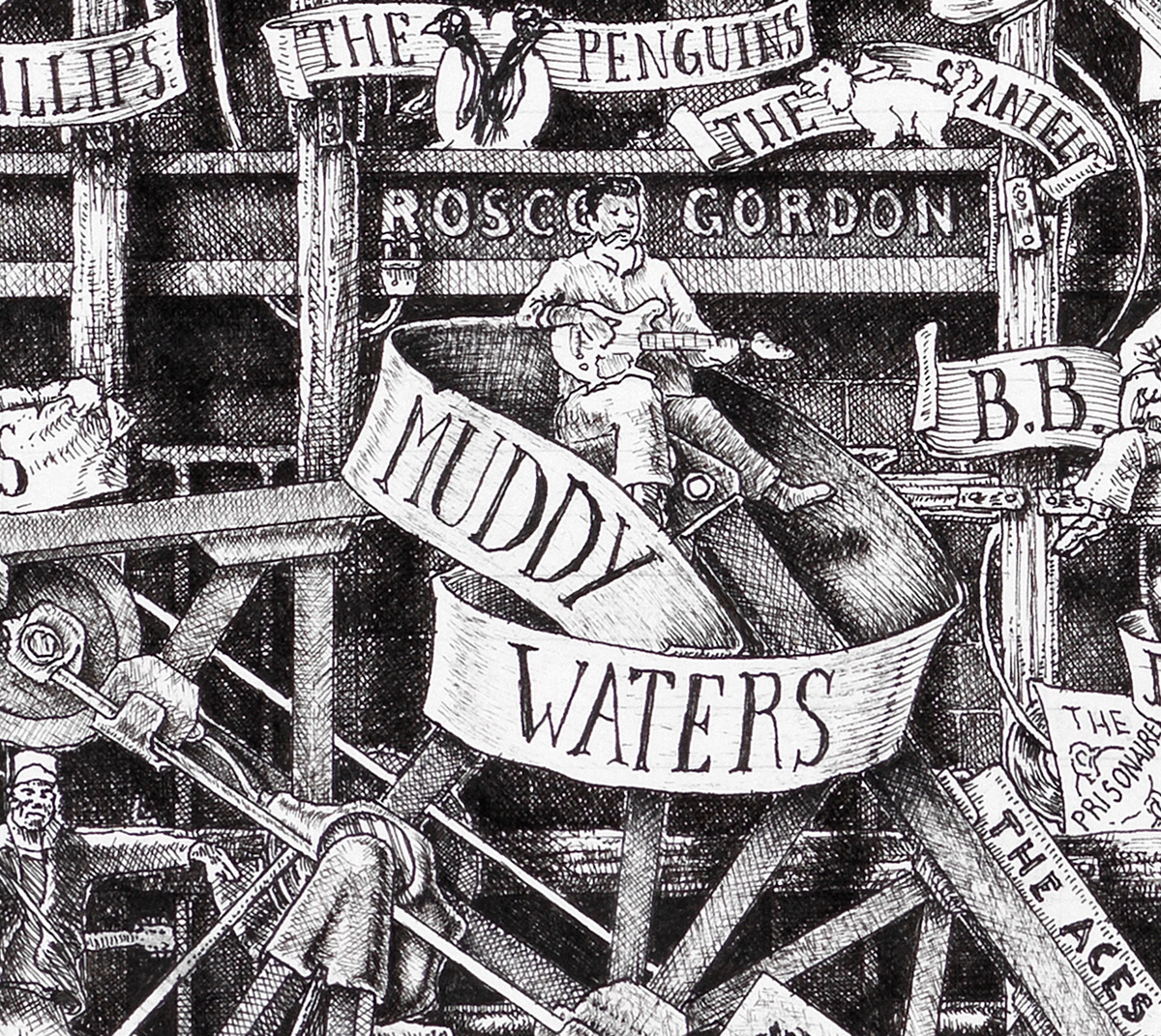
A bridge to rock without leaving blues behind
In the 1960s, British audiences rediscovered Waters and other American blues musicians. The Rolling Stones, Yardbirds and numerous blues-rock groups studied those records, often reshaping them with greater volume and different arrangements. The exchange was unequal at times: the African American artists who built this repertoire did not always receive the commercial rewards enjoyed by their rock successors.
Waters nevertheless kept performing and recording, gaining renewed attention with albums produced by Johnny Winter in the 1970s. His genealogy runs from Delta blues through urban migration and Chicago blues toward rhythm and blues, British rock and blues rock: technological change never entirely obscured the voice and human experience at its source.
Muddy Waters’s electric guitar, voice and collective band sound defined Chicago blues and deeply influenced the Rolling Stones, blues rock and the rock music of the 1960s. Songs such as Hoochie Coochie Man, Mannish Boy and Rollin’ Stone became defining landmarks of electric blues and modern rock genealogy.
Within The Great Rock and Roll History, Muddy Waters also represents the great African American migration from the South to industrial cities: changes in work, audiences and instruments reshaped music and helped establish rock’s social and sonic foundations.
Influenced by
- Son House
- Robert Johnson
- Delta blues
- Southern field hollers and work songs.
Influent For
- Rolling Stones
- Led Zeppelin
- Eric Clapton
- British Blues
- Hard rock and electric guitar culture
Related Artists
Howlin’ Wolf
Little Walter
Willie Dixon
Johnny Winter
SOURCES
Muddy Waters official archives
Blues Hall of Fame
Rock and Roll Hall of Fame
AllMusic
Library of Congress Alan Lomax archives
In rock genealogy, Muddy Waters connects rural Mississippi blues with the electric sound of Chicago. His legacy extends beyond riffs and repertoire: it includes the blues band as a collective organism, the expressive power of thevoice and the transmission of an African American tradition to generations of British and international rock musicians.