
Charley Patton, often called the father of Delta blues, turned the Mississippi plantation world into a musical stage: a rough voice, percussive guitar and stories moving between pain and provocation. In The Great Rock and Roll History, he is essential to understanding the roots of electric blues and, through it, rock and roll.
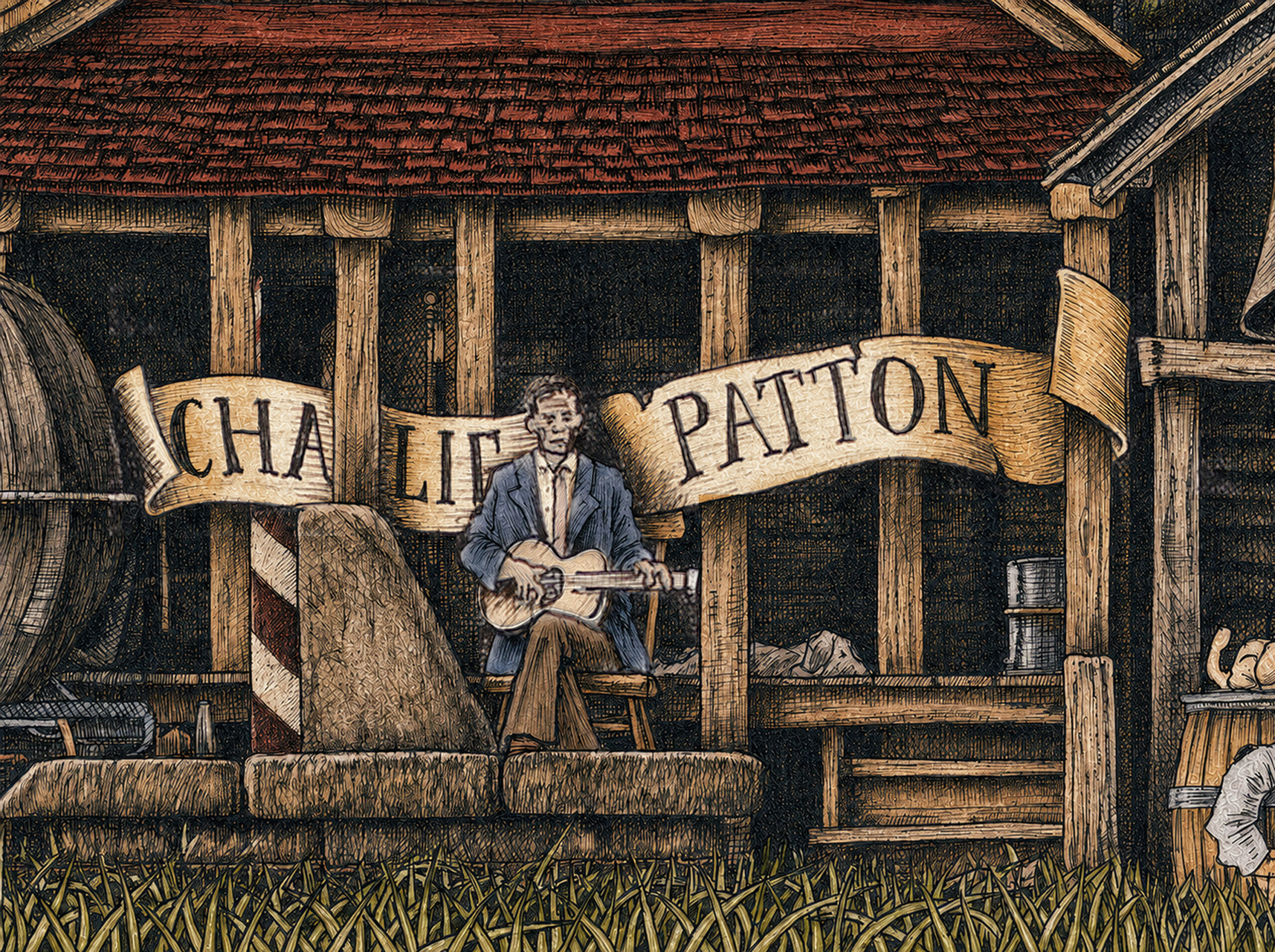
Rock Icons: Charlie Patton
A voice from the Delta, before the blues became legend.

From Dockery Farms to his Paramount recordings and his influence on Howlin’ Wolf, Charley Patton helped establish the language of Delta blues.
Name Charley Patton (also frequently spelled Charlie Patton)
Birth Probably April 1891 in Mississippi; precise date and place disputed
Death April 28, 1934, Indianola, Mississippi
Musical region Mississippi Delta, particularly the Dockery Farms area
Genres Delta blues, country blues, sacred songs and ballads
Instrument Vocals and acoustic guitar
First recordings 1929, for Paramount Records
ARTIST OFFICIAL SITE: No official site
LISTEN
High Water Everywhere (Parts 1 & 2)
Screamin’ and Hollerin’ the Blues
More to discover…
Dockery: the blues before records
We know less about Charley Patton than his reputation might suggest. Accounts are fragmentary, his birth date
remains uncertain, and even stories about his family background require caution. He grew up in Mississippi’s agricultural world, amid plantation labor, musical encounters and constant movement.
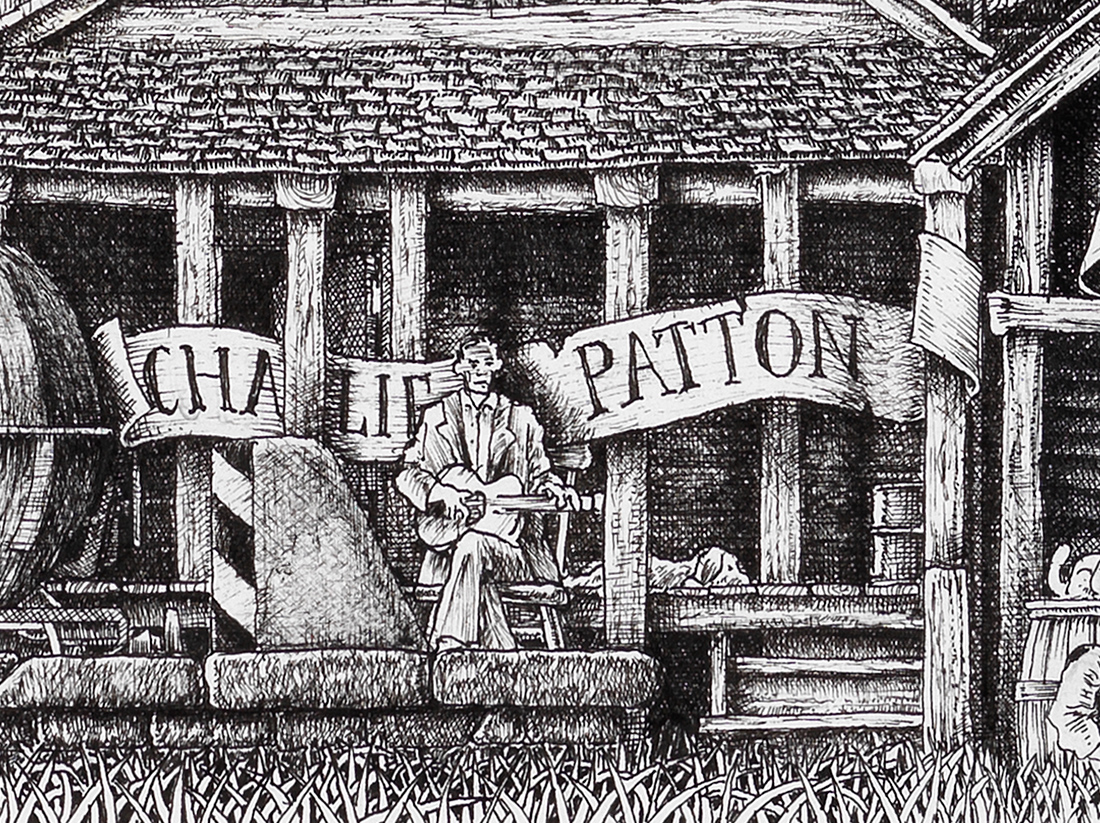
Around Dockery Farms, a crossroads of Delta musical culture, he absorbed work songs, ballads, dance music and religious traditions. His guitar was never merely accompaniment: it drove the beat, answered his voice and turned every performance into an exchange with the audience. Patton played wherever there were listeners and a chance to earn money: parties, makeshift venues, gatherings and juke joints.
The romantic image of the wandering bluesman, however, should not obscure an African American community confronting segregation, poverty and racial violence.
A man who could not fit into three minutes
Witnesses described Patton as a magnetic entertainer who played guitar behind his back, struck it like a drum and commanded noisy rooms with his powerful, abrasive voice. He also acquired a turbulent reputation: complicated relationships, drinking and conflict recur in recollections of his life. Not every anecdote needs to become established fact to understand the importance of his stage presence.
His Paramount recordings, begun in 1929, had to compress a repertoire built for whole evenings into a few minutes. Pony Blues captures his rhythmic drive; Screamin’ and Hollerin’ the Blues conveys the almost physical urgency of his singing. Technically imperfect and often surviving only in noisy copies, these records offer precious glimpses of an artist who belonged above all to live performance.
High water, land and people
In 1929 Patton recorded High Water Everywhere, one of the most remarkable musical accounts of the catastrophic 1927 Mississippi flood. It is more than reportage: rising water becomes an experience of collective fear and inequality. His repertoire also embraced local events, desire, rivalry and spirituality. The boundary between blues and sacred music, often sharply drawn by later histories, was far less rigid in his world.
His artistic relationships were equally complex. Willie Brown was an important musical companion; Son House entered Patton’s circle in his later years. Bertha Lee, his partner and a singer, joined him on some of his final recordings. Behind the solitary bluesman myth stands a network of people, places and relationships without which this music would not have carried the same force.
The legacy: a lineage reaching rock
Patton died in 1934, shortly after his final recording sessions. He never experienced the mass popularity his influence would help make possible. Howlin’ Wolf remembered Patton as a crucial model: the future electric blues singer’s forceful voice and theatrical presence reveal a deep continuity.
Robert Johnson and many other Delta musicians also worked within a musical environment shaped by Patton, although shared traditions are a sounder explanation than crediting one man with every innovation. As blues was amplified in Chicago and later inspired British bands in the 1960s, part of that impulse reached rock music.
Patton did not single-handedly invent Delta blues. He was one of its most formidable interpreters, giving lasting shape to a musical culture the recording industry had only just begun to document.
Charley Patton’s rhythmic force and theatrical delivery anticipated vital aspects of electric blues, leaving an imprint that would eventually reach rock music.
In the illustrated genealogy of The Great Rock and Roll History, Patton stands near the roots of the route from the Delta to urban blues and rock: not a single isolated origin, but a decisive figure within a collective tradition.
Influenced by
- Delta vocal and guitar traditions
- African American work songs
- Traditional ballads
- African American sacred music
Influent For
- Howlin’ Wolf
- Son House
- Robert Johnson (shared musical environment)
- Muddy Waters
- John Lee Hooker
Related Artists
Willie Brown
Bertha Lee
Tommy Johnson
Skip James
Bukka White
Get Your Rock Icon
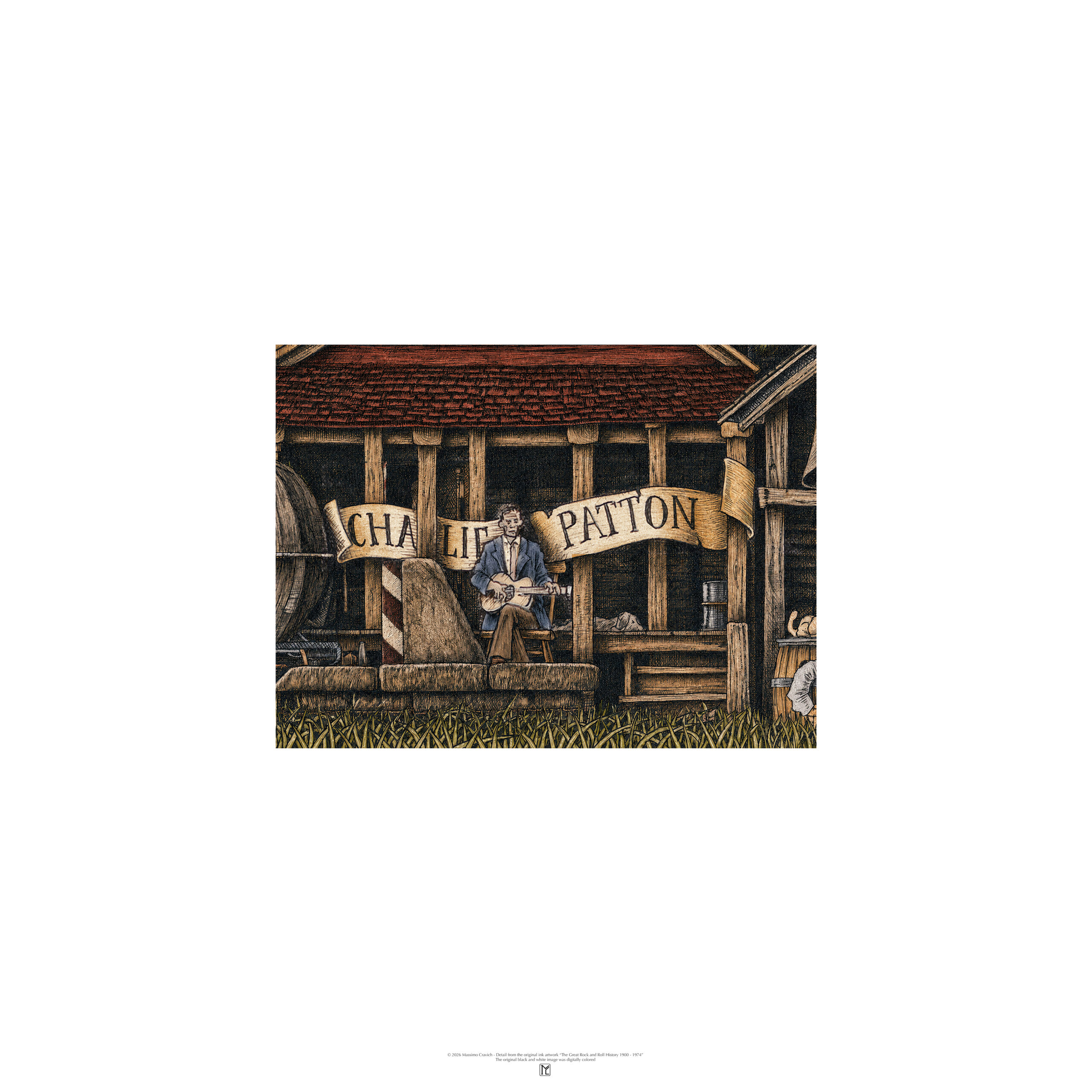
Selected artworks from Rock Icons and Stories are available as high-quality framed art prints. Printed on premium 230 gsm matte paper with excellent detail and colour reproduction, each print is professionally framed and delivered ready to hang.A carefully selected, high-quality alternative to the museum-grade Fine Art Giclée editions, offering an accessible way to own and display a reproduction of the original artwork. Printing, framing and worldwide fulfilment are handled by our specialist printing partner.

SOURCES
Smithsonian Folkways – Charley Patton: https://folkways.si.edu/
Encyclopaedia Britannica – Charley Patton: https://www.britannica.com/biography/Charley-Patton
Library of Congress – National Recording Registry: https://www.loc.gov/programs/national-recording-preservation-board/recording-registry/
Charley Patton remains indispensable to the history of Delta blues: a restless performer, a storyteller of his community and an artist of extraordinary rhythmic power. His surviving recordings are few compared with the musical life they suggest, yet they still carry the sound of a world from which many of the great transformations of blues and rock would emerge.