
Woody Guthrie was an American folk songwriter, a foundational figure of modern social song and one of the great spiritual fathers of the American singer-songwriter tradition. His music transformed migration, poverty, labor, antifascism and collective memory into a direct, narrative and still powerful musical language.
This illustrated profile explores his voice, political legacy and role in the birth of modern songwriting within The Great Rock and Roll History, a large-scale illustrated timeline of modern music.
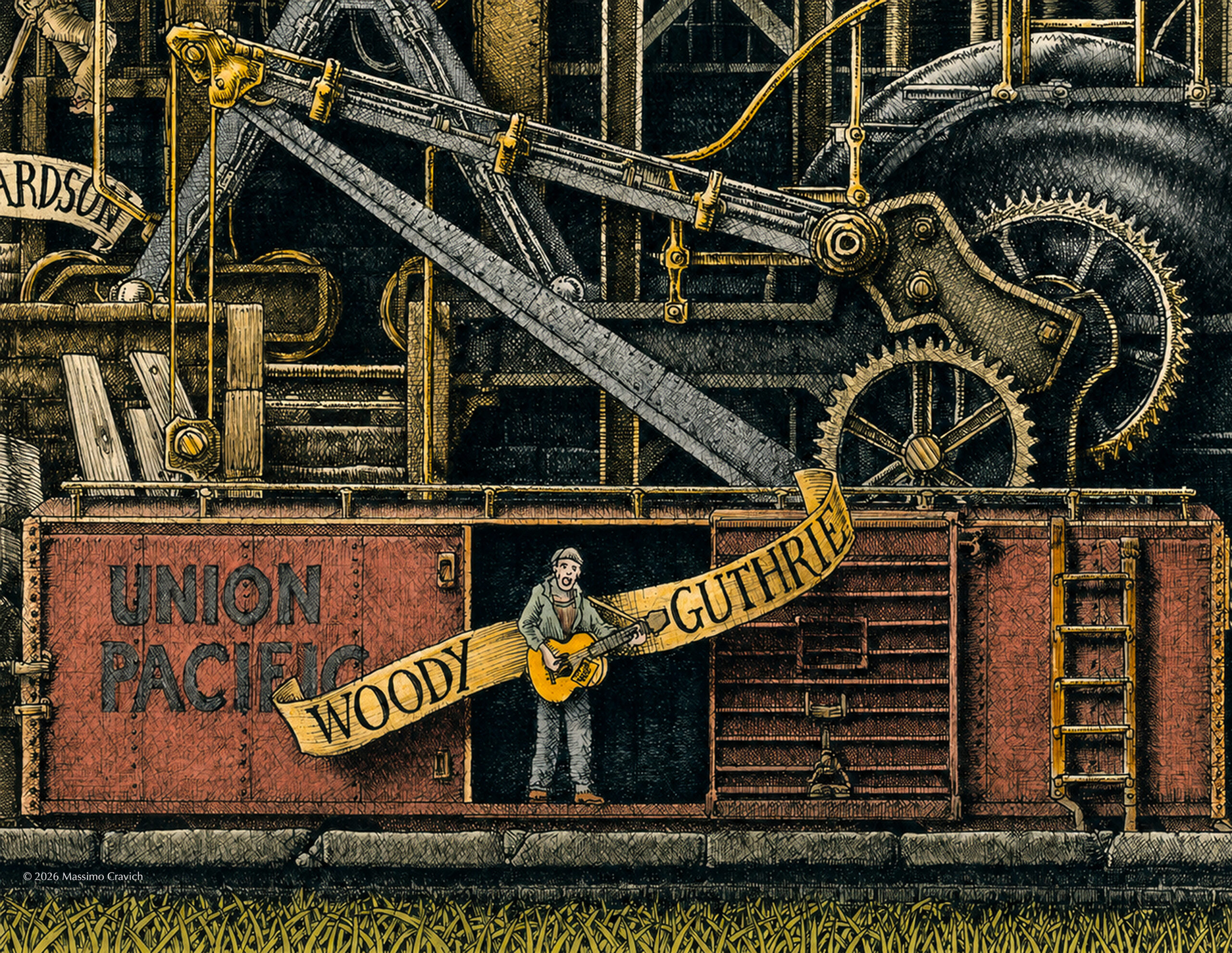
Rock Icons: Woody Guthrie

Dust Bowl troubadour, poet of migrants, union singer and spiritual father of modern American protest song.
By combining traditional folk, narrative balladry, social protest and American vernacular language, Woody Guthrie helped define the modern form of political song and folk songwriting.
Name: Woodrow Wilson Guthrie
Birth: July 14, 1912 – Okemah, Oklahoma, USA
Died: October 3, 1967, New York City, USA
Main instruments: vocals, guitar, harmonica, mandolin, occasional fiddle
Genres: folk, American folk, protest song, Dust Bowl ballads, country folk, children’s songs
ARTIST OFFICIAL SITE: woodyguthrie.org
LISTEN
So Long, It’s Been Good To Know Yuh
Deportee (Plane Wreck At Los Gatos)
More to discover…
The invisible foundation of modern American song
Woody Guthrie was not merely a folk singer. He was a kind of moral infrastructure for American music: a rough, ironic, migrant voice full of dust and anger, capable of turning popular song into social reportage. Before him, many ballads narrated events, heroes, disasters and love stories. With Guthrie, the ballad also became a political tool, a travel diary, a working-class newsreel and a cultural weapon.
His importance within a history of rock may seem indirect only to those who see rock as a mere sequence of electric guitars. In reality, Guthrie is under the floorboards. Without him, Bob Dylan, Phil Ochs, Bruce Springsteen, Joe Strummer, Billy Bragg, Ani DiFranco and a long line of artists who used song to speak about labor, injustice, war, migration, identity and collective memory become much harder to understand.
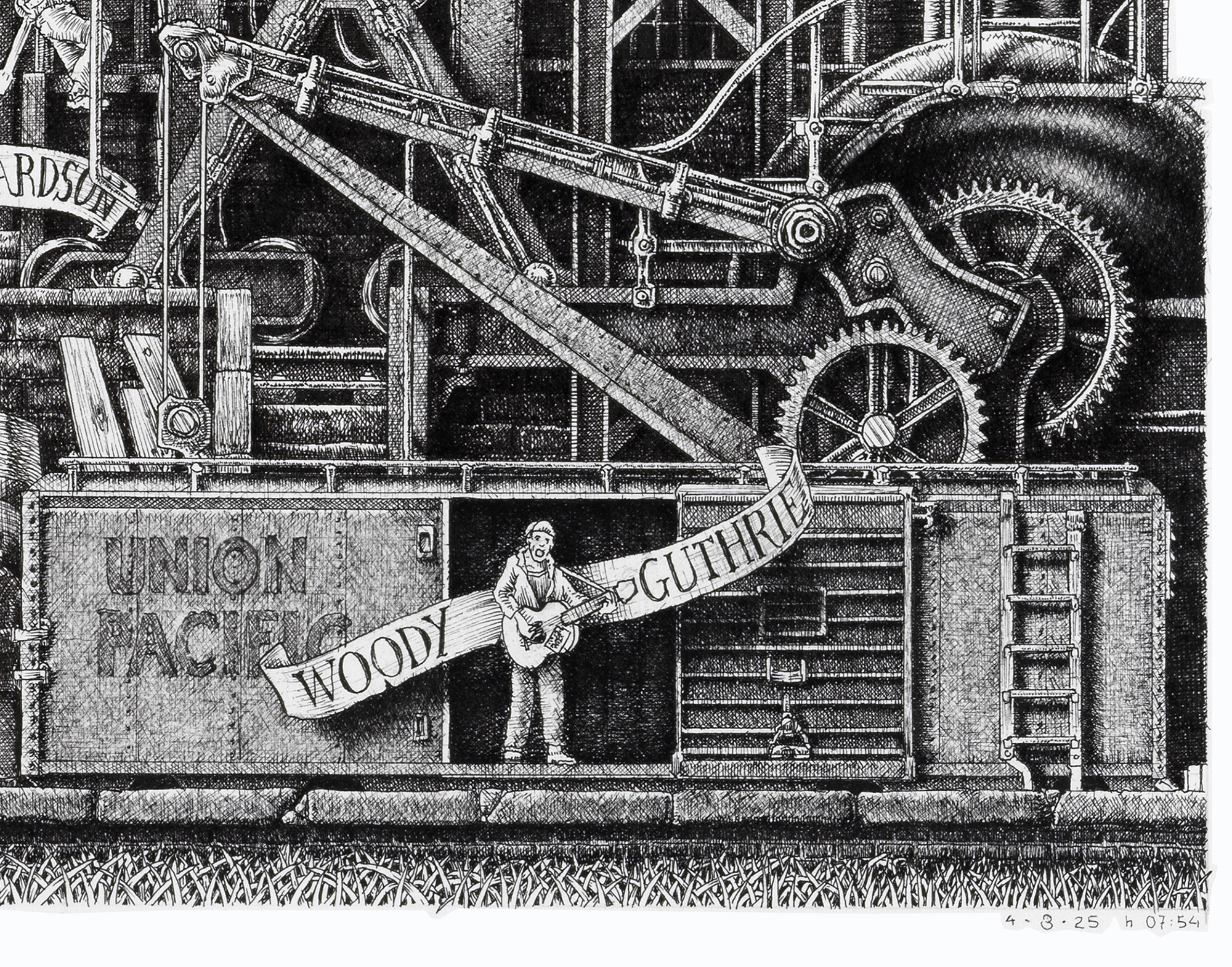
His visual power is equally strong: the guitar bearing the words This Machine Kills Fascists, the hat, the carved face, the posture of a traveler without a fixed homeland. Guthrie did not manufacture a persona. He became a symbol because his life already resembled a ballad, with family fires, poverty, freight trains, migrant camps, local radio, unions, merchant ships, hospitals and archives filled with songs left behind like seeds.
Albums such as Dust Bowl Ballads became milestones of American folk music, connecting personal experience, mass migration and political storytelling in a form that would influence the entire modern singer-songwriter tradition.
Songs such as This Land Is Your Land and Pastures Of Plenty became essential references in American folk music, protest song and twentieth-century songwriting.
His music occupies a foundational position within the visual narrative of The Great Rock and Roll History.
Influenced by
- Anglo-American traditional ballads
- The Carter Family
- Jimmie Rodgers
- Rural American gospel and hymnody
- Oral culture of migrant workers and labor unions
Influent For
- Bob Dylan
- Pete Seeger
- Phil Ochs
- Bruce Springsteen
- Billy Bragg and the contemporary folk-punk/protest tradition
- Jerry Jeff Walker
Related Artists
Pete Seeger
Billy Bragg / Wilco
Get Your Rock Icon
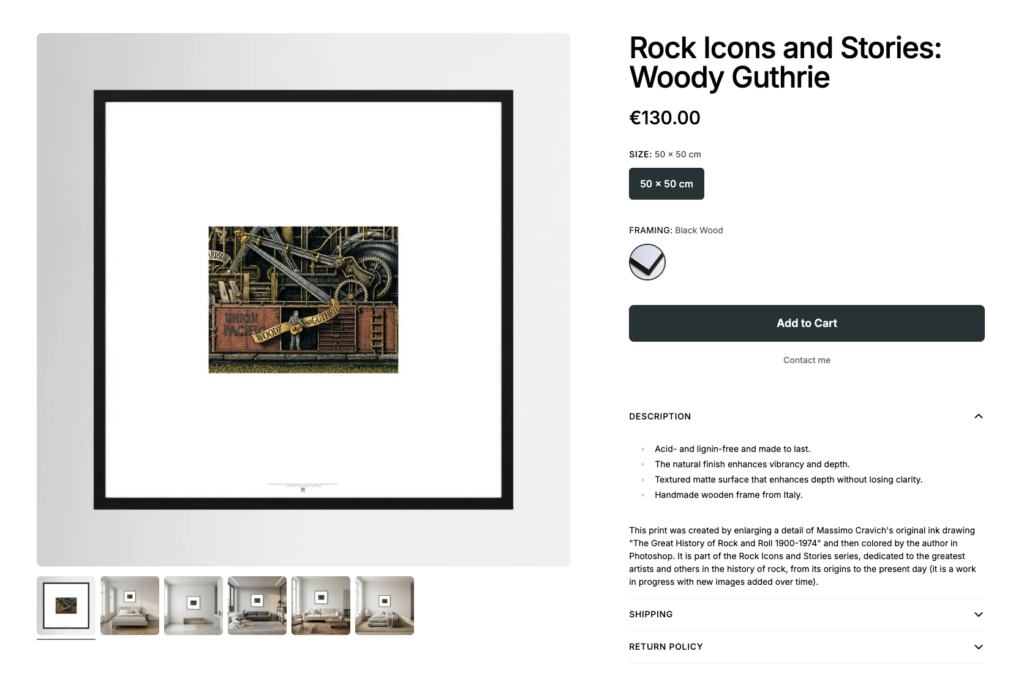
Selected artworks from Rock Icons and Stories are available as high-quality framed art prints. Printed on premium 230 gsm matte paper with excellent detail and colour reproduction, each print is professionally framed and delivered ready to hang.A carefully selected, high-quality alternative to the museum-grade Fine Art Giclée editions, offering an accessible way to own and display a reproduction of the original artwork. Printing, framing and worldwide fulfilment are handled by our specialist printing partner.

LINKABLE SOURCES
Woody Guthrie Official Website – https://woodyguthrie.org
Woody Guthrie Center – https://woodyguthriecenter.org
Rock & Roll Hall of Fame, Woody Guthrie – https://rockhall.com/inductees/woody-guthrie/
Library of Congress, Dust Bowl Ballads – https://blogs.loc.gov/nls-music-notes/2022/07/song-stories-woody-guthries-dust-bowl-ballads
Kennedy Center, This Land Is Your Land – https://www.kennedy-center.org/education/resources-for-educators/classroom-resources/media-and-interactives/media/music/story-behind-the-song/the-story-behind-the-song/this-land-is-your-land/
Within the broader history of American music, Woody Guthrie represents one of the foundational figures of modern folk music, protest song and the songwriter tradition that would deeply influence rock.
His legacy extends through Bob Dylan, Bruce Springsteen, the folk revival, political punk and every form of popular song that uses a plain voice to speak about justice, labor, migration and human dignity.