
Arlo Guthrie was one of the most ironic, unconventional and culturally important figures of post-Dylan American folk music, a songwriter capable of blending surreal storytelling, political satire, folk tradition and hippie counterculture into a deeply American artistic language.
This illustrated profile explores his music, narrative imagination and cultural impact within The Great Rock and Roll History, a large-scale illustrated timeline of modern music.

Rock Icons: Arlo Guthrie
Rebellious storyteller suspended between political folk, American absurdity and hippie anarchism.
By combining traditional folk music, political satire and surreal storytelling, Arlo Guthrie helped redefine the role of the American songwriter during the counterculture era of the 1960s and 1970s.

Real name: Arlo Davy Guthrie
Born: July 10, 1947 — Brooklyn, New York, USA
Status: active
Instruments: vocals, guitar, harmonica
Genres: folk, folk rock, protest song, americana
ARTIST OFFICIAL SITE: arlo.net
LISTEN
More to discover…
The man who transformed protest folk into absurd American theater
Arlo Guthrie occupies a strange and fascinating place within American folk history. As the son of Woody Guthrie, one of the sacred figures of American protest music, he could easily have become merely respectful continuation of tradition. Instead he created something entirely personal. His music blended satire, surrealism, everyday absurdity and ironic observation of contemporary America.
Rather than preaching rigid ideologies, Arlo Guthrie narrated the human chaos of counterculture with anarchic humor and disenchanted warmth. This transformed his work into something very different from the more solemn political folk music of the 1960s. For this reason heremains one of the great eccentric storytellers of American music. Songs such as Alice’s Restaurant Massacree and City Of New Orleans remain defining masterpieces of narrative American folk music.
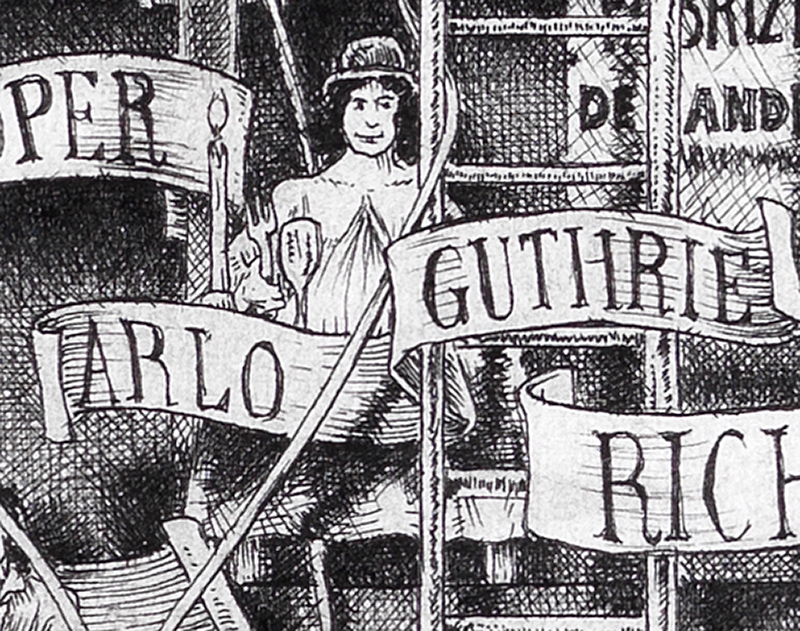
His music occupies a fundamental place within the folk genealogy explored in The Great Rock and Roll History
Influenced by
- Woody Guthrie
- Traditional American folk
- Beat generation
- Bob Dylan
- Hippie counterculture
Influent For
- Modern folk storytelling
- Contemporary americana
- John Prine
- Satirical American folk
- Narrative songwriting
About Arlo…
1) Growing up as Woody Guthrie’s son
Growing up as Woody Guthrie’s son meant living beside one of the great moral and political symbols of American folk music. For Arlo this legacy became both enormous privilege and nearly impossible burden.
2) Counterculture and gentle anarchism
During the 1960s Arlo Guthrie fully entered American counterculture. Unlike many more rigid activists, however, his artistic approach remained deeply ironic, human and anti-authoritarian.
3) Alice’s Restaurant and surreal masterpiece
“Alice’s Restaurant Massacree” remains one of the strangest and most brilliant works in American folk history. The long surreal monologue begins with illegal garbage dumping but gradually evolves into gigantic satire about bureaucracy, militarism and American paranoia.
4) Rejecting the Vietnam War
One central aspect of “Alice’s Restaurant” involves Guthrie’s refusal of military draft during the Vietnam era. Behindthe comedy existed precise and devastating political criticism.
5) Festivals, marijuana and hippie chaos
Arlo Guthrie quickly became beloved figure within hippie culture. Festivals, marijuana, communal living and psychedelic travel entered constantly into his artistic life.
6) Woodstock and counterculture mythology
His Woodstock appearance permanently solidified his public image. His relaxed humor and human warmth perfectly represented the gentler side of American hippie culture.
7) Coming Into Los Angeles and airport paranoia
“Coming Into Los Angeles” became ironic anthem of American anti-drug paranoia. The song constantly played withambiguity between satire and provocation.
8) City Of New Orleans and American melancholy
With “City Of New Orleans,” Guthrie revealed much more poetic and nostalgic dimensions of his artistry. The trainjourney becomes metaphor for changing American identity itself.
9) Spirituality and alternative lifestyles
Throughout his life Guthrie developed strong interests in spirituality, community living and nontraditional lifestyles. This further strengthened his image as gentle outsider of American music.
10) Arlo Guthrie as absurd narrator of America
Arlo Guthrie’s historical greatness lies in transforming protest folk into something more human, ironic and narratively sophisticated. His songs do not simply discuss politics: they explore the absurdity of modern American experience itself. That is why he remains one of the most beloved and unique figures in folk music history.
Related Artists
Pete Seeger
John Prine
Phil Ochs
Key sources
Official Arlo Guthrie archives
American folk archives
Woodstock historical archives
Counterculture archives
Within the broader history of American folk music, Arlo Guthrie represents one of the most ironic, narrative-driven and culturally important figures of the counterculture era. His work permanently reshaped the relationship between folk storytelling, political satire and hippie American imagery.