
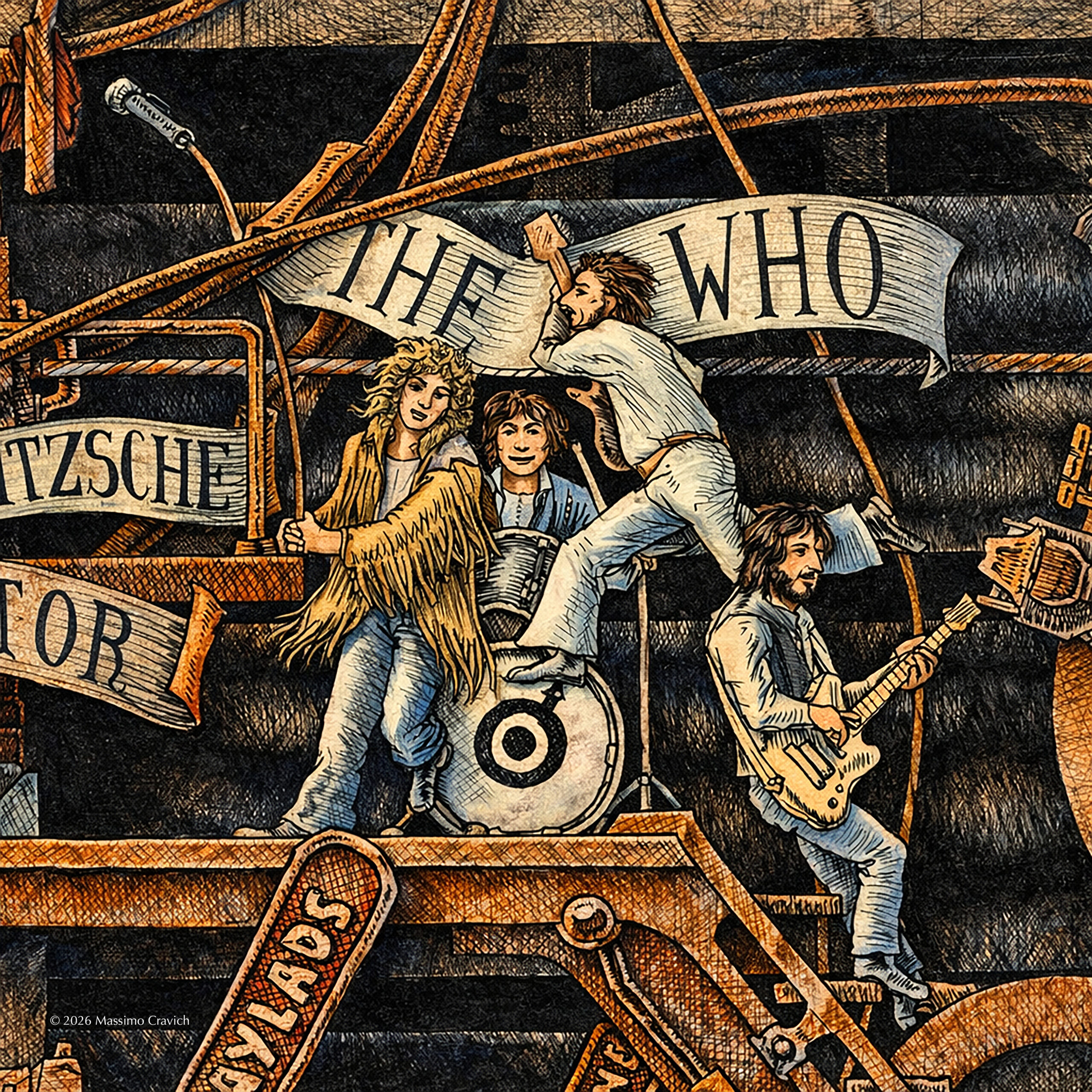
The Who were one of the defining bands of British rock, transforming rhythm & blues, Mod culture, pop art, feedback and stage violence into a musical language that anticipated hard rock, punk, power pop and the narrative ambition of the rock opera. This illustrated profile explores The Who’s sound, internal tensions and enormous influence within The Great Rock and Roll History , following their path from My Generation to Tommy, Who’s Next and Quadrophenia.

Rock Icons: The Who
Four personalities in collision
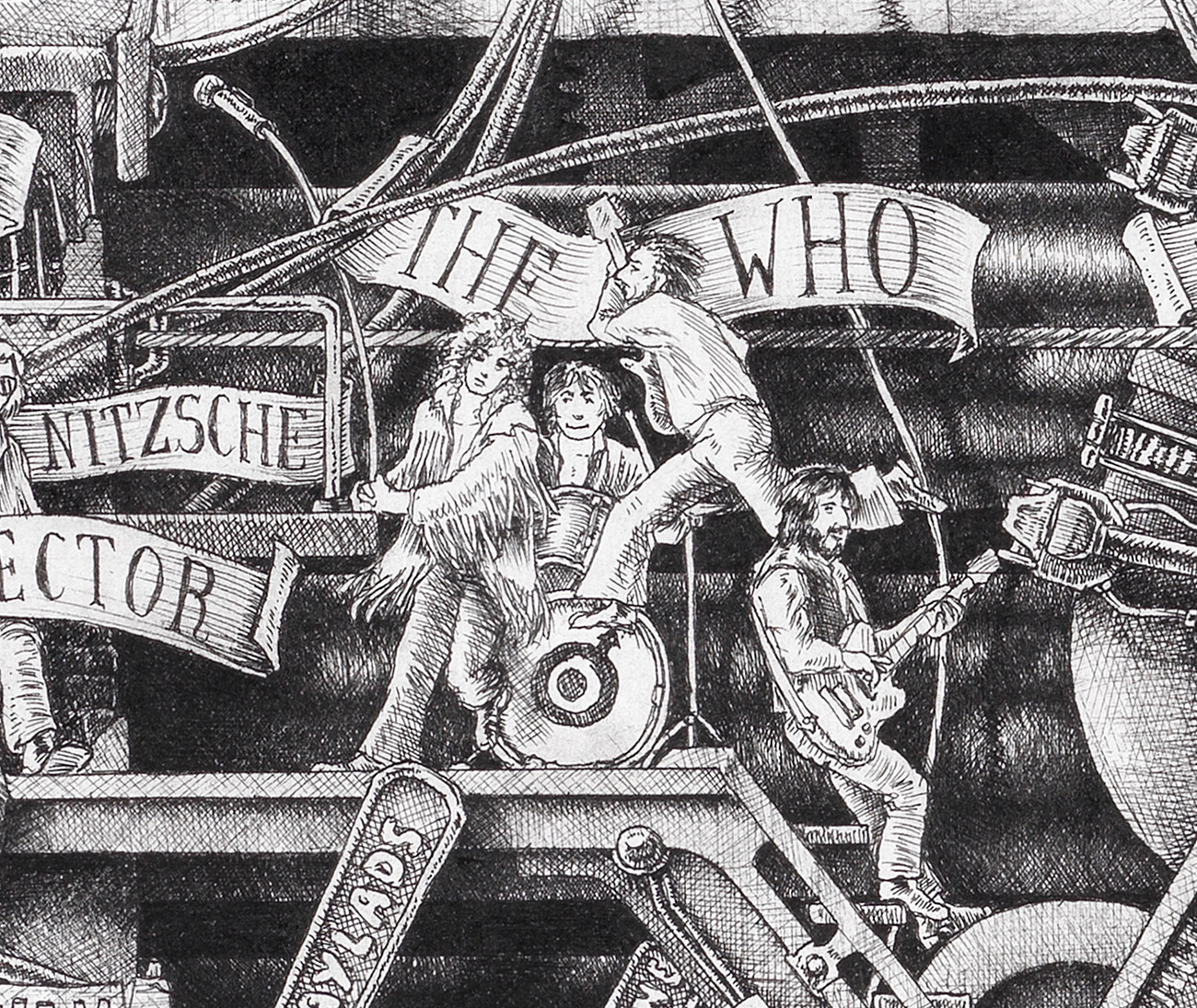
Townshend’s guitar, Daltrey’s voice, Entwistle’s bass and Moon’s drums turned chaos into one of rock’s most powerful architectures.
From London’s Mod scene and early-1960s rhythm & blues to rock opera and the synthesizers of Who’s Next, The Who radically expanded the language of the rock band, influencing hard rock, punk, power pop and later forms of conceptual rock.
Founded: 1964, London (UK)
Status: In activity
Genres: Rock, Hard Rock
Classic period 1964-1978
Classic core: Pete Townshend, Roger Daltrey, John Entwistle, Keith Moon
ARTIST OFFICIAL SITE: www.thewho.com
LISTEN
More to discover…
From Mod to the future: the band that turned conflict into rock
The Who emerged from Mod London, but from the beginning they were too restless to remain confined to that scene. Their early language drew on American rhythm & blues, soul and the energy of British singles, yet Pete Townshend quickly transformed those roots into something more aggressive and conceptual. ‘My Generation’ was not merely a generational anthem: John Entwistle’s lead-like bass, Keith Moon’s explosive drums, Roger Daltrey’s stuttering vocal and Townshend’s guitar sounded like four forces simultaneously trying to drive the song.
From that conflict came a defining feature of The Who: every instrument could behave like a lead voice without destroying the whole. Noise itself became musical material. Feedback, Marshall amplification, power chords and instrument destruction turned the rock concert into physical theatre, yet behind the violent image Townshend was developing increasingly sophisticated writing.
The Who Sell Out used commercials and jingles as a pop-art framework; Tommy brought extended narrative into the center of rock culture and helped popularize the idea of the rock opera. The Who thusdemonstrated that a band capable of almost proto-punk brutality could simultaneously think in terms of characters, recurring themes and album-scale architecture.
With the unfinished Lifehouse project and then Who’s Next, Townshend introduced electronic sequences and synthesizers not as decoration but as rhythmic structure: ‘Baba O’Riley’ and ‘Won’t Get Fooled Again’ opened a new relationship between technology and rock power. Quadrophenia returned to Mod roots, transforming them into memory, identity and social conflict. The Who’s genealogy is therefore exceptionally broad: their force anticipates hard rock; their urgency, frustration and destructive aesthetic feed punk; open chords and melody influence power pop; extended narrative leaves a mark on progressive and conceptual rock. Few bands projected so many different futures at once.
Rock Icons: The Who
Songs such as My Generation, I Can See for Miles, Pinball Wizard, Baba O’Riley and Won’t Get Fooled Again, together with albums including Tommy, Who’s Next and Quadrophenia, place The Who among the major innovators of British rock.
Within The Great Rock and Roll History, The Who occupy an exceptional crossroads: R&B; and soul feed Mod culture; Mod evolves into harder and more spectacular rock; feedback and power chords anticipate hard rock and punk, while rock opera, concept albums and electronic technology open paths toward art rock and progressive rock.
Influenced by
- James Brown
- Bo Diddley
- Eddie Cochran
- The Kinks
- American rhythm & blues and soul
Influent For
- Queen
- The Clah
- Sex Pistols
- Led Zeppelin
- Pearl Jam
- U2
Related Artists
Small Faces
The Yardbirds
Cream
The Jam
Get Your Rock Icon
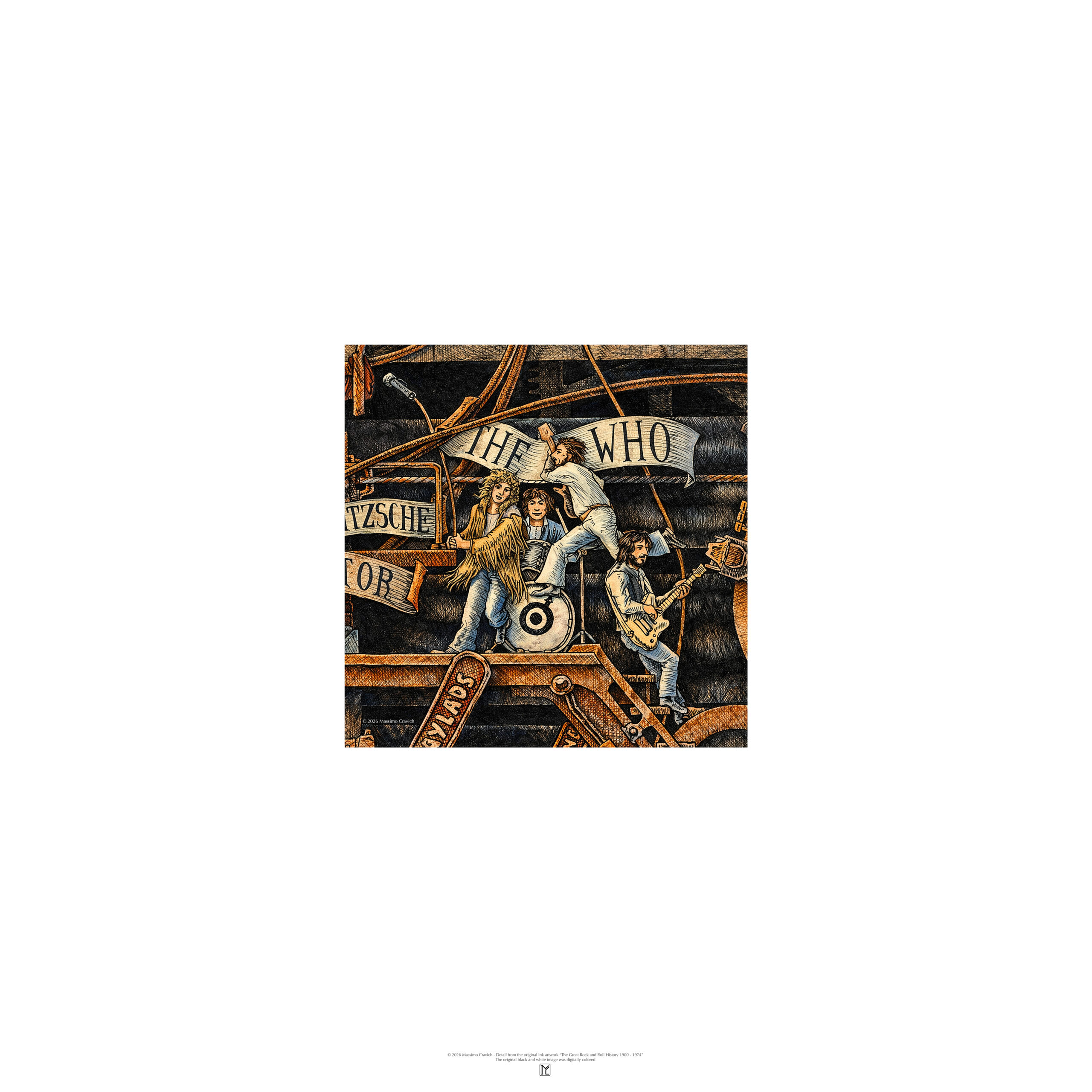
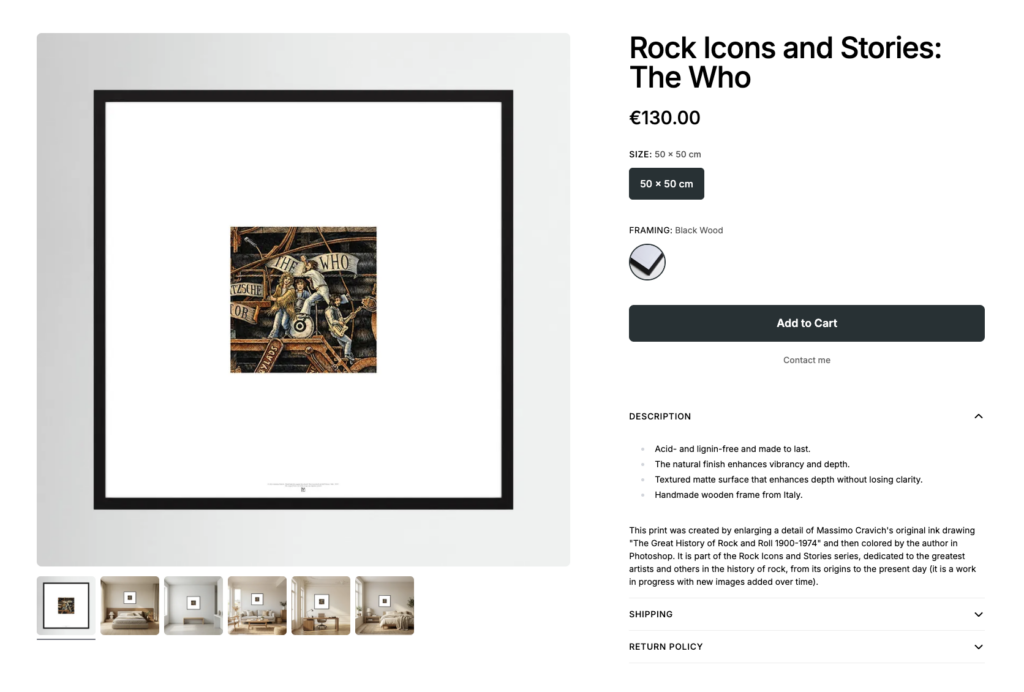
Selected artworks from Rock Icons and Stories are available as high-quality framed art prints. Printed on premium 230 gsm matte paper with excellent detail and colour reproduction, each print is professionally framed and delivered ready to hang.A carefully selected, high-quality alternative to the museum-grade Fine Art Giclée editions, offering an accessible way to own and display a reproduction of the original artwork. Printing, framing and worldwide fulfilment are handled by our specialist printing partner.
SOURCES
• The Who – official website and archive: thewho.com
• Rock & Roll Hall of Fame – The Who, inducted 1990
• Pete Townshend, Who I Am, HarperCollins, 2012.
• Richard Barnes, The Who: Maximum R&B;.
• Andy Neill and Matt Kent, Anyway Anyhow Anywhere: The Complete Chronicle of The Who.
In rock history, The Who represent a rare combination of physical force and formal ambition. They transformed rhythm & blues and Mod culture into a personal language of feedback, power chords, rhythmic virtuosity, narrative and electronic experimentation. Their legacy runs through hard rock, punk, power pop, progressive and conceptual rock, making them one of the crucial genealogical junctions in British music.