
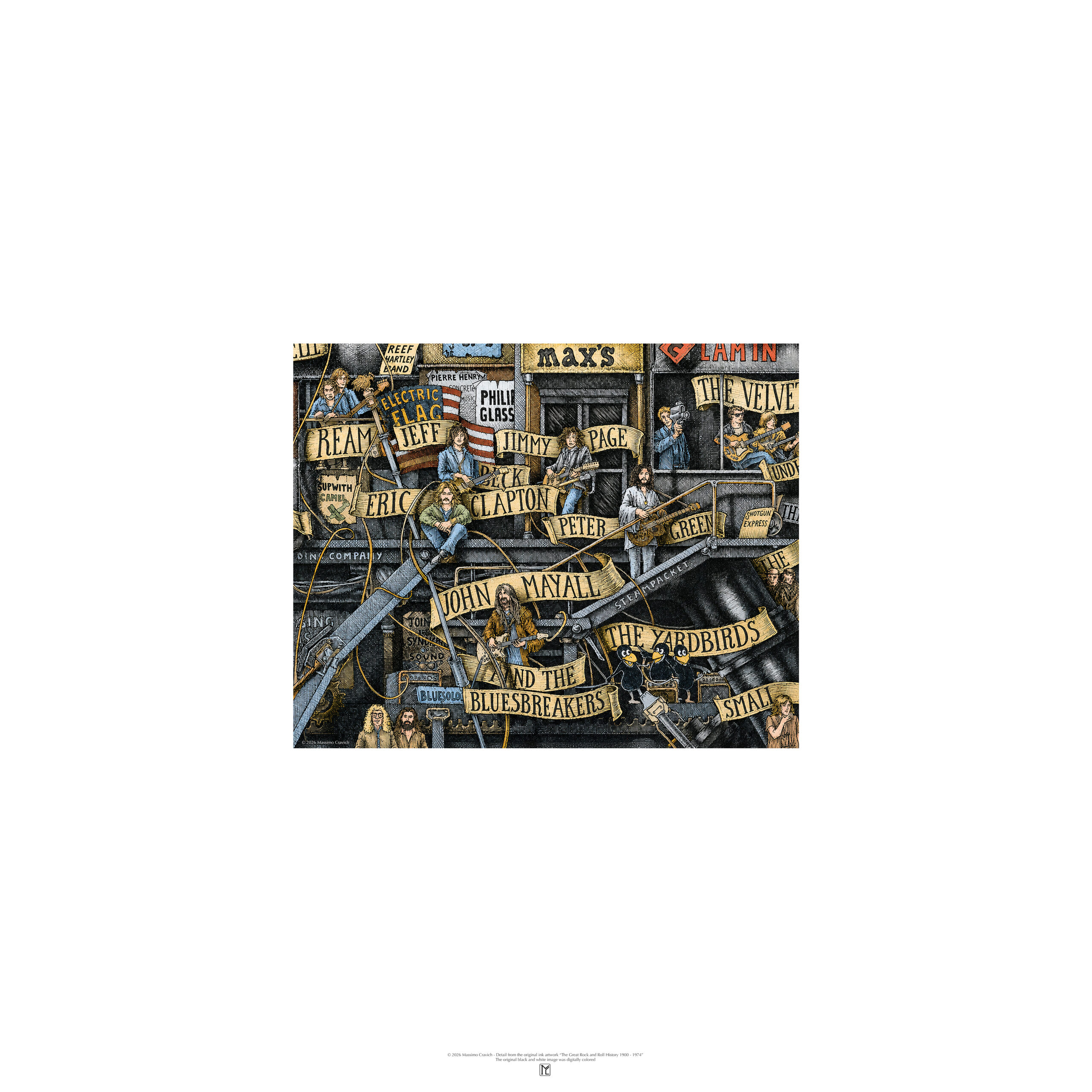
Eric Clapton stands at several defining crossroads in rock history: the Yardbirds, John Mayall’s Bluesbreakers, Cream, Blind Faith and Derek and the Dominos. This Great Rock and Roll History profile follows the English guitarist who transformed his love of African American blues into a recognizable rock language, without separating his musical achievements from the contradictions of his life.

Rock Icons: Eric Clapton
The guitar, the blues and a lifelong search for belonging.

From London’s British blues scene to Layla and 461 Ocean Boulevard, Eric Clapton moved through legendary bands, troubled friendships and personal turning points that shaped rock history.
Full name Eric Patrick Clapton
Born March 30, 1945, Ripley, Surrey, England
Instruments Guitar, vocals
Genres Blues rock, British blues, rock, roots rock
Key bands Yardbirds, John Mayall’s Bluesbreakers, Cream, Blind Faith, Derek and the Dominos
Collaborators Duane Allman, George Harrison, B.B. King, J.J. Cale, Steve Winwood
ARTIST OFFICIAL SITE: www.ericclapton.com
LISTEN
Hideaway — John Mayall & the Bluesbreakers
I Shot the Sheriff — Eric Clapton
More to discover…
An English boy searches for his voice in the blues
Growing up in Ripley, Clapton discovers as a child that the people he thought were his parents are actually his grandparents: a family rupture that contributes to the alienation he later describes in his autobiography.
The guitar becomes both discipline and refuge. He studies records by Robert Johnson, Muddy Waters and Freddie King obsessively, finding in their intensity a way to express difficult emotions. In the Yardbirds, however, the group’s commercial ambitions collide with his blues purism: he leaves after the pop success of For Your Love.
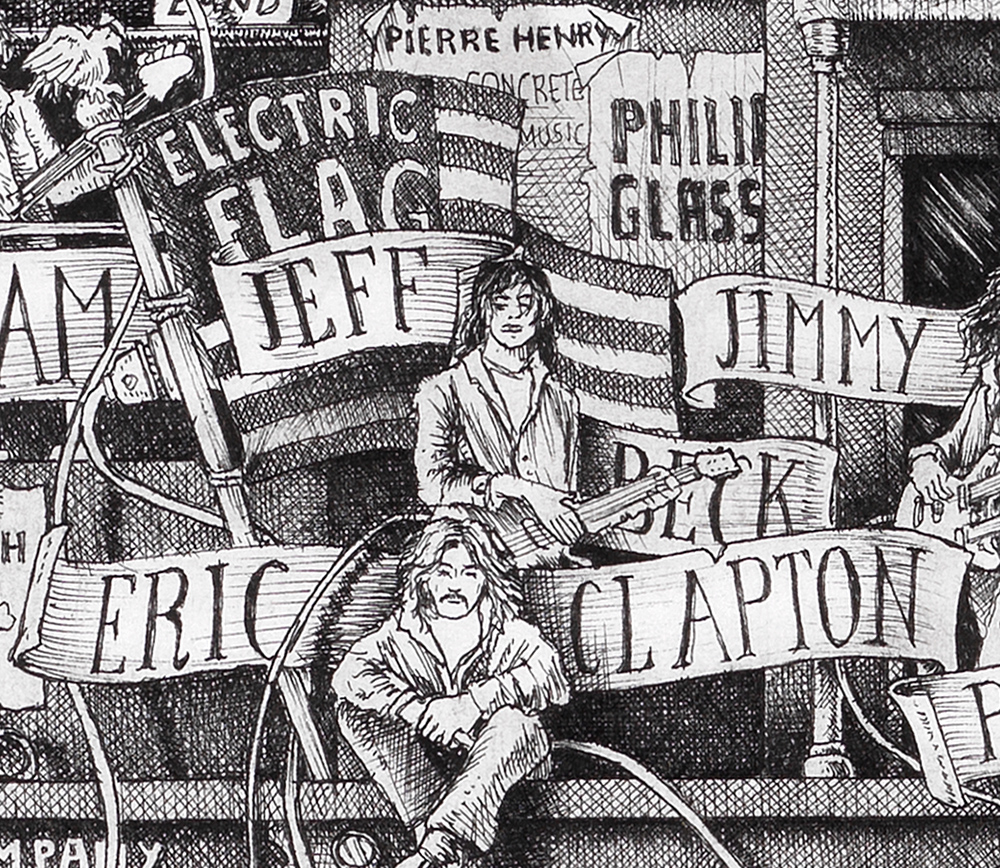
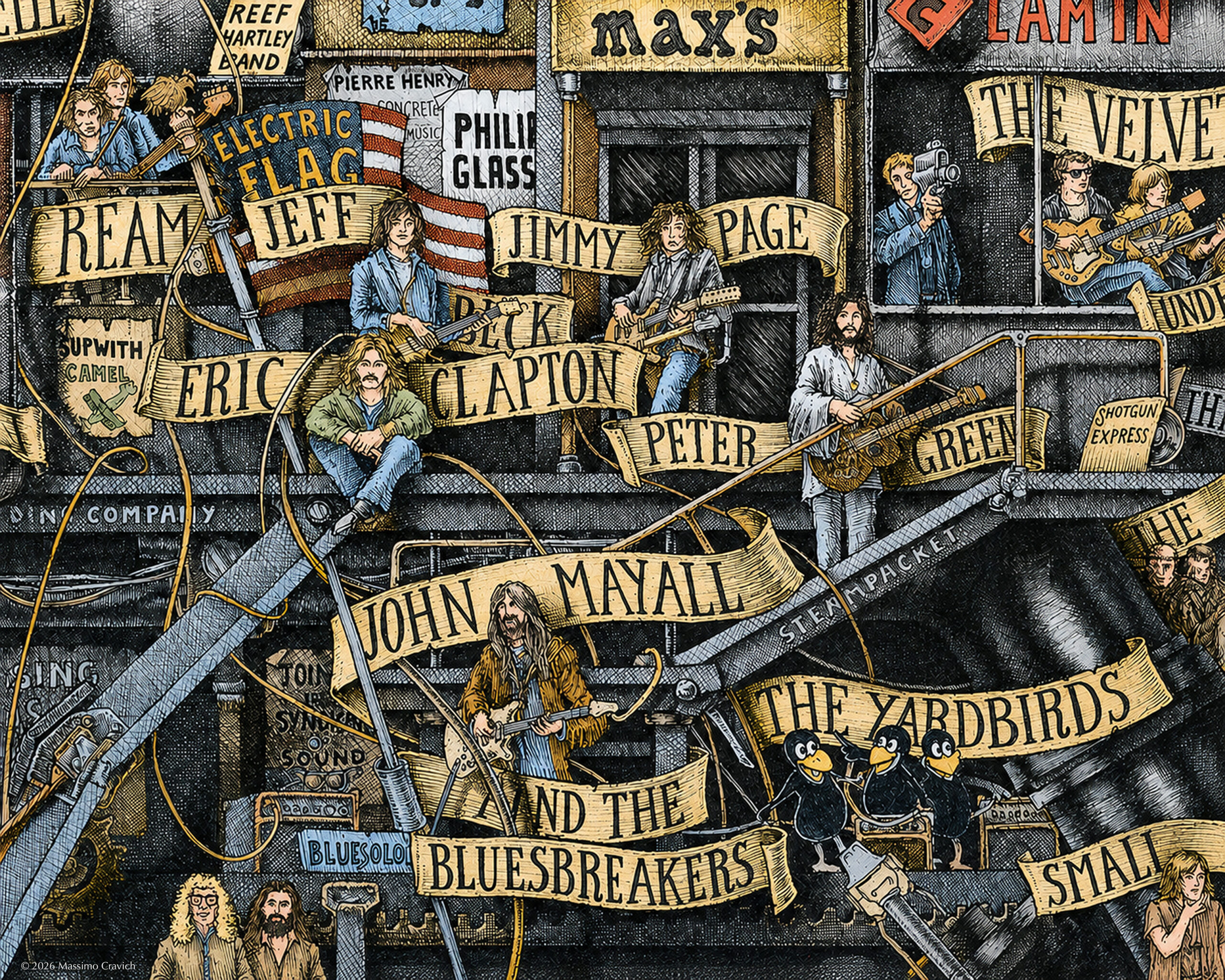
With John Mayall he records the celebrated 1966 Bluesbreakers album known as Beano. His forceful Gibson Les Paul sound through a Marshall amplifier becomes a model; “Clapton is God” appears on London walls. For a musician uncomfortable with worship, fame is already a burden.
Cream: three virtuosos, an impossible balance
With Jack Bruce and Ginger Baker he forms Cream, a trio in which blues, improvisation and psychedelia collide spectacularly. Sunshine of Your Love, White Room and their version of Crossroads show how tradition can become something radically new. Yet the freedom that drives the music also amplifies tensions: Bruce and Baker clash, the volume rises, and Clapton feels increasingly like a symbol of virtuosity rather than a musician serving songs.
After Cream split, the supergroup Blind Faith with Steve Winwood lasts barely a year. Playing with Delaney & Bonnie then points him toward a collective sound built on soul, gospel and American roots. It is a crucial shift: he begins searching less for the definitive solo and more for the feeling of belonging to a band.
Layla: love, friendship and collapse
His friendship with George Harrison and his love for Pattie Boyd, then Harrison’s wife, become one of rock’s most painful personal entanglements. With Derek and the Dominos, and through a decisive encounter with Duane Allman, Clapton records Layla and Other Assorted Love Songs: an album that turns private anguish into music through interlocking guitars and an exposed vocal performance.
Its initially disappointing sales, Jimi Hendrix’s death and then Duane Allman’s become intertwined with heroin addiction and isolation. This is not a romantic story of suffering automatically redeemed by talent: recovery requires real help. In 1973 Clapton returns to the stage at the Rainbow Theatre, partly thanks to Pete Townshend. The following year 461 Ocean Boulevard and his version of Bob Marley’s I Shot the Sheriff mark a fresh start.
Living beyond the legend
Clapton continues moving between mainstream success and returns to the blues, from Slowhand to collaborations with B.B. King. Alcohol dependence shapes further difficult years, followed by recovery and his involvement with the Crossroads Centre in Antigua. In 1991 his son Conor dies in an accident, a devastating loss he publicly processes in Tears in Heaven.
The success of 1992’s Unplugged shows that his power can also lie in restraint, far from the monumental amplification of his early career. He remains a complicated figure: the racist remarks he made onstage in 1976 are a serious, documented part of his history, starkly at odds with his artistic debt to Black music. Telling his story means acknowledging musical influence, personal vulnerability and responsibility together, without treating biography as absolution.
Eric Clapton helped define British blues and blues rock, from the Bluesbreakers’ guitar tone to Cream’s improvisation and the emotional intensity of Layla.
Within The Great Rock and Roll History, Clapton connects the British rediscovery of African American blues to the supergroup era and the 1970s return to roots music. His career also offers a vital opportunity to examine appropriation, recognition and music’s transatlantic circulation.
Influenced by
- Robert Johnson
- Muddy Waters
- B.B. King
- Buddy https://www.massimocravichart.com/rock-icons/buddy-guy/Guy
- Freddie King
Influent For
- Duane Allman
- Mark Knopfler
- Stevie Ray Vaughan
- John Mayer
- Gary Moore

Related Artists
- John Mayall
- Jack Bruce
- Ginger Baker
- George Harrison
- Steve Winwood
Get Your Rock Icon
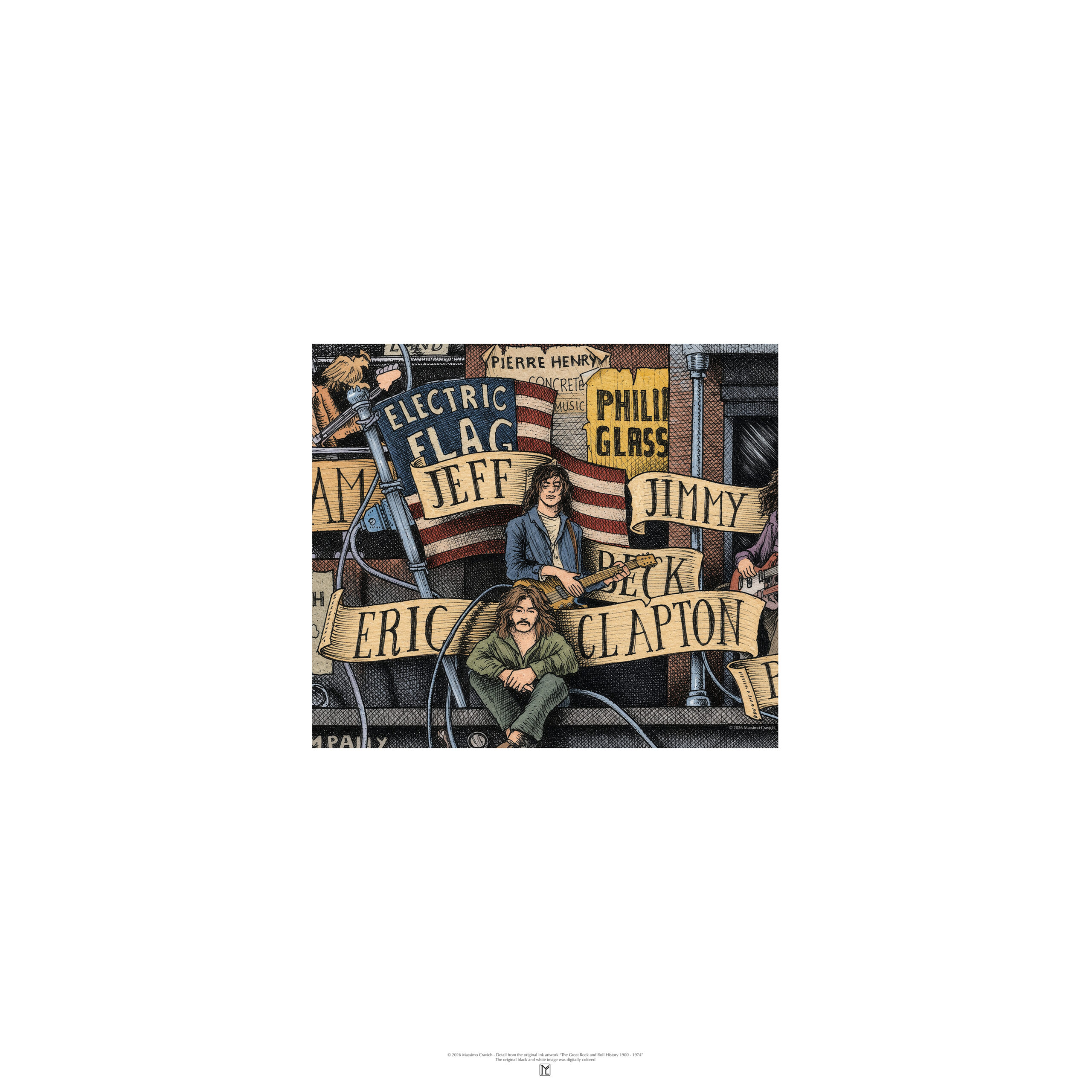
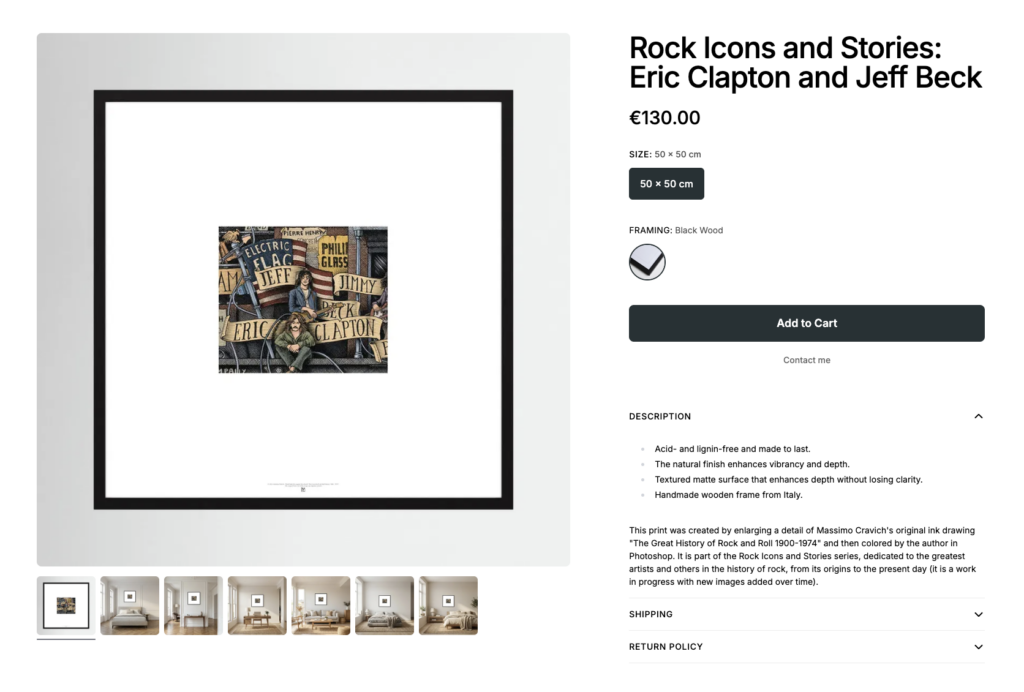
Selected artworks from Rock Icons and Stories are available as high-quality framed art prints. Printed on premium 230 gsm matte paper with excellent detail and colour reproduction, each print is professionally framed and delivered ready to hang.A carefully selected, high-quality alternative to the museum-grade Fine Art Giclée editions, offering an accessible way to own and display a reproduction of the original artwork. Printing, framing and worldwide fulfilment are handled by our specialist printing partner.
You may also like this print
Sources
Eric Clapton — official website: https://ericclapton.com/
Rock & Roll Hall of Fame: https://rockhall.com/inductees/eric-clapton/
Encyclopaedia Britannica: https://www.britannica.com/biography/Eric-Clapton
Eric Clapton’s story is that of a musician who repeatedly changed bands and musical languages while pursuing the same ideal of intensity. From British blues to Cream, from Layla to his solo recordings, his career traces both the evolution of rock guitar and the human costs of fame. His legacy demands that we acknowledge his important recordings, the musicians who taught him and the shadows that cannot simply be erased.