
Cream lasted less than three years, yet in that time they changed the very meaning of the rock trio. Eric Clapton, Jack Bruce and Ginger Baker arrived from British blues and jazz with formidable reputations and turned the stage into a confrontation among three soloists, where bass and drums were no longer mere support for the guitar. Within Great Rock and Roll HistoryHistory, Cream mark the point where British blues, jazz improvisation, psychedelia and electric power converge toward what would soon be called hard rock.
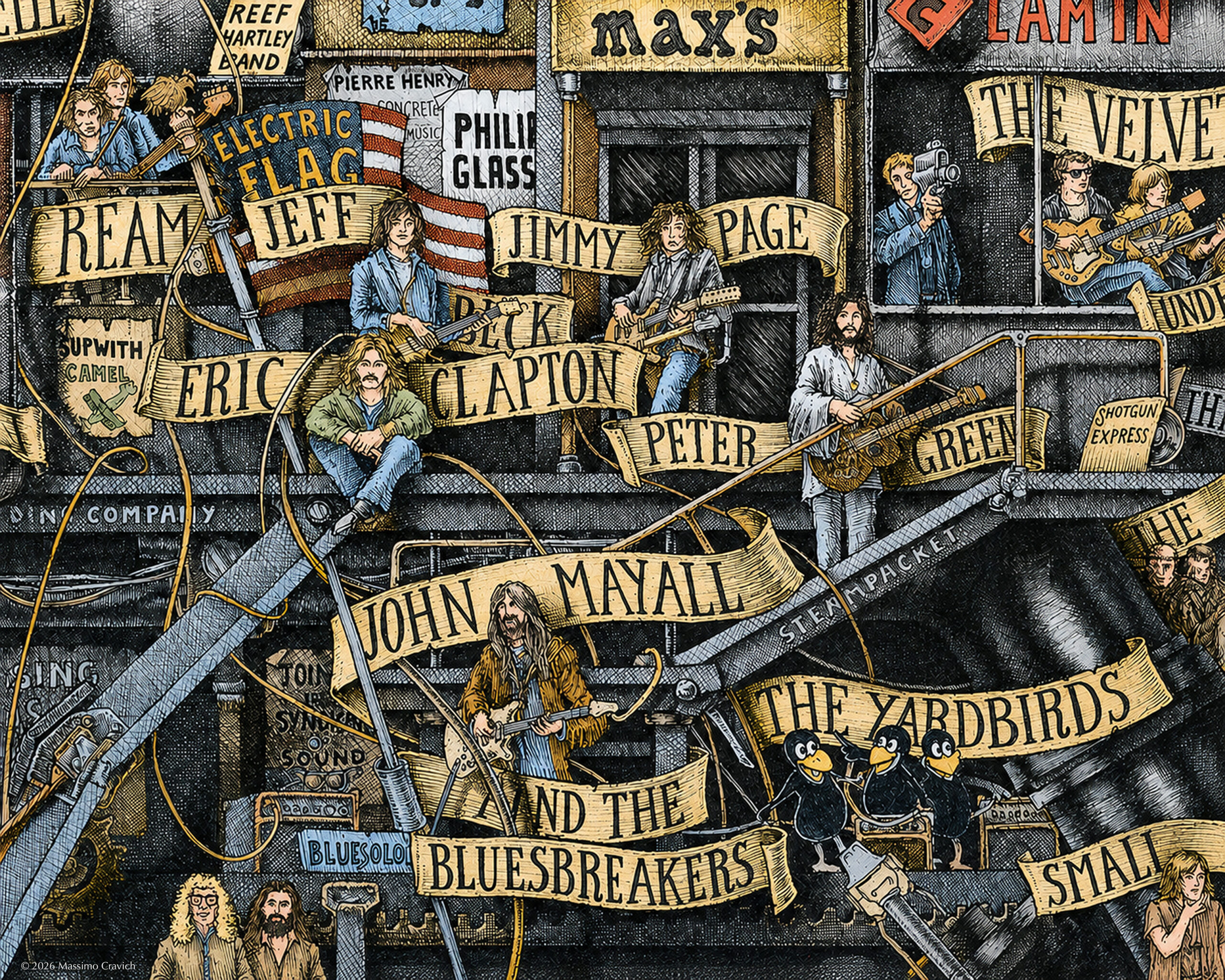
Rock Icons: Eric Clapton
Three virtuosos, no supporting players: the perfect mixture that was almost impossible to keep together.

Formed in London in 1966 by Eric Clapton, Jack Bruce and Ginger Baker, Cream fused blues, jazz and psychedelia in a power trio that redefined instrumental roles in rock and helped anticipate hard rock and heavy metal.
Formed London, 1966
Members Eric Clapton; Jack Bruce; Ginger Baker
Original period 1966-1968
Genres Blues rock, psychedelic rock, hard rock, improvisation
Key albums Fresh Cream; Disraeli Gears; Wheels of Fire; Goodbye
Principal writer and
singer
Jack Bruce, often with lyricist Pete Brown
Key producer Felix Pappalardi
Reunions 1993; London and New York concerts in 2005
ARTIST OFFICIAL SITE: www.creambandofficial.com
LISTEN
More to discover…
Baker wants Clapton, Clapton wants Bruce
Cream began in 1966 through an almost perversely perfect combination. Ginger Baker, drummer with the Graham Bond Organisation, wanted a new group and proposed the idea to Eric Clapton, already celebrated through John Mayall’s Bluesbreakers. Clapton agreed on one condition: he wanted Jack Bruce on bass and vocals.
The problem was that Bruce and Baker had already worked together in the Graham Bond Organisation and their relationship had been fiercely antagonistic; Baker had even played a part in Bruce’s departure. Nevertheless, they agreed to begin again.
Musically the choice was electrifying. Bruce did not treat bass as a discreet foundation, Baker did not regard drums as a metronome, and Clapton no longer wanted to remain inside purist blues grammar. The name Cream reflected their reputations as the ‘cream’ of British musicians. From the first rehearsals, their power came from precisely what would make them fragile as people: none of the three was willing to be a supporting player.
From blues to psychedelia: Disraeli Gears
Fresh Cream retains an obvious blues connection, but already shows a band stretching songs and turning instrumental interaction into spectacle. The real explosion came with Disraeli Gears in 1967. With producer Felix Pappalardi, the trio absorbed psychedelia without losing physical weight. Jack Bruce wrote much of the original material, frequently with poet Pete Brown, and sang many of the defining songs.
Sunshine of Your Love grew around one of rock’s most recognizable riffs; Strange Brew and Tales of Brave Ulysses reveal how rapidly the language had moved beyond blues revivalism. Clapton retained the fire of the Bluesbreakers, but now conversed with a bass that often behaved like a second lead instrument and drums bringing jazz-derived independence into rock. Cream became especially huge in the United States just as rock music itself was learning to think on a larger scale.
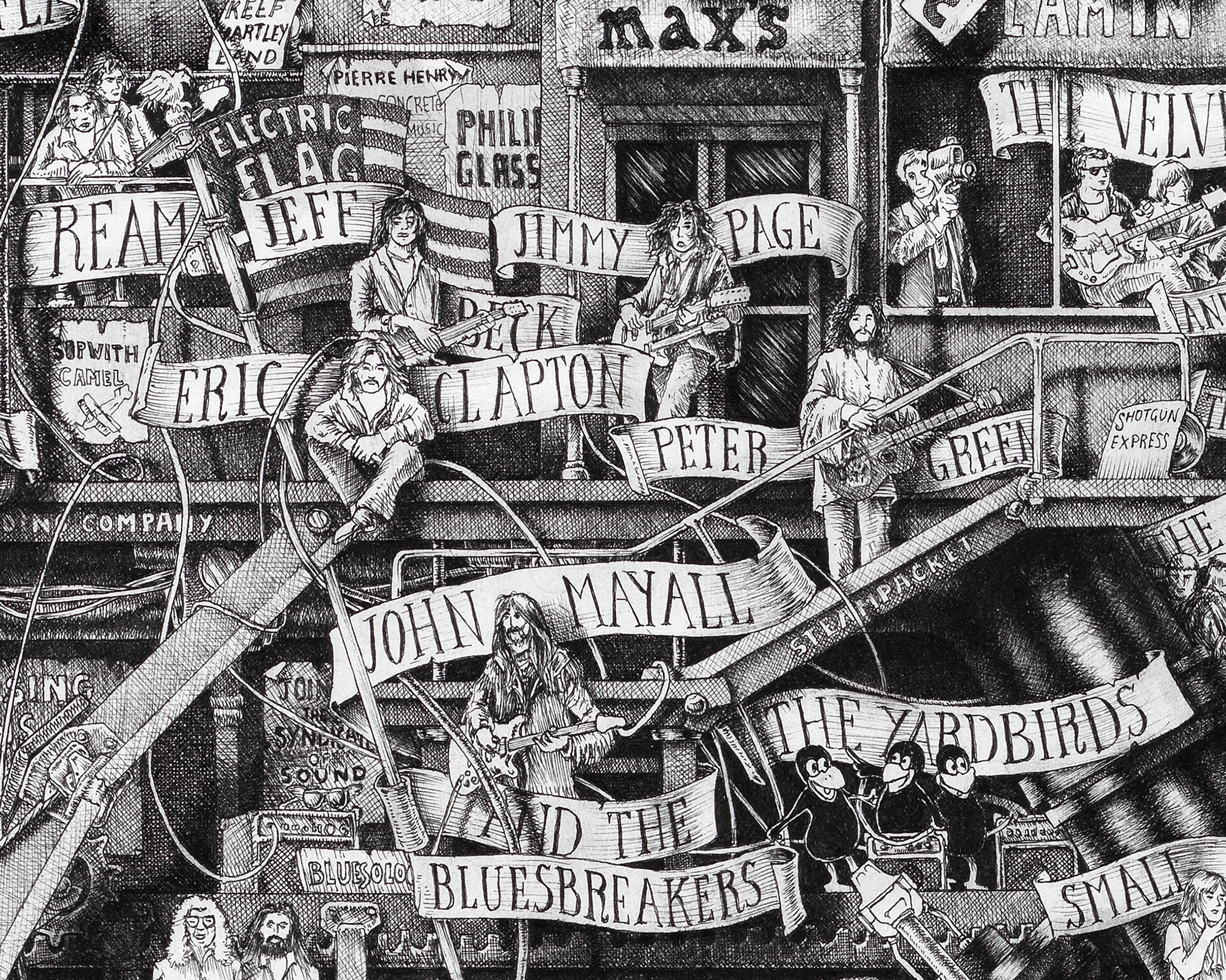
Onstage: three soloists and a permanent war
Live, the Cream idea reached both its maximum expression and its breaking point. Songs became platforms for extended improvisation: Clapton, Bruce and Baker could chase, challenge and almost disregard one another, trusting volume, instinct and technique. The 1968 double album Wheels of Fire, divided between studio and concert recordings, captures this double identity. Crossroads turns Robert Johnson into high-tension rock; White Room demonstrates the compositional strength of Bruce and Brown.
Yet the musical intensity had a cost. The antagonism between Bruce and Baker never disappeared, while Clapton increasingly felt trapped by the guitar-hero role. He also began to question music in which sheer power and individual display risked becoming ends in themselves. The same freedom that made Cream revolutionary was beginning to consume the group.
Breaking up at the top, then meeting again
In 1968, as Wheels of Fire topped the American album chart and Cream stood among the world’s biggest live attractions, the decision was made to split. After a farewell tour, the final concerts took place at the Royal Albert Hall on November 26. Goodbye appeared in 1969 and included Badge, written by Clapton with George Harrison.
The story’s brevity became part of the myth: Cream did not endure a slow decline; they stopped while still enormous. In 1993 the trio played together again for their Rock & Roll Hall of Fame induction. The true reunion arrived in 2005 with four Royal Albert Hall concerts and three at Madison Square Garden. For several nights the old chemistry returned, although the old tensions had not entirely vanished. Jack Bruce died in 2014 and Ginger Baker in 2019, making final the history of a group that had always existed on the edge of instability.
Cream transformed the trio into a conversation among three instruments of equal status: their legacy is not merely volume or virtuosity, but the idea that a rock band could improvise with the freedom and risk of a small jazz group.
Within The Great Rock and Roll History, Cream directly connect the British blues of John Mayall and the Graham Bond Organisation to psychedelia and the birth of hard rock: a line running from Robert Johnson and Muddy Waters toward Led Zeppelin, Black Sabbath and generations of power trios.

Influenced by
- Robert Johnson
- Muddy Waters
- B.B. King
- John Mayall & the Bluesbreakers
- Modern jazz
Influent For
- Led Zeppelin
- Black Sabbath
- Deep Purple
- Mountain
- Rush
Related Artists
- John Mayall & the Bluesbreakers
- Graham Bond Organisation
- Blind Faith
- Jimi Hendrix Experience
- Mountain
Get Your Rock Icon
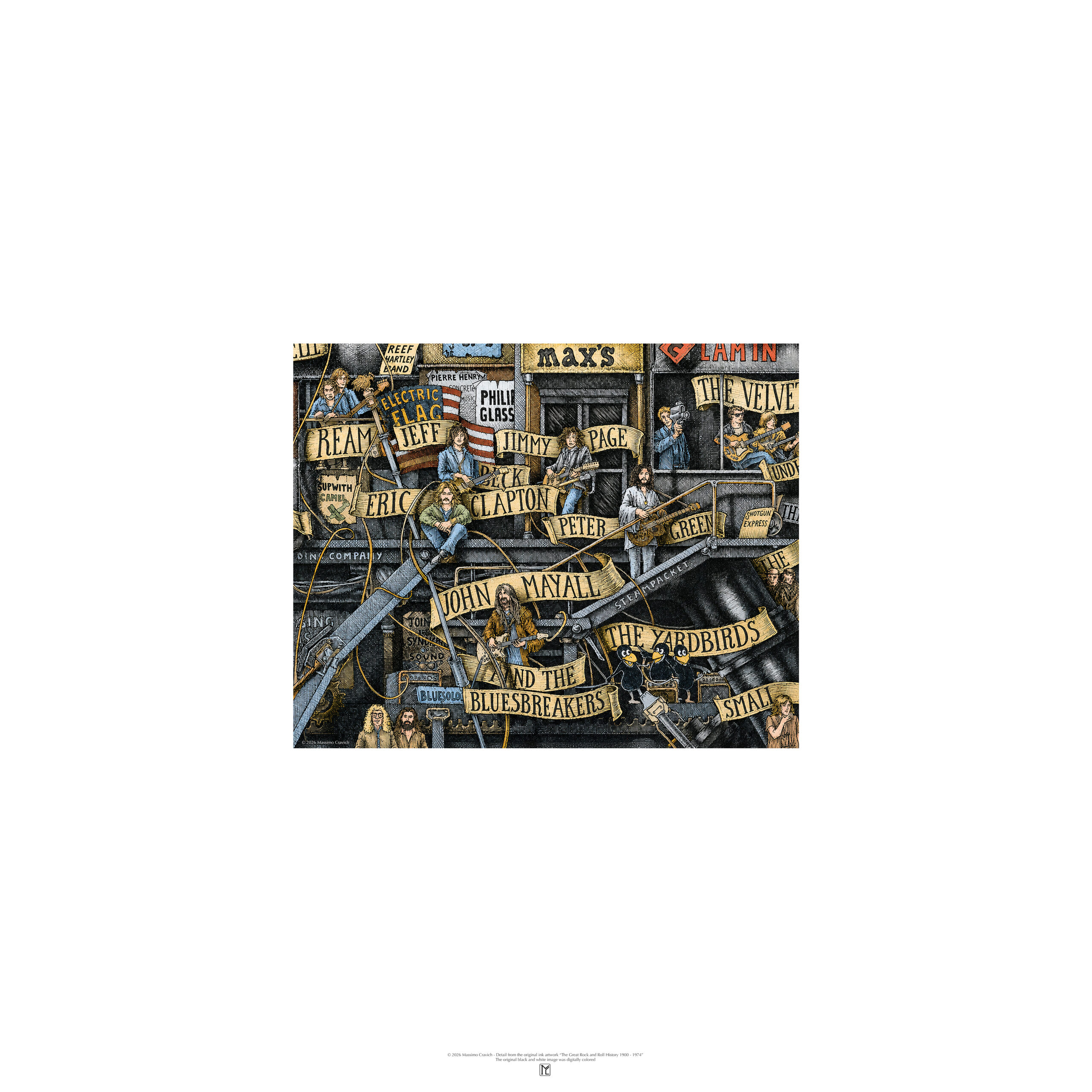
Selected artworks from Rock Icons and Stories are available as high-quality framed art prints. Printed on premium 230 gsm matte paper with excellent detail and colour reproduction, each print is professionally framed and delivered ready to hang.A carefully selected, high-quality alternative to the museum-grade Fine Art Giclée editions, offering an accessible way to own and display a reproduction of the original artwork. Printing, framing and worldwide fulfilment are handled by our specialist printing partner.
Sources
Cream – Official Biography
Eric Clapton – Official Biography
Jack Bruce – Official Biography
Ginger Baker – Official History Archive
Rock & Roll Hall of Fame – Cream
Cream were an experiment as musically successful as they were humanly unstable. Clapton brought blues and a new conception of lead guitar; Bruce possessed the voice, much of the writing and a bass that refused to remain in the background; Baker treated drums with a jazz musician’s independence.
None could completely dominate the other two. From that precarious balance came monumental riffs, dangerous improvisations and a model copied for decades. Their story was extremely short because it probably could not have lasted much longer. Yet in those two years Cream demonstrated how much noise, freedom and invention could be contained in only three people.