
Jimi Hendrix was one of the most revolutionary, mythological and culturally explosive figures in modern music history, an artist capable of transforming the electric guitar into psychedelic, cosmic, sexual and experimental instrument while permanently redefining rock music itself.
Jimi Hendrix reached wider recognition after years working inside American R&B; and soul circuits, where guitar often served primarily as companiment. In London from 1966, that background encountered British blues, psychedelia, high-volume amplification and new possibilities in the recording studio.
This profile places Jimi Hendrix within The Great Rock and Roll History, tracing the route from blues, R&B; and the chitlin’ circuit to the Jimi Hendrix Experience, and onward to a language in which feedback, distortion, wah-wah, studio technique and amplification become compositional elements.
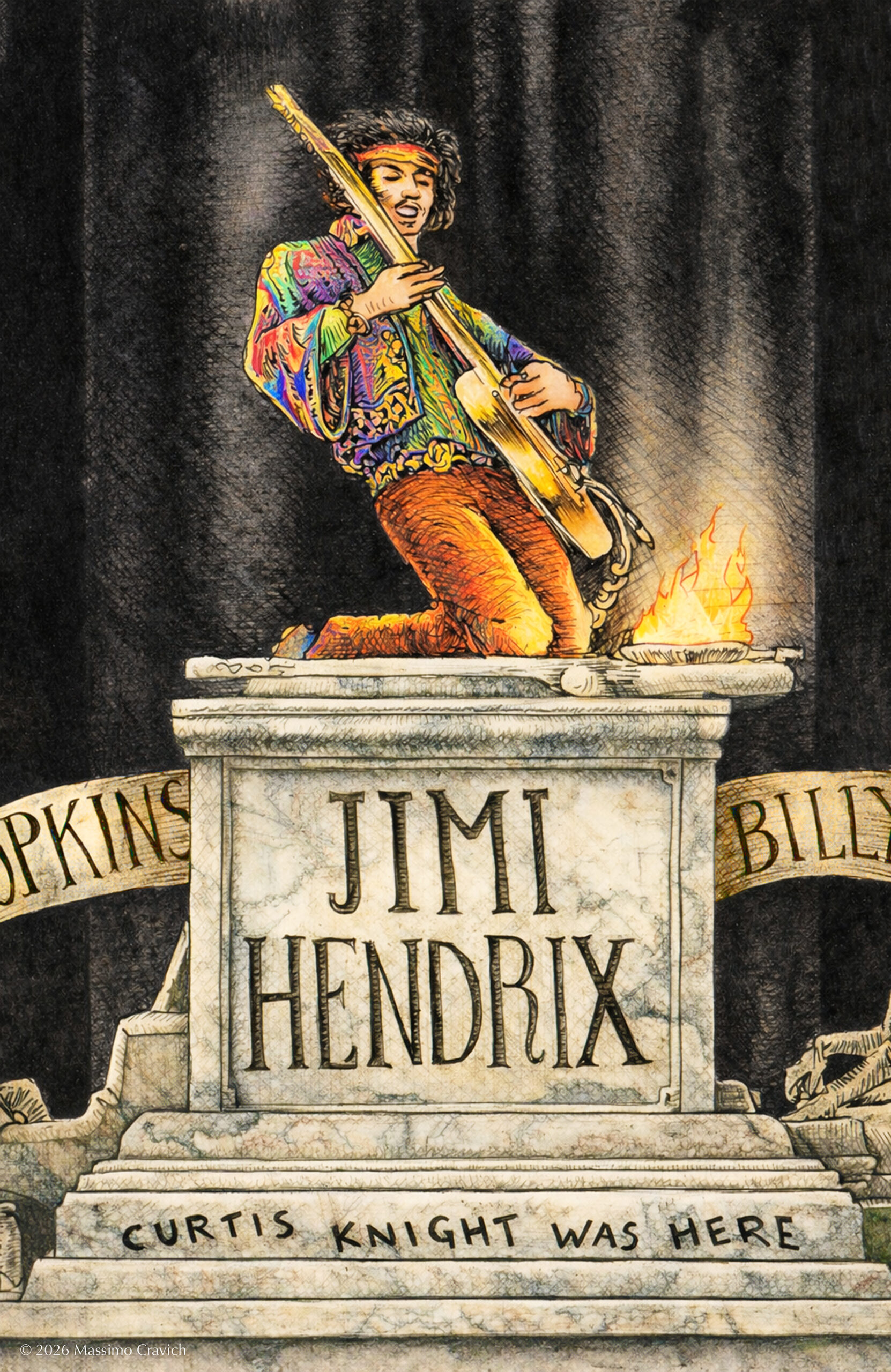
Rock Icons: Jimi Hendrix
Electric rock shaman suspended between cosmic feedback, LSD, psychedelic eroticism and absolute guitar revolution.

The guitar stops merely producing notes: amplifier, noise and space enter the composition. From his work as a sideman on American R&B; circuits to the London of Are You Experienced, Axis: Bold as Love and Electric Ladyland, Jimi Hendrix connected blues, soul, rock and psychedelia while transforming the timbral and structural possibilities of electric guitar.
Name: James Marshall Hendrix
Born: November 27, 1942 — Seattle, Washington, USA
Died: September 18, 1970 — London, United Kingdom
Instruments: guitar, vocals
Genres: psychedelic rock, blues rock, hard rock, experimental rock
ARTIST OFFICIAL SITE: www.jimihendrix.com
LISTEN
More to discover…
The man who transformed the guitar into psychedelic weapon
Hendrix embodied sexual revolution, psychedelia, racial tension and the self-destructive mythology of counterculture simultaneously. That is why he still feels like figure from alternate dimension of rock music.
Before the Experience, Hendrix worked within the professional world of Black American music: playing with R&B; and soul artists, accompanying singers and learning a language of rhythm, fills, dynamics and response to the voice. Behind that experience stood the blues of Muddy Waters, B.B. King and Albert King, Chuck Berry’s rock and roll, and an expanded concept of guitar already present in players such as T-Bone Walker. In London, this background encountered a scene increasing volume and aggression through Clapton, Jeff Beck, Pete Townshend and British blues rock. Hendrix developed his music at the point of friction between these worlds.
From blues to electric sound: when the amplifier becomes an instrument too
With the Jimi Hendrix Experience, distortion is no longer merely a side effect of an overdriven amplifier. Controlled feedback, fuzz, wah-wah, sustain and vibrato-arm manipulation become parts of phrasing. On Are You Experienced this vocabulary still coexists with relatively compact songs; Axis: Bold as Love expands harmony and color; Electric Ladyland brings the studio into composition through overdubbing, spatial effects and sound treatment. Voodoo Child (Slight Return) shows how blues can remain recognizable even as timbre is pushed far beyond its conventional form.
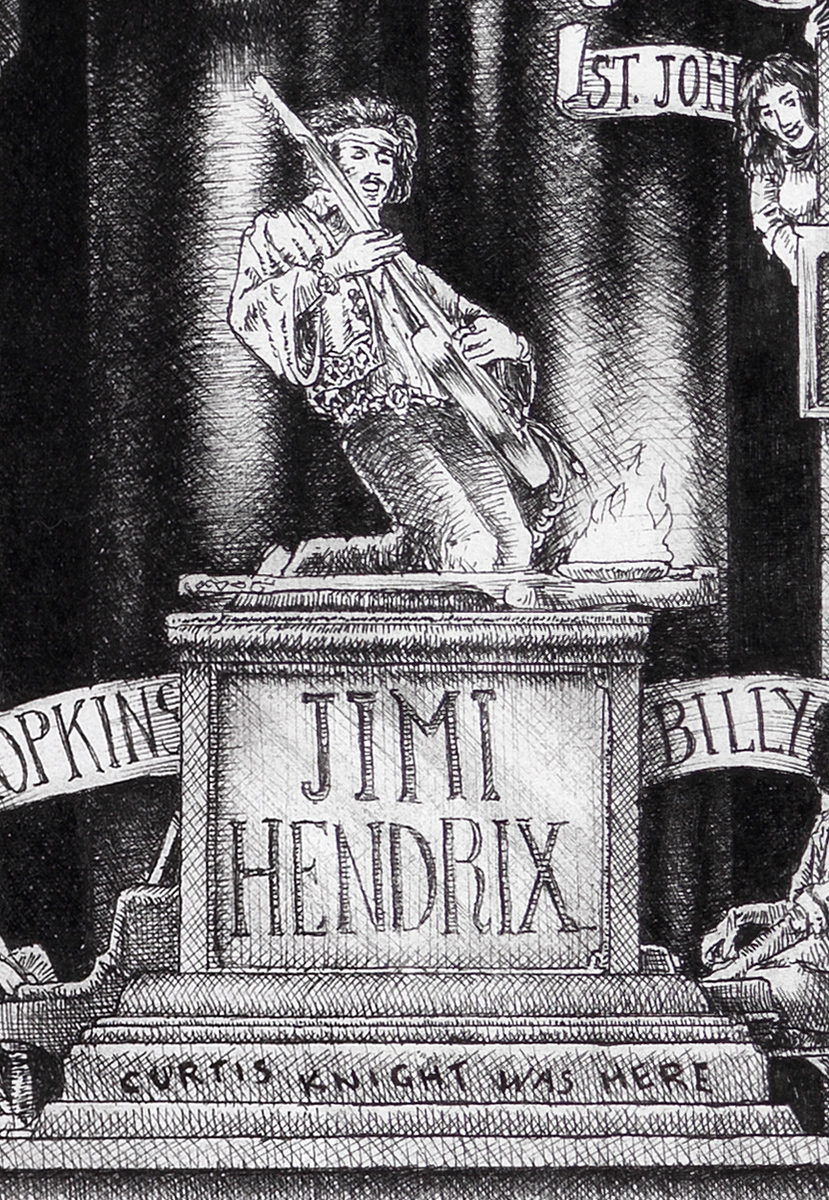
The genealogical consequence is not simply a generation of faster guitarists. Hendrix makes available a different idea of the instrument: guitar can produce environment, organized noise, rhythm, sonic mass and color in addition to riffs and solos. Hard rock and heavy metal pass through this opening, but so do fusion, funk rock and later investigations of feedback and texture.
There is no single line: blues + R&B;/soul + rock and roll -> Hendrix + psychedelia/studio -> hard rock and heavy metal, but also funk rock, fusion and experimental approaches to guitar sound.
Tracks such as Purple Haze, Little Wing, Voodoo Child (Slight Return) and Machine Gun reveal different aspects of the same process: blues, rhythm, feedback, effects and amplification are treated as components of a single electric language. Albums such as Are You Experienced? and Electric Ladyland remain among the absolute masterpieces of twentieth-century rock music.
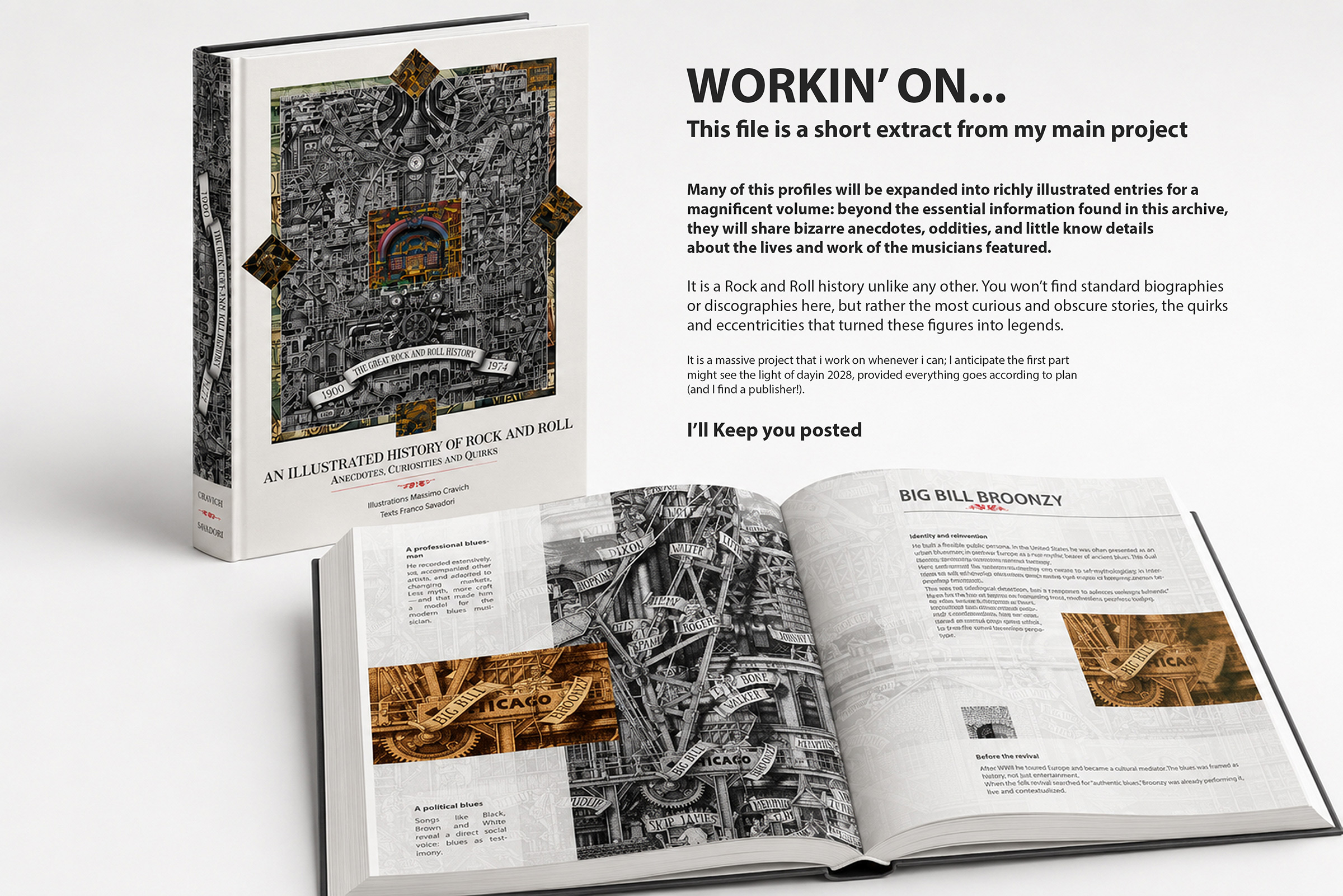
His music occupies a fundamental place within the rock genealogy explored in The Great Rock and Roll History.
Influenced by
- Muddy Waters
- T-Bone Walker
- Little Richard
- Chicago electric blues
- African-American rhythm and blues
Influent For
- Hard rock
- Heavy metal
- Prince
- Eddie Van Halen
- Modern psychedelic rock
Related Artists
- Eric Clapton
- Cream
- Prince
- Stevie Ray Vaughan
- Buddy Guy
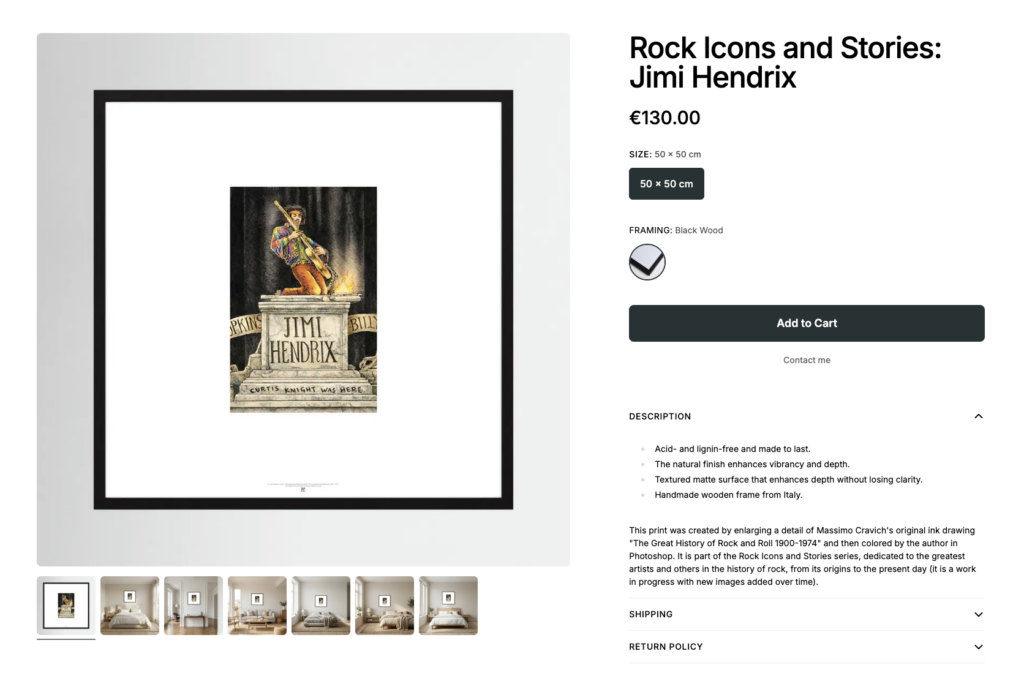
Get Your Rock Icon
Selected artworks from Rock Icons and Stories are available as high-quality framed art prints. Printed on premium 230 gsm matte paper with excellent detail and colour reproduction, each print is professionally framed and delivered ready to hang.A carefully selected, high-quality alternative to the museum-grade Fine Art Giclée editions, offering an accessible way to own and display a reproduction of the original artwork. Printing, framing and worldwide fulfilment are handled by our specialist printing partner.

SOURCES
Official Jimi Hendrix archives
Psychedelic rock archives
Woodstock archives
Electric guitar historical archives
In rock genealogy, Hendrix occupies a point where existing traditions are reorganized through electric technology. Blues remains a recognizable matrix, but amplifier, effects and studio cease to be merely means of reproducing the guitar and become parts of the instrument itself. His legacy therefore does not amount to one model of guitar playing: it includes the weight of the riff, the use of feedback, the relationship between rhythm and soloing, and the possibility of constructing music directly through timbre.