
Led Zeppelin formed in 1968 out of the collapse of the Yardbirds and at a moment when British blues was becoming heavier, louder and freer in form. Jimmy Page, Robert Plant, John Paul Jones and John Bonham combined blues, British and American folk, rock and roll, psychedelia and an exceptionally powerful rhythm section, creating music able to move between sonic force and acoustic space.
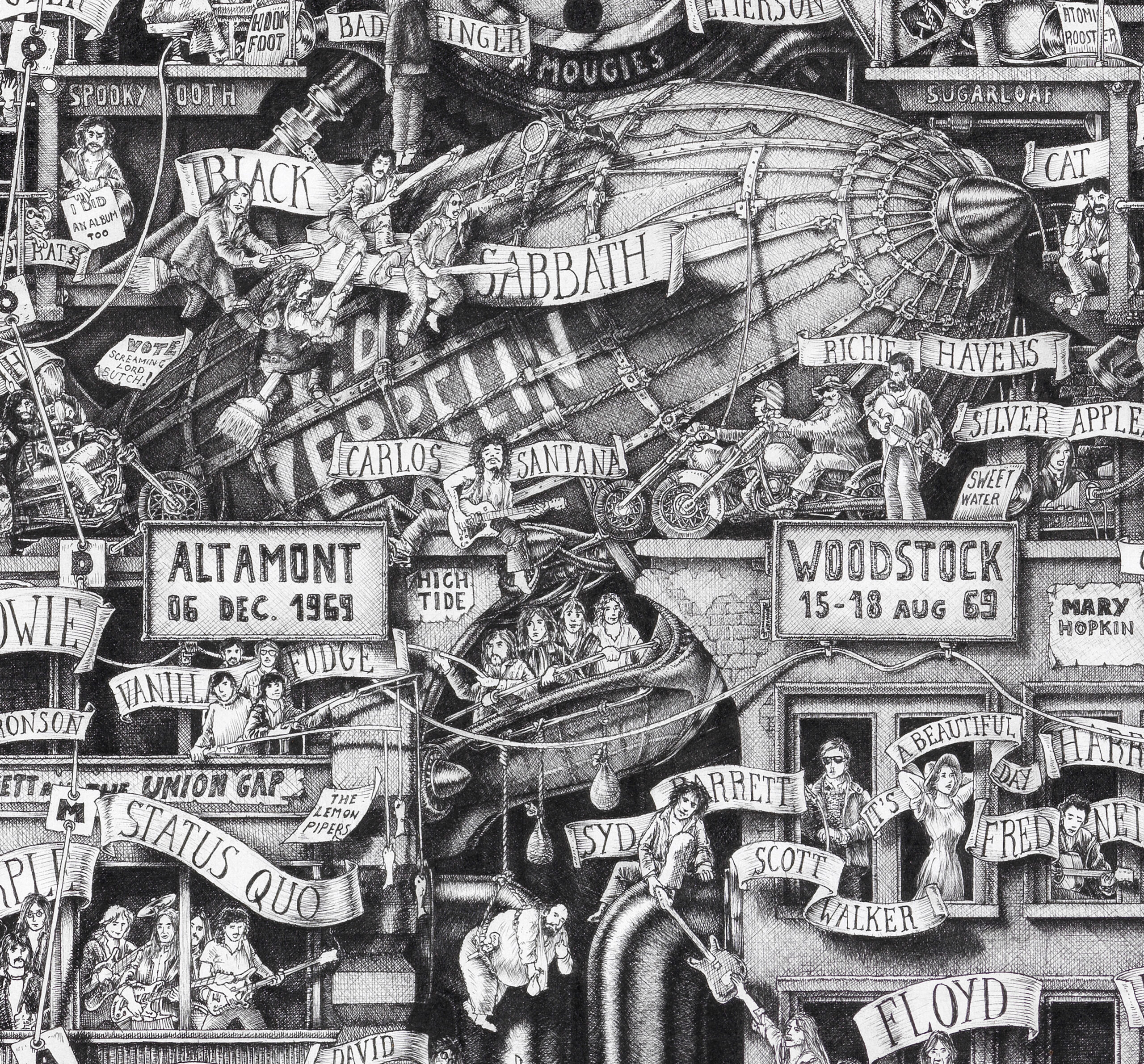
This profile places Led Zeppelin The Great Rock and Roll History, (a large-scale illustrated timeline of modern music), tracing the movement from blues and the Yardbirds toward hard rock and heavy rock without losing the band’s relationship with folk, acoustic music and studio experimentation.
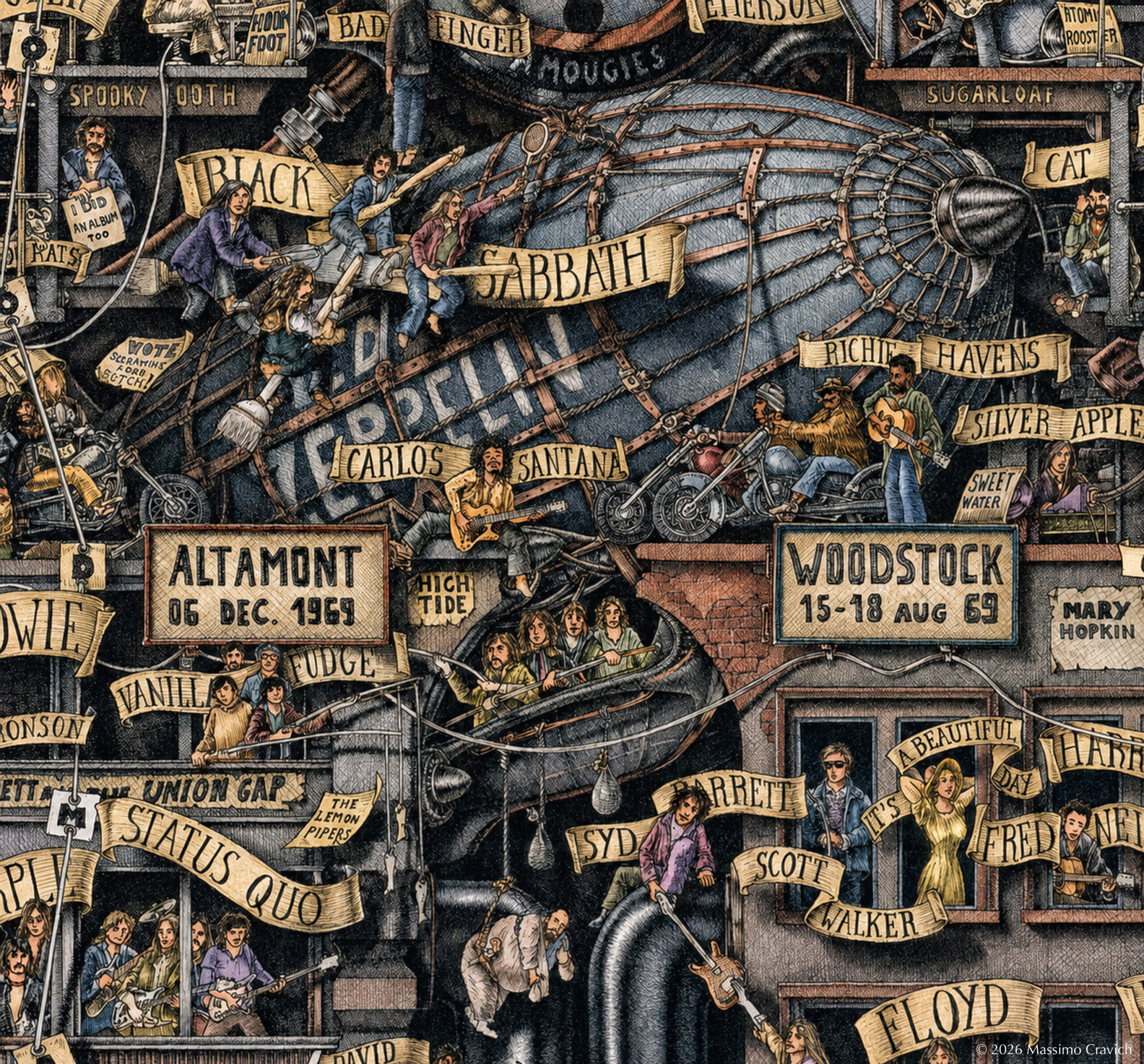
Rock Icons: Led Zeppelin

Weight, space and dynamics: the blues is enlarged without becoming the band’s only language..
From Led Zeppelin and Led Zeppelin II through Led Zeppelin IV and Physical Graffiti, the band transformed blues, folk, rock and roll and psychedelia through monumental riffs, extreme dynamics, ambient recording and a rhythm section central to the development of hard rock.
From blues to hard rock
Led Zeppelin embodied the transformation of rock into an industrial and mythological machine. Drug abuse, violence within the entourage, Peter Grant’s authoritarian management and rare poetic collaborations created a paradoxical legacy of power, excess and cultural influence. Led Zeppelin did not simply expand rock music—they amplified it. Their sound introduced a new level of volume, intensity and physical impact, redefining the relationship between music and the listener. At the same time, their work moved between extremes: heavy guitar-driven tracks and acoustic, folk-inspired compositions, creating a dynamic contrast that became a defining feature of their style.
Founded: 1968, London, UK
Status: disbanded (1980)
Core genres: Hard rock, blues rock, proto-metal, folk rock
Classic core: Jimmy Page, Robert Plant, John Paul Jones, John Bonham
Manager: Peter Grant
ARTIST OFFICIAL SITE: www.ledzeppelin.com
LISTEN
The Battle of Evermore (featuring Sandy Denny)
More to discover…
One of the most influential groups in the history of rock music.
Led Zeppelin’s formation already contains many of the tensions in their music. Page came from the Yardbirds and years of session work; Jones brought similar studio discipline and arranging skill; Plant and Bonham came from the Midlands and from a circuit less central than London’s music industry. Four different paths met in a band that worked with remarkable intensity and, especially in its early years, lived almost continuously between stage and studio. African American blues remained a fundamental source – from Willie Dixon and Muddy Waters to Howlin’ Wolf – but it was subjected to volume, dynamic compression and rhythmic physicality far removed from its original context.
Power and dynamics become architecture
The change involved more than Page’s riffs. Bonham turned drums into a spatial and melodic presence; Jones connected bass, keyboards and arrangement; Plant pushed blues-derived singing into registers and intensities suited to the band’s new volume. Page also treated the studio as part of composition: microphone distance, natural reverberation, overdubbing and contrasts between density and emptiness helped create the sense of scale. Yet beside Whole Lotta Love or Black Dog stand Going to California, The Battle of Evermore and other pieces where folk, acoustic tunings and British tradition prevent the group from being reduced to heaviness alone.

Genealogically, Led Zeppelin stand where British blues, psychedelia and electric rock become one of the main matrices of hard rock. Their influence reaches heavy metal, yet the band remains broader than the genre it helped feed: groove, folk, funk, Eastern music and studio experimentation continue to enter the repertoire. Their relationship with blues sources is also complex and at times controversial, particularly regarding credits and adaptations on the early records.
The evolutionary line can be read as blues/R&B; + folk + the Yardbirds and British blues -> Led Zeppelin -> hard rock/heavy rock -> heavy metal, arena rock and later forms of riff-driven, dynamically powerful rock.
Tracks such as Dazed and Confused, Whole Lotta Love, When the Levee Breaks and Kashmir show how Led Zeppelin expanded hard rock through riffs, groove, dynamics, spatial recording and acoustic crosscurrents.
Within The Great Rock and Roll History, Led Zeppelin belong to the generation that carried rock at the end of the 1960s from clubs toward concerts, albums and productions of ever greater scale. Their history also reflects the growing bargaining power of major rock bands and the shift toward a culture increasingly centered on the albumand live performance.
Influenced by
- Electric Blues
- British Folk (especially Incredible String Band)
- Psychedelia
Influent For
- Aesthetics of rock as mythological
- Hard Rock
- Heavy Metal
- Arena Rock
- Greta Van Fleet
Related Artists
Yardbirds
Get Your Rock Icon
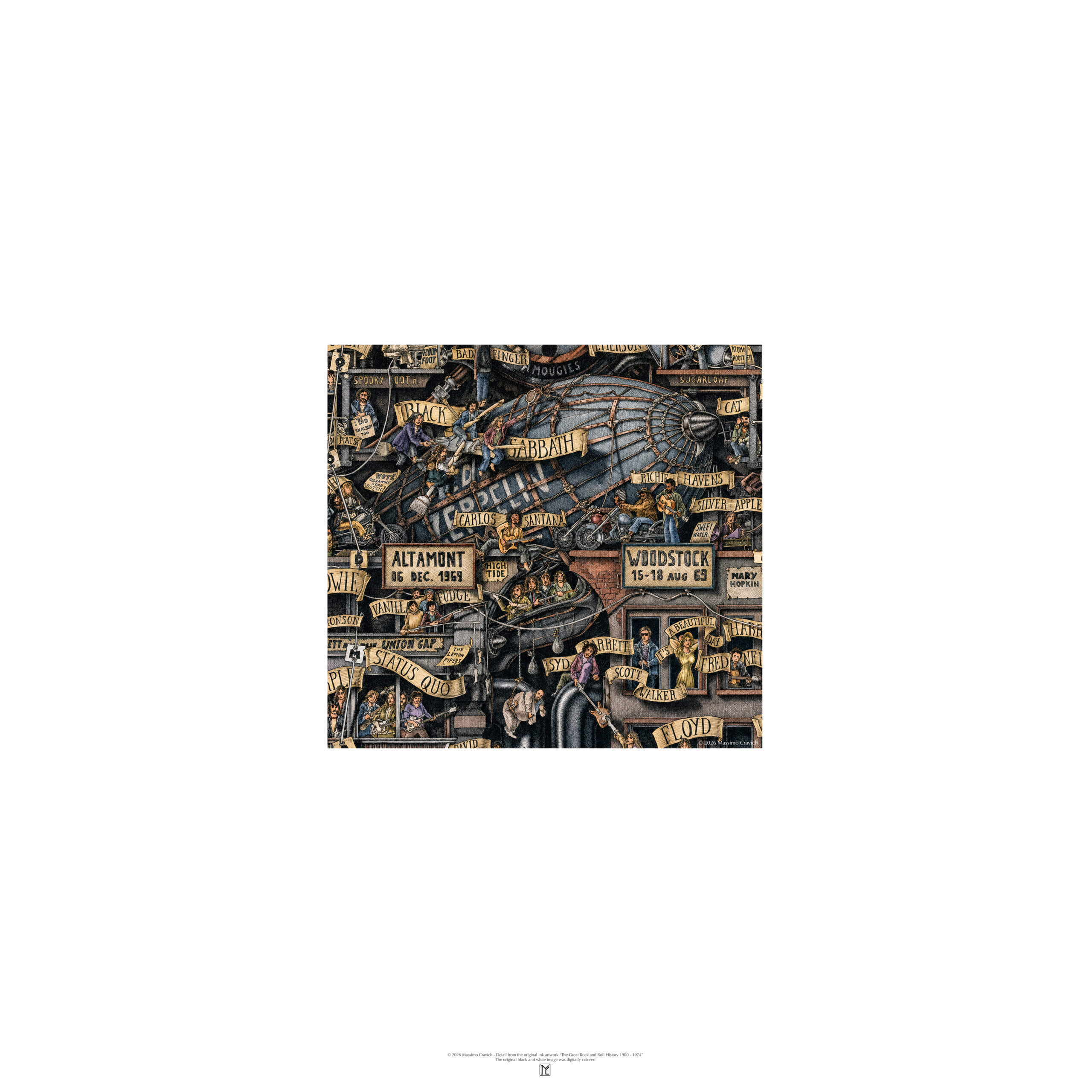
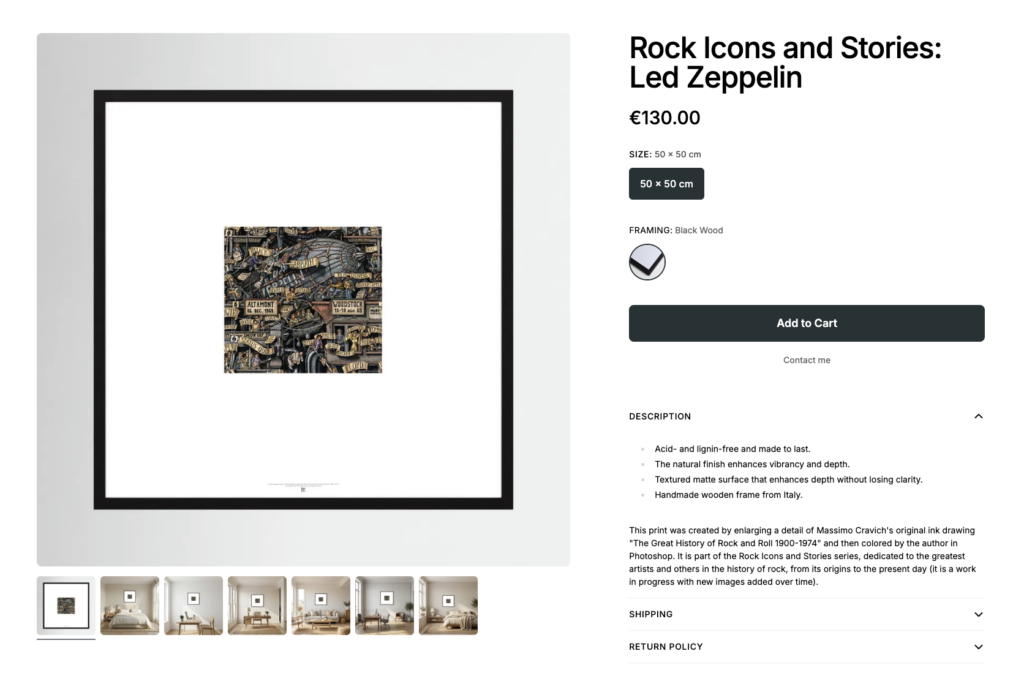
Selected artworks from Rock Icons and Stories are available as high-quality framed art prints. Printed on premium 230 gsm matte paper with excellent detail and colour reproduction, each print is professionally framed and delivered ready to hang.A carefully selected, high-quality alternative to the museum-grade Fine Art Giclée editions, offering an accessible way to own and display a reproduction of the original artwork. Printing, framing and worldwide fulfilment are handled by our specialist printing partner.
SOURCES (selected)
Led Zeppelin — General Profile (Wikipedia).
Biographies of Mick Wall and Stephen Davis.
Interviews with Jimmy Page and Robert Plant.
In rock genealogy, Led Zeppelin represent more than an increase in volume. Their force comes from contrast: weight and silence, riff and space, electric blues and acoustic folk, studio discipline and the physical impact of live performance. That combination contributed decisively to hard rock and supplied material for future heavy metal, while also leaving a broader model of a band able to treat arrangement, production and dynamics as inseparable parts of composition.