
Emerson, Lake & Palmer brought together three established musicians in 1970: Keith Emerson of the Nice, Greg Lake of King Crimson and Carl Palmer of Atomic Rooster. The trio turned the meeting of rock, classical music, jazz and electronic technology into one of British progressive rock’s most visible experiments. This profile in The Great Rock and Roll History explores not only the records but also the ambition, relationships and contradictions behind the music.
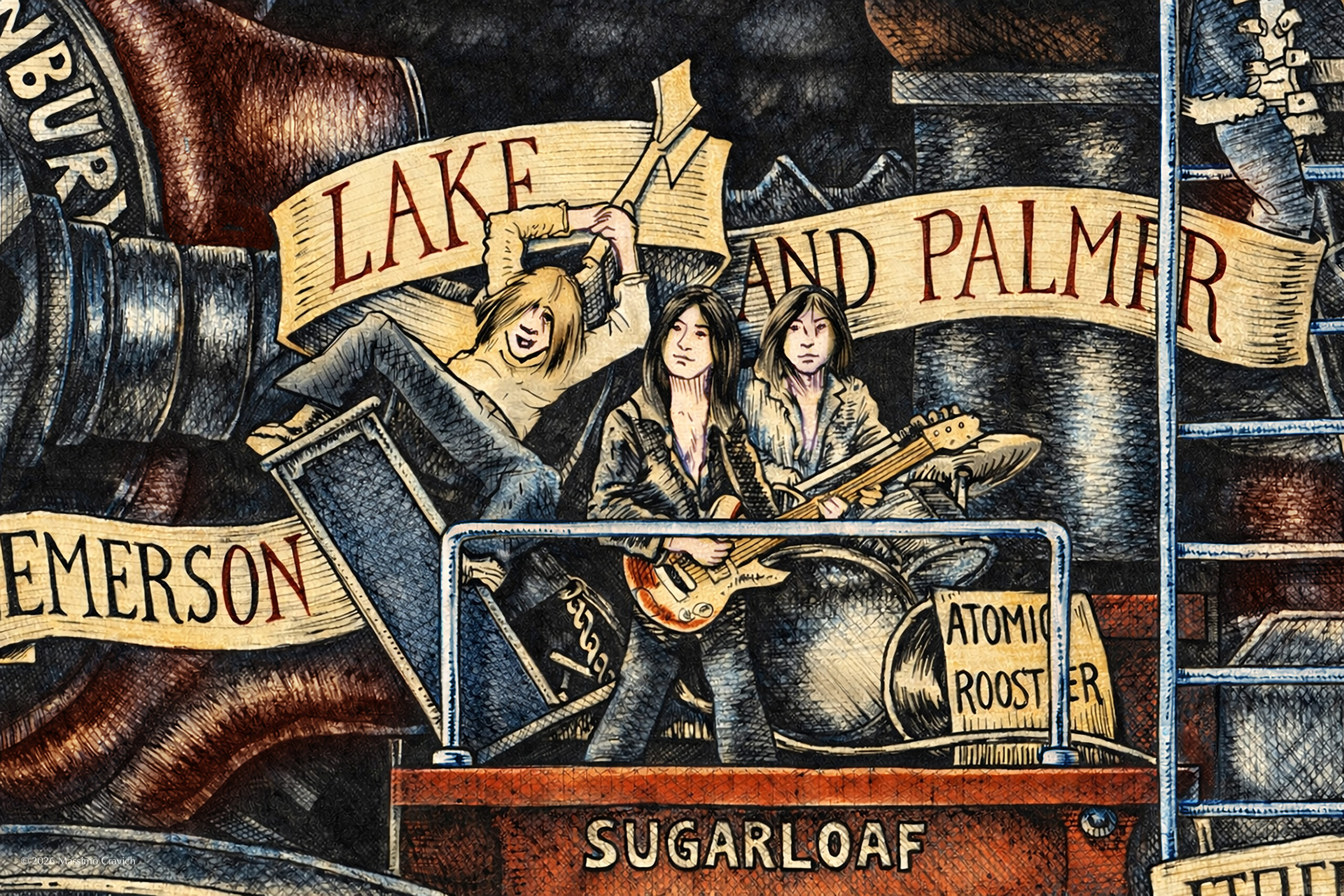
Rock Icons: Emerson Lake and Palmer

Progressive rock supergroup blending classical music, virtuoso performance and large-scale rock experimentation.
By combining classical influences, complex arrangements and large-scale live performances, the group helped expand the artistic ambitions of rock music. From Emerson, Lake & Palmer and Tarkus to Trilogy and Brain Salad Surgery, ELP redefined symphonic rock with Hammond organ, Moog synthesizer, bass, vocals and drums.
Founded: 1970 (UK)
Years Active: 1970–1979 and 1990–1999
Historical core: Keith Emerson (keyboards), Greg Lake (bass, voice, guitar), Carl Palmer (drums)
Genres: Progressive Rock, Art Rock, Jazz-Rock
Official Site: www.emersonlakeandpalmer.com
LISTEN
Pictures at an Exhibition (live)
More to discover…
The Alchemists of Progressive Rock
Three careers, three temperaments
When Keith Emerson and Greg Lake met in 1969, both were looking beyond their existing bands. Emerson had turned the Nice’s performances into physical, provocative events, mixing classical quotations with his famously abused stage organ. Lake, after King Crimson’s debut, wanted more room for melodic songwriting and his voice. Carl Palmer, very young but already experienced, completed a trio in which nobody was merely an accompanist. The band emerged from an alliance of strong personalities: Emerson wanted to expand the keyboard’s possibilities, Lake sought songs with an emotional connection, and Palmer brought precision, speed and almost orchestral rhythmic drive. Their different ambitions became both their greatest resource and, later, a source of friction.
The sound of a human machine
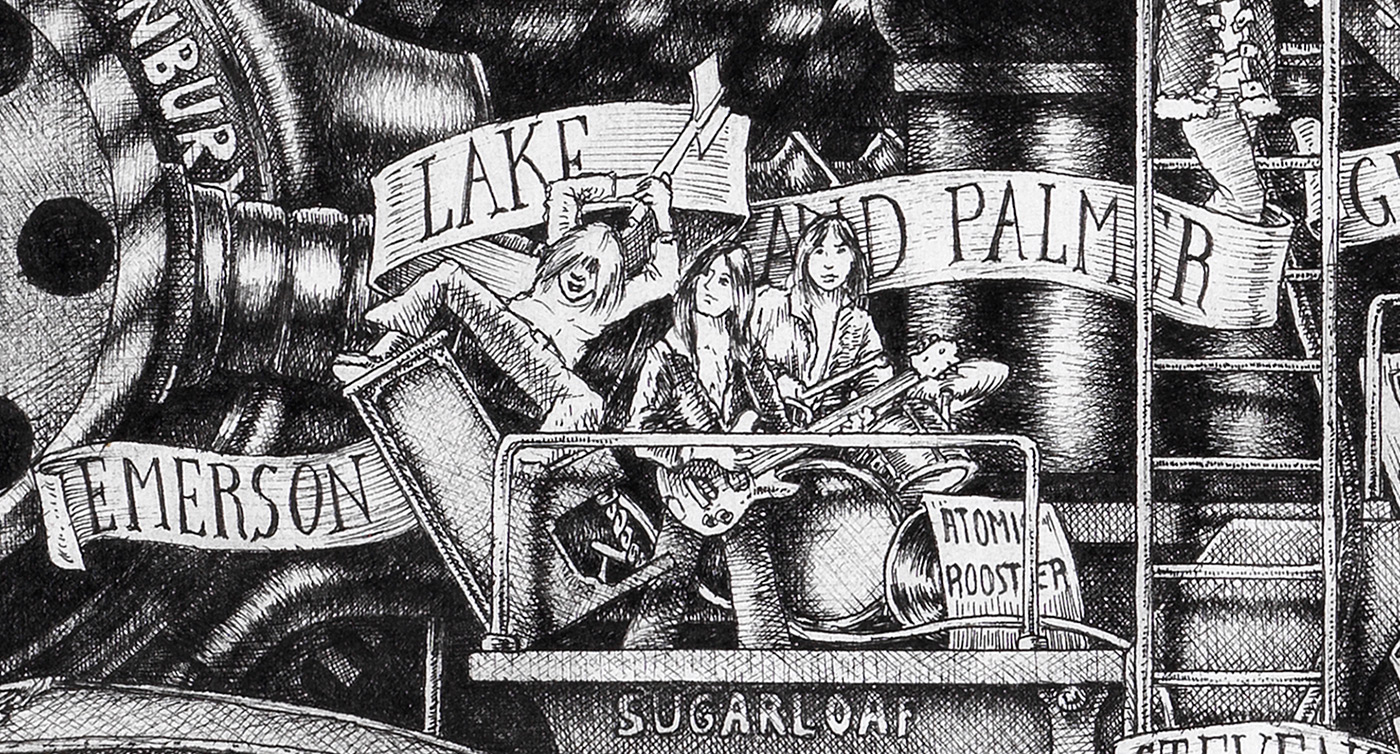
The debut album and Tarkus reveal a band replacing the usual lead-guitar focus with Hammond organ, piano and Moog. Emerson drew on Bach, Mussorgsky and jazz without treating classical music as a museum piece: he subjected it to rock’s volume and theatricality. Palmer did more than keep time, setting accents, rolls and independent figures against the keyboards; Lake balanced forceful bass with acoustic and melodic passages such as Lucky Man and From the Beginning. Beneath the apparent display of technique, their music worked when the contrasts remained audible: monumental keyboards, a warm voice and restless drums searching for balance.
Success and the weight of spectacle
Moving from concert halls into large arenas made ELP a symbol of progressive rock’s possibilities and excesses. Pictures at an Exhibition brought Mussorgsky into a rock concert; Trilogy refined their songwriting, while Brain Salad Surgery combined science-fiction imagery, virtuosity and increasingly elaborate stage production. Success also changed their relationships: Emerson’s ambitions, Lake’s concern for song form and Palmer’s discipline did not always align. Touring, audience expectations and the pressure to surpass each previous show made their early spontaneity harder to preserve. Their story exposes a human question beneath the spectacle: how far can a project built on three individual voices expand before its own scale begins to shape the music?
Fracture, reunions and a contested legacy
After the orchestral experiment of Works Volume 1, financial and artistic difficulties combined with exhaustion; the band split in the late 1970s and reunited in the 1990s. Meanwhile, punk and new wave challenged the very spectacle that had filled their concerts. Reducing ELP to a symbol of excess, however, obscures their influence. From the Nice and early King Crimson they inherited the idea of rock open to complex composition, then carried it toward symphonic rock, modern keyboard virtuosity and a conception of drums as an independent voice. Their history is also that of three musicians who wanted different things yet created a sound none could have achieved alone.
Albums such as Tarkus and Brain Salad Surgery became defining examples of progressive rock experimentation during the 1970s. Lucky Man, Tarkus, From the Beginning and Karn Evil 9 reveal ELP’s contrast between melody, extended composition, electronic keyboards and rhythmic power.
Within The Great Rock and Roll History, ELP illustrate the moment when progressive rock also became a culture of large-scale concerts: technology, staging and virtuosity changed the relationship between musicians and audiences, even as reactions against rock spectacle began to emerge.
Influenced by
- Johann Sebastian Bach
- Modest Mussorgsky
- Dave Brubeck
- The Nice
- King Crimson
Influent For
- Dream Theater
- Jordan Rudess
- Rick Wakeman
- Spock’s Beard
- Transatlantic
Related Artists
- The Nice
- King Crimson
- Atomic Rooster
- Yes
- Premiata Forneria Marconi
SOURCES
Emerson, Lake & Palmer official website: https://www.emersonlakepalmer.com/
Greg Lake official website: https://www.greglake.com/
Carl Palmer official website: https://www.carlpalmer.com/
Edward Macan, Rocking the Classics: English Progressive Rock and the Counterculture
In progressive rock genealogy, Emerson, Lake & Palmer demonstrate how rock could absorb classical forms and jazz improvisation without losing the energy of live performance. Their legacy grew from three contrasting temperaments: Emerson’s sonic invention, Lake’s melodic sensitivity and Palmer’s dynamic precision. The tensions that eventually wore the group down cannot be separated from the audacity that made its music possible.