
King Crimson appeared in 1969 within a British scene already expanding rock through psychedelia, jazz, classical music and new studio technologies. From the beginning, however, Robert Fripp and the changing musicians around him resisted turning that openness into a stable formula: each phase called the previous one into question.
This profile places King Crimson within The Great Rock and Roll History, tracing the route from late-1960s psychedelia and symphonic rock toward a more unstable, rhythmic and experimental progressive language, capable of anticipating developments far beyond the genre’s first period.

Rock Icons: King Crimson
Progressive rock as continuous transformation rather than a style to preserve.

From In the Court of the Crimson King to Larks’ Tongues in Aspic, Starless and Bible Black and Red, King Crimson connected rock, jazz, improvisation, classical influences and timbral research while repeatedly reshaping the language of British progressive rock.
Formed: 1968, London (U.K.)
Statuds: intermittent project with a changing lineup
Key Figures: Robert Fripp
Genres: Rock, Pop, Beat
ARTIST OFFICIAL SITE: King Crimson
LISTEN
Larks’ Tongues in Aspic, Part I
More to discover…
From symphonic rock to instability: a band changing as progressive rock takes shape
In 1969 In the Court of the Crimson King arrived as British rock was moving beyond psychedelia. Mellotron, extreme dynamics, improvisation and near-symphonic construction coexist with a harshness that, in 21st Century Schizoid Man, already feels far removed from simple orchestral decoration. The human history of the group is equally unstable: rapidly changing lineups, musicians with different ideas, and Robert Fripp remaining the point of continuity without turning King Crimson into a conventional band built around a frontman. Instability becomes almost a working method.
During the early 1970s the group continued dismantling its own language. Larks’ Tongues in Aspic introduced a more mobile rhythm section, David Cross’s violin and Jamie Muir’s percussion; with John Wetton and Bill Bruford the sound gained weight without becoming conventional hard rock. Collective improvisation, irregular meters, abrupt silences and blocks of sound increasingly replaced the monumentality of the debut. On Red this search reaches a leaner, more physical form: a riff can carry the weight of hard rock while being placed inside far less predictable structures.
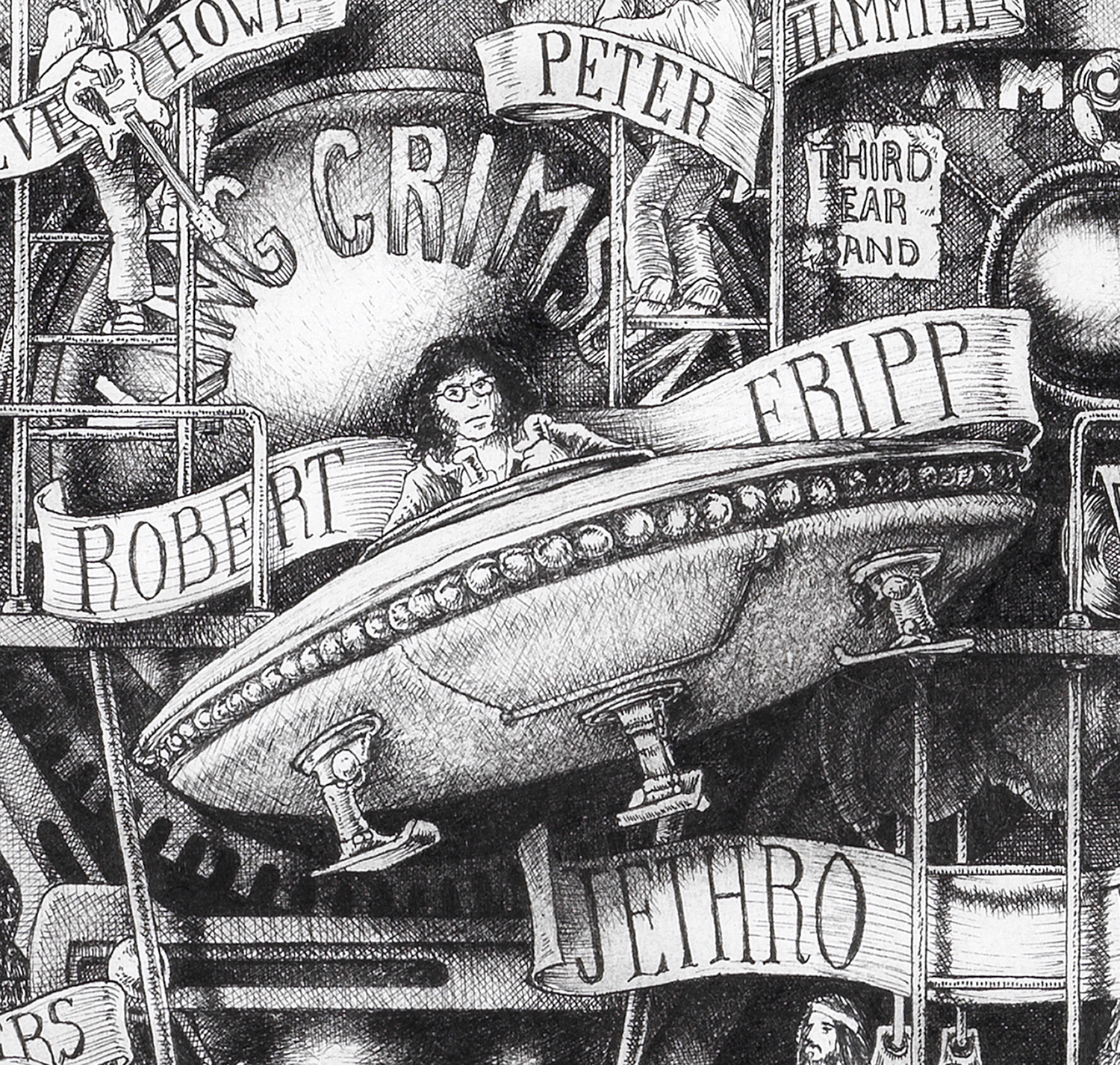
King Crimson’s genealogical position lies precisely in moving through progressive rock without fully coinciding with its most codified image. Psychedelia and jazz contribute formal freedom and improvisation; classical music contributes organization, tension and timbral investigation; electric rock contributes volume and riff.
The result opens several routes: experimental progressive, art rock, forms of heavy progressive, and later languages using rhythmic complexity and dissonance outside historical prog. The line therefore runs: psychedelia + jazz + classical music + electric rock -> King Crimson -> experimental progressive/art rock -> later forms of complex, heavy and dissonant rock.
Albums such as In the Court of the Crimson King, Larks’ Tongues in Aspic and Red show how King Crimson reshaped progressive rock through changing lineups, improvisation, irregular meters, timbral research and an increasingly physical use of sound.
WithinThe Great Rock and Roll History, King Crimson embody a central contradiction of the early 1970s: while
progressive rock was consolidating into a recognizable genre, the group continued to treat it as provisional territory, to be abandoned or rebuilt whenever it threatened to become predictable.
Influenced by
- British experimental jazz
- European contemporary music
- Late 1960s psychedelia
- Béla Bartók
- John Coltrane
Influent For
- Modern progressive rock.
- Post Rock
- Math Rock
- Contemporary art rock
- Tool
- Talking Heads
- Opeth
Related Artists
Get Your Rock Icon
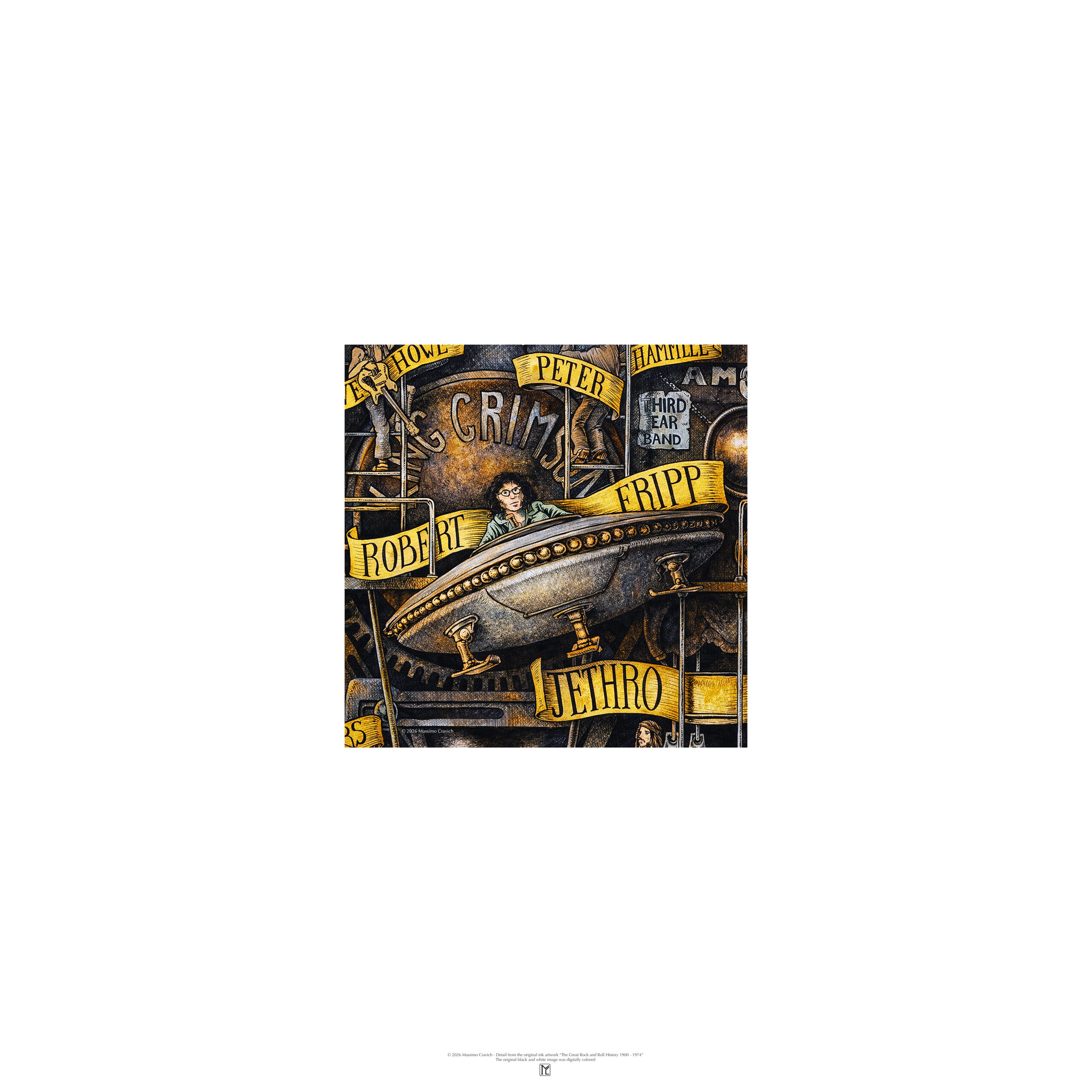
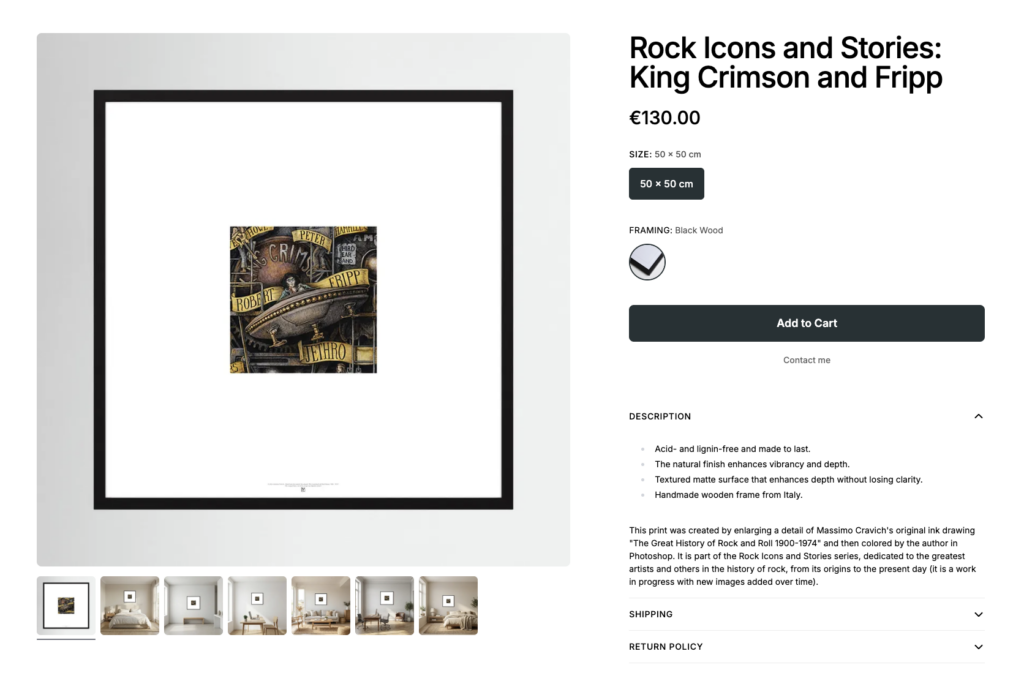
Selected artworks from Rock Icons and Stories are available as high-quality framed art prints. Printed on premium 230 gsm matte paper with excellent detail and colour reproduction, each print is professionally framed and delivered ready to hang.A carefully selected, high-quality alternative to the museum-grade Fine Art Giclée editions, offering an accessible way to own and display a reproduction of the original artwork. Printing, framing and worldwide fulfilment are handled by our specialist printing partner.
In rock genealogy, King Crimson are not simply one of the groups associated with the emergence of progressive rock; they are also one of the forces that kept it from becoming completely fixed. From the near-symphonic landscape of 1969 to the harder, fragmented material of Red, each lineup questions the previous one. That instability – musical and human – makes the group an important passage between progressive rock’s first expansion and later ideas of complexity, dissonance and experimentation..