
The Grateful Dead were one of the most original and culturally influential bands to emerge from the American counterculture of the 1960s, transforming rock into an open-ended meeting place for folk, blues, country, psychedelia, jazz and collective improvisation.
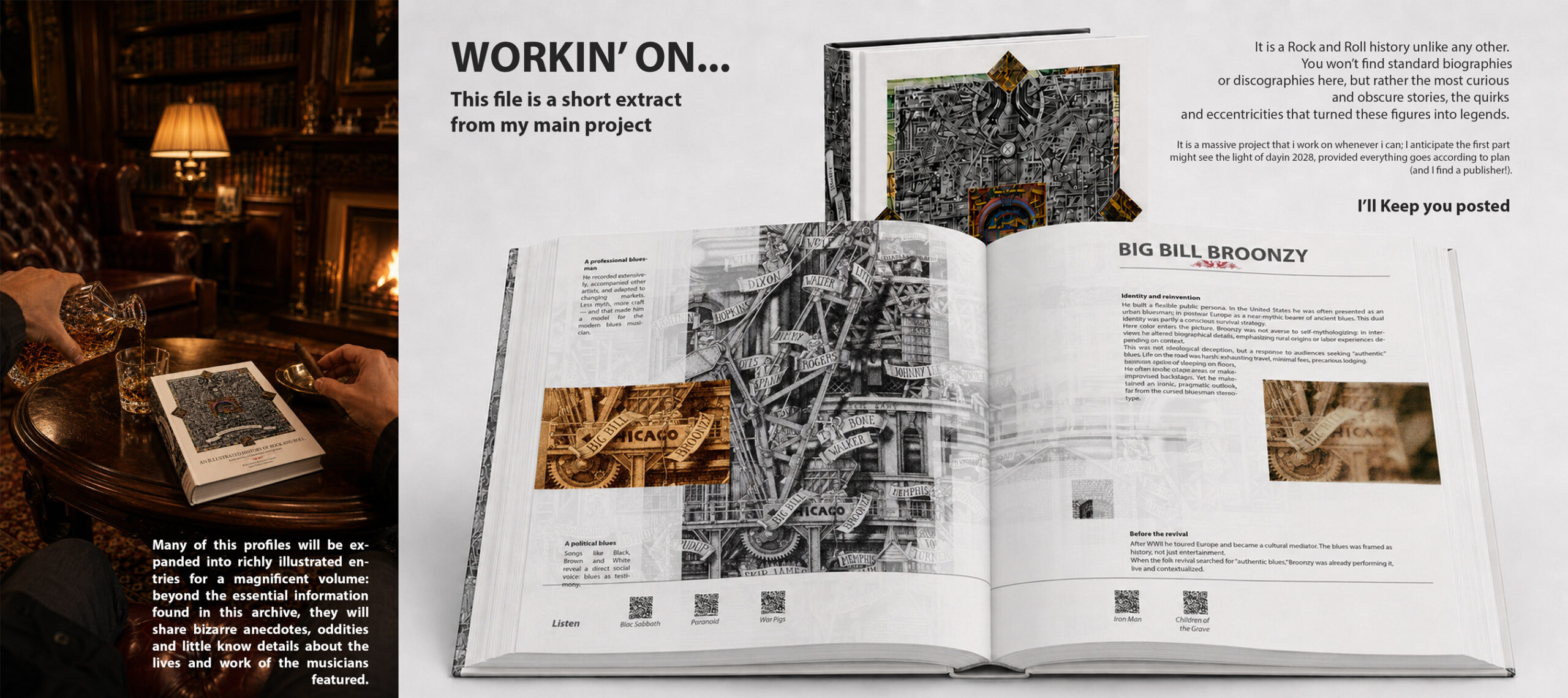
This illustrated profile explores the Grateful Dead’s musical language, improvisational philosophy, communal culture and long-term influence within The Great Rock and Roll History, a large-scale illustrated timeline mapping the evolution of modern music.
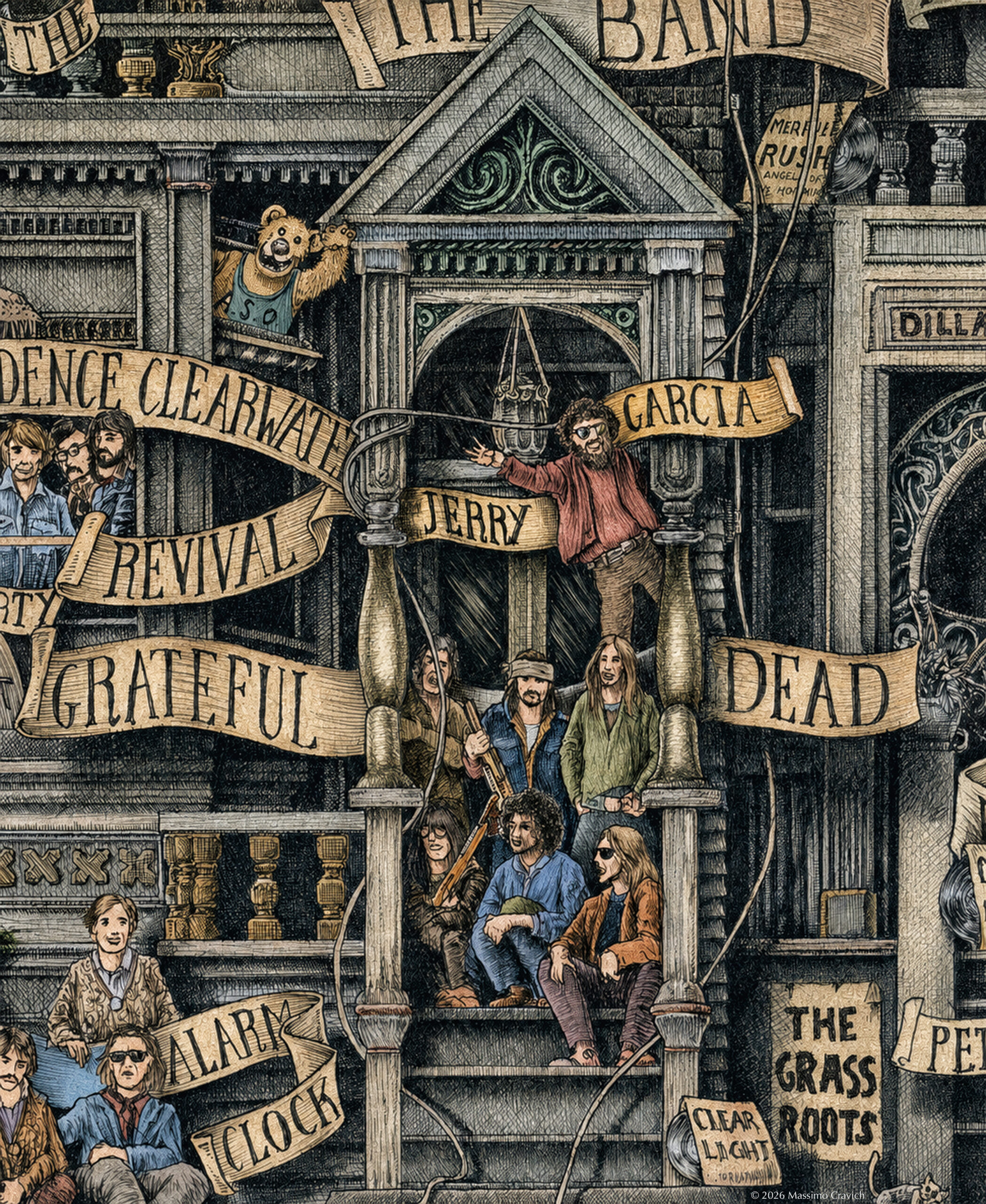

Rock Icons: Grateful Dead
The San Francisco band that turned songs into journeys, concerts into communities and improvisation into a permanent way of making rock music.
From their beginnings as the Warlocks and their central role in the San Francisco psychedelic scene to decades of constantly changing live performances, the Grateful Dead created a unique synthesis of American roots music and exploratory rock, establishing a model later inherited by jam bands and independent touring cultures.
Founded: 1965, San Francisco Bay Area (California, USA)
Status: disbanded (1995) — with a living legacy through successor projects and a still-thriving fan culture
Core genres: psychedelic rock, jam band, folk-rock, blues, Americana
Classic core: Jerry Garcia, Bob Weir, Phil Lesh, Bill Kreutzmann, Ron “Pigpen” McKernan (later joined by Mickey Hart and others)
ARTIST OFFICIAL SITE: https://www.dead.net/
LISTEN
More to discover…
The band that made the journey more important than the destination
The Grateful Dead occupy a peculiar place in rock history because their deepest achievement cannot be reduced to a sequence of hit singles or even to a conventional discography.
They emerged from the same mid-1960s Bay Area counterculture that produced psychedelic rock, but their roots reached much further back. Jerry Garcia had immersed himself in bluegrass and folk; Ron ‘Pigpen’ McKernan brought blues and R&B; Phil Lesh approached the bass with a compositional imagination shaped partly by avant-garde and classical music; Bob Weir developed an unusually oblique rhythm-guitar language; and the percussion section eventually became a polyrhythmic laboratory.
The result was not stylistic purity but continuous conversation.Their decisive innovation was to treat the concert as a living form. Songs were structures that could open, dissolve into improvisation and return in altered form. Pieces such as ‘Dark Star’ became less fixed compositions than territories to revisit, and no two performances needed to be identical. This practice connected rock improvisation with jazz-like risk while remaining grounded in folk songs, blues forms, country harmonies and the American songbook. Studio albums such as Workingman’s Dead and American Beauty revealed another essential side of the group: concise songwriting, vocal harmony and a deep relationship with older American musical traditions.
Equally important was the culture that formed around them. The Dead encouraged concert taping under controlled conditions, cultivated a direct relationship with their audience and developed an enormous touring ecosystem largely outside the normal logic of radio hits. The Deadheads were not simply fans but participants in a mobile community whose rituals became inseparable from the band’s identity.
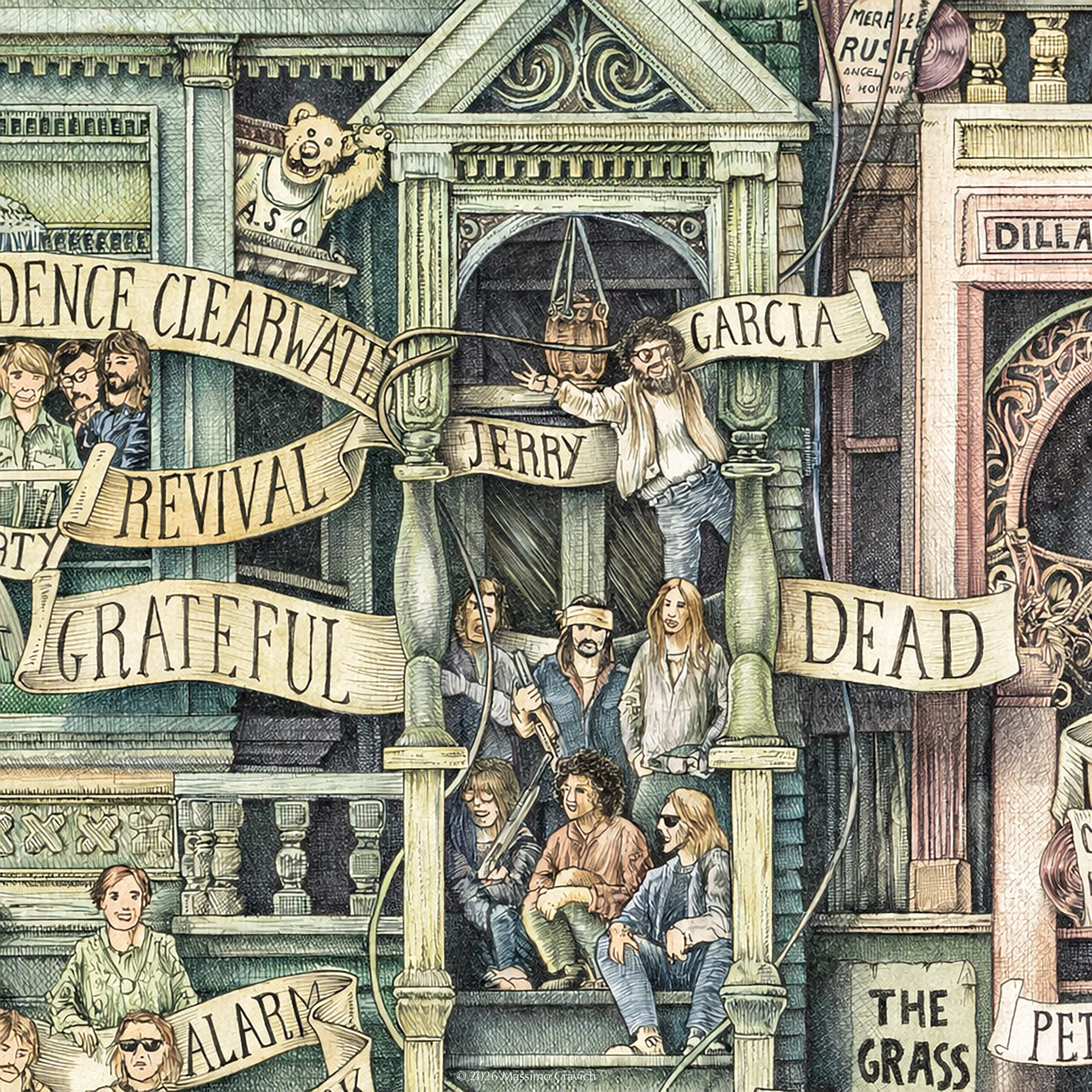
This combination of musical openness, technological curiosity, independent organization and audience loyalty anticipated later jam-band culture and aspects of direct-to-fan music distribution. The Grateful Dead therefore represent not only a sound, but an alternative model of how a rock band could exist.
Albums and performances surrounding Live/Dead, Workingman’s Dead, American Beauty and Europe ’72 established the Grateful Dead as a crucial link between San Francisco psychedelia, American roots music and the improvisational culture that would later define the jam-band tradition.
Within The Great Rock and Roll History, the Grateful Dead stand at a major crossroads: the folk revival, blues, bluegrass and country meet the psychedelic revolution, while jazz-like improvisation and an unusually close relationship with the audience point toward later forms of live-oriented and independent rock culture.

Influenced by
- Reverend Gary Davis (gospel-blues, fingerpicking, American spiritual tradition).
- Rural blues and R&B;, folk revival and Bay Area bluegrass (pre-psychedelic roots).
- Jazz and improvisation (the idea that form can change every night).
- Woody Guthrie
- Bill Monroe
- Muddy Waters
- John Coltrane
- The Beatles
Influent For
- Phish (jam approach and fan culture).
- Widespread Panic (American jam-rock).
- The String Cheese Incident (festival culture + improvisation).
- Wilco and modern Americana (song as landscape).
- Psychedelic and neo-psych scenes (free form as ritual sound).
- Live-sound technology and concert audio philosophy.
- The very notion of a “community band”: fans as co-authors of the legend.
Related Artists
Ken Kesey and the Merry Pranksters
Get Your Rock Icon
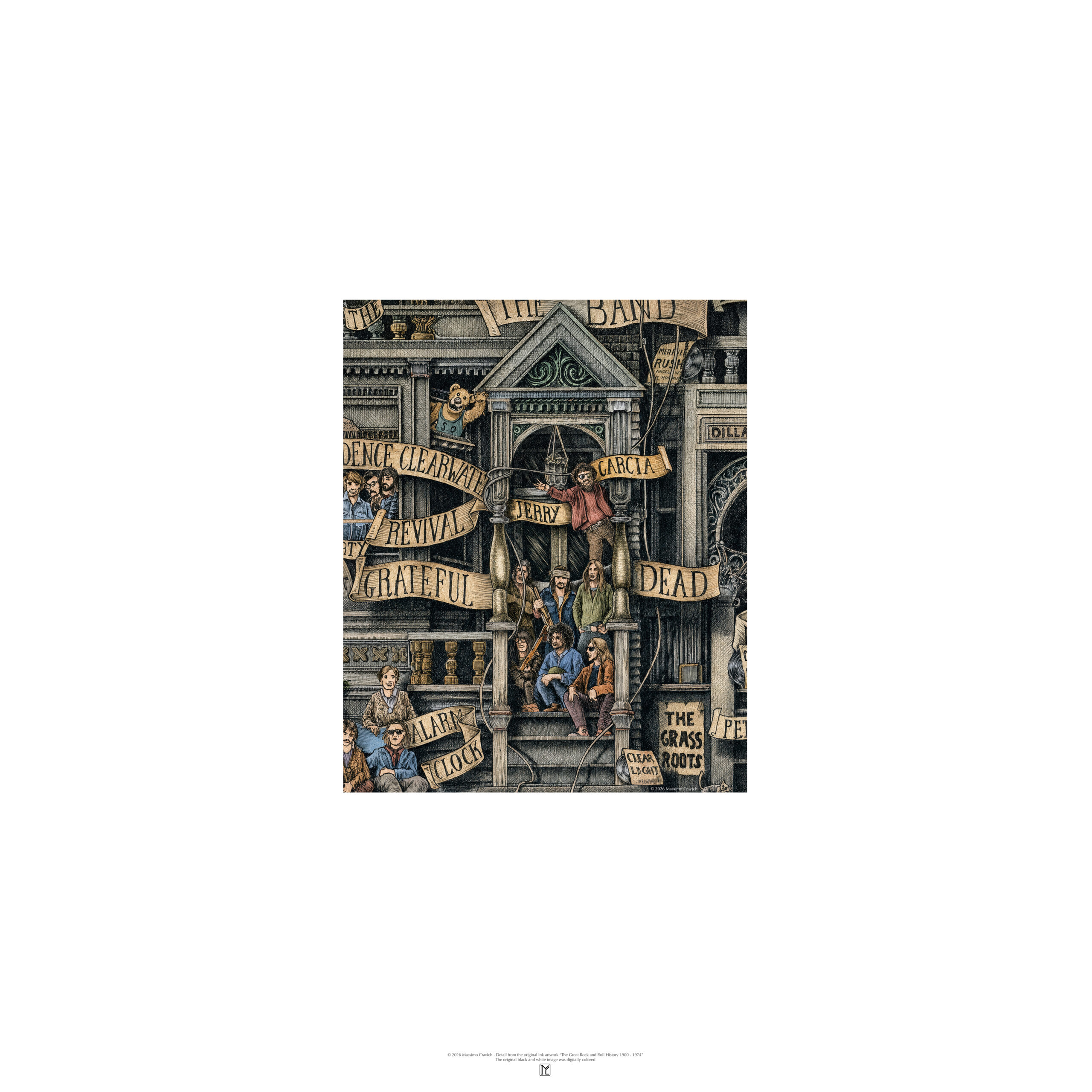
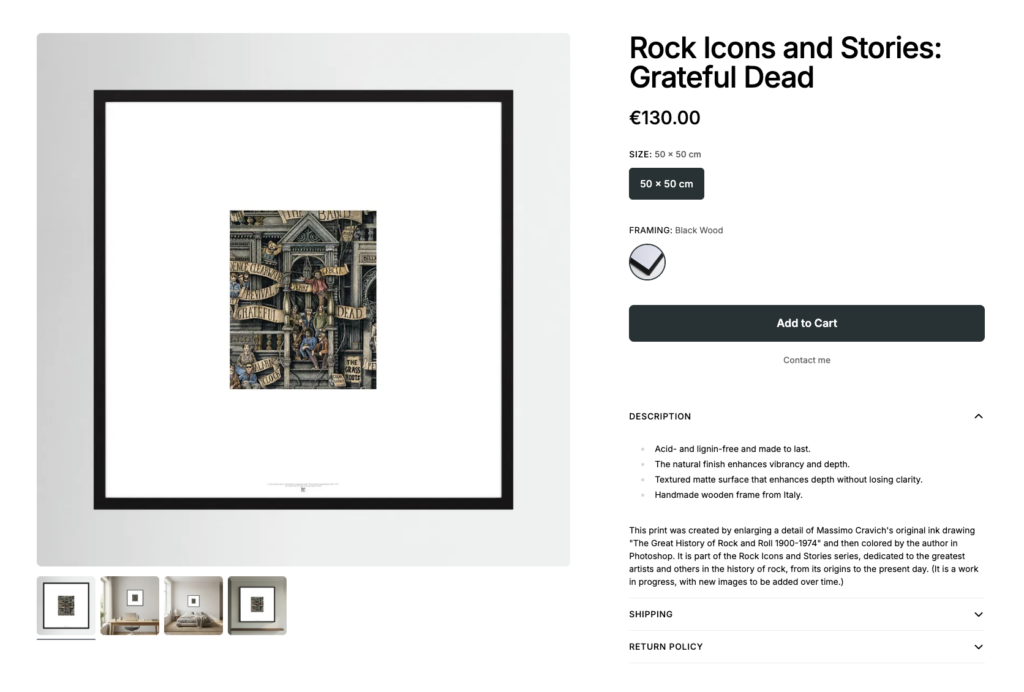
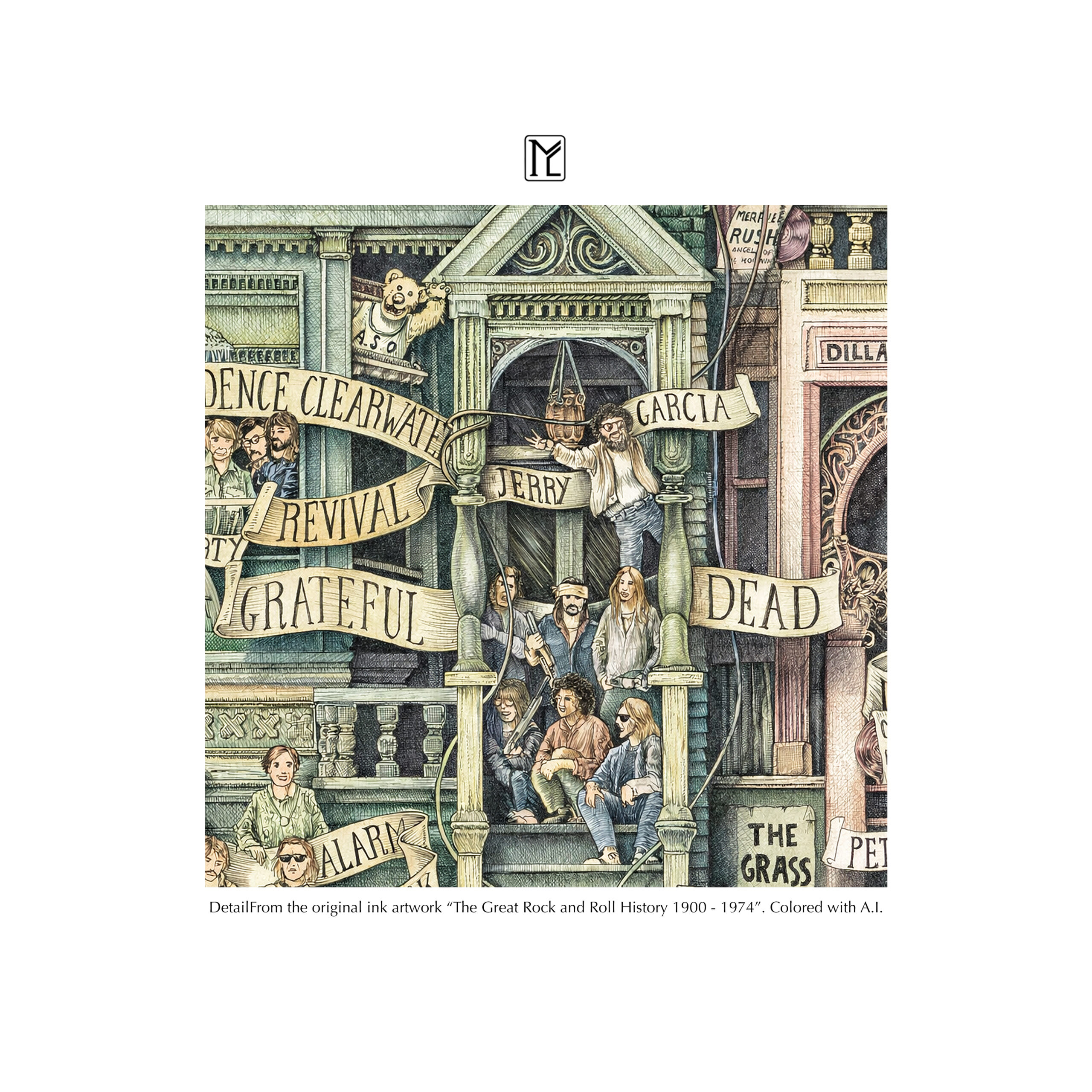
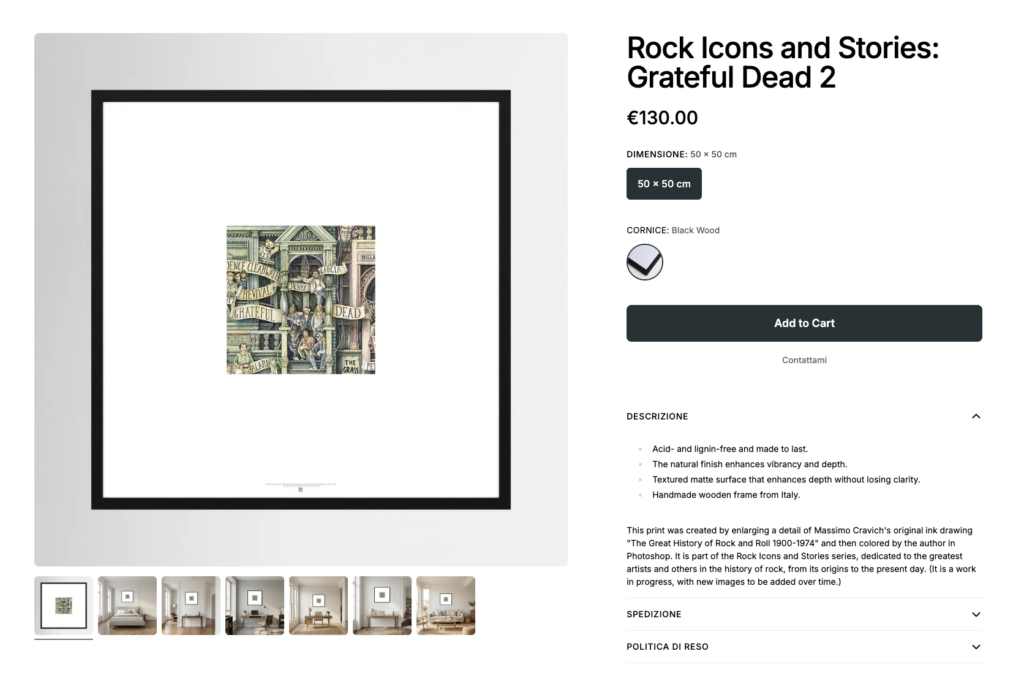
Selected artworks from Rock Icons and Stories are available as high-quality framed art prints. Printed on premium 230 gsm matte paper with excellent detail and colour reproduction, each print is professionally framed and delivered ready to hang.A carefully selected, high-quality alternative to the museum-grade Fine Art Giclée editions, offering an accessible way to own and display a reproduction of the original artwork. Printing, framing and worldwide fulfilment are handled by our specialist printing partner.
Two different prints available:
SOURCES
• Grateful Dead – official website and archive: dead.net
• Rock & Roll Hall of Fame – Grateful Dead inductee profile: rockhall.com/inductees/grateful-dead/
• Dennis McNally, A Long Strange Trip: The Inside History of the Grateful Dead, Broadway Books, 2002.
• Blair Jackson, Garcia: An American Life, Viking, 1999.
• David Gans and Peter Simon, Playing in the Band: An Oral and Visual Portrait of the Grateful Dead, St. Martin’s Press, 1985.
Within the broader history of rock music, the Grateful Dead represent one of the clearest examples of rock as an evolving process rather than a fixed product. By connecting American roots traditions with psychedelia, extended improvisation and a radically durable live community, they created a musical and cultural model whose influence extends far beyond the San Francisco scene from which they emerged.