
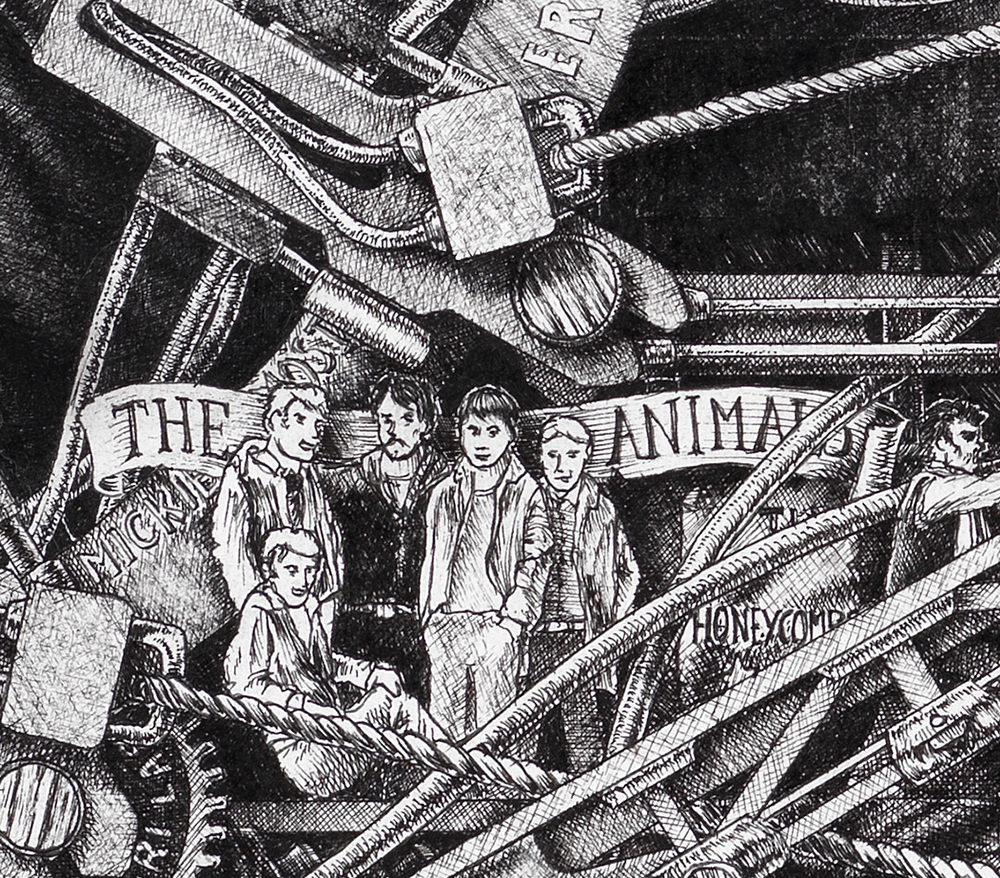
The Animals brought a raw sound rooted in African American blues and working-class Newcastle into the heart of the British Invasion. With Eric Burdon on vocals and Alan Price on organ, they turned The House of the Rising Sun into an international hit. This Great Rock and Roll History profile follows their path from British rhythm and blues through internal divisions to American psychedelia.

Rock Icons: The Animals
From Newcastle to the world: the blues, a ferocious voice and the cost of success.

Through The House of the Rising Sun, Don’t Let Me Be Misunderstood and We Gotta Get Out of This Place, the Animals built a bridge between blues, soul, British rock and 1960s youth culture. By combining traditional British folk music with electric instrumentation and evolving ensemble structures, the group helped expand the language of folk rock.
Formed: 1971, Newcastle, United Kingdom
Status: Disbanded
Classic Lineup: Eric Burdon, Alan Price, Hilton Valentine, Chas Chandler, John Steel
Later Members: Dave Rowberry, Barry Jenkins; the American lineup included John Weider and others
Genres: British rhythm and blues, blues rock, rock, psychedelia
Production: Mickie Most on the early hit recordings
ARTIST OFFICIAL SITE: www.ericburdon.com
LISTEN
We Gotta Get Out of This Place
More to discover…
Newcastle: five personalities and music taken seriously
The Animals emerged far from the London scene that dominates the usual British Invasion story. Eric Burdon grew up in industrial Newcastle, drawn to African American music that seemed to speak more honestly about the world he knew. A band formed around Alan Price’s organ, played the clubs, absorbed Ray Charles, John Lee Hooker and rhythm and blues, and developed a harsher identity than many of its pop contemporaries.
Hilton Valentine supplied guitar, Chas Chandler bass and John Steel drums: different personalities held together by the urgency of performance rather than a perfectly shared long-term plan. Burdon’s deep, dramatic voice did not merely imitate his models; it made the blues feel immediate to British youngsters growing up amid factories and social change.
A house in New Orleans and a success that changed everything
In 1964 the group recorded The House of the Rising Sun, a traditional song already shaped by numerous folk and blues interpretations. Valentine’s arpeggio, Price’s organ and Burdon’s almost theatrical delivery created a record unusual in length and atmosphere, yet capable of topping international charts.
Success opened America to them but also introduced problems: the arrangement credit, awarded solely to Price, became a lasting source of friction. The band continued with emotionally powerful songs such as Don’t Let Me Be Misunderstood and We Gotta Get Out of This Place, the latter resonating with young people desperate to escape their circumstances. The Animals thus became unplanned spokesmen for anxieties far broader than their own biographies.
The band fractures: money, control and divergent paths
Life between concerts, studios and promotion exposed tensions that performing together had temporarily contained. Price left in 1965 and was replaced by Dave Rowberry. Chandler departed the following year and became a manager and producer, playing a decisive role in Jimi Hendrix’s breakthrough. Steel also left, making way for Barry Jenkins.
Burdon, a magnetic figure increasingly drawn toward new experiences, no longer identified with the formula behind the early hits. Their story reflects a recurring problem for 1960s bands: the music business demanded continuity just as rapid success accelerated personal change and made compromises between musicians harder to sustain.
From the British Invasion to psychedelic California
After the original lineup dissolved, Burdon gravitated toward California and assembled a new Animals lineup immersed in psychedelia and counterculture. San Franciscan Nights and Sky Pilot belong to a world very different from Newcastle’s clubs. The group’s genealogy remains clear, however: electric blues and soul fed British rhythm and blues, which the Animals brought into international charts before exploring new forms of rock.
Their legacy is more than a collection of hits. They demonstrated how a voice, an organ and a lean rhythm section could transform existing repertoire into a recognizable identity, while revealing the human price of an extraordinarily fast ascent.
With Alan Price’s organ, Hilton Valentine’s guitar and Eric Burdon’s voice, the Animals helped define the blues-driven, dramatic side of the British Invasion.
Within The Great Rock and Roll History, the Animals show how British bands’ transatlantic success also depended on reinterpretations of African American and folk repertoire, at a time when credits, rights and power within the record industry remained crucial issues.
Influenced by
- John Lee Hooker
- Ray Charles
- Jimmy Reed
- Nina Simone
- Bo Diddley
Influent For
- Bruce Springsteen
- Joe Cocker
- The Doors
- Tom Petty
- George Thorogood
Related Artists
- The Rolling Stones
- The Yardbirds
- The Spencer Davis Group
- Jimi Hendrix
- War
Get Your Rock Icon
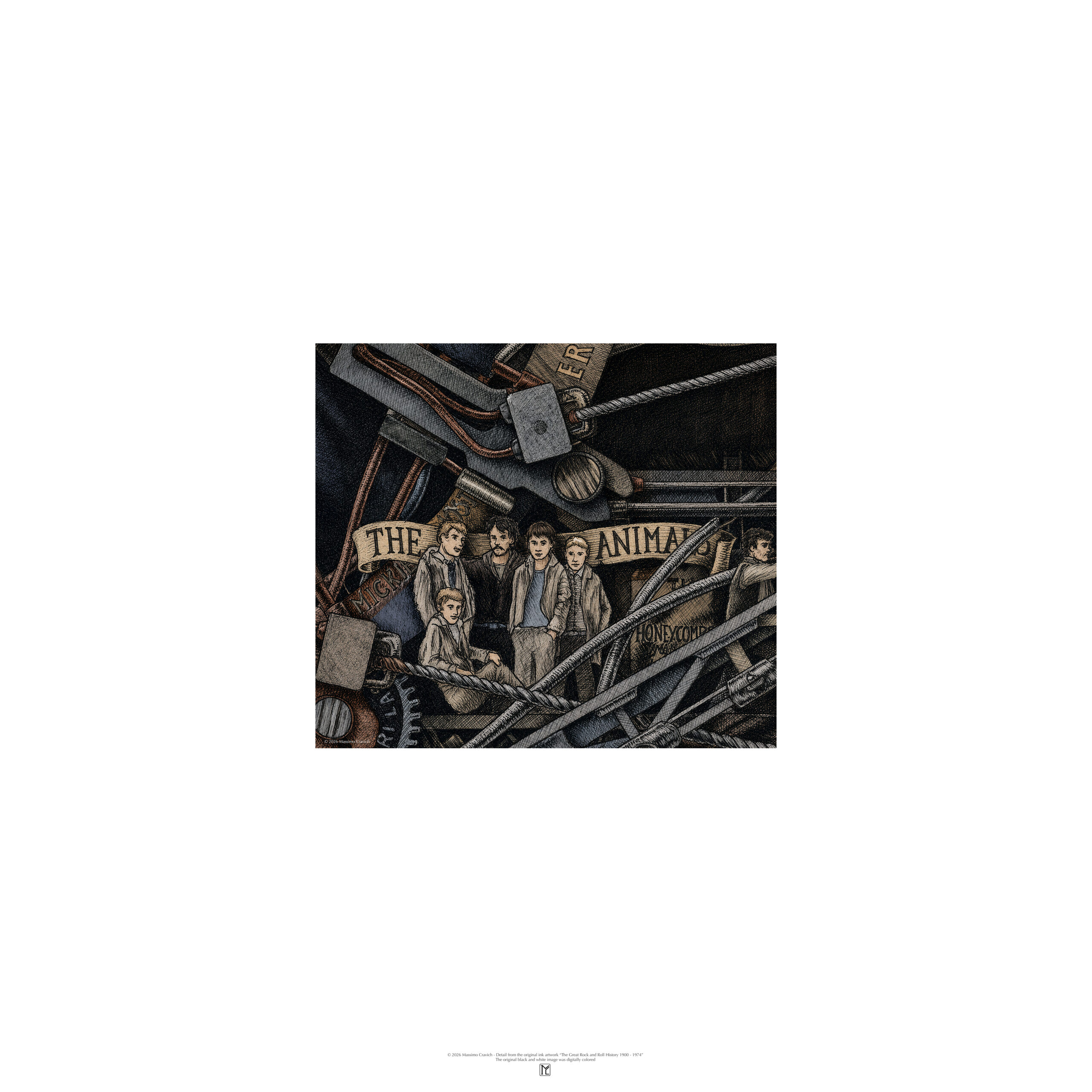
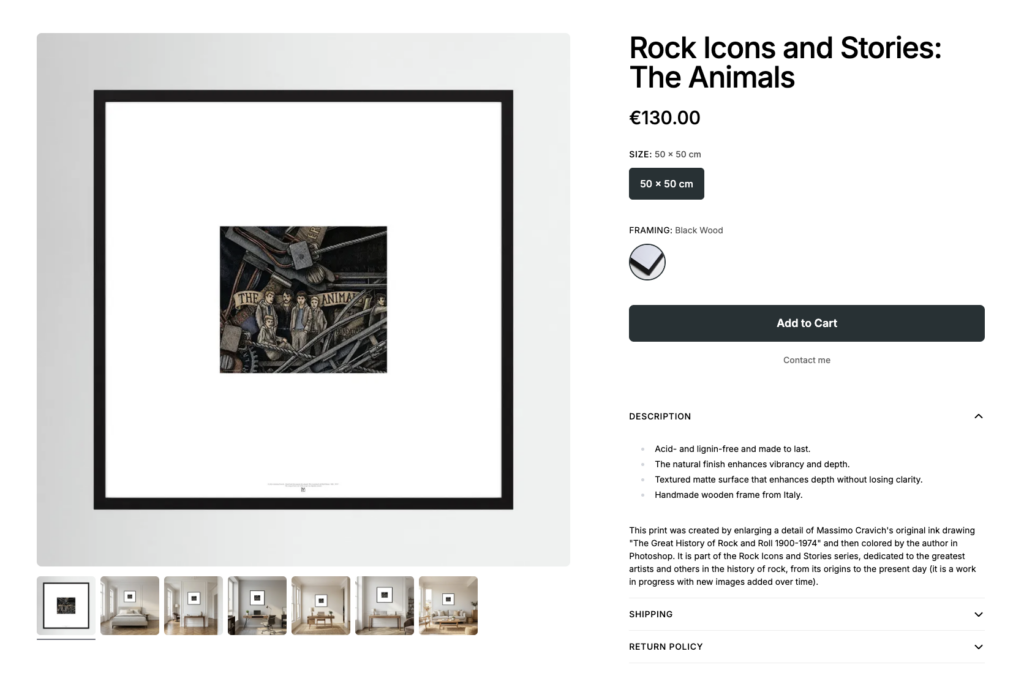
Selected artworks from Rock Icons and Stories are available as high-quality framed art prints. Printed on premium 230 gsm matte paper with excellent detail and colour reproduction, each print is professionally framed and delivered ready to hang.A carefully selected, high-quality alternative to the museum-grade Fine Art Giclée editions, offering an accessible way to own and display a reproduction of the original artwork. Printing, framing and worldwide fulfilment are handled by our specialist printing partner.
SOURCES
The Animals – official website: https://www.theanimalswebsite.com/
Rock & Roll Hall of Fame – The Animals: https://rockhall.com/inductees/animals/
Encyclopaedia Britannica – The Animals: https://www.britannica.com/topic/the-Animals
In rock history, the Animals stand where African American blues, folk tradition and a new British youth sensibility meet. Their intensity came from the balance of voice, organ and rhythm, but also from five personalities overwhelmed by success. From industrial Newcastle to psychedelic California, their trajectory reveals how quickly 1960s rock could transform both music and the lives of those performing it.