
Van der Graaf Generator were one of the darkest, most theatrical and intellectually radical groups in the entire history of British progressive rock. Formed at the end of the 1960s and driven by Peter Hammill’s feverish personality, they built a sonic language made of apocalyptic organs, furious saxophones, nervous improvisation, existential lyrics and constant emotional tension.
This illustrated profile explores their existential progressive rock, theatrical experimentation and cultural influence within The Great Rock and Roll History, a large-scale illustrated timeline of modern music.
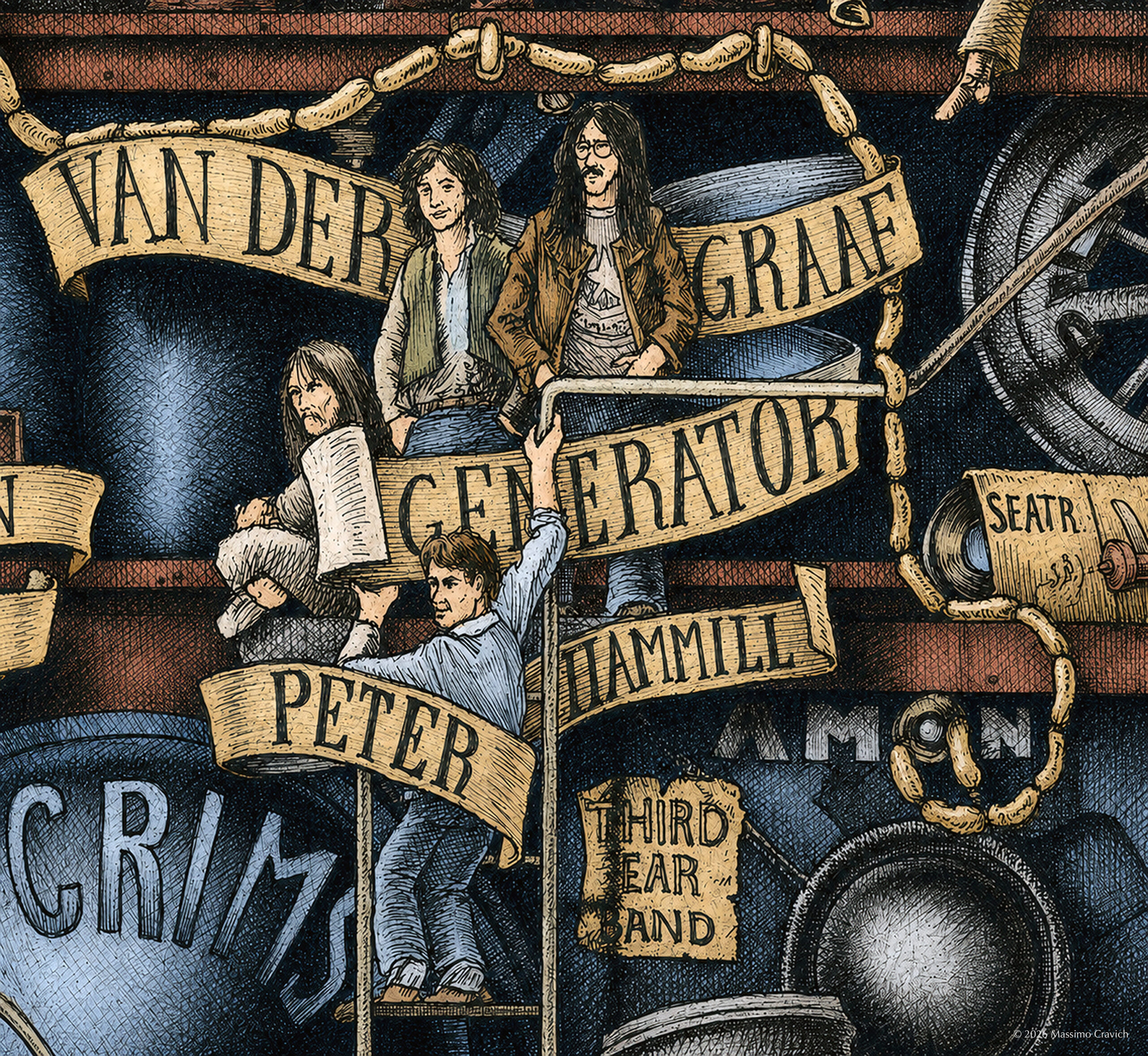
Rock Icons: Van Der Graaf Generator

British progressive visionaries blending existential poetry, jazz chaos and apocalyptic rock atmospheres.urban poetry and proto-punk.
By combining progressive rock, existential lyricism and avant-garde experimentation, Van der Graaf Generator became one of the defining cult bands of intellectual rock history.
Founded: 1967 – Manchester, England
Status: disbanded / intermittent reunions
Classic Core: Peter Hammill, Hugh Banton, Guy Evans, David Jackson
Genres: progressive rock, avant-prog, art rock, experimental rock
ARTIST OFFICIAL SITE: www.vandergraafgenerator.co.uk
LISTEN
A Plague of Lighthouse Keepers
More to discover…
The Darkest Soul of Progressive Rock
Van der Graaf Generator occupy an almost unique position in progressive rock history. While groups such as Yes, Genesis or Emerson Lake & Palmer often moved toward mythological worlds, complex sonic architecture orinstrumental spectacle, Van der Graaf Generator seemed to come from a more unstable and dangerous region of the mind.
Unlike many progressive bands focused on virtuosity, fantasy escape or technical spectacle, Van der Graaf Generator transformed rock into a territory of crisis: identity, madness, isolation, death, faith, fear and psychological fragmentation became musical material.
Their music rarely comforts the listener. Instead, it forces the listener into closed rooms, mental corridors, spiritual crises and distorted inner landscapes. The result is progressive rock that feels less decorative and far more theatrical, closer to expressionism, twentieth-century literature and inner monologue than to simple rock fantasy.
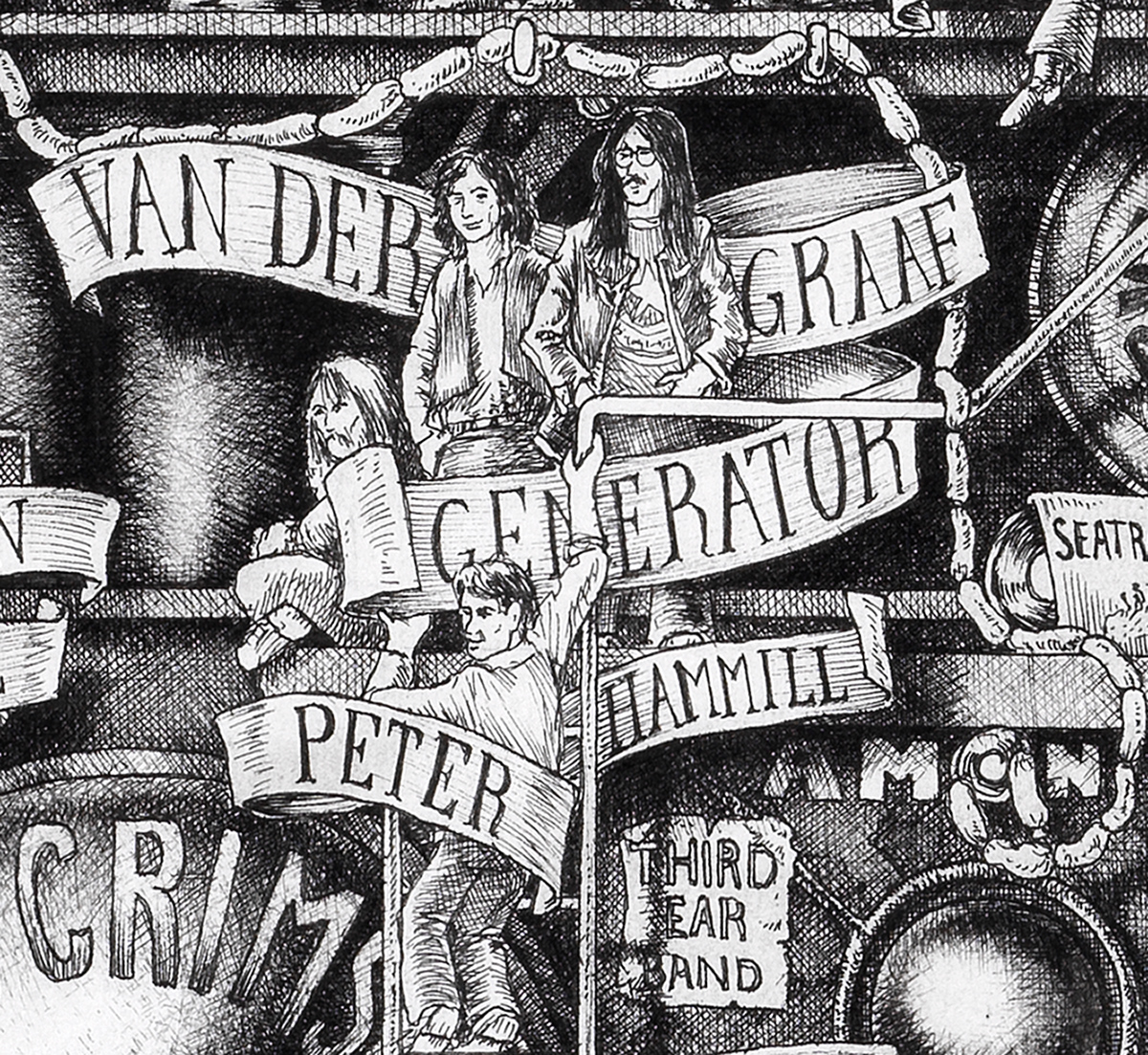
This tension made the group difficult, sometimes even hostile, but also irresistible for listeners who search in music not only for beauty, but for intensity, discomfort and emotional truth.
Albums such as Pawn Hearts, H to He, Who Am the Only One and Godbluff became defining landmarks of dark progressive rock and existential art-rock experimentation.
Their music occupies a central position within the broader visual narrative of The Great Rock and Roll History.
Influenced by
- King Crimson and the darker side of British progressive rock
- Jazz improvisation and free-form ensemble playing
- Expressionist theatre and literary modernism
- Science fiction, existential philosophy and psychological fiction
- British underground and avant-garde rock culture
Influent For
- Peter Hammill’s later solo work and experimental songwriting
- Post-punk and dark art-rock vocal performanceisation and free-form ensemble playing
- Avant-prog and Rock in Opposition sensibilities
- Italian progressive rock audiences and dramatic prog culture
- Experimental bands interested in sax-driven, guitarless rock intensityvant-garde rock culture
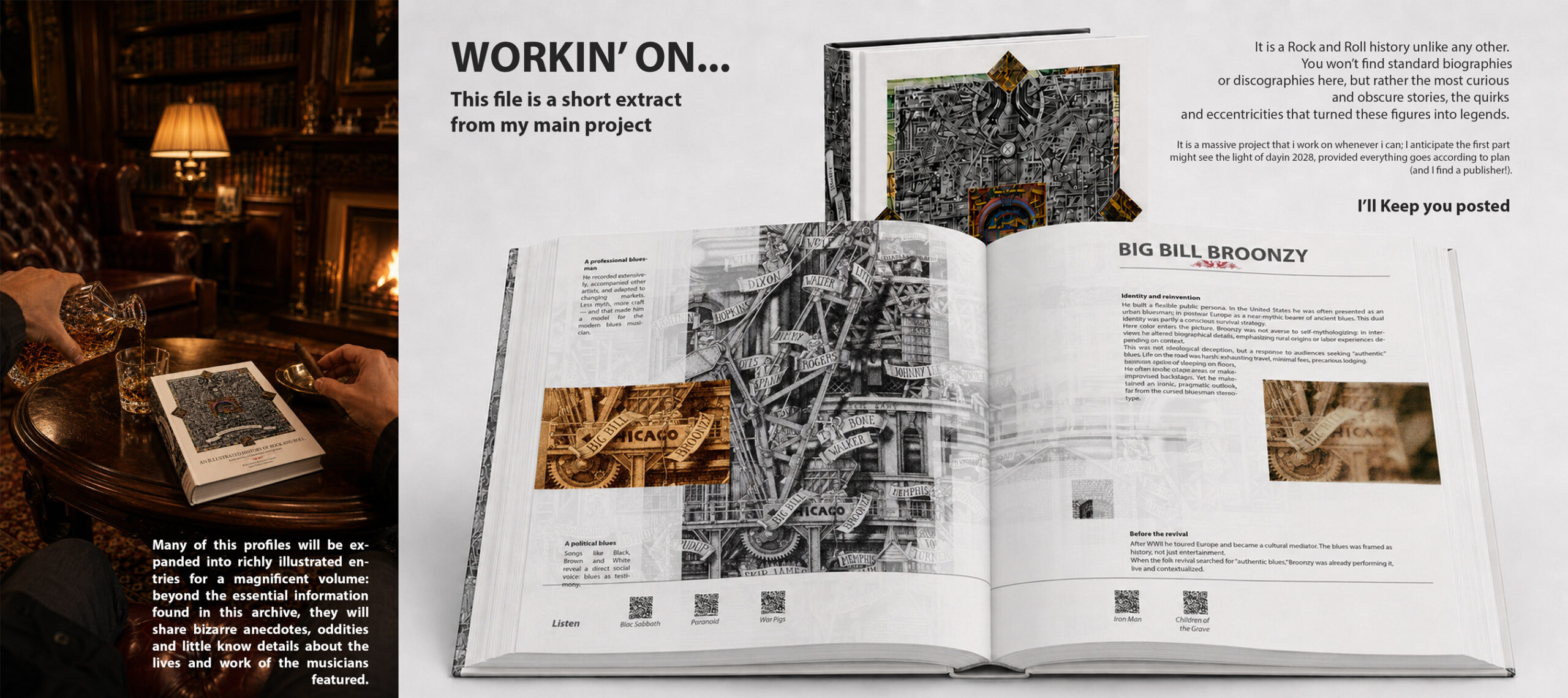
Related Artists
Peter Hammill
Genesis
Peter Gabriel
Robert Fripp
Get Your Rock Icon
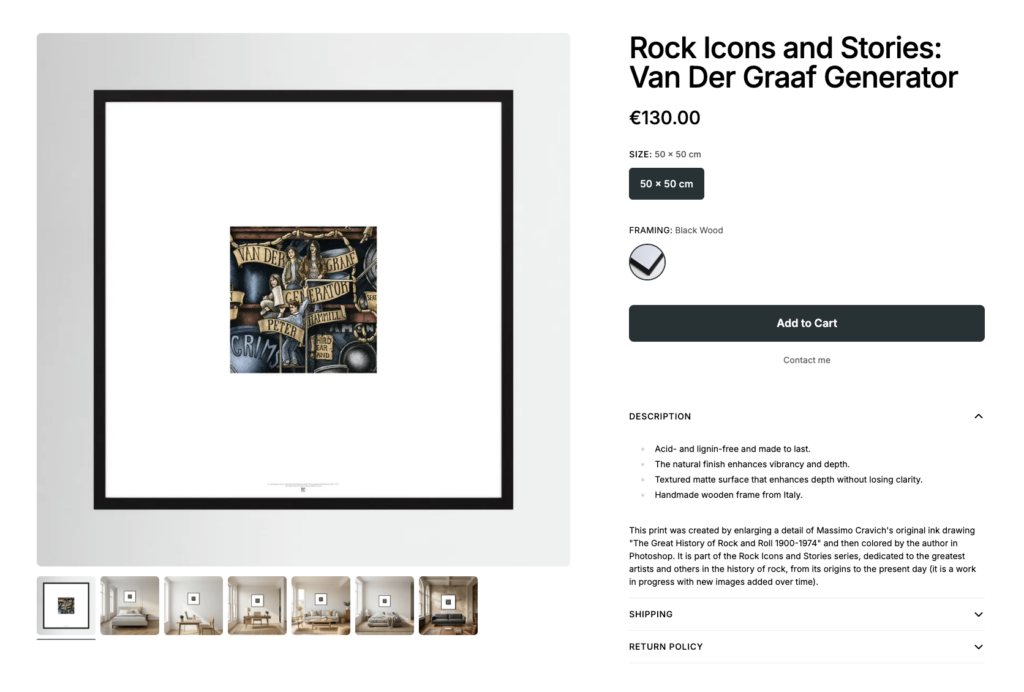
Selected artworks from Rock Icons and Stories are available as high-quality framed art prints. Printed on premium 230 gsm matte paper with excellent detail and colour reproduction, each print is professionally framed and delivered ready to hang.A carefully selected, high-quality alternative to the museum-grade Fine Art Giclée editions, offering an accessible way to own and display a reproduction of the original artwork. Printing, framing and worldwide fulfilment are handled by our specialist printing partner.

SOURCES
Peter Hammill official archives
Van der Graaf Generator / Charisma Records historical resources
AllMusic
Prog Archives
British progressive rock historical archives
Within the broader narrative of progressive rock history, Van der Graaf Generator represent one of the most radical transformations of rock music into existential theatre, literary introspection and psychological intensity.
Their influence extends across avant-prog, post-punk, dark art rock, experimental songwriting and the entire tradition of intellectually ambitious progressive music.