
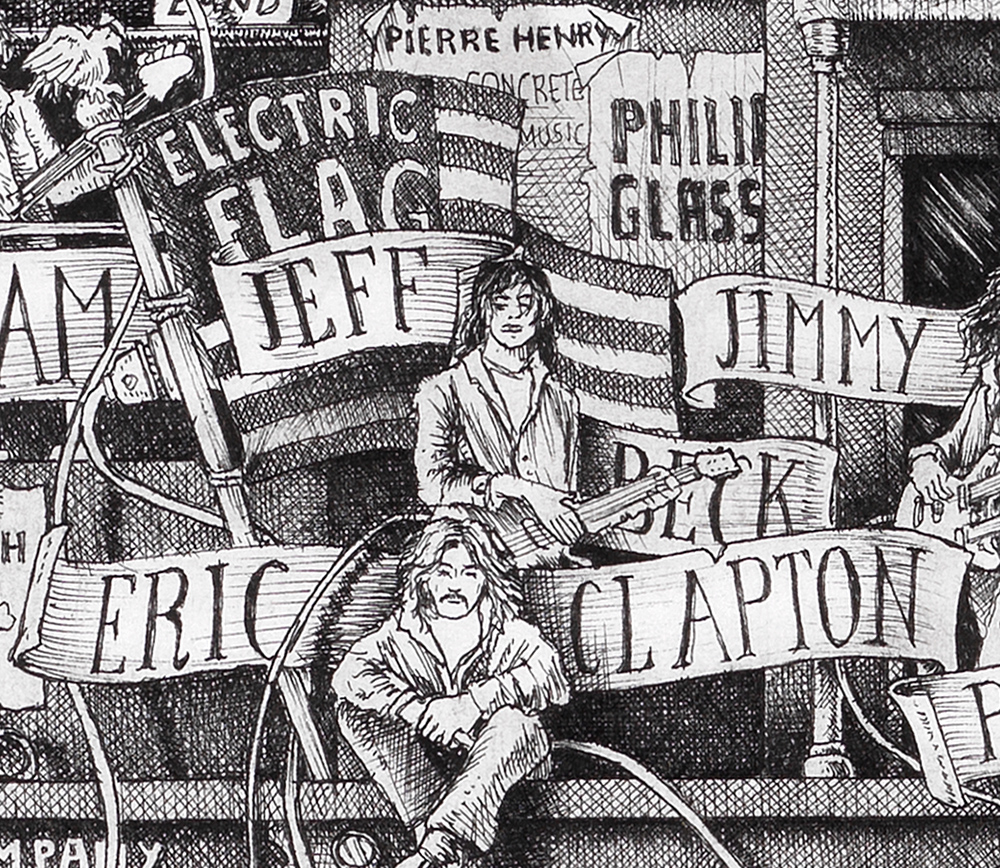
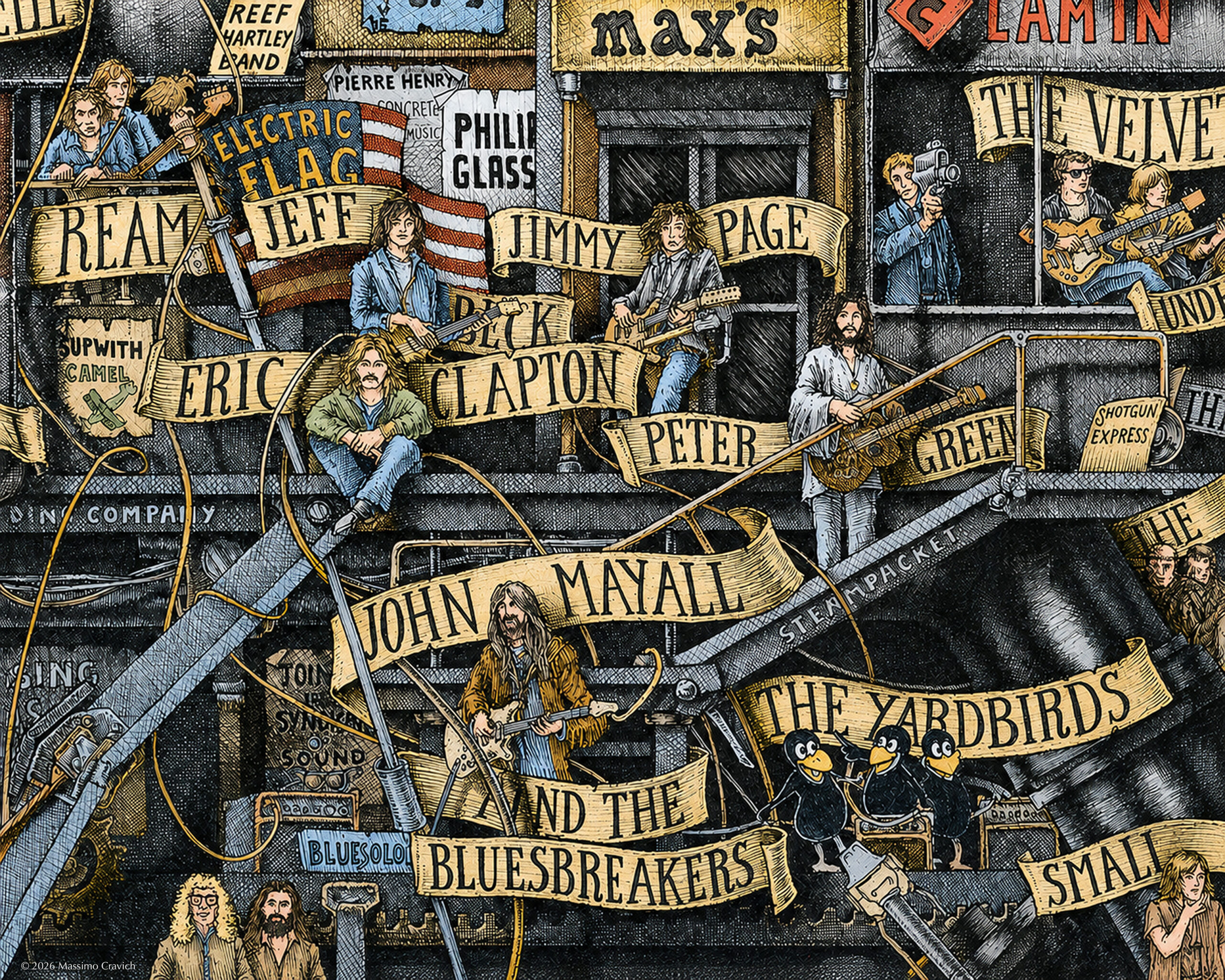
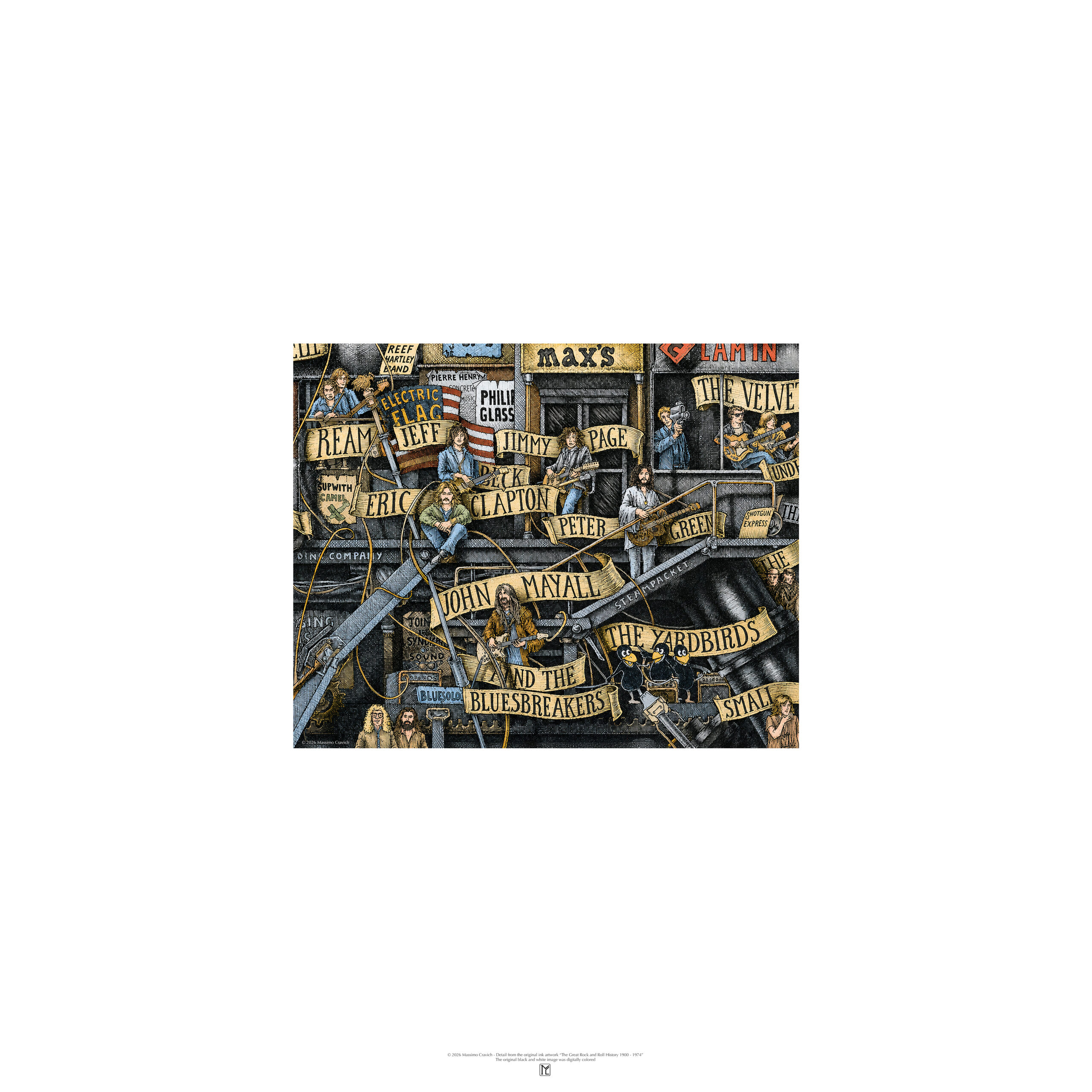
Jeff Beck repeatedly rewrote the vocabulary of the electric guitar: from the Yardbirds’ explosive blues to the Jeff Beck Group’s heavy rock and the instrumental fusion of Blow by Blow and Wired. In The Great Rock and Roll History, his story is that of a musician resistant to labels and more interested in sound than celebrity.

Rock Icons: Jeff Beck
The guitarist who preferred chasing a sound to becoming a star.

From the Yardbirds to fusion, Jeff Beck transformed distortion, feedback, the vibrato arm and melodic sensitivity into an unmistakable musical voice.
Full name Geoffrey Arnold Beck
Born 24 June 1944, Wallington
Died 10 January 2023, East Sussex
Instruments Electric Guitar
Genres Blues rock, hard rock, jazz rock, fusion, instrumental rock
Key bands The Yardbirds; Jeff Beck Group; Beck, Bogert & Appice
Collaborators Rod Stewart, Ronnie Wood, Jan Hammer, Stevie Wonder, Tal Wilkenfeld
ARTIST OFFICIAL SITE: www.jeffbeck.com
LISTEN
Shapes of Things — The Yardbirds
I Ain’t Superstitious — Jeff Beck Group
Cause We’ve Ended as Lovers — Jeff Beck
More to discover…
A boy, a guitar and the urge to make noise
Growing up on the outskirts of London, Beck fell for the guitar through Les Paul, Cliff Gallup and American rock and roll. He was fascinated not only by finger speed but by the possibilities of electrically reshaping tone. He built and modified instruments, developing an almost craftsmanlike curiosity that stayed with him for life.
Replacing Eric Clapton in the Yardbirds in 1965, he did not try to reproduce Clapton’s blues purism: he pushed the group toward feedback, distortion and unusual textures. On Heart Full of Soul and Shapes of Things, the guitar became a laboratory. Jimmy Page’s arrival briefly united two formidable talents, but touring pressures and personal friction took their toll. Beck left the group in 1966.
The Jeff Beck Group: a furnace too hot to contain
Beck brought together Rod Stewart on vocals, Ronnie Wood on bass and, in the best-known lineup, Mickey Waller on drums. Truth (1968) and Beck-Ola (1969) anticipated the weight and freedom of hard rock: amplified blues, sudden shifts in dynamics and a singer powerful enough to stand beside the guitar. Yet great music did not guarantee stability.
Competing ambitions, personal conflicts and Beck’s discomfort with commercial compromise undermined the band. A serious car accident in 1969 also disrupted his plans, including a prospective lineup with Tim Bogert and Carmine Appice. When the trio finally released an album in 1973, musical chemistry again failed to produce a lasting partnership. Beck kept choosing risk over the security of a successful formula.
His boldest move: doing without a singer
In the mid-1970s Beck made what looked like a commercially risky choice: he placed his guitar at the heart of largely instrumental albums. Blow by Blow (1975), produced by George Martin, and Wired (1976) blended funk, jazz rock, blues and almost vocal melodies. Stevie Wonder’s Cause We’ve Ended as Lovers, dedicated to Roy Buchanan, became one of Beck’s most moving performances.
In keyboardist Jan Hammer he found a musical partner who could answer his ideas without turning every passage into a virtuoso contest. Unlike many guitar heroes, Beck did not feel compelled to fill every space: silence, harmonics, tonal shading and volume control mattered as much as notes. Fusion gave him the freedom to be soloist, arranger and sonic experimenter at once.
A private temperament and a language no one quite duplicated
Beck never followed a straightforward career path. He alternated long gaps between albums with collaborations, returns to rockabilly and fresh electronic explorations; vintage cars and workshop hours often appealed more than rock-star ceremony. His technique evolved toward expressive use of the vibrato arm and fingerstyle playing, bending notes until the guitar almost seemed to speak.
Work with Jennifer Batten, Imogen Heap and, later, Johnny Depp showed an artist who remained curious rather than repeating himself. He died in 2023 after contracting bacterial meningitis. His legacy extends beyond technique: he proved that virtuosity could serve the vulnerability of a melody, and that loyalty to one’s musical roots sometimes means continually changing their form.
Jeff Beck was a defining innovator of rock guitar, connecting British blues, hard rock and jazz fusion while retaining a uniquely recognizable tone.
In The Great Rock and Roll History, Beck traces a path distinct from Clapton’s: beginning with many of the same blues inspirations, he pushed the guitar toward tonal experimentation and instrumental music, revealing parallel routes within the British rock revolution.
Influenced by
- Les Paul
- Cliff Gallup
- B.B. King
- Buddy Guy
- Roy Buchanan
Influent For
- Eddie Van Halen
- Steve Vai
- Joe Satriani
- Jennifer Batten
- John McLaughlin

Related Artists
- The Yardbirds
- Eric Clapton
- Jimmy Page
- Rod Stewart
- Jan Hammer
Get Your Rock Icon
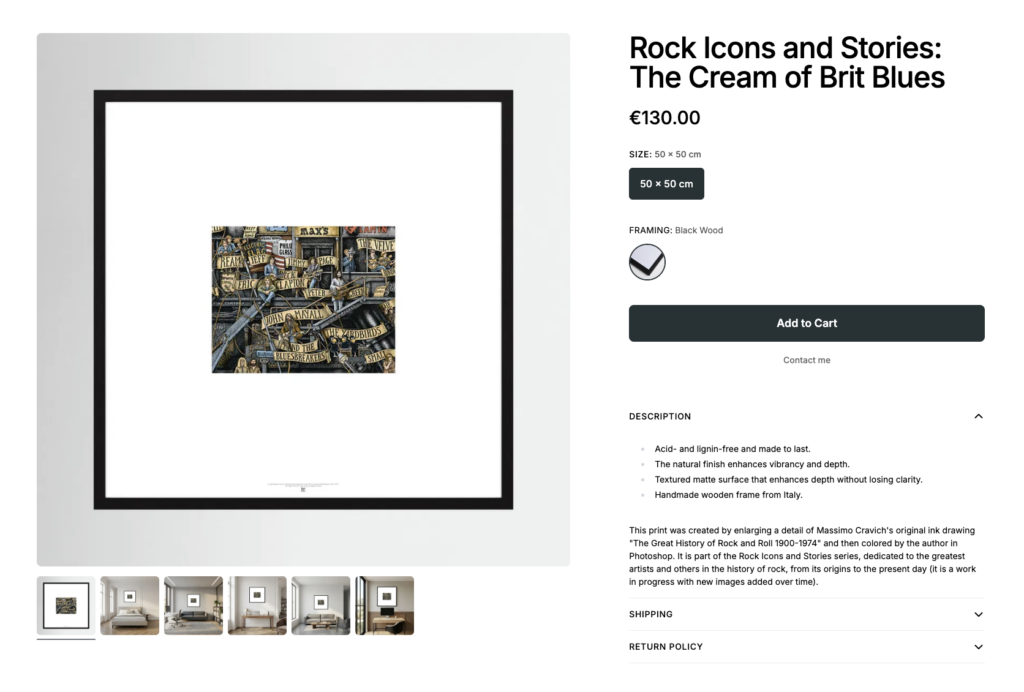
Selected artworks from Rock Icons and Stories are available as high-quality framed art prints. Printed on premium 230 gsm matte paper with excellent detail and colour reproduction, each print is professionally framed and delivered ready to hang.A carefully selected, high-quality alternative to the museum-grade Fine Art Giclée editions, offering an accessible way to own and display a reproduction of the original artwork. Printing, framing and worldwide fulfilment are handled by our specialist printing partner.
You may also like this print
Sources
Rock & Roll Hall of Fame: https://rockhall.com/inductees/jeff-beck/
Encyclopaedia Britannica: https://www.britannica.com/biography/Jeff-Beck
Official website: https://www.jeffbeck.com/
Jeff Beck’s story is that of a musician who valued sonic exploration above rock-star mythology. From the British Invasion to fusion, his touch expanded the expressive possibilities of the electric guitar and left a lasting mark on rock history.