
Les Paul and Mary Ford were one of the most innovative partnerships in postwar popular music: he was a guitarist, inventor and sound experimenter, she a singer of extraordinary precision, and together they transformed recording itself into a creative instrument.
This illustrated profile explores their success, technical innovations and influence on electric guitar and record production within The Great Rock and Roll History where they occupy a decisive junction between jazz, pop, country and the birth of the modern recording studio.
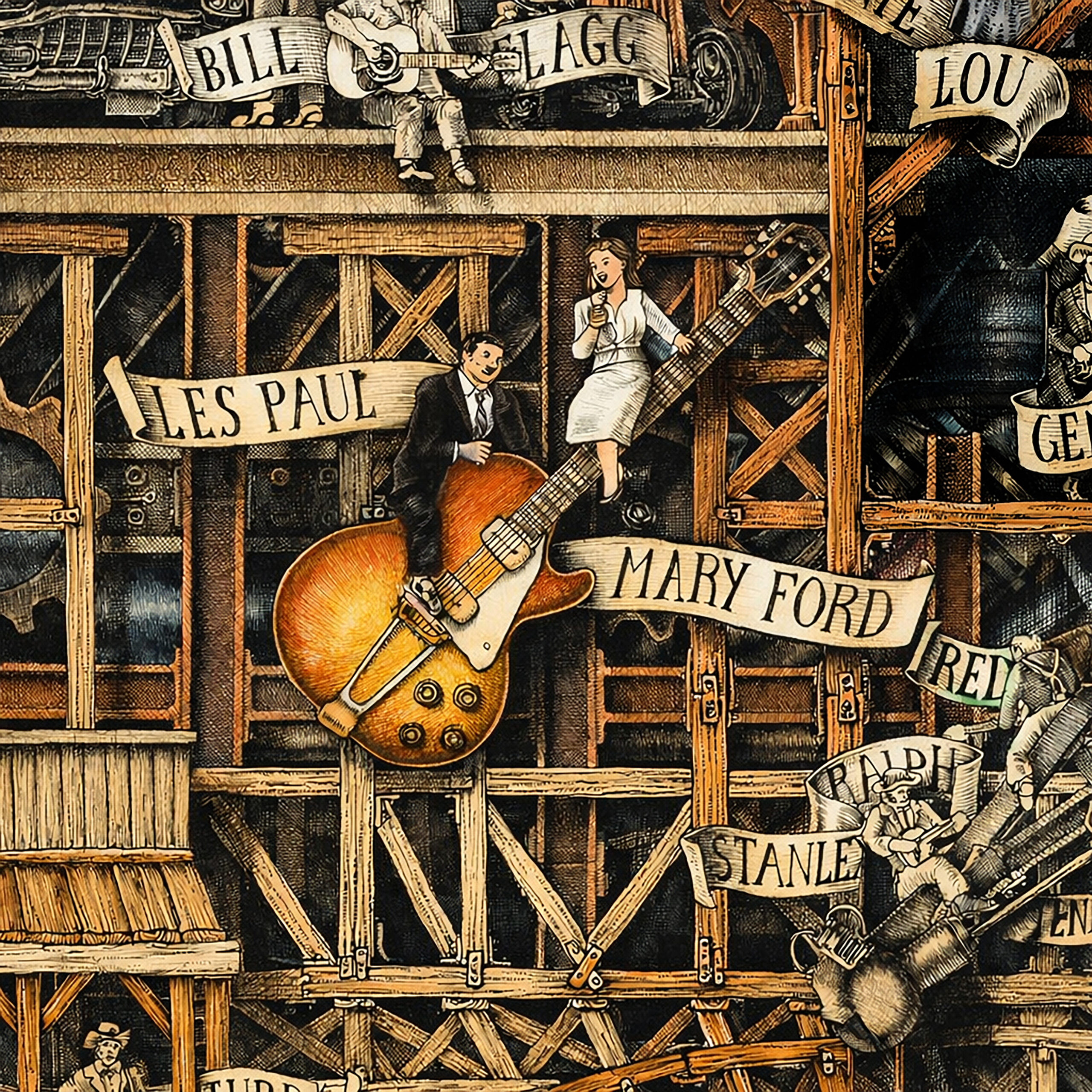

Rock Icons: Les Paul and Mary Ford
The duo who multiplied guitars and voices on tape, turning the studio from a place that captured music into an instrument that could create it.
Through overdubbed guitars, layered vocals, multitrack recording, speed manipulation and echo techniques, Les Paul and Mary Ford anticipated many practices that would become fundamental to pop and rock production in the following decades.
Active as a duo: 1949–1964
Members Les Paul (Lester William Polsfuss) and Mary Ford (Iris Colleen Summers)
Roles: Les Paul (guitar, inventor, producer), Mary Ford (vocals, guitar, vocal arrangements)
Genres: Pop, jazz, early pop-rock, studio experimentation
Relevance: Pioneers of multitrack recording and home-studio culture
ARTIST OFFICIAL SITE: www.les-paul.com
LISTEN
The World Is Waiting for the Sunrise
More to discover…
When the recording studio became an instrument
Les Paul and Mary Ford belong to rock history above all because of what they made possible. Paul was already a formidable guitarist whose background crossed jazz, country and popular music, but his curiosity extended far beyond performance. He wanted an electric guitar with greater control and sustain, experimented with pickups and solid-body instruments and, most importantly, sought to free recording from the limits of merely documenting a performance.
Mary Ford, with her clear and remarkably accurate voice, became the ideal partner: technology did not conceal her musicianship, it multiplied it.On their early-1950s records, a single duo could sound like an entire ensemble. Les stacked guitar parts at different speeds, constructed harmonies impossible to perform simultaneously and manipulated tape to create new timbres. Mary recorded her voice repeatedly to build bright, tightly arranged vocal layers. On ‘How High the Moon’, one of their masterpieces, the listener hears a sonic construction that does not exist as one continuous performance: it exists because tape makes assembly possible.
That principle would become central to rock, from the studio work of Buddy Holly and Phil Spector to the Beatles, Brian Wilson and modern multitrack production. Their genealogical importance is therefore double. Les Paul contributed to the development and popularization of the solid-body electric guitar, destined to become one of rock’s defining objects; at the same time, the duo demonstrated that a record could contain a sonic reality different from a concert performance.
The Gibson Les Paul would later become enormously important in the hands of rock guitarists, but the deeper legacy of Les Paul and Mary Ford may lie in showing that recording could itself mean composing, designing and inventing sound. Before rock fully entered the studio era, they had already opened the door.
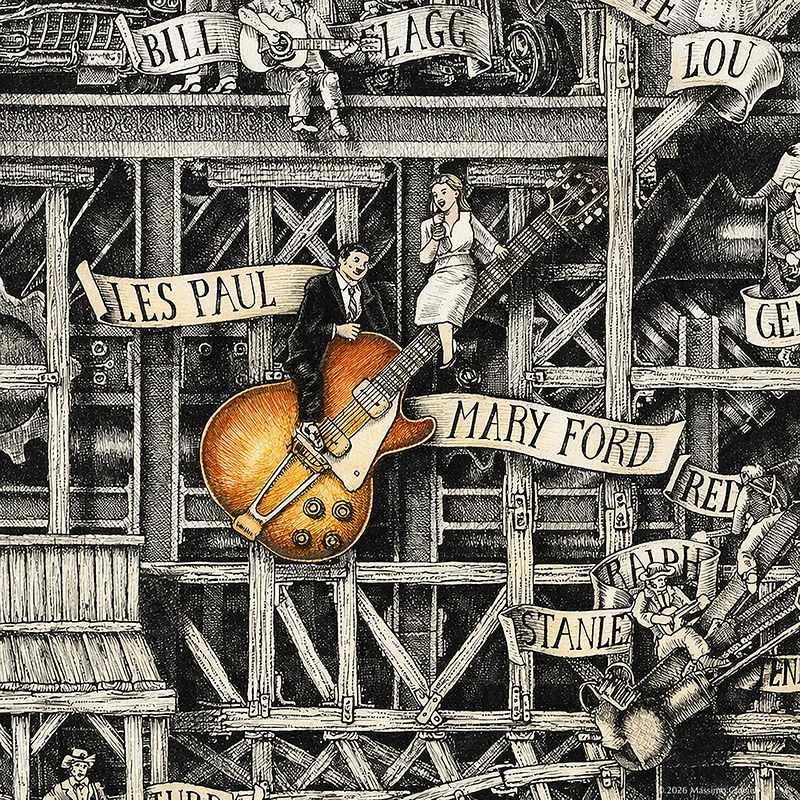
Hits such as How High the Moon, The World Is Waiting for the Sunrise and Vaya con Dios combined guitar virtuosity, vocal harmony and pioneering overdubbing, making Les Paul and Mary Ford fundamental precursors of modern pop and rock production.
Within The Great Rock and Roll History, Les Paul and Mary Ford occupy a technological and musical crossroads: jazz, country and pop meet the solid-body electric guitar and multitrack recording, preparing a new way of constructing records that would become essential to rock and roll, pop and studio-based rock.
Influenced by
- Jazz
- Swing
- Radio Pop
- Django Reinhardt
- Charlie Christian
- Bing Crosby
- Country music
- Jazz guitar
Influent For
- Chet Atkins
- Buddy Holly
- The Beatles
- Brian Wilson
- Jimmy Page
- Home studio culture.
- Multitrack production
- Modern pop recording.

Related Artists
- Chet Atkins
- Bing Crosby
- Charlie Christian
- Buddy Holly
- Phil Spector
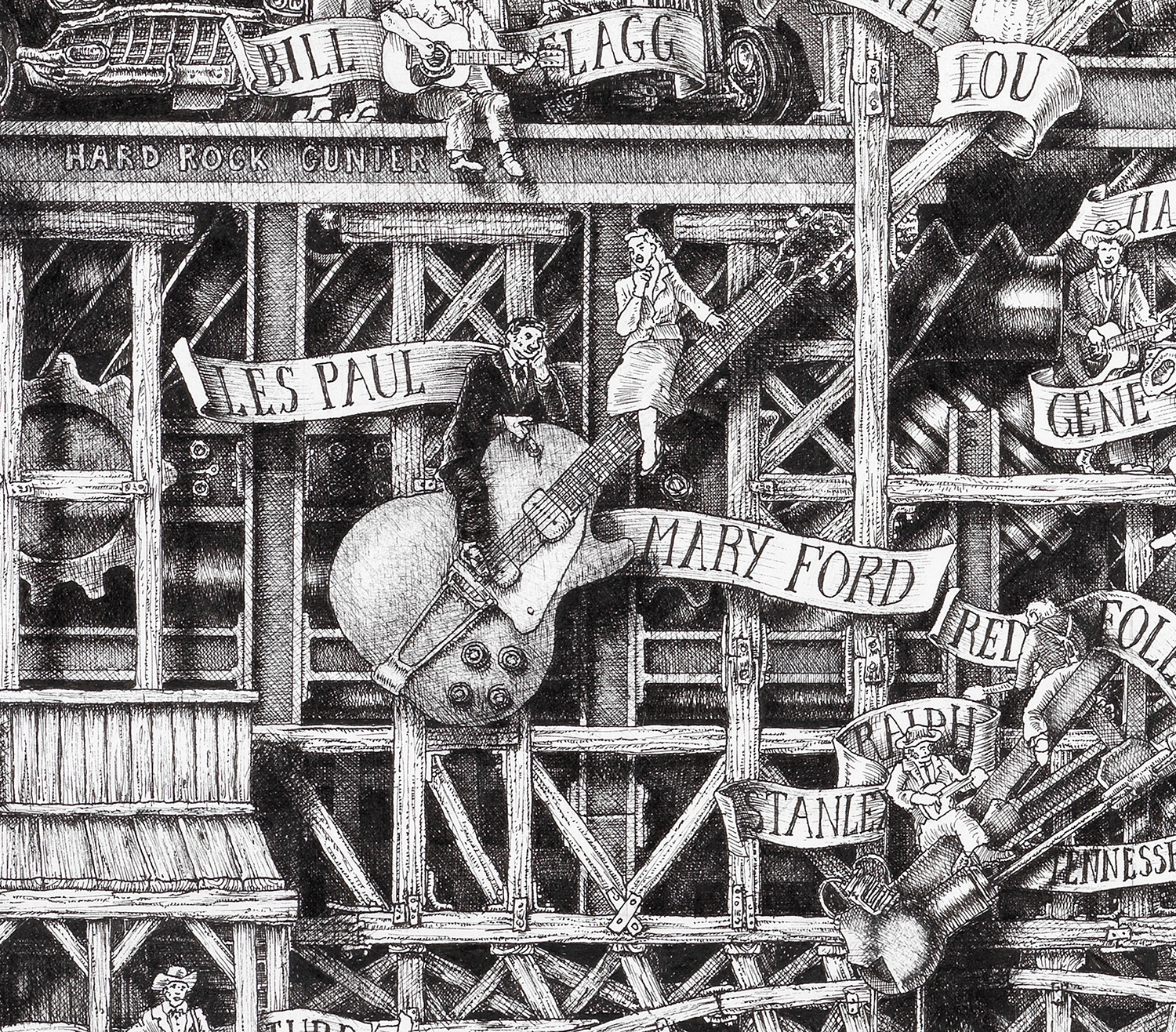
Rock Icons: Les Paul and Mary Ford
Get Your Rock Icon
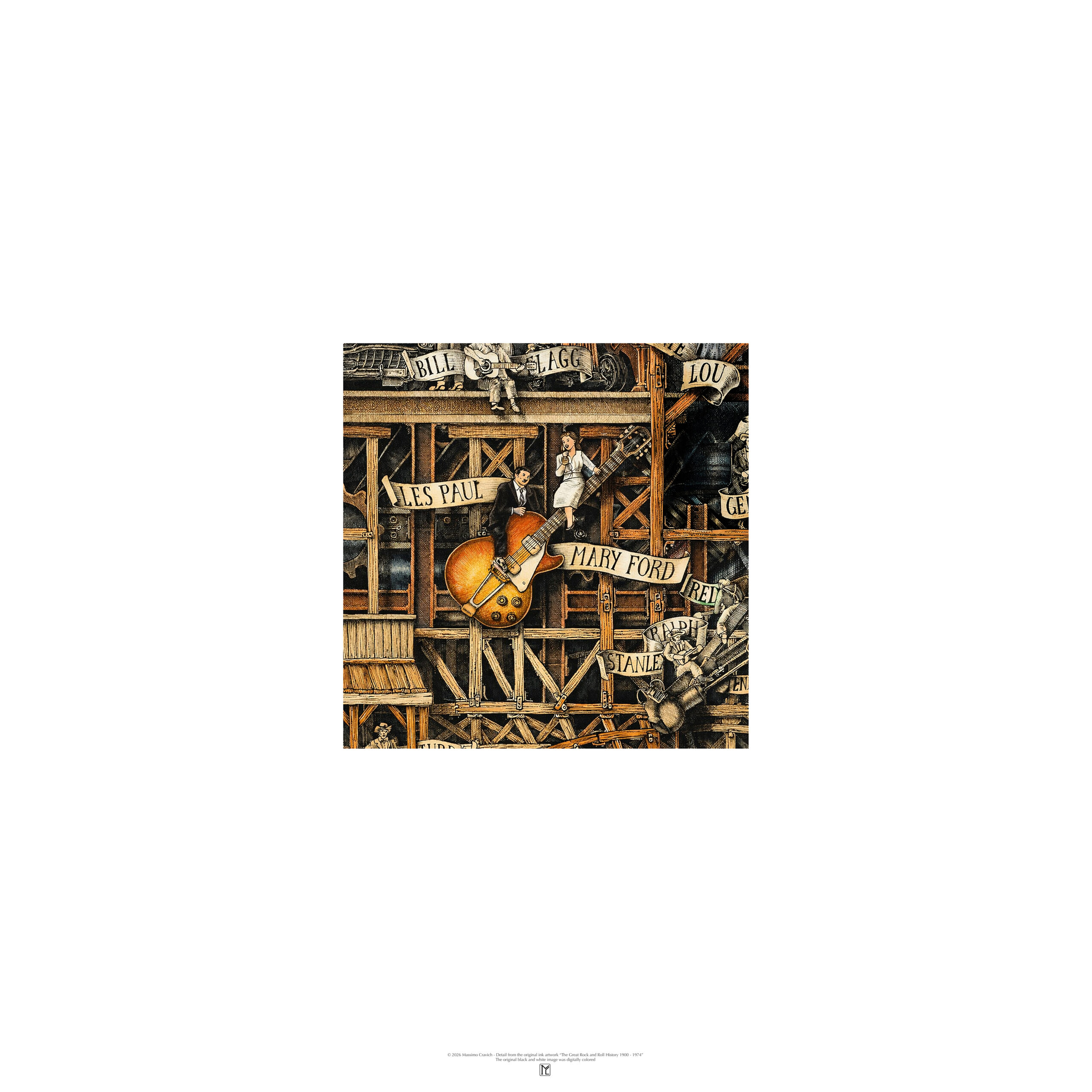
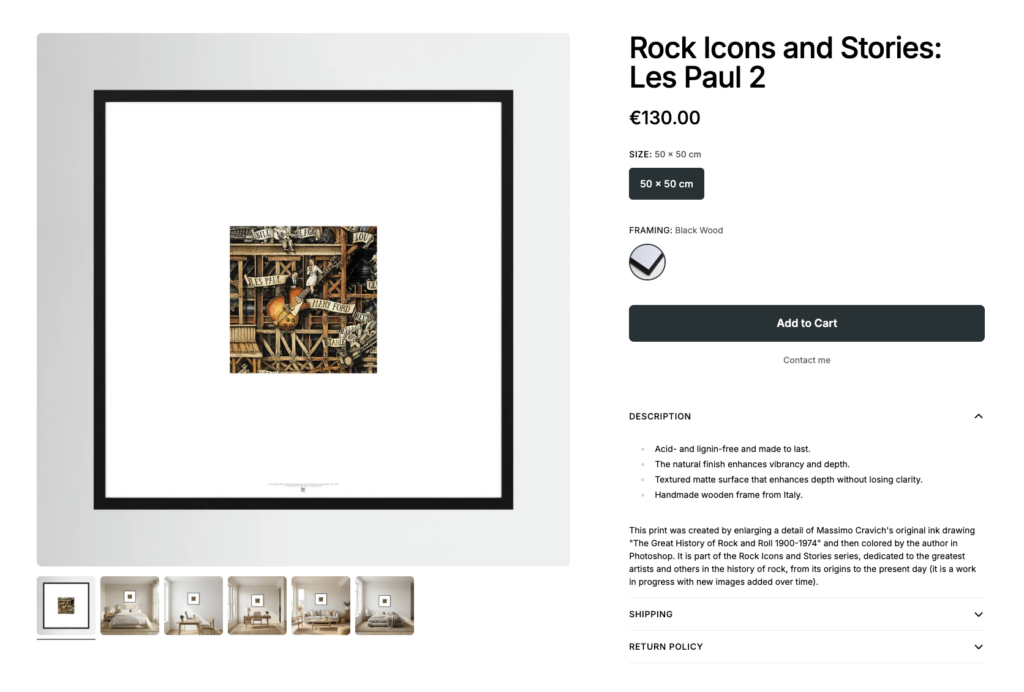
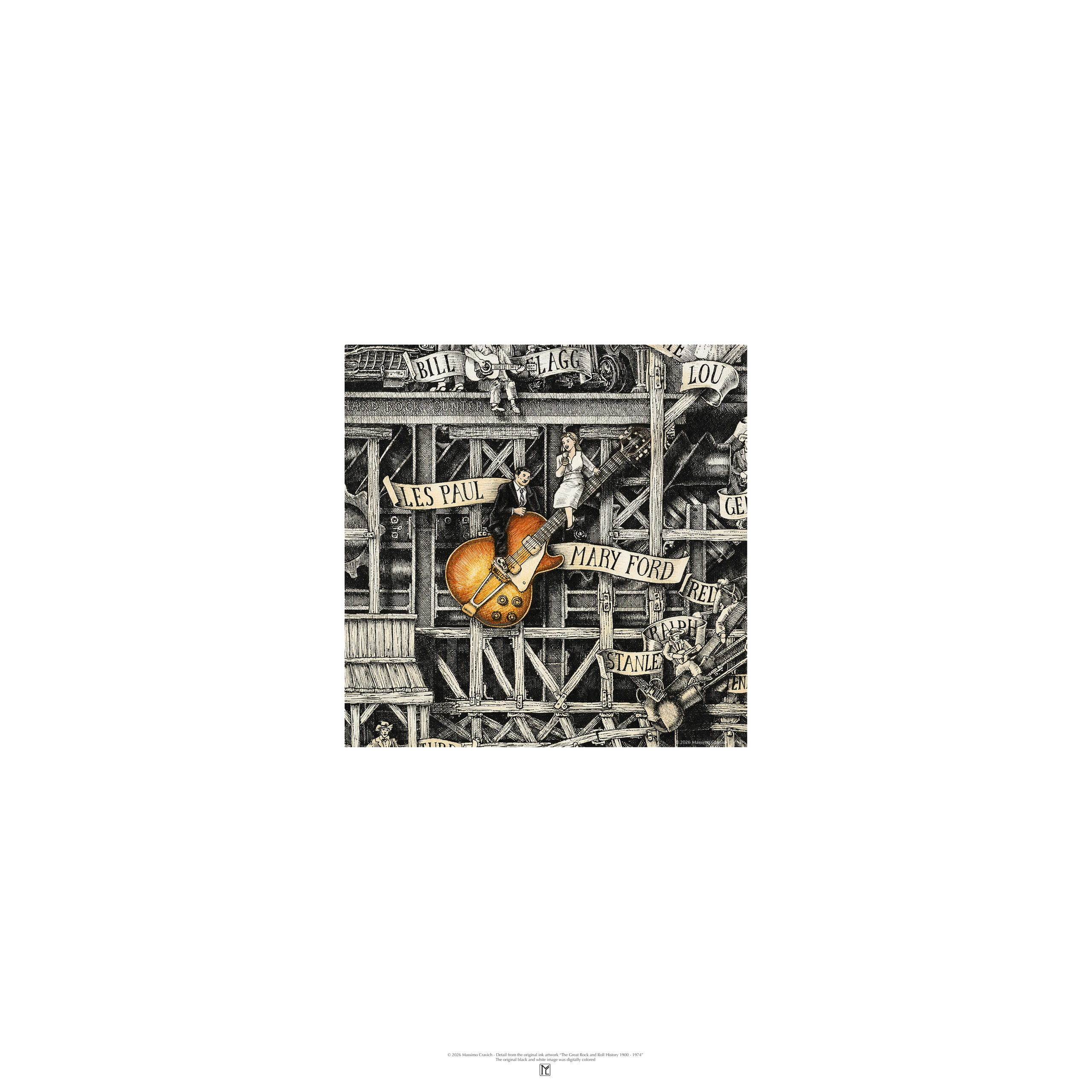
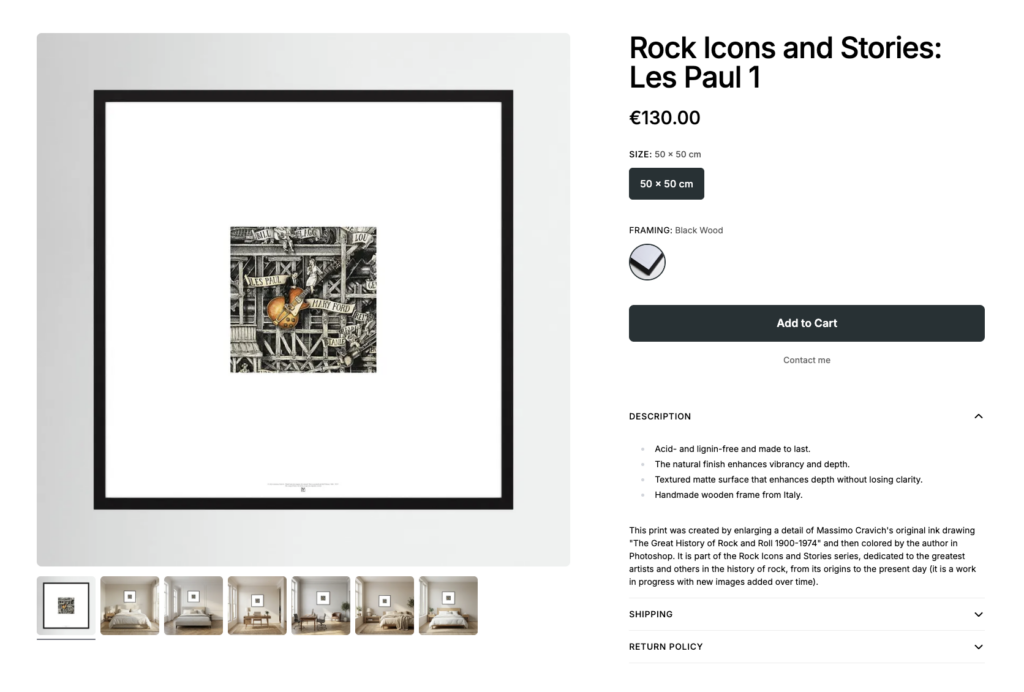
Selected artworks from Rock Icons and Stories are available as high-quality framed art prints. Printed on premium 230 gsm matte paper with excellent detail and colour reproduction, each print is professionally framed and delivered ready to hang.A carefully selected, high-quality alternative to the museum-grade Fine Art Giclée editions, offering an accessible way to own and display a reproduction of the original artwork. Printing, framing and worldwide fulfilment are handled by our specialist printing partner.
Two different Prints Available:
SOURCES
• Les Paul Foundation – biography, archive and material on Les Paul’s technical innovations.
• Rock & Roll Hall of Fame – Les Paul profile.
• GRAMMY Museum / Recording Academy – historical material on Les Paul and multitrack recording.
• Mary Alice Shaughnessy, Les Paul: An American Original, William Morrow, 1993.
In the history of rock, Les Paul and Mary Ford represent the point at which instrumental innovation and recording innovation began to merge. The electric guitar, overdubbing, sound-on-sound and multilayer construction of voices and instruments anticipated the modern concept of music production, leaving a legacy that runs through rock and roll, pop, hard rock and virtually all later recorded music.