
Buffalo Springfield were crucial to the transition from folk rock to psychedelia and American country rock. Formed in Los Angeles in 1966 by Stephen Stills, Neil Young, Richie Furay, Bruce Palmer and Dewey Martin, they compressed remarkable songwriting, incompatible ambitions and personal tension into little more than two years. This The Great Rock and Roll History profile explores their music and the fragile human chemistry behind it.
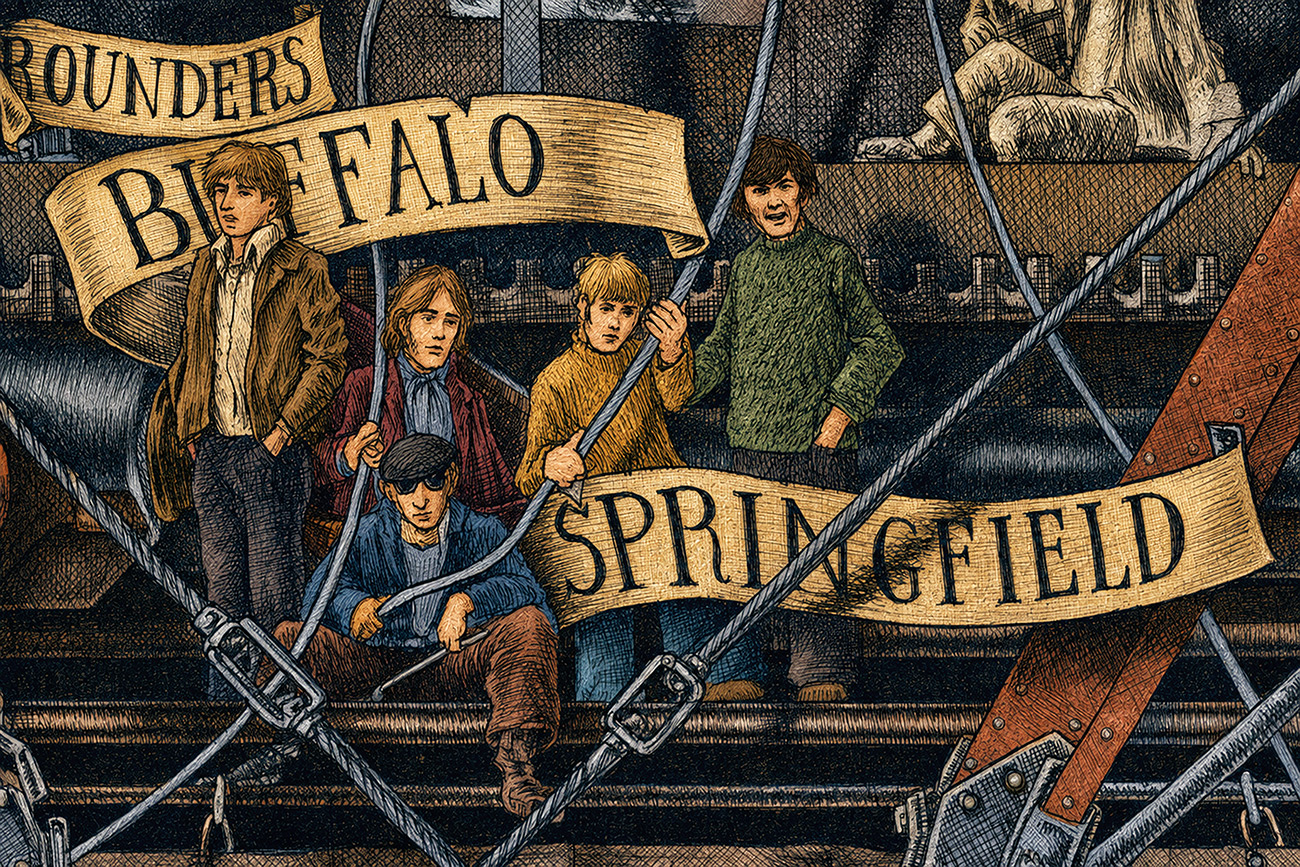
Rock Icons: Buffalo Springfield
Five musicians, three songwriters and a band too restless to last.

With For What It’s Worth, Bluebird, Mr. Soul and Expecting to Fly, Buffalo Springfield expanded folk rock through electric guitars, vocal harmonies, studio experimentation and country influences.
Origin: Los Angeles, California; formed in 1966
Classic Lineup: Stephen Stills; Neil Young; Richie Furay; Bruce Palmer; Dewey Martin
Active: 1966–1968; later brief reunions
Albums: Buffalo Springfield (1966); Buffalo Springfield Again (1967); Last Time Around (1968)
Genres: Folk rock, psychedelic rock, country rock
LISTEN
More to discover…
A meeting on the road and an already fragile balance
The story begins almost like a Los Angeles legend: Stephen Stills and Richie Furay encounter Neil Young and Bruce Palmer in city traffic after unsuccessfully searching for them. With Dewey Martin on drums, a lineup emerges whose collective energy soon conceals three different sensibilities.
Stills seeks a language joining folk, blues and electric rock; Young brings restlessness, abrasive sounds and unpredictable writing; Furay contributes melody, harmonies and a more conciliatory presence. Sunset Strip clubs quickly turn them into a formidable live band, yet none of the three writers seems willing simply to become someone else’s backing voice. Even before the records, that tension is the engine of Buffalo Springfield.
A song born from the Strip, not the war
In November 1966 Stills witnesses the tense atmosphere surrounding Pandora’s Box and youth protests on the Sunset Strip. He writes For What It’s Worth, recorded shortly afterward: a song of observation and mistrust, not originally an anti-Vietnam War song, as it is often remembered. Its success carries the group far beyond the California scene, but also threatens to reduce their range to a single hit.
Onstage Buffalo Springfield are powerful and unpredictable; in the studio their identity proves harder to capture. Voices intertwine while acoustic and electric guitars interact with a sense of space that anticipates many possibilities in American rock.
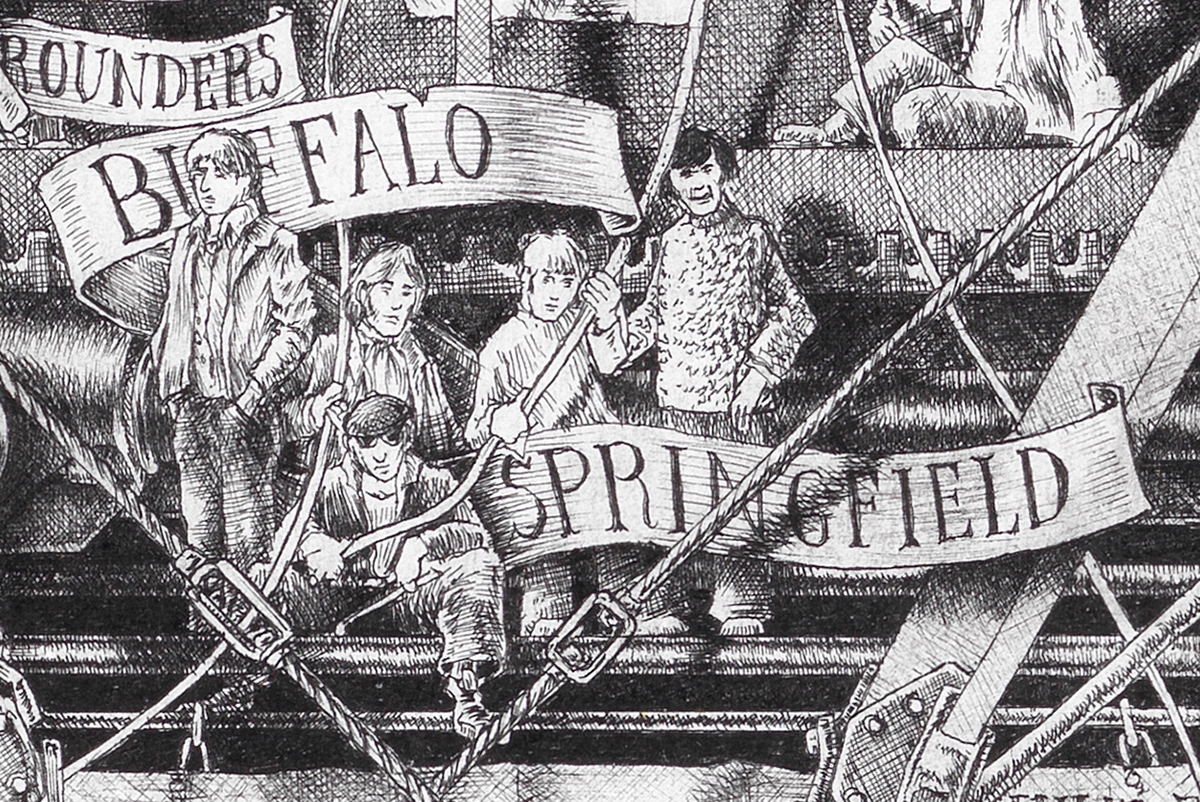
Three talents pulling in different directions
Buffalo Springfield Again reveals both their creative peak and their internal fractures. Bluebird expresses Stills’s rhythmic and guitar-driven ambition; Mr. Soul exposes Young’s bitter irony about fame; Expecting to Fly, recorded with session players and orchestral arrangements, shows how willing Young already is to work outside the band format.
Furay’s A Child’s Claim to Fame points toward country. Palmer’s immigration difficulties, Young’s absences and the strain of reconciling concerts with recording deepen the divisions. They do not separate because they lack ideas: they cannot sustain a shared framework for so many strong ones.
The breakup and the seeds of American rock
By the time Buffalo Springfield split in 1968, Last Time Around is being assembled as the band is already falling apart. Yet their musical family tree is extraordinary. Stills and Young will join Crosby, Stills, Nash & Young at different stages; Furay and Jim Messina, who enters during the final phase, form Poco, a crucial country-rock group. Young pursues a fiercely individual solo career.
More than a link between the Byrds and CSN&Y, Buffalo Springfield demonstrate that folk rock could become an open laboratory: ballads, abrasive guitars, orchestral recording and country roots could coexist, even when the musicians themselves no longer could.
From For What It’s Worth to Bluebird and Expecting to Fly, Buffalo Springfield chart the movement from California folk rock toward more individual forms of psychedelia and country rock.
Within The Great Rock and Roll History, Buffalo Springfield capture the Sunset Strip as a meeting place and a site of conflict, where youth culture, the record industry and musicians’ personal freedom collided.
Influenced by
- The Byrds
- Bob Dylan
- The Beatles
- The Everly Brothers
- The Rolling Stones
Influent For
- Crosby, Stills, Nash & Young
- Poco
- Eagles
- Tom Petty
- Wilco

Related Artists
Moby Grape
Crosby, Stills & Nash
Poco
Crazy Horse
Get Your Rock Icon
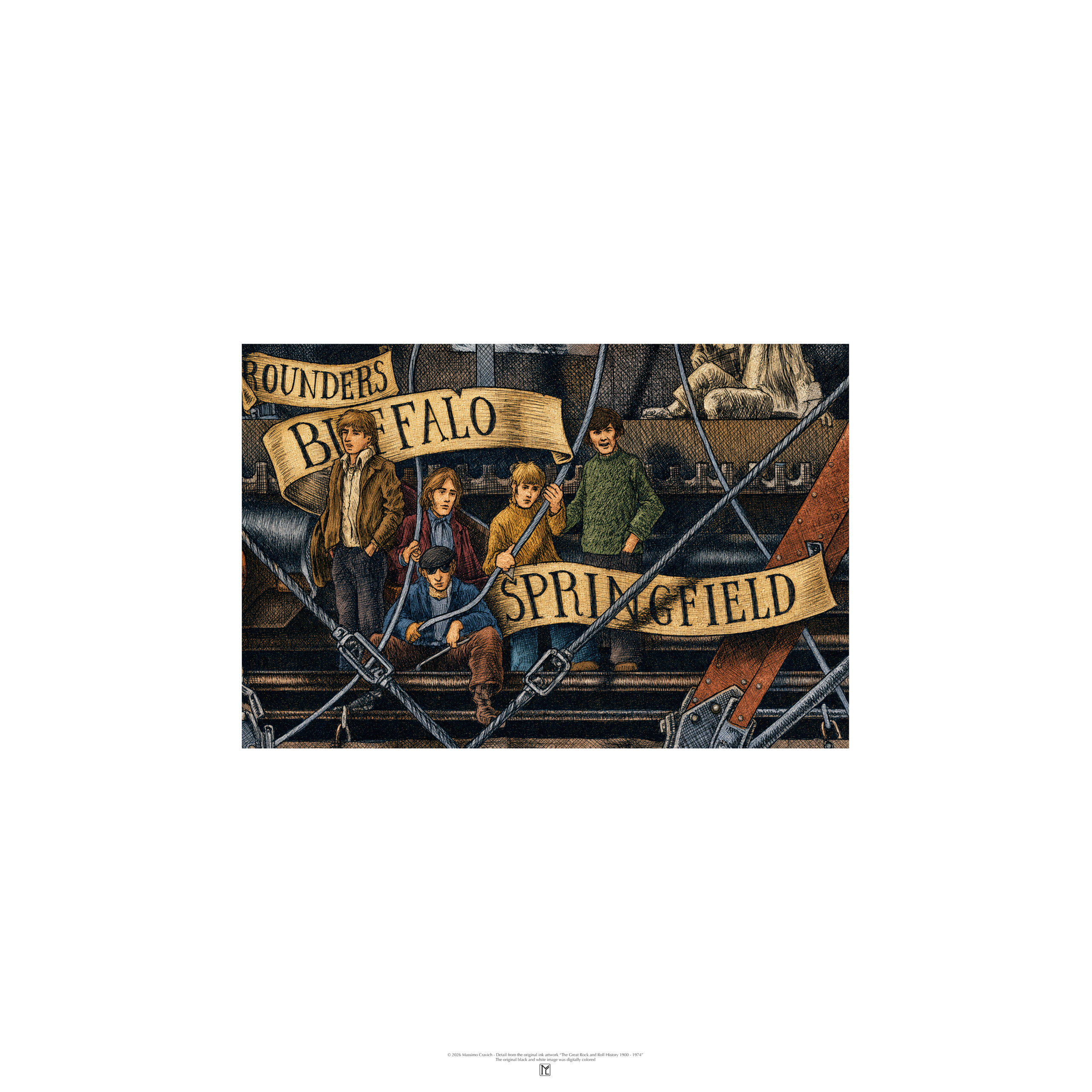
Selected artworks from Rock Icons and Stories are available as high-quality framed art prints. Printed on premium 230 gsm matte paper with excellent detail and colour reproduction, each print is professionally framed and delivered ready to hang.A carefully selected, high-quality alternative to the museum-grade Fine Art Giclée editions, offering an accessible way to own and display a reproduction of the original artwork. Printing, framing and worldwide fulfilment are handled by our specialist printing partner.
Sources
Rock & Roll Hall of Fame – Buffalo Springfield: https://rockhall.com/inductees/buffalo-springfield/
Encyclopaedia Britannica – Buffalo Springfield: https://www.britannica.com/topic/Buffalo-Springfield
John Einarson, For What It’s Worth: The Story of Buffalo Springfield
In rock genealogy, Buffalo Springfield stand at the crossroads of electric folk, psychedelia and country rock. Their originality comes from the often contentious meeting of Stills, Young and Furay, supported by a rhythm section able to turn competing ideas into collective music. Their short lifespan does not diminish their importance: its very fragmentation helped generate several of the defining paths of American rock.