
Buddy Guy is one of the most influential, explosive and revolutionary figures in the history of electric blues, a guitarist who transformed the language of Chicago blues into something violently modern, emotional and deeply connected to the birth of psychedelic rock and hard rock.
This illustrated profile explores his music, guitar style and cultural impact within The Great Rock and Roll History, a large-scale illustrated timeline of modern music.
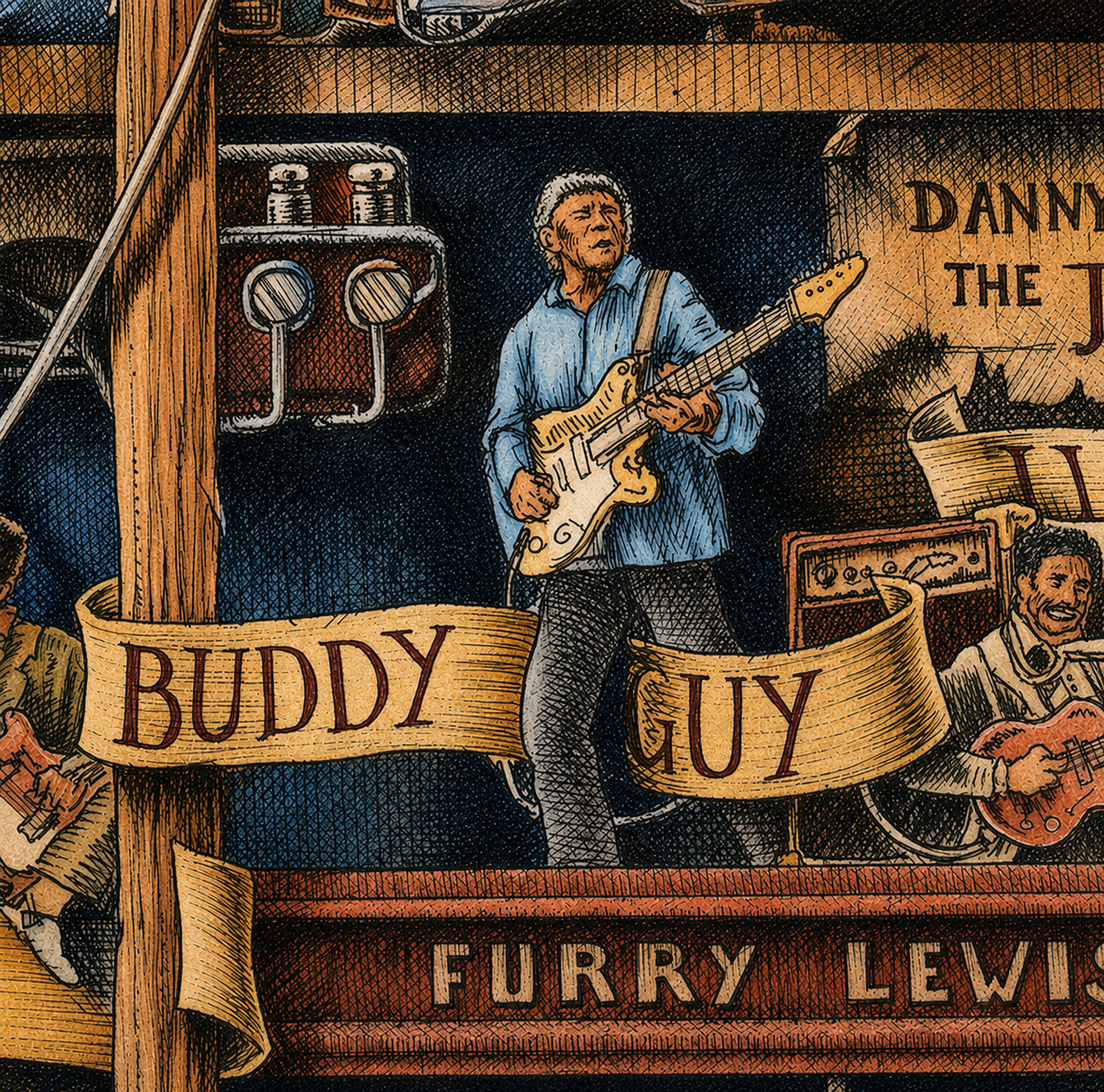
Rock Icons: Buddy Guy
Legendary blues guitarist suspended between electric Chicago, expressive fury and the birth of modern rock.By combining Chicago blues, aggressive improvisation and emotional intensity, Buddy Guy helped redefine the language of modern electric guitar.

Real Name: George Guy
Born: July 30, 1936 — Lettsworth, Louisiana, USA
Status: Active
Instruments: Vocals, guitar
Genres: Chicago blues, electric blues, blues rock
ARTIST OFFICIAL SITE: buddyguy.net
LISTEN
Damn Right, I’ve Got The Blues
More to discover…
The man who made the blues too violent for its own era
Buddy Guy occupies an almost paradoxical position in blues history. For many years producers and record executives considered him “too loud,” “too aggressive” and too uncontrolled for traditional blues audiences. Yet those very characteristics would eventually transform rock music forever. His playing constantly shattered the rules of classic Chicago blues. Massive volume, explosive feedback, screaming bends and unpredictable dynamics turned every performance into something dangerous and emotionally overwhelming.
Long before Hendrix, Clapton or Stevie Ray Vaughan, Buddy Guy was already pushing electric guitar toward territories that mainstream audiences were not yet prepared to understand.
Buddy Guy grew up in rural Louisiana surrounded by poverty and racial segregation. Music represented emotional escape, spirituality and collective identity. As a child he even built primitive homemade guitars from scraps and wire. That physical relationship with the instrument remained visible throughout his entire career. When Buddy Guy arrived in Chicago during the 1950s, he entered the epicenter of electric blues culture. To stand out among giants such as Muddy Waters and Howlin’ Wolf required something radically personal, and Buddy responded with explosive emotional intensity.
Chess Records and the problem of being too modern
One of the strangest aspects of Buddy Guy’s career is that Chess Records often did not know how to market him. Leonard Chess considered his sound too wild and uncontrolled for traditional blues audiences. Listening today to “Stone Crazy” remains shocking. The distortion, aggression and feedback make therecording sound years ahead of its era. While Buddy Guy struggled commercially in America, British musicians treated him almost like a mythical figure. Eric Clapton repeatedly described him as one of the greatest guitarists ever.
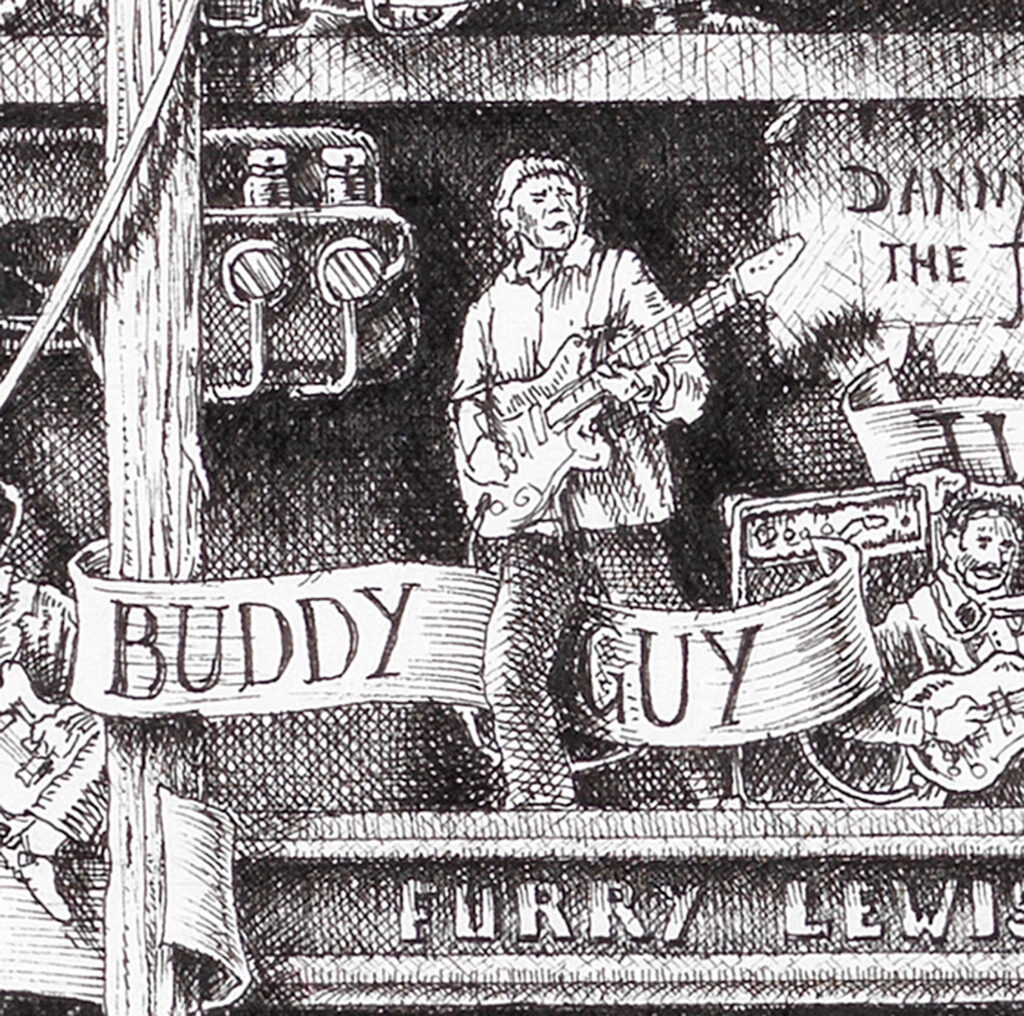
Buddy Guy and Jimi Hendrix
The spiritual connection between Buddy Guy and Jimi Hendrix remains one of the most fascinating genealogies in rock history. Many supposedly “Hendrix-style” elements already existed inside Buddy Guy’s performances years earlier. Live, Buddy Guy became almost unpredictable. He walked through crowds with impossibly long guitar cables, screamed, bent notes beyond conventional limits and transformed concerts into emotional explosions.
Difficult years, near oblivion and rebirth
During the 1970s Buddy Guy experienced extremely difficult periods as traditional blues temporarily lost mainstream cultural attention. In 1991 Damn Right, I’ve Got The Blues brought Buddy Guy back to international prominence. A new generation suddenly recognized how enormous his influence had been.
Buddy Guy’s historical importance lies in being simultaneously one of the last giants of classic blues and one of the earliest architects of modern electric rock guitar. His music directly connects Delta blues, Chicago blues, Hendrix, hard rock and contemporary blues rock. Very few musicians occupy such a crucial genealogical position.
Songs such as Stone Crazy and Damn Right, I’ve Got The Blues remain defining peaks of electric blues guitar..
His music occupies a central place within the blues and rock genealogy explored in The Great Rock and Roll History.
Influenced by
- Muddy Waters
- T-Bone Walker
- Southern gospel
- Delta blues
- Classic Chicago blues
Influent For
- Eric Clapton
- Jimi Hendrix
- Stevie Ray Vaughan
- Jeff Beck
- Modern Blues Rock

Related Artists
Otis Rush
Eric Clapton
Stevie Ray Vaughan
Get Your Rock Icon
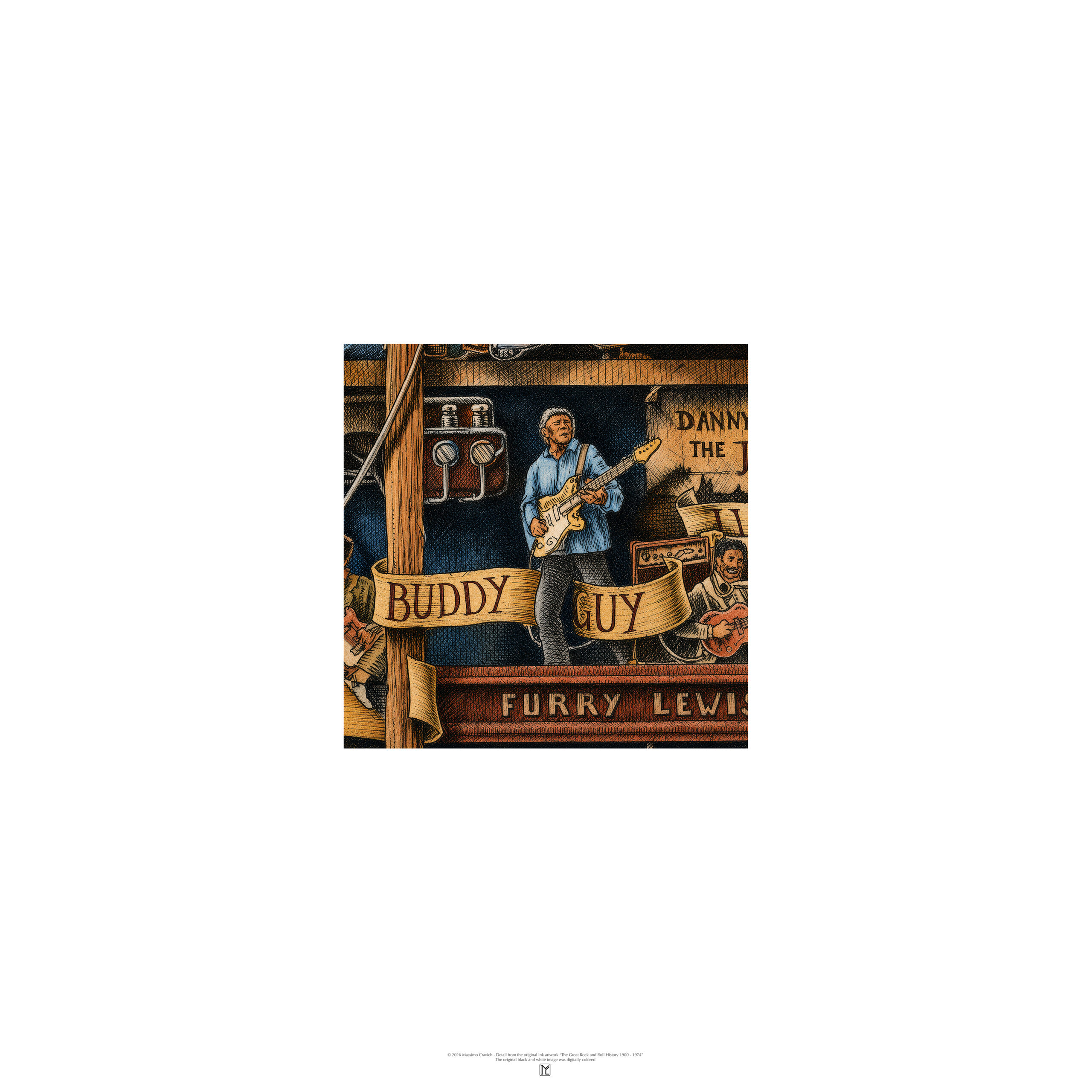
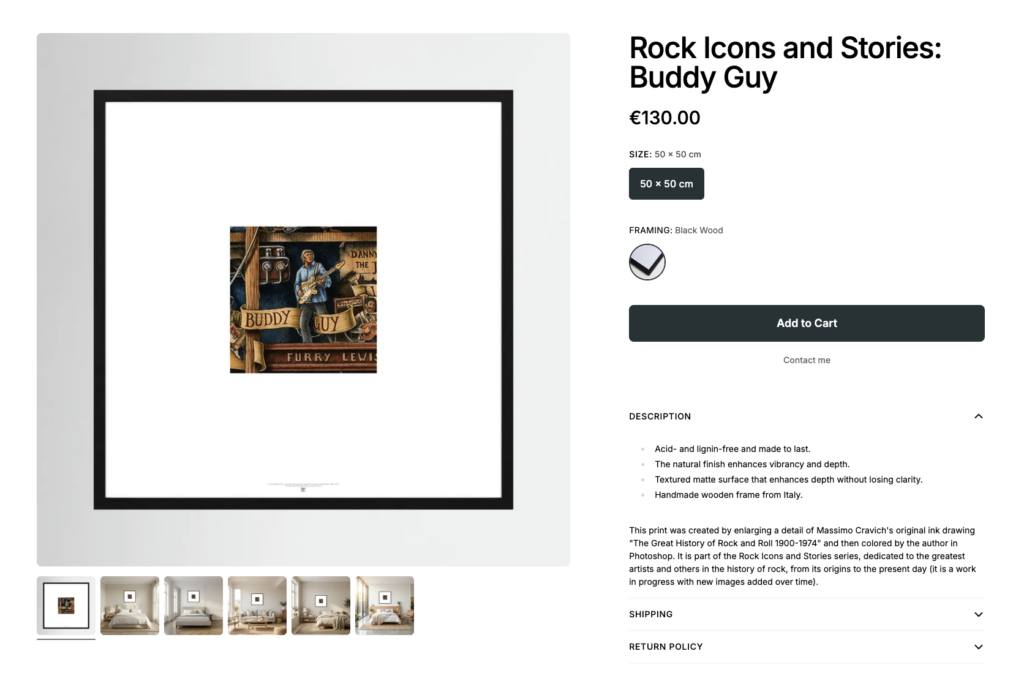
Selected artworks from Rock Icons and Stories are available as high-quality framed art prints. Printed on premium 230 gsm matte paper with excellent detail and colour reproduction, each print is professionally framed and delivered ready to hang.A carefully selected, high-quality alternative to the museum-grade Fine Art Giclée editions, offering an accessible way to own and display a reproduction of the original artwork. Printing, framing and worldwide fulfilment are handled by our specialist printing partner.
Sources
Official Buddy Guy Website
Chess Records archives
Chicago blues historical archives
Blues Hall of Fame archives
Within the broader history of American electric blues, Buddy Guy represents one of the most influential, innovative and explosive figures in modern guitar history. His work permanently reshaped the relationship between Chicago blues, extreme improvisation and the birth of modern electric rock.