
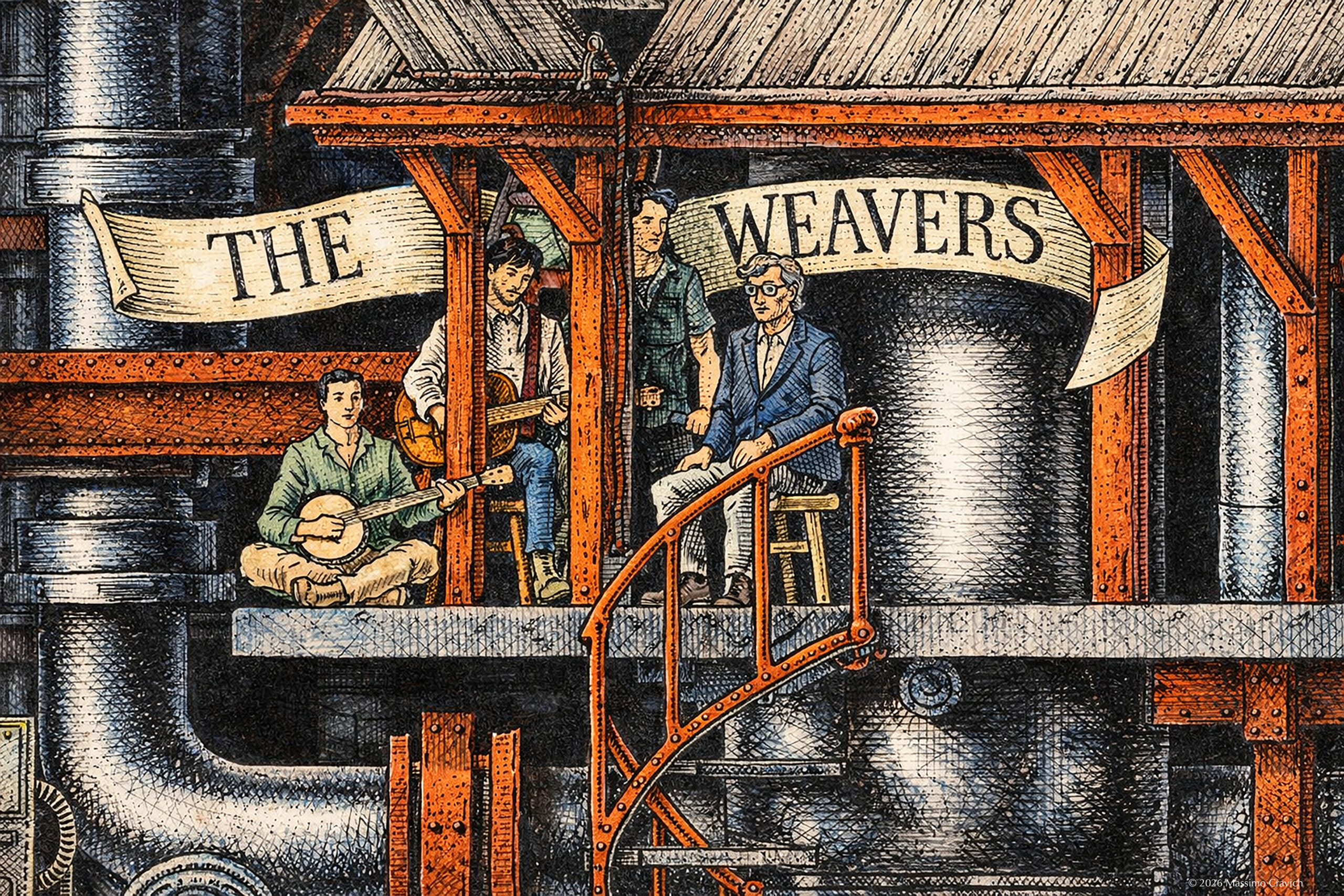
The Weavers carried American folk music from union gatherings and small venues to the top of the charts before the Cold War political climate abruptly disrupted their rise. Pete Seeger, Lee Hays, Ronnie Gilbert and Fred Hellerman turned collective singing into widely heard popular music. This profile places the Weavers within The Great Rock and Roll History , between traditional song, the folk revival and struggles over freedom of expression.
Rock Icons: The Weavers
Four voices, a shared tradition and the political cost of success.
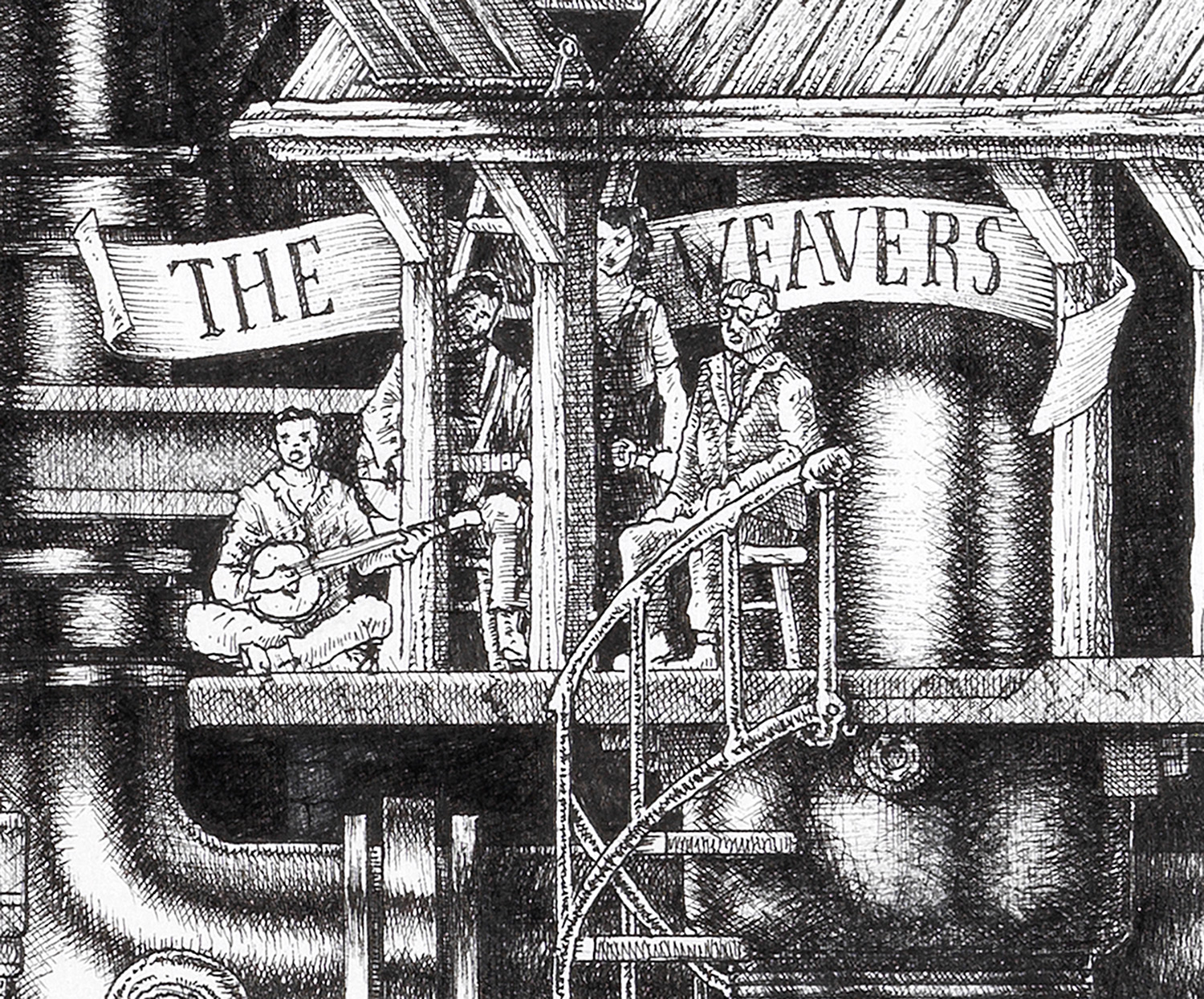
The group brought traditional folk songs to a wider audience, combining political awareness, collective singing and accessible arrangements.

With Goodnight, Irene, On Top of Old Smoky and Wimoweh, the Weavers brought folk repertoire to a national audience and helped prepare the ground for the 1960s folk revival. Their influence would later be visible in the development of folk rock and the work of artists such as Bob Dylan.
Formed 1948, Greenwich Village, New York
Classic members Pete Seeger; Lee Hays; Ronnie Gilbert; Fred Hellerman
Roots Almanac Singers; traditional folk; union songs
Genres American folk; folk revival; protest song
Breakthrough 1950: Goodnight, Irene
Active 1948–1952; later reunions and concerts
LISTEN
Wimoweh (The Lion Sleeps Tonight)
More to discover…
Four people, not just four voices
The group emerged in postwar Greenwich Village, but its roots ran deeper. Pete Seeger and Lee Hays had shared the Almanac Singers’ experience and the songs of the labor movement. Ronnie Gilbert brought a commanding voice and a stage presence that challenged conventional images of a female folk singer, while Fred Hellerman contributed sensitive guitar playing and an arranger’s ear.
They were not interchangeable personalities. Seeger had the energy of a musical educator; Hays combined political commitment with humor; Gilbert supplied interpretive force; Hellerman helped shape the ensemble sound. Their bond rested on a conviction that audiences should not simply listen: singing together was itself a social act.
Success and the paradox of popular music
Working with Gordon Jenkins and Decca, the Weavers achieved extraordinary success in 1950 with Goodnight, Irene, associated with Lead Belly. On Top of Old Smoky, Wimoweh and other recordings followed, drawing on ballads, African American traditions and songs from beyond the United States. The paradox was clear: musicians committed to communal and politically conscious folk music had entered the national entertainment business.
Their polished arrangements drew criticism from purists but carried unfamiliar melodies to millions of listeners. At the center remained the vocal harmonies and the unusual feeling, for the pop market of the day, that a song also belonged to the people singing along.
Rock Icons – The Weavers
The blacklist: when singing becomes a risk
In the anti-communist climate of the early 1950s, some members’ political past became a target. Blacklisting pressure cost the group radio, television and recording opportunities; the Weavers broke up in 1952. This was more than an abstract Cold War episode: it meant lost work, damaged reputations and strained personal relationships.
Their 1955 Carnegie Hall reunion showed that an audience was still willing to hear them. Seeger subsequently left the lineup, while the others continued with new collaborators. Individual choices and disagreements did not erase their shared achievement, but revealed how difficult it was to reconcile political conscience, professional survival and popular success.
A bridge to the folk revival
The Weavers did not invent the folk revival, but they demonstrated that collective repertoire could reach a mass audience. Their example preceded the success of vocal groups such as the Kingston Trio and helped shape the musical environment in which Joan Baez, Bob Dylan and Peter, Paul and Mary would emerge.
Genealogically, spirituals, ballads and labor songs passed through the Almanac Singers and the Weavers into the folk culture of the 1960s. Their deepest legacy, however, was not purely musical: it was the idea that a song’s origin, the decision to sing it and the invitation to sing together could carry human and public consequences.
From the harmonies of Goodnight, Irene to the international circulation of Wimoweh, the Weavers united traditional repertoire, vocal arrangement and audience participation.
Within The Great Rock and Roll History, the Weavers mark folk music’s passage from activist networks into the national recording market, a transformation that preceded the folk revival and exposed the relationship between music, industry and political freedom.
Influenced By
- Woody Guthrie
- Lead Belly
- The Almanac Singers
- The Carter Family
- Paul Robeson
Influent For
- The Kingston Trio
- Peter, Paul and Mary
- Joan Baez
- Bob Dylan
- The Seekers
Related Artists
- Woody Guthrie
- Lead Belly
- The Almanac Singers
- Odetta
- The Kingston Trio
Sources
The Weavers, The Weavers at Carnegie Hall (Vanguard, 1957).
Ronnie Gilbert, Ronnie Gilbert: A Radical Life with Songs.
Pete Seeger, Where Have All the Flowers Gone.Smithsonian Folkways: https://folkways.si.edu/
Library of Congress: https://www.loc.gov/
In the genealogy of rock and folk, the Weavers occupy a crucial junction: they brought traditional songs and socially conscious repertoire into mass popular music while paying a personal and professional price during the blacklist. Their story unites vocal harmony, collective participation and civil courage, helping prepare the cultural ground for the next generation of folk revival artists.