
Status Quo were one of the longest-lasting, most underrated and physically overwhelming bands in British rock history, a group capable of transforming boogie rock, minimalist hard rock and rhythmic obsession into almost hypnotic form of live energy. They passed through British psychedelia before finding a direct, unmistakable language in boogie rock.
Their story, explored within The Great Rock and Roll History, follows the journey from Swinging London to major 1970s stages, alongside the enduring friendship and tensions between Francis Rossi and Rick Parfitt.
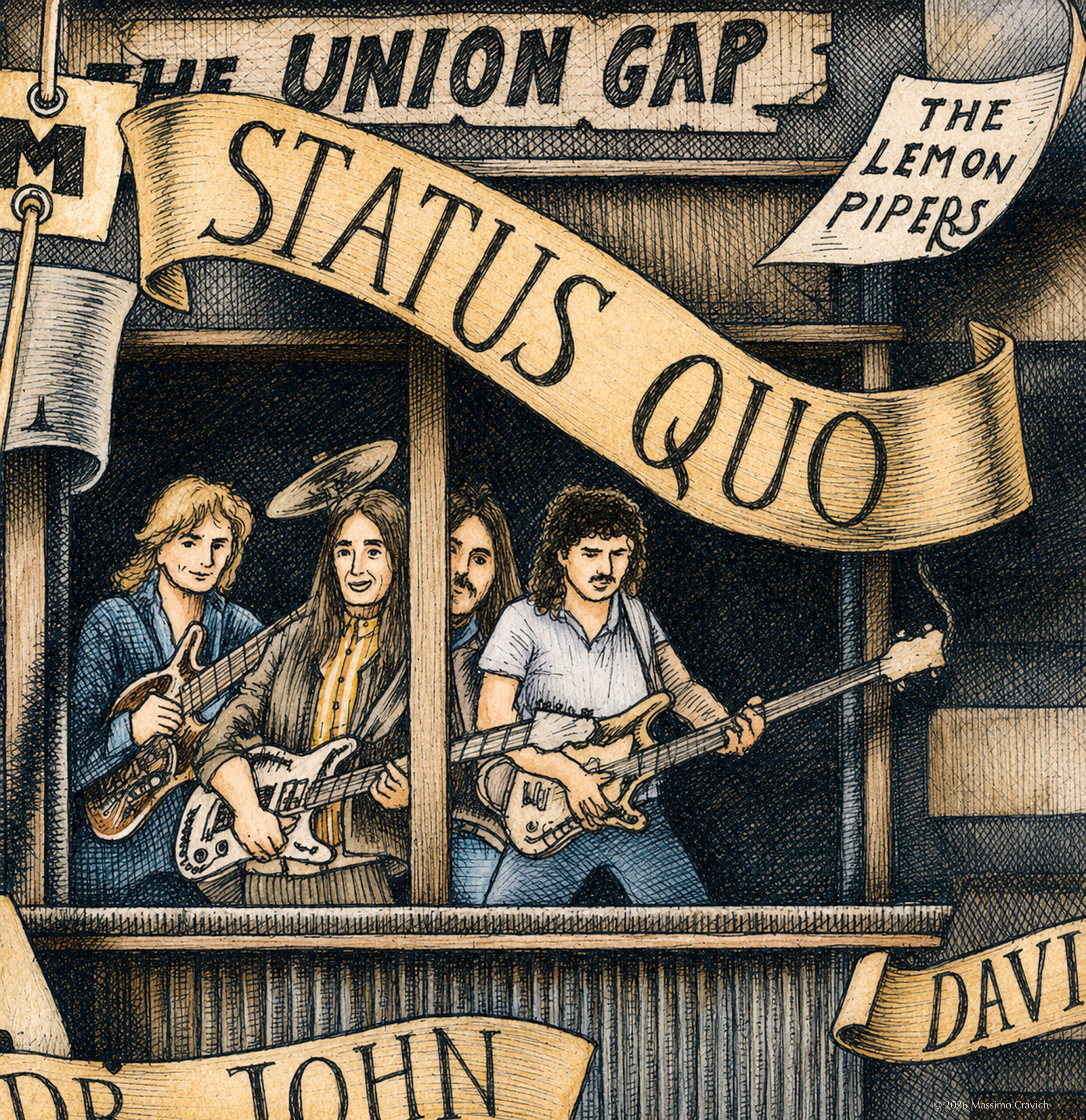
Rock Icons: Status Quo
British boogie machine suspended between endless riffs, beer, denim and eternal highway rock.

By combining hard boogie, live energy and minimalist guitar work, Status Quo helped redefine the most physical and direct language of 1970s British rock music. With Pictures of Matchstick Men, Piledriver, Hello! and Quo, Status Quo moved from psychedelic pop toward lean, hard-driving boogie built around the interlocking guitars of Francis Rossi and Rick Parfitt.
Formed: 1962 London, United Kingdom
Status: active in various incarnations through later decades
Classic Line up: Francis Rossi, Rick Parfitt, Alan Lancaster, John Coghlan
Genres: Boogie rock, Hard rock, Rock and roll
ARTIST OFFICIAL SITE: www.www.statusquo.co.uk
LISTEN
More to discover…
The band that transformed three chords into force of nature
Status Quo occupy unique place within British rock history. For decades they were often dismissed as merely repetitive boogie band. Yet beneath that apparent simplicity existed one of the most effective and physically engaging rhythmic machines ever created in European rock. Their secret was obsession.
Repeated riffs, relentless grooves and intertwined guitars transformed Status Quo concerts into almost trance-like rock experiences. Francis Rossi and Rick Parfitt also created one of the most recognizable guitar partnerships in British music.
Yet behind enormous success existed alcohol, internal tension and exhaustion from endless touring. That is why Status Quo remain one of the defining symbols of working-class European rock.
Transformation: from psychedelic colours to denim
The group’s roots lie in the Spectres, formed by Francis Rossi and Alan Lancaster in the early 1960s. Rick Parfitt’s arrival and the success of Pictures of Matchstick Men in 1968 briefly placed them within psychedelia.
Yet behind the bright clothes and promotional gimmicks was a live band increasingly drawn to the driving rhythms of blues and rock and roll. The change was personal as well as musical: denim, long hair and a less manufactured image suggested a search for authenticity, while Rossi and Parfitt developed a guitar partnership based on interlocking parts, repetition and subtle variations.
The Frantic Four: friendship, exhaustion and friction
With Lancaster on bass and John Coghlan on drums, the lineup later known as the Frantic Four built its reputation through relentless touring. Piledriver, Hello! and Quo capture a band that made repetition an identity rather than a limitation. Musical unity, however, did not mean personal harmony. Rossi’s comparatively controlled, pragmatic outlook and Parfitt’s impulsiveness and attraction to rock excess created a powerful but sometimes difficult partnership; Lancaster was equally determined to defend his ideas. Constant touring, alcohol and drug use, and disagreements over musical direction gradually strained the group.
The cost of a formula and a place in rock genealogy
Their commitment to boogie attracted accusations of repetition, but the apparent simplicity concealed precise collective discipline: a steady pulse, tightly interwoven guitars, live dynamics and immediate audience contact. Later lineup changes and tensions, culminating in Lancaster’s departure in the 1980s, showed how hard that balance was to preserve.
Genealogically, Status Quo connect rock and roll and electric blues to British boogie and direct, riff-driven hard rock. Their story also demonstrates that rock history is shaped not only by stylistic breakthroughs but by popular musical languages refined night after night.
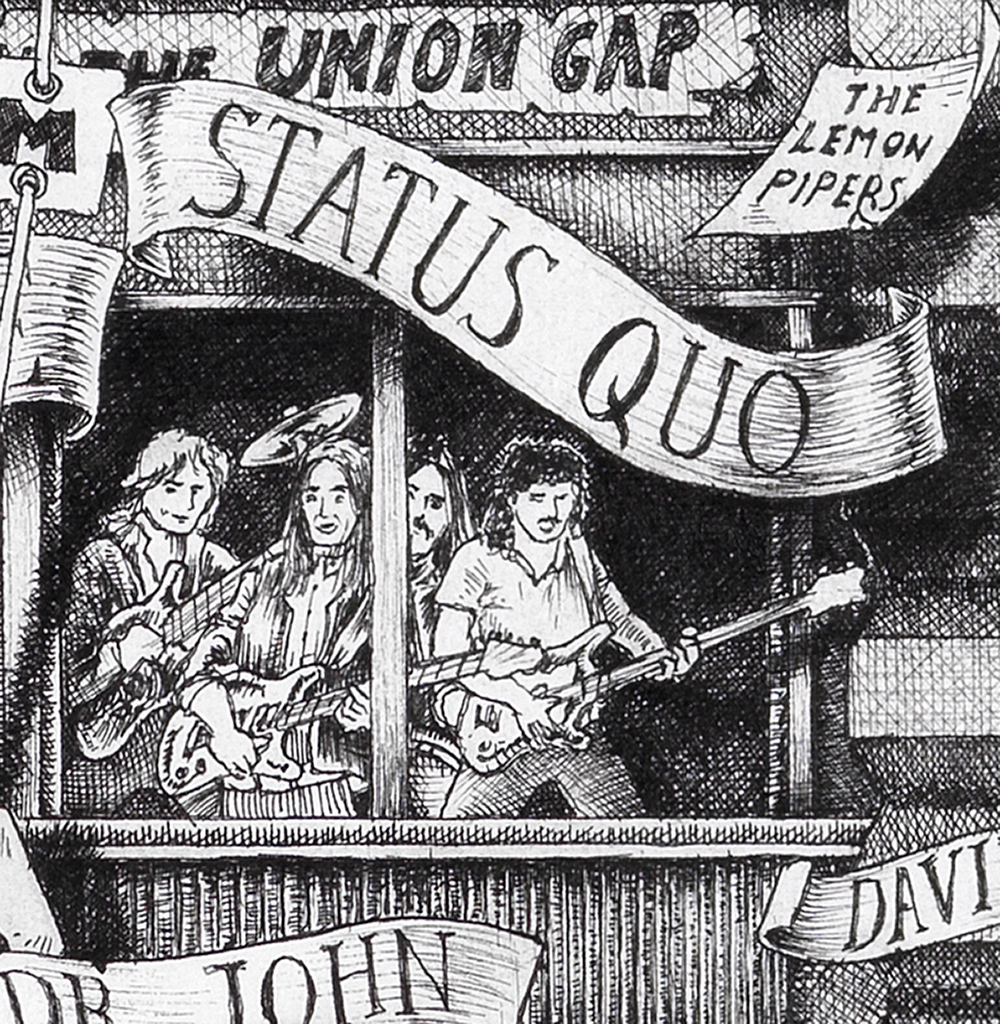
Songs including Caroline, Down Down and Roll Over Lay Down define Status Quo’s boogie rock through interlocking rhythm guitars, an insistent pulse and live energy. Albums such as Piledriver and Hello! remain among the defining masterpieces of British boogie rock.
Within The Great Rock and Roll History, Status Quo represent the working, touring side of 1970s British rock. Less interested in progressive rock’s conceptual spectacle, they shaped their language through concerts, rhythmic discipline and a lasting connection with audiences.
Influenced by
- Chuck Berry
- 1950s rock and roll
- British psychedelia
- British blues rock
- American boogie music
Influent For
- European hard boogie
- British stadium rock
- Working-class rock bands
- Motorhead live attitude
- Minimalist guitar rock
Related Artists
AC/DC
Motorhead
Slade
Nazareth
SOURCES
Official Status Quo archives
British hard rock archives
Classic boogie rock archives
Live Aid historical archives
Status Quo turned boogie rock into a collective signature, moving through psychedelia, hard rock and the culture of large-scale live performance. Behind their seemingly simple formula lie the complicated partnership of Francis Rossi and Rick Parfitt, the power of the original lineup and the human cost of a career lived almost constantly on the road. Their place in rock genealogy rests on the meeting of popular immediacy and stubborn musical identity.