
Martin Carthy is one of the most important, respected and quietly influential figures in British folk music history. Through innovative arrangements, personal tunings, almost archaeological attention to ancient ballads and dry yet deeply expressive singing, he transformed the English folk revival into something: – alive, – radical, – contemporary, – and artistically sophisticated. Martin Carthy is a central figure in the British folk revival: a guitarist, singer and researcher who gave traditional English ballads contemporary force without simply turning them into pop songs. This illustrated profile in The Great Rock and Roll History, explores his place at the meeting point of oral tradition, London folk clubs and the emergence of British folk rock.
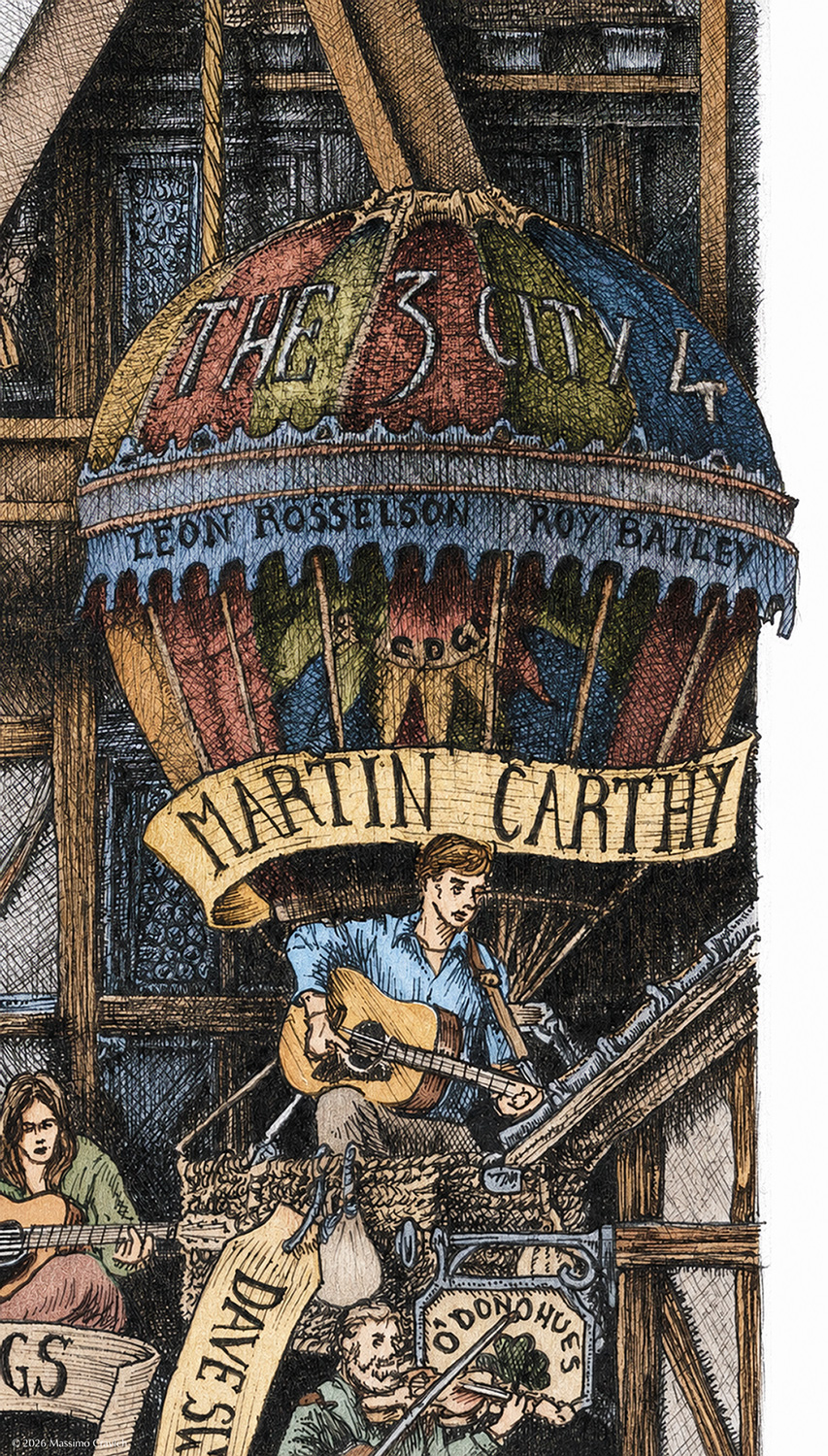
Rock Icons: Martin Carthy
Tradition not as a museum piece, but as music to interpret and pass on.

English folk master blending traditional ballads, innovative guitar technique and modern British folk identity.
Through his guitar arrangements, ballad repertoire and work with Steeleye Span, the Albion Country Band and singer Norma Waterson, Martin Carthy profoundly influenced English folk music and folk rock.
Name: Martin Carthy
Born: May 21, 1941 — Hatfield, England
Status: Active
Instruments: acoustic guitar, vocals, banjo
Genres: British folk, folk revival, traditional folk, folk rock
ARTIST OFFICIAL SITE: No Official Site
LISTEN
• Famous Flower of Serving Men
Bonus Track: Streets of London (VocalRoy Bailey, Martin Carthy and Leon Rosselson on guitars)
The Man Who Preserved Tradition by Transforming It
Ballads and the London folk-club scene
Martin Carthy came of age in a Britain where traditional music could seem to belong more to archives than to everyday life. Early-1960s folk clubs offered something different: a place where an old song could be debated, reshaped and brought back before an audience. Carthy developed a distinctive guitar approach, using alternative tunings, counterpoint and a close relationship between melody and rhythm. He did not try to smooth away the ballads’ rough edges; their violence, irony and ambiguity remained intact.
Bob Dylan heard his repertoire during visits to London, while the story of Scarborough Fair, later made famous by Simon & Garfunkel in an arrangement that prompted controversy, illustrates the delicate boundary between shared tradition, personal interpretation and proper recognition.
An independent spirit inside and outside bands
Carthy is deeply collaborative, yet reluctant to compromise his understanding of tradition for commercial convenience. His time with Steeleye Span and later the Albion Country Band placed him where English electric folk was finding its identity. But joining electric groups did not mean abandoning his acoustic principles. He brought close attention to sources, a storyteller’s sense of ballad structure and arrangements that made electric instruments engage with forms much older than rock.
His artistic and personal partnership with Norma Waterson, followed by work with their daughter Eliza Carthy, reveals another side of his career: tradition as a conversation between people and generations rather than the property of any single performer.
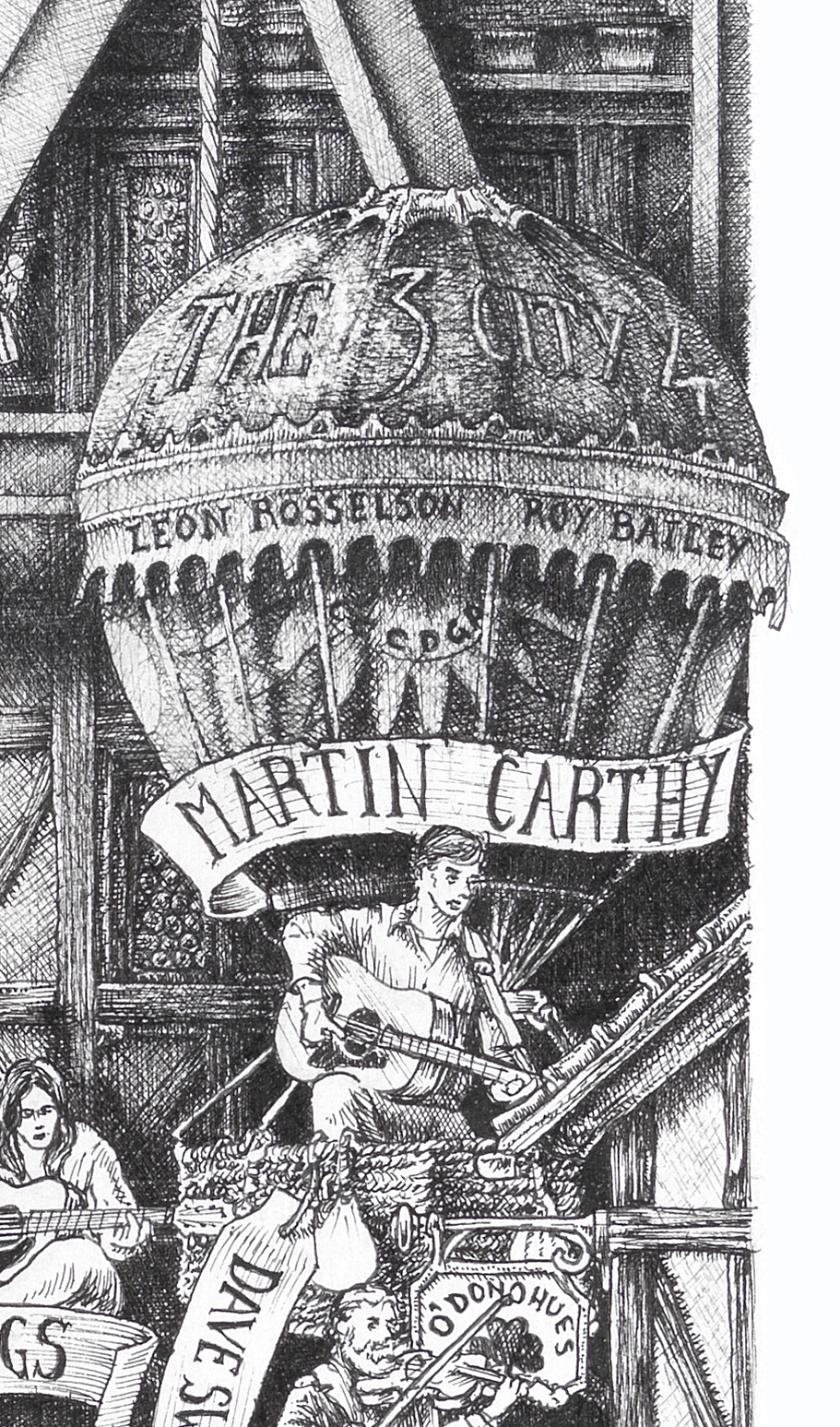
The genealogy of a moving tradition
Carthy’s importance does not rest on one record or spectacular breakthrough. It lies in his sustained demonstration that a ballad can change its arrangement and audience without losing complexity. His work connects traditional singers and the folk revival to folk rock, influencing musicians well beyond strictly defined folk.
In rock genealogy, the line runs from British ballads and oral tradition through the folk revival to Martin Carthy, British folk rock and later generations of acoustic interpreters.
Martin Carthy’s guitar arrangements, English ballad repertoire and work with Steeleye Span and the Albion Country Band helped define the relationship between traditional folk and British folk rock. Traditional songs and albums such as Scarborough Fair, Prince Heathen and Byker Hill became defining landmarks of the British folk revival and modern acoustic folk interpretation.
Within The Great Rock and Roll History , Martin Carthy represents an essential, less conspicuous side of the 1960s transformation: while rock electrified folk, some performers preserved its memory, stories and irregularities, preventing tradition from becoming merely a sonic style.
Influenced by
- Ewan MacColl
- A.L. Lloyd
- Traditional British ballads
- Oral folk traditions
- Medieval Music
Influent For
- Bob Dylan
- Fairport Convention
- Steeleye Span
- British folk revival
- Acoustic fingerstyle guitar
Related Artists
- Fairport Convention
- Steeleye Span
- Norma Waterson
- Eliza Carthy
- Ewan MacColl
SOURCES
Martin Carthy official archives
BBC Folk Archives
English Folk Dance and Song Society
AllMusic
British folk historical archives
Martin Carthy holds a central place in British folk history because he combined research, interpretation and inventive guitar playing. His influence extends through the folk revival, folk rock and later generations, but his deepest legacy is both human and musical: a traditional song remains alive only when someone takes responsibility for it, listens closely and finds a new reason to sing it.