
Jethro Tull are a British rock band formed in 1967, widely regarded as one of the most original and influential groups in progressive rock, blending folk traditions, hard rock energy and conceptual ambition.
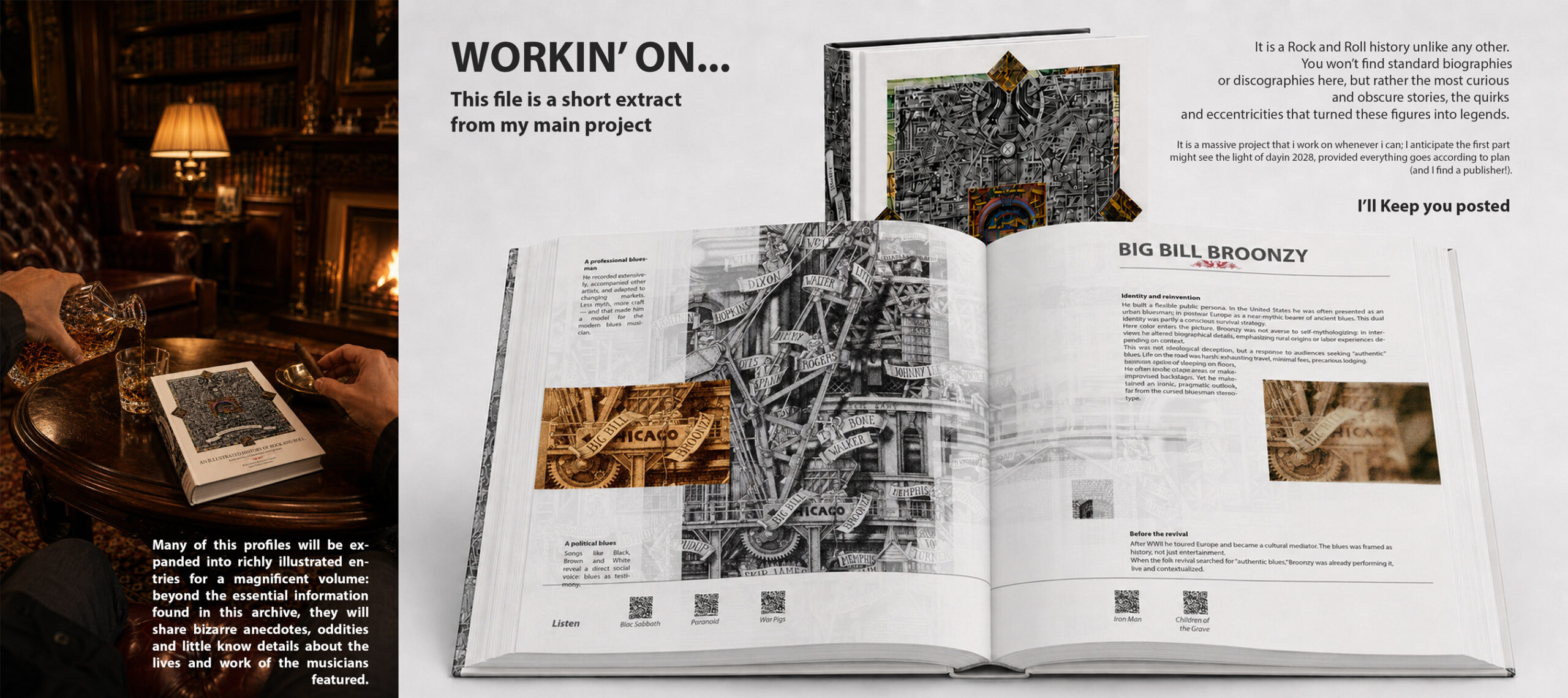
This illustrated profile explores their musical evolution, artistic vision and cultural impact within The Great Rock and Roll History, a large-scale illustrated timeline of modern music.

Rock Icons: Jethro Tull

By combining blues roots, progressive structures and folk-inspired textures, the band expanded the expressive possibilities of rock music.
Formed: 1967, Blackpool / London(UK)
Disbanded: 1970
Key Figures: Ian Anderson (leader, singer, flautist, acoustic guitar) – Martin Barre (Guitar)
Genres: Progressive rock, Folk rock, Hard rock, Blues rock
ARTIST OFFICIAL SITE: www.jethrotull.com/
LISTEN
More to discover…
The Minstrels that blended Folk rock with Progressive
Jethro Tull developed a highly distinctive musical language in which acoustic traditions, electric rock and conceptual composition coexisted.
Their work moved fluidly between intricate progressive structures and pastoral folk atmospheres, often combining literary themes, irony and historical imagery.
This unique synthesis positioned the band at the intersection of progressive experimentation and roots-based musical imagination. Jethro Tull are one of the most fascinating anomalies in British rock: a band that starts with blues, appropriates folk, absorbs progressive, flirts with hard rock, and puts at the center an instrument that no one had ever dared to bring so prominently: the flute. All filtered by the ironic, theatrical, and often provocative intelligence of Ian Anderson.
Albums such as Aqualung and Thick as a Brick helped redefine the possibilities of the concept album in rock music.
Their work occupies a distinctive position within the broader visual narrative of The Great Rock and Roll History.

Influenced by
- Bluesbreakers
- Cream
- Traditional British Folk.
- Classical and Baroque Music
Influent For
- European Progressive Rock
- Theatrical Folk Rock
- Progressive Metal
- Narrative Conceptual Rock
Related Artists
Get Your Rock Icon
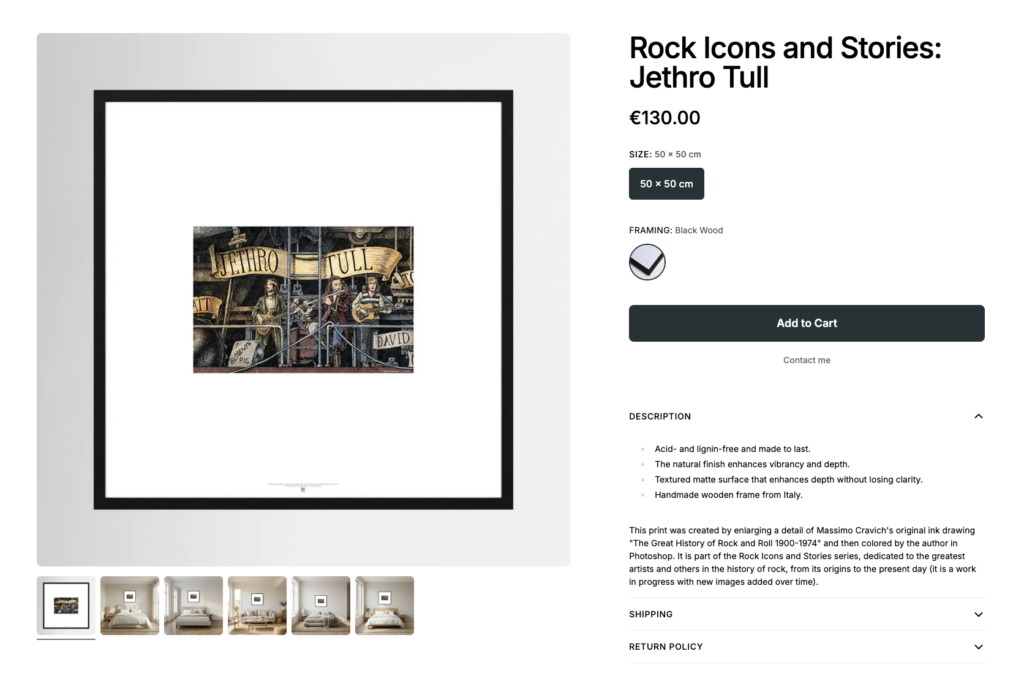
Selected artworks from Rock Icons and Stories are available as high-quality framed art prints. Printed on premium 230 gsm matte paper with excellent detail and colour reproduction, each print is professionally framed and delivered ready to hang.A carefully selected, high-quality alternative to the museum-grade Fine Art Giclée editions, offering an accessible way to own and display a reproduction of the original artwork. Printing, framing and worldwide fulfilment are handled by our specialist printing partner.

Within the broader narrative of rock history, Jethro Tull represent a unique expansion of rock language, uniting progressive composition, folk imagination and conceptual ambition.
Their influence extends across generations, shaping progressive rock, folk-rock experimentation and alternative approaches to musical storytelling.