
Arthur Lee was the leader, singer and principal songwriter of Love, one of the most original bands to emerge from 1960s Los Angeles. Drawing on folk rock, rhythm & blues, garage and psychedelia, he created a restless and sophisticated musical language that reached its most enduring expression on Forever Changes. This illustrated profile explores Arthur Lee as a songwriter, arranger and connecting figure within The Great Rock and Roll History, tracing the path from the Sunset Strip scene to a form of psychedelic rock capable of absorbing folk, jazz, flamenco, orchestration and urban tension.
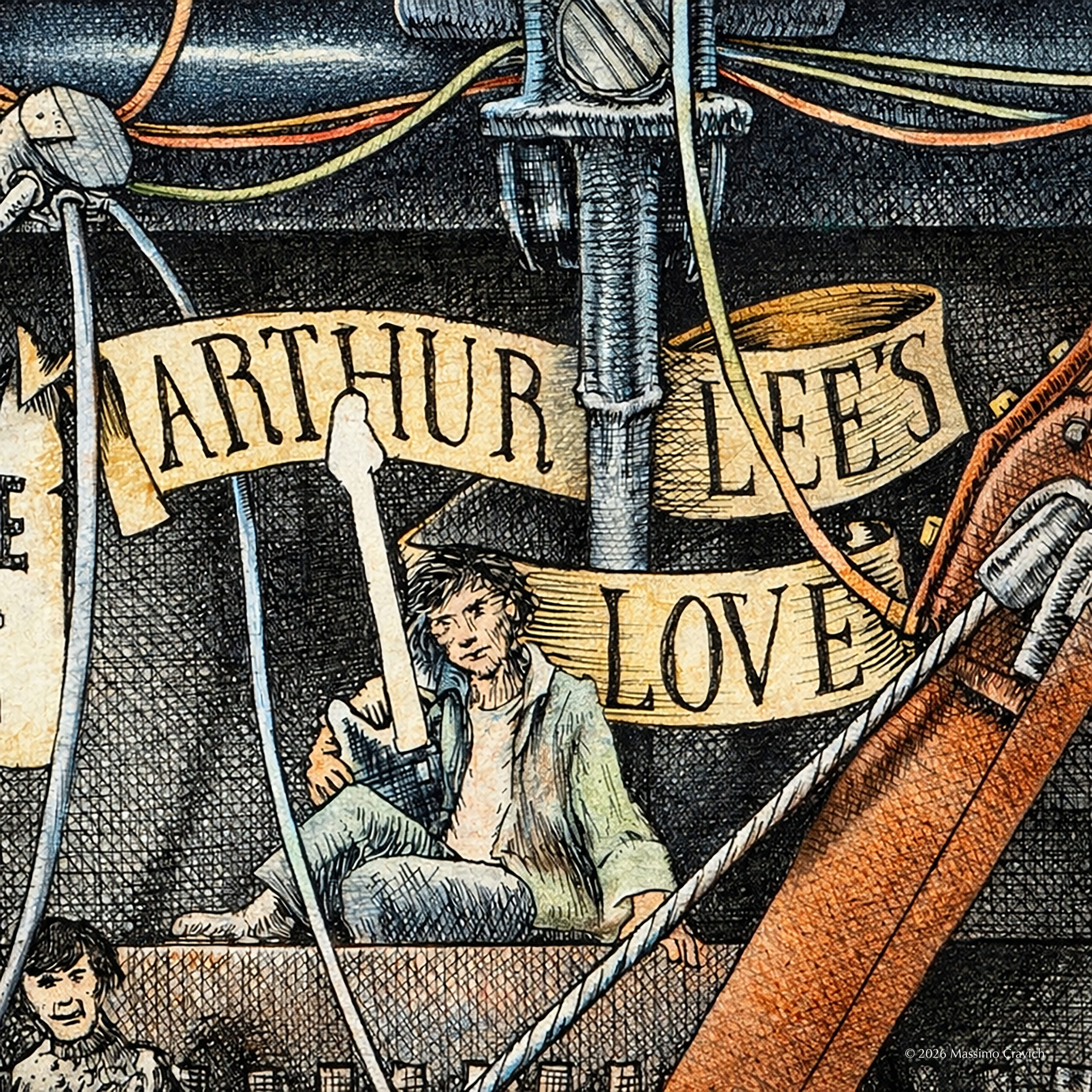
Rock Icons: Arthur Lee

The Love visionary who turned Los Angeles psychedelia into songs that were luminous, nervous and startlingly modern.
With Love, Arthur Lee moved through garage rock, folk rock and psychedelia without settling into any single formula, progressing from the electric urgency of 7 and 7 Is to the acoustic and orchestral songwriting of Forever Changes, an album that later influenced generations of alternative and indie musicians.
Name: Arthur Porter Taylor (Arthur Lee)
Birth: March 7, 1945 — Memphis, Tennessee, USA
Death: August 3, 2006 — Memphis, Tennessee, USA
Main band: Love
Genres: Psychedelic rock, folk rock
ARTIST OFFICIAL SITE: https://www.lovearthurlee.com
LISTEN
More to discover…
From the Sunset Strip to Forever Changes: psychedelia looking beyond psychedelia
Arthur Lee occupies a singular position in mid-1960s Los Angeles. Love emerged from the same scene that produced the Byrds, the Doors and Buffalo Springfield, yet Lee never followed a linear path. Their early recordings mixed folk rock, garage, rhythm & blues and an almost proto-punk hardness; Bacharach and David’s My Little Red Book became something dry and obsessive, while 7 and 7 Is pushed speed, distortion and tension toward territory rock would explore much later. Lee absorbed the scene while already seeming impatient with its boundaries.
The decisive leap was 1967’s Forever Changes. At the height of the Summer of Love mythology, Lee wrote an album far removed from uncomplicated utopianism: acoustic yet uneasy, melodic yet filled with paranoia, isolation, mortality and sharp observations of city life. The songs combined folk guitars, unpredictable melodic lines, brass, strings, vocal harmonies and sudden rhythmic turns. Bryan MacLean provided an important compositional counterweight, while theorchestral arrangements expanded the palette without reducing the record to baroque pop. Here psychedelia became primarily a way of perceiving the world rather than a catalog of studio effects.
Lee’s genealogical importance becomes especially clear in retrospect. Love never achieved the international reach of several contemporaries, and instability limited the continuity of the classic lineup, but Forever Changes gradually acquired enormous status among musicians and listeners. Its mixture of acoustic fragility, psychological darkness, sophisticated arrangement and sudden electric force anticipated sensibilities that would reappear in post-punk, indie and alternative rock.
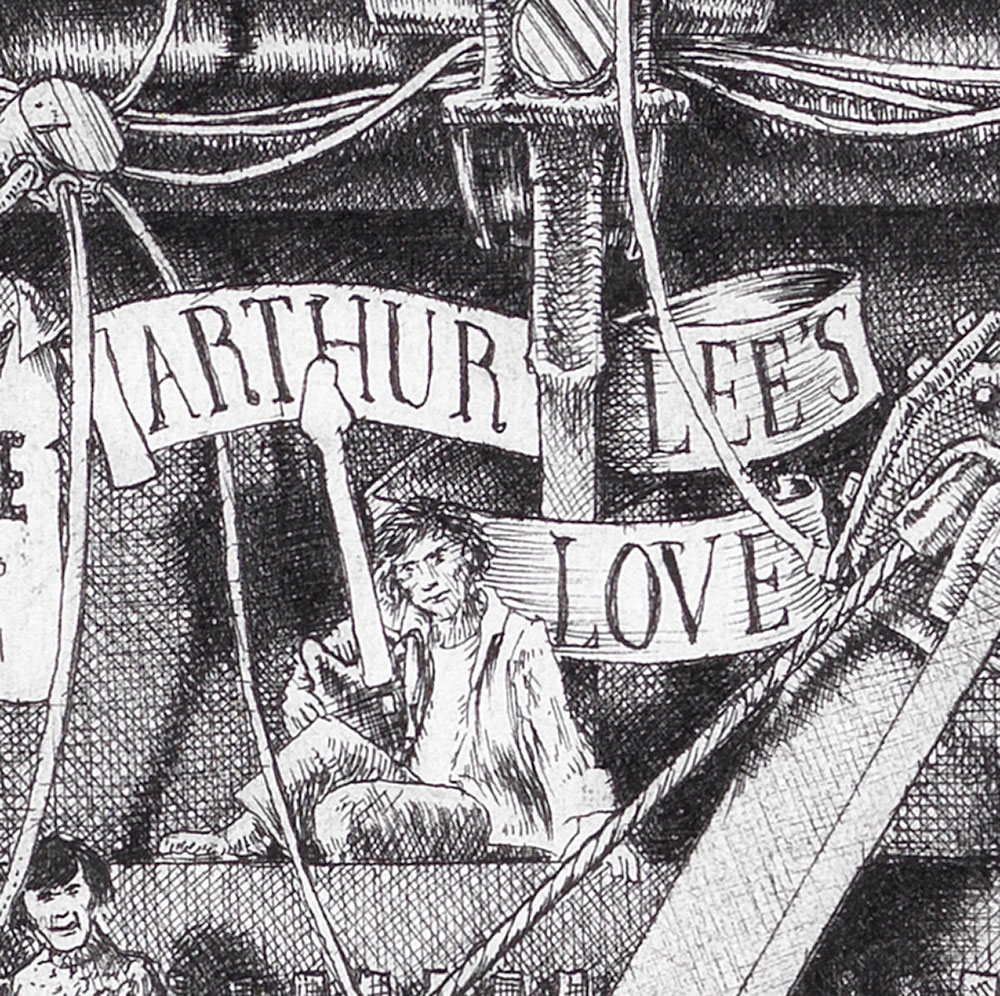
Arthur Lee therefore forms an unusual bridge: from mid-1960s folk rock and garage to a more ambiguous, inward-looking idea of the rock songwriter, where melodic beauty and unease can inhabit the same song.
From My Little Red Book and 7 and 7 Is to Alone Again Or and You Set the Scene, Arthur Lee and Love expanded the vocabulary of American psychedelia, leaving Forever Changes as a crucial reference point for later alternative and indie rock.
Within The Great Rock and Roll History, Arthur Lee connects rhythm & blues and garage with Los Angeles folk rock; from there the line passes through psychedelia and orchestral pop, projecting a darker songwriter sensibility toward post-punk, alternative and indie rock.
Influenced by
- The Byrds
- The Rolling Stones
- Burt Bacharach
- John Coltrane
- Folk and rhythm & blues traditions
Influent For
- he Damned
- Echo & the Bunnymen
- The Stone Roses
- Primal Scream
- Teenage Fanclub
Related Artists
- Love
- Bryan MacLean
- The Byrds
- The Doors
- Buffalo Springfield
SOURCES
• Love / Arthur Lee – discographies and archival materials concerning the Elektra recordings.
• Rock & Roll Hall of Fame – historical materials on the 1960s Los Angeles rock scene.• John Einarson, Forever Changes: Arthur Lee and the Book of Love, Jawbone Press, 2010.
• Andrew Hultkrans, Forever Changes, 33 1/3, Continuum, 2003.
• Elektra / Rhino reissue notes and historical documentation for Forever Changes.
In rock genealogy, Arthur Lee matters because he shows how quickly psychedelia could move beyond itself. With Love he began from garage, R&B; and folk rock, but arrived at songwriting in which orchestration, urban unease, acoustic melody and sudden electric tension existed without hierarchy. Forever Changes was not simply a great record of 1967: over time it became an underground blueprint for much of the alternative music that followed.