
B.B. King is one of the key figures in electric blues and one of the guitarists who most profoundly influenced the language of rock. Starting in the Mississippi Delta and moving on to Memphis, rhythm & blues, and the African-American urban circuit, he transformed the electric guitar into a second voice: few notes, unmistakable vibrato, pauses, and phrasing capable of communicating more than pure speed. This article explores B.B. King’s roots, musical language, and enormous legacy within The Great Rock and Roll History, following the path from gospel and Delta blues to modern electric blues and, through him, to generations of blues-rock guitarists.
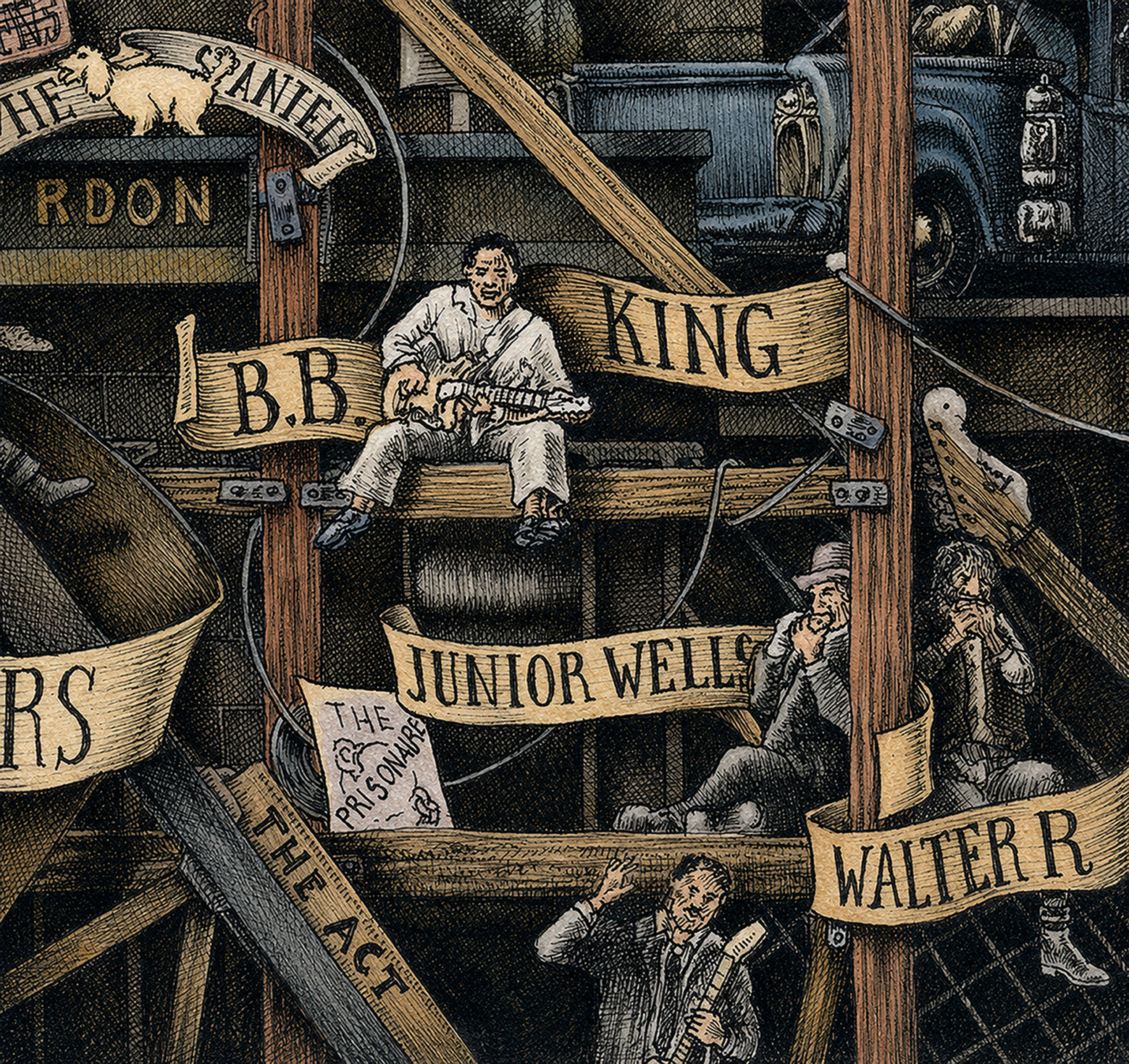
Rock Icons: B.B. King
The man who taught the electric guitar to sing

From Mississippi gospel and Memphis radio broadcasts to major hits like “Three O’Clock Blues” and “The Thrill Is Gone,” B.B. King developed a style based on vibrato, bending, economy of notes, and a dialogue between voice and guitar that became one of the fundamental matrices of blues rock and the modern electric guitar. A note from B.B. King could be worth an entire solo.
Real Name: Riley B. King
Born: September 16, 1925 — Mississippi, USA
Died: May 14, 2015 — Las Vegas, USA
Instruments: vocals, guitar
Genres: Blues, electric blues, rhythm and blues
ARTIST OFFICIAL SITE: www.bbking.com
LISTEN
More to discover…
The guitar as a second voice: from the Delta to the universal language of the blues
B.B. King’s musical birth occurred at the intersection of different currents of African-American music. There was gospel, sung since he was a boy; Mississippi Delta blues; the more sophisticated and urban blues of T-Bone Walker; the jazz of guitarists like Charlie Christian; the phrasing of Lonnie Johnson; and the elegance of Django Reinhardt. When he arrived in Memphis in the late 1940s, King also entered the world of radio and modern rhythm and blues. The result is no longer strictly Delta blues, but something new: a music in which the electric guitar gradually ceases to be a simple accompaniment and becomes an interlocutor of the voice.
It is here that King builds one of the fundamental vocabularies of modern guitar. He almost never plays while singing: his voice and Lucille respond to each other, like two characters engaged in the same conversation. The bends mimic the inflections of the human voice; the left-hand vibrato becomes an instantly recognizable signature; the pauses acquire the same importance as the notes. While other guitarists would develop the blues towards speed, distortion, and power, King demonstrates that intensity can arise from economy. A held note, slightly bent, and placed in the right spot can contain an entire emotional phrase. It is a principle destined to become fundamental well beyond the blues.
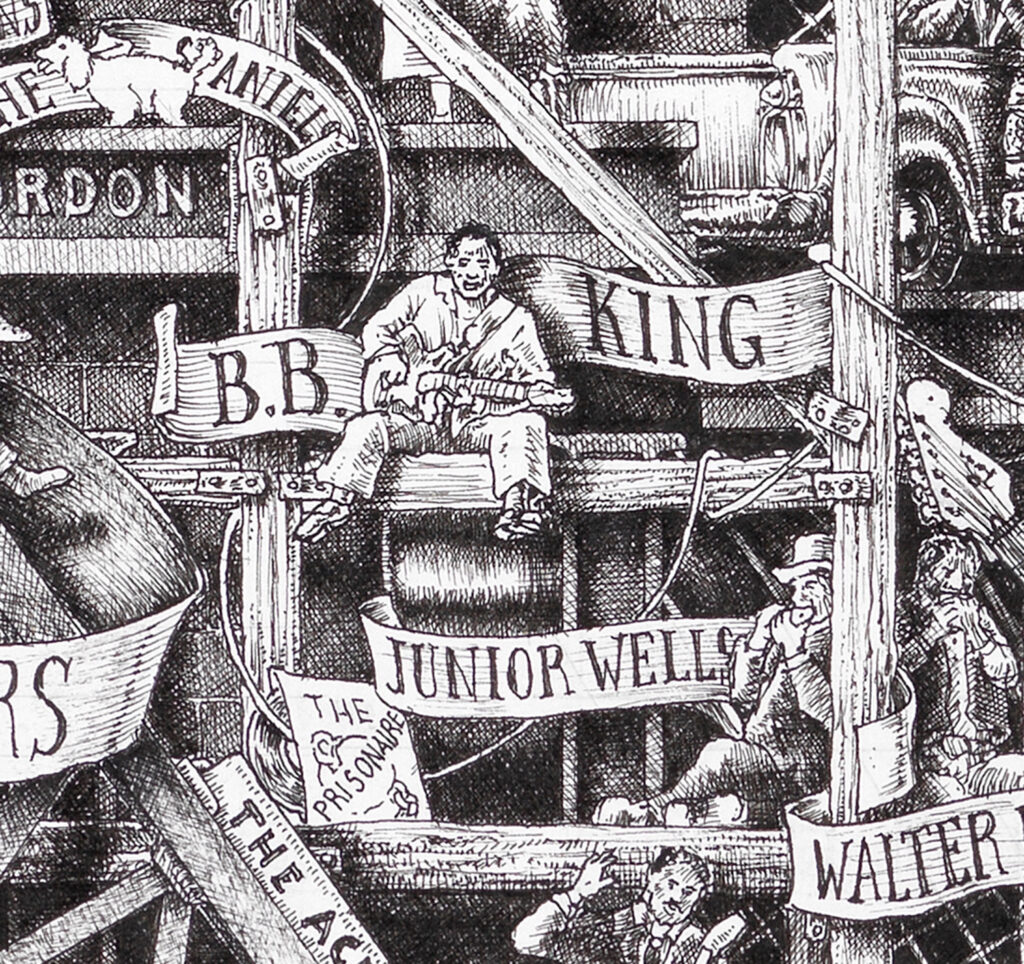
His genealogical position is enormous. During the 1960s, a new generation of British musicians traced the roots of American blues: Eric Clapton, Peter Green, and subsequently many other leading figures in blues rock recognized King as a key influence. Through them, elements of his phrasing entered rock, hard rock, and the grammar of lead guitar. But King remained recognizable as a bluesman: even when The Thrill Is Gone expanded his sound with strings and contemporary production, the core remained that dialogue between voice and guitar that had originated decades earlier. The genealogical line is crystal clear: gospel and Delta blues → T-Bone Walker and urban electric blues → B.B. King → British blues → blues rock → modern rock guitar. Very few musicians allow us to observe with such clarity the transition of a language from a local tradition to a universal musical vocabulary.
His music occupies a central position within the broader visual narrative of The Great Rock and Roll History.
Influenced by
- T-Bone Walker
- Southern gospel
- Delta blues
- Swing jazz
- Memphis urban blues
Influent For
- Eric Clapton
- Jimi Hendrix
- Stevie Ray Vaughan
- British blues-rock
- Modern guitar heroes

Related Artists
- T-Bone Walker
- Eric Clapton
- Albert King
- Stevie Ray Vaughan
- Buddy Guy
Get Your Rock Icon
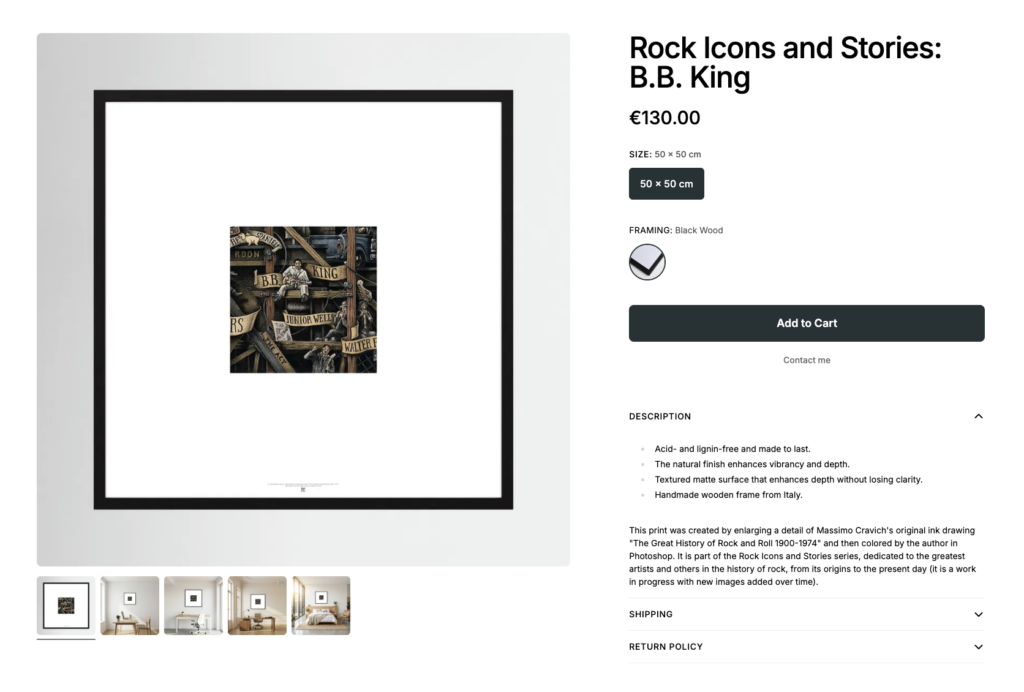
Selected artworks from Rock Icons and Stories are available as high-quality framed art prints. Printed on premium 230 gsm matte paper with excellent detail and colour reproduction, each print is professionally framed and delivered ready to hang.A carefully selected, high-quality alternative to the museum-grade Fine Art Giclée editions, offering an accessible way to own and display a reproduction of the original artwork. Printing, framing and worldwide fulfilment are handled by our specialist printing partner.
Sources
Rock and Roll Hall of Fame
B.B. King official archives
AllMusic
American blues historical archives
In the history of rock, B.B. King represents one of the fundamental links between African-American blues and the modern electric guitar. Absorbing gospel, Delta blues, jazz, and the electric elegance of T-Bone Walker, he developed a personal language based on bending, vibrato, pauses, and the dialogue between voice and instrument. Through musicians like Eric Clapton and Peter Green, this grammar entered directly into British blues and blues-rock, becoming part of the DNA of rock guitar. B.B. King’s legacy demonstrates that virtuosity doesn’t necessarily consist in the number of notes: it can reside in the ability to make every single note unmistakable and necessary.