
Creedence Clearwater Revival developed a deliberately economical sound at the end of the 1960s, built from rock and roll, blues, country, R&B; and Southern American traditions despite the band’s California origins. At the height of psychedelia they chose short forms, clear riffs and narrative songwriting rather than the era’s dominant expansion of sound.
This profile follows Creedence Clearwater Revival’s place within The Great Rock and Roll History: from blues, rockabilly and country roots to a dry, modern form of roots rock, and onward to traces heard in southern rock, Americana and later reinterpretations of American traditional music.
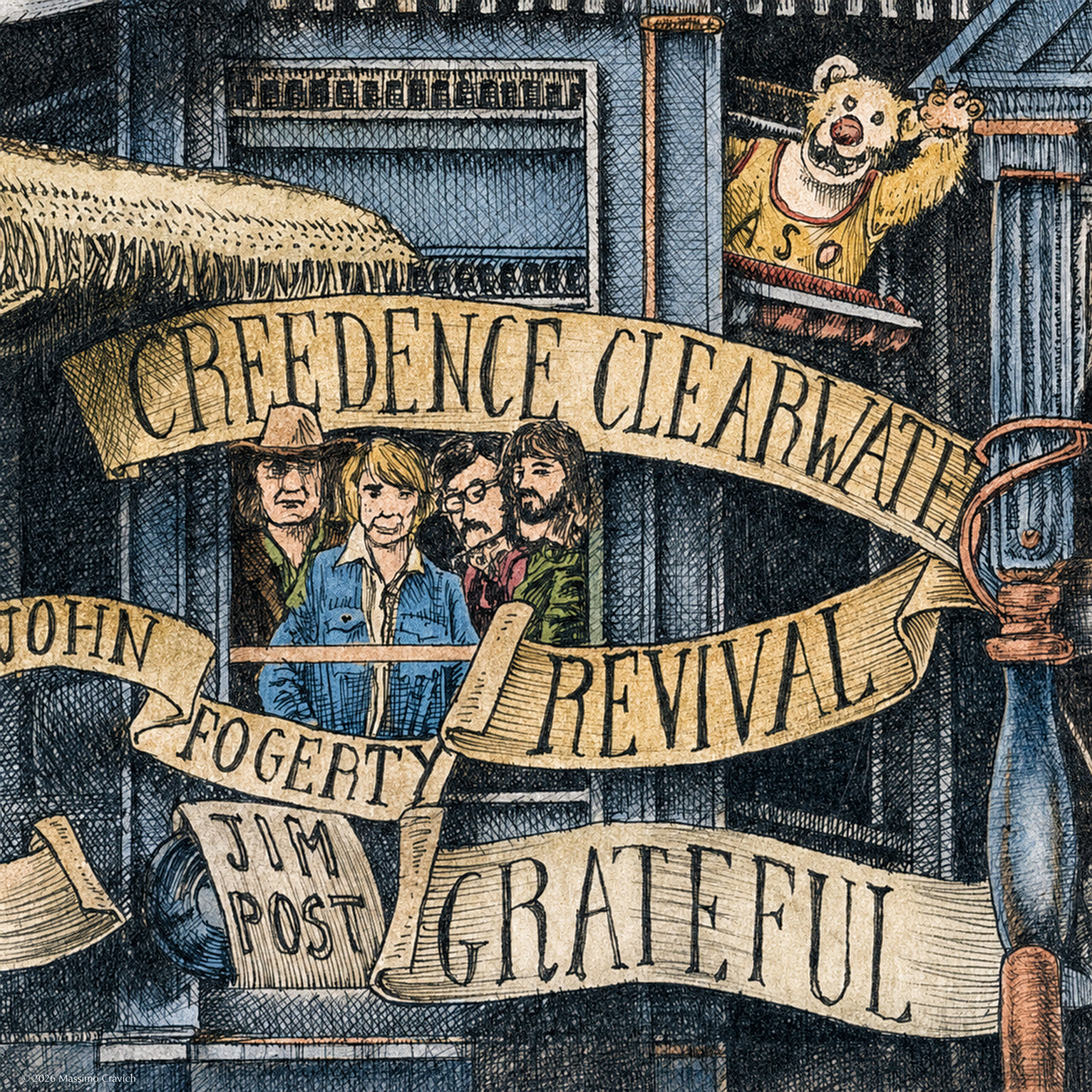
Rock Icons: Creedence Clearwater Revival
California, an imagined South and songs stripped to essentials: another route through the end of the 1960s.

Between 1968 and 1970, albums including Bayou Country, Green River, Willy and the Poor Boys and Cosmo’s Factory condensed blues, country, rockabilly and R&B; into an immediate form of roots rock centered on John Fogerty’s writing and voice. By combining swamp blues, roots rock and American working-class imagery, Creedence Clearwater Revival became one of the defining architects of roots-oriented rock music.
Formed: 1967 — El Cerrito, California, USA
Status: Disbanded
Classic Line up: John Fogerty, Tom Fogerty, Stu Cook, Doug Clifford
Genres: Roots rock, swamp rock, blues rock, country rock
ARTIST OFFICIAL SITE: www.concord.com/artist/creedence-clearwater-revival
LISTEN
More to discover…
Against the current without nostalgia: American roots inside late-1960s rock
Creedence reached its peak while much American rock was turning toward psychedelia, extended improvisation and studio experimentation. Their response was not a scholarly return to the past but a synthesis. John Fogerty absorbed Chuck Berry, Little Richard, Bo Diddley, Howlin’ Wolf, rockabilly, country and rhythm & blues and compressed them into compact structures. Guitar parts favored riffs and interlocking figures over virtuosity; the rhythm section avoided unnecessary decoration; Fogerty’s voice adopted inflections associated with the South even though the band came from California. The result was an American musical landscape that was partly real and partly imagined.
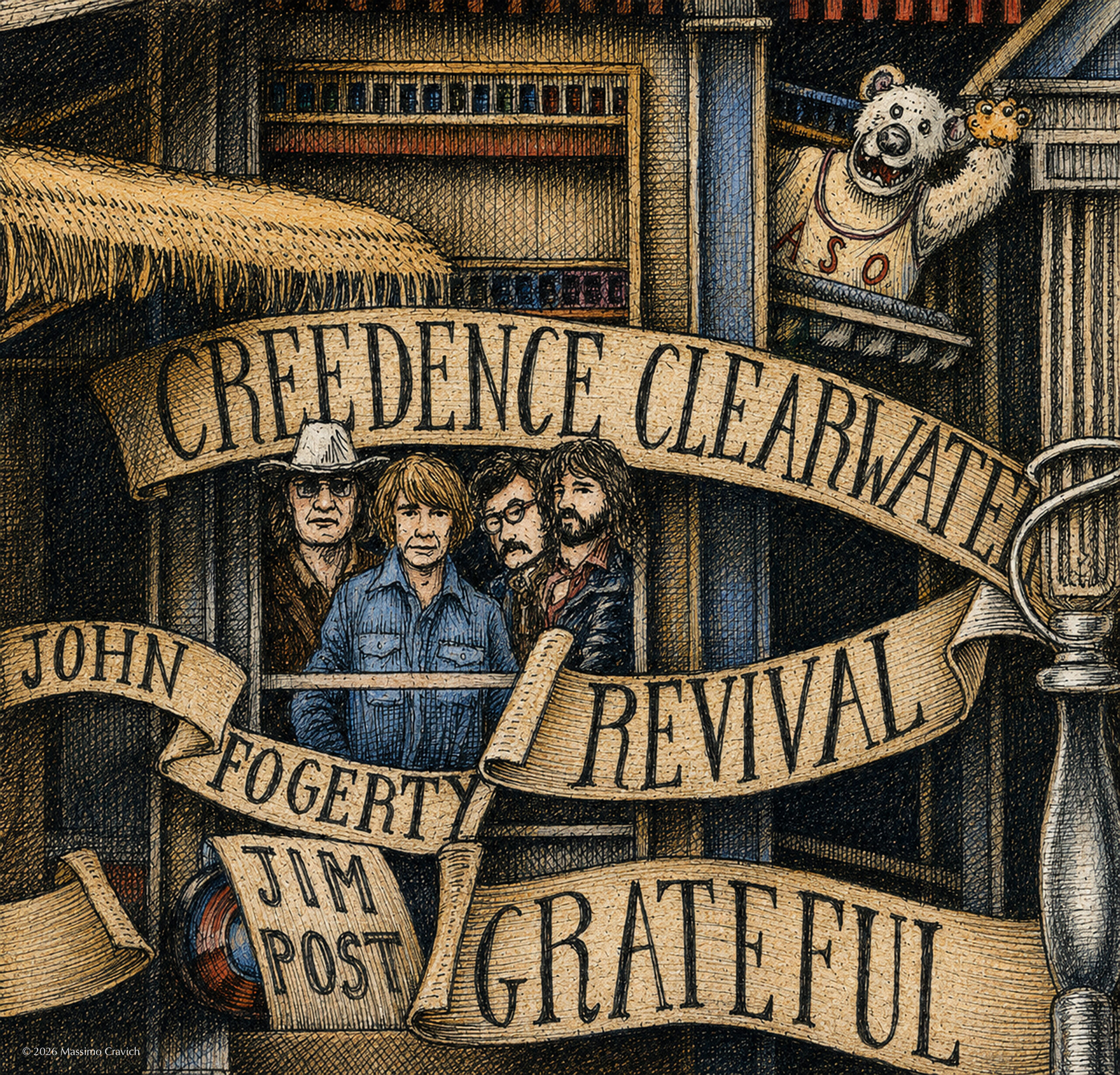
That construction is especially clear in songs involving bayous, rivers, trains, work and rural landscapes. Born on the Bayou sounds geographically specific but emerged from the imagination of a California songwriter; Proud Mary uses the Mississippi as a setting for movement and change; Green River reshapes personal memories into an almost archetypal landscape.
Alongside them, Fortunate Son and Who’ll Stop the Rain bring the same musical economy into the social and political tensions of the period. The result avoids both psychedelic ornament and traditionalist reconstruction: roots become contemporary material.
Their genealogical position therefore depends less on inventing a genre than on a method of synthesis. Rock and roll, blues, country and R&B; are recombined into a language that anticipates part of southern rock without simply belonging to it, while providing a later reference point for roots rock and Americana.
The song architecture itself – recognizable riff, compact arrangement, direct narrative – remained useful to musicians seeking an alternative to both virtuosity and overloaded production. The line can be read as blues + country + rockabilly + R&B; -> Creedence Clearwater Revival -> roots rock -> southern rock and later forms of Americana and roots-oriented rock.
Songs such as Proud Mary, Green River, Fortunate Son and Up Around the Bend show how Creedence Clearwater Revival reshaped blues, country and rock-and-roll materials into compact, narrative and fully contemporary roots rock.
Within The Great Rock and Roll History, Creedence Clearwater Revival connect blues, country, rockabilly and R&B; -> American rock and roll -> late-1960s roots rock -> southern rock, Americana and later rock reinterpretations of American traditions.
Influenced by
- 1950s rock and roll
- Southern blues
- Country music
- Little Richard
- Hank Williams and rhythm and blues
Influent For
- Bruce Springsteen
- Tom Petty
- Heartland rock
- Southern rock
- American roots rock
Related Artists
Bruce Springsteen
Tom Petty
The Band
Get Your Rock Icon
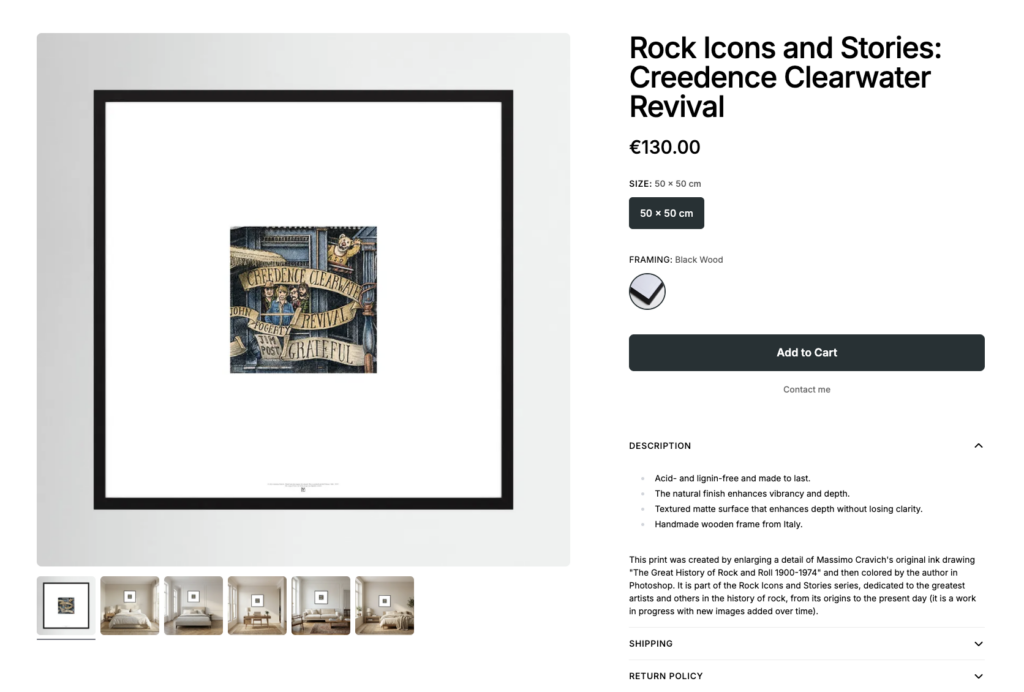
Selected artworks from Rock Icons and Stories are available as high-quality framed art prints. Printed on premium 230 gsm matte paper with excellent detail and colour reproduction, each print is professionally framed and delivered ready to hang.A carefully selected, high-quality alternative to the museum-grade Fine Art Giclée editions, offering an accessible way to own and display a reproduction of the original artwork. Printing, framing and worldwide fulfilment are handled by our specialist printing partner.
SOURCES
Rock and Roll Hall of Fame
Creedence Clearwater Revival official archives
AllMusic
American roots-rock historical archives
In rock genealogy, Creedence Clearwater Revival occupy an unusual position because they worked with roots without merely reproducing them. Their sound was built from earlier materials – blues, country, rockabilly and rhythm & blues – but compressed them into songs designed for the present, while their Southern imagery was reconstructed from California as a musical landscape. That combination of economy, narrative and American memory provides a bridge between early rock and roll and later forms of roots rock, southern rock and Americana.