
Big Bill Broonzy was one of the great connecting figures in blues history: a singer, guitarist and songwriter who moved through country blues, hokum, urban Chicago blues and the folk revival, almost embodying the transformation of African-American music between the 1920s and 1950s.
This illustrated profile explores Big Bill Broonzy’s roots, evolution and influence within The Great Rock and Roll History, where his long career connects Southern rural blues with the city, prewar blues with postwar forms, and finally American blues with the European generation that would help create blues rock.
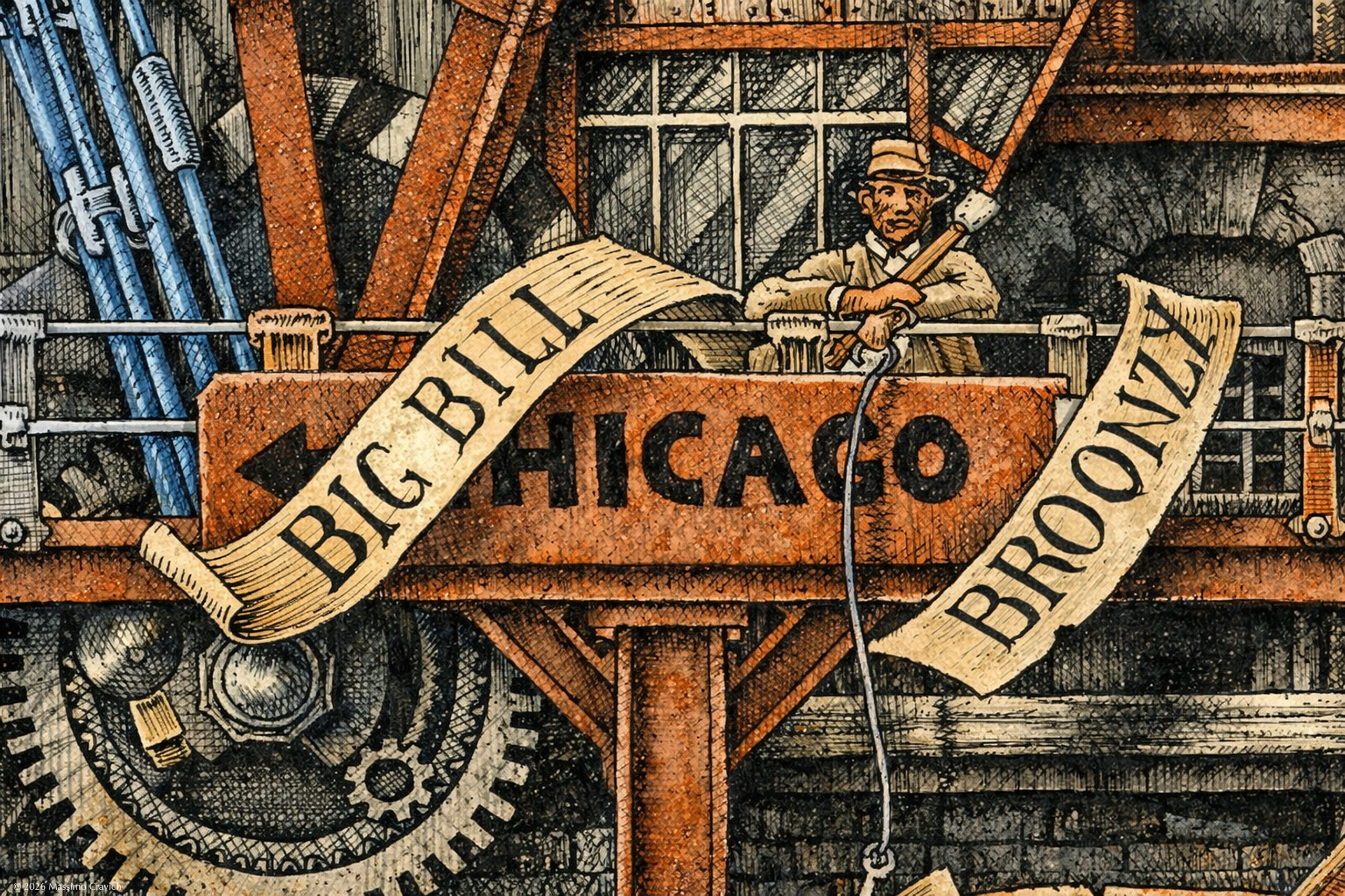
Rock Icons: Big Bill Broonzy
A bluesman between two worlds: from rural roots to Chicago, then to the Europe that learned to hear the blues through him.

From his early acoustic recordings in 1920s Chicago to the more rhythmic urban ensembles of the 1930s and 1940s and his European tours of the 1950s, Big Bill Broonzy crossed many of the major transformations of prewar blues, becoming a reference point for the folk revival and the future British blues generation.
Birth name Lee Conley Bradley (commonly given; some biographical details remain disputed)
Born June 26, 1893, traditional date – Arkansas, USA
Died August 14, 1958 – Chicago, Illinois, USA
Instruments Vocals, guitar
Genres Country blues, Chicago blues, hokum, folk blues
Main period 1920s-1950s
Historical role Bridge between rural blues, urban blues and the folk revival
Instruments: guitar, vocals
LISTEN
More to discover…
From country blues to the city: the bridge between rural and urban blues
Big Bill Broonzy’s story almost perfectly parallels the migration of the blues from the rural South to the city. Arriving in Chicago in the 1920s, he had to adapt his language to a rapidly changing musical environment. His early recordings retained elements of country blues, but Broonzy soon developed a remarkably versatile style that could work solo, in duos or with small ensembles.
His guitar could be rhythmic and propulsive yet unexpectedly refined, while his direct, narrative voice made movement between blues, hokum and urban entertainment seem completely natural.
The 30’s and the 40’s
During the 1930s and 1940s Broonzy became one of the most prolific and adaptable musicians on the Chicago scene. He recorded with larger groups and participated in the gradual transformation of blues into an urban, rhythmic music aimed at a modern African-American market. His appearance at the 1938 From Spirituals to Swing concert at CarnegieHall also placed him within a crucial moment in the presentation of African-American music to wider audiences. Songs such as Key to the Highway became blues standards, while material including Black, Brown and White demonstrated how directly the blues could address discrimination and social conditions.
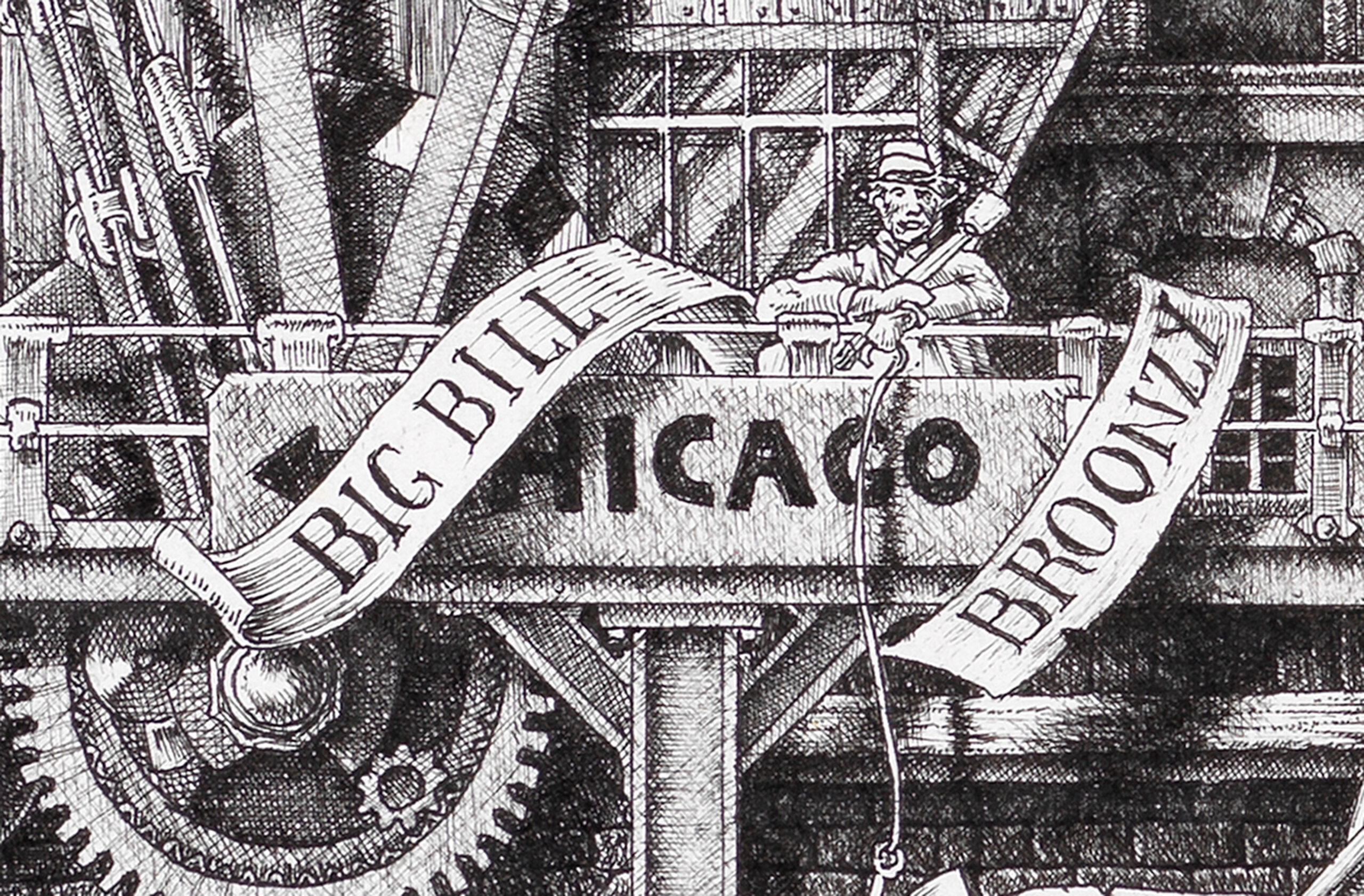
Rock Icons: Big Bill Broonzy
The 50’s
The most unusual part of his genealogy came in the 1950s. On European tours Broonzy often returned to a more acoustic, apparently rural presentation and became, for many young listeners, a personification of the blues’ origins. That image simplified a career that had actually been far more urban and complex, but its consequences were enormous: British musicians including Alexis Korner regarded him as a fundamental reference.
Through the folk revival and emerging British blues, his music entered a chain that would lead toward blues rock. Country blues -> prewar Chicago -> urban blues -> European revival -> British blues: Broonzy did not merely occupy one branch of the tree; he physically crossed several eras of the blues.
Songs including Key to the Highway, Hey Hey and Black, Brown and White reveal the range of Big Bill Broonzy, a crucial figure in the transition from country blues to Chicago blues and in Europe’s later rediscovery of African-American roots music.
Within The Great Rock and Roll History, Big Bill Broonzy forms an especially valuable genealogical bridge: Southern rural blues -> migration to Chicago -> prewar urban blues -> European folk revival -> Alexis Korner and British blues -> blues rock.
Influenced by
- Blind Blake
- Papa Charlie Jackson
- Jim Jackson
- Southern rural blues
- African-American folk and spiritual traditions
Influent For
- Muddy Waters
- Alexis Korner
- Eric Clapton
- Bert Jansch
- John Renbourn

Related Artists
- Tampa Red
- Memphis Minnie
- Sonny Boy Williamson I
- Muddy Waters
- Alexis Korner
Get Your Rock Icon
Selected artworks from Rock Icons and Stories are available as high-quality framed art prints. Printed on premium 230 gsm matte paper with excellent detail and colour reproduction, each print is professionally framed and delivered ready to hang.A carefully selected, high-quality alternative to the museum-grade Fine Art Giclée editions, offering an accessible way to own and display a reproduction of the original artwork. Printing, framing and worldwide fulfilment are handled by our specialist printing partner.

SOURCES
• Smithsonian Folkways – Big Bill Broonzy recordings and historical notes.• Encyclopaedia Britannica – Big Bill Broonzy biographical overview.
• Bob Riesman, I Feel So Good: The Life and Times of Big Bill Broonzy, University of Chicago Press, 2011.
• Big Bill Broonzy, Big Bill Blues, as told to Yannick Bruynoghe, 1955.
• Historical Vocalion, Bluebird, Mercury and Folkways discographical materials.
In the genealogy of rock, Big Bill Broonzy matters above all as a figure of transition. His career connects country blues with urban Chicago, acoustic blues with the more rhythmic forms of the postwar era, and finally America with the Europe of the folk revival. When the British generation began transforming blues into blues rock, Broonzy had already been one of the musicians who showed them where that language came from. His legacy therefore lies not only in songs or guitar technique, but in the continuity he embodies between blues worlds too often described as separate.