
Alexis Korner turned American blues into a meeting ground for a generation of British musicians. With Cyril Davies and Blues Incorporated, he created a London environment where jazz, electric blues and rhythm & blues could interact, laying groundwork for many British Invasion bands. This profile in The Great Rock and Roll History, traces his role connecting African American traditions, London clubs and the emergence of blues rock.
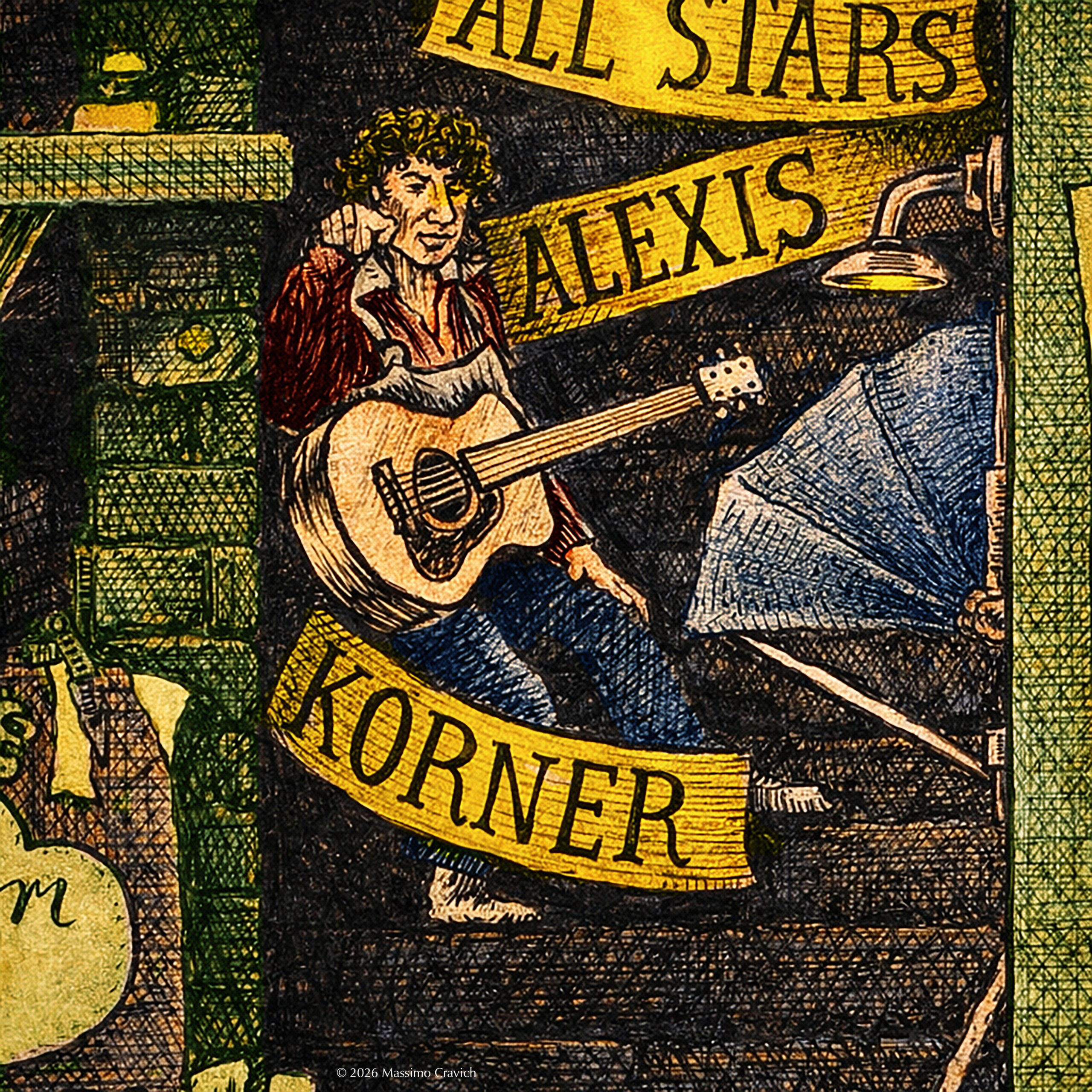
Rock Icons: Alexis Korner
Blues as a meeting place: a scene before a genre.

British blues pioneer who helped shape the foundations of modern British rock music
From the London Blues and Barrelhouse Club to Ealing Club nights and R&B from the Marquee, Alexis Korner and Blues Incorporated helped turn the appreciation of American blues into a collective practice crucial to British rock.
Name: Alexis Andrew Nicholas Koerner
Born: April 19, 1928
Died: January 1, 1984
Genres: Blues, R&B;, British blues, Blues rock
Instruments: Voice – Guitar
ARTIST OFFICIAL SITE: alexis-korner.net
LISTEN
I Wanna Put a Tiger in Your Tank
More to discover…
The Engine of Events
Alexis Korner approached blues music not only as a performer but also as a cultural mediator and musical catalyst. Through his bands, collaborations and radio work, he helped create an environment in which British blues and rock could develop. His work connected traditional American blues with a new generation of British musicians eager to expand the language of rock music.
This role positioned him as one of the central architects of the British blues explosion of the 1960s. Many influential musicians associated with the British blues movement began their careers through collaborations connected to Alexis Korner.
From Chicago to London: building a scene, not a formula
Born in Paris and arriving in London during the war, Korner discovered blues through American records and the British jazz world. In Chris Barber’s circle he met Cyril Davies; together they promoted visiting African American performers and created spaces for music still marginal in British clubs. Their work was not simply an attempt to copy Chicago or the Delta. It involved adapting the repertoire to different instruments, audiences and musicians without losing sight of its originators.
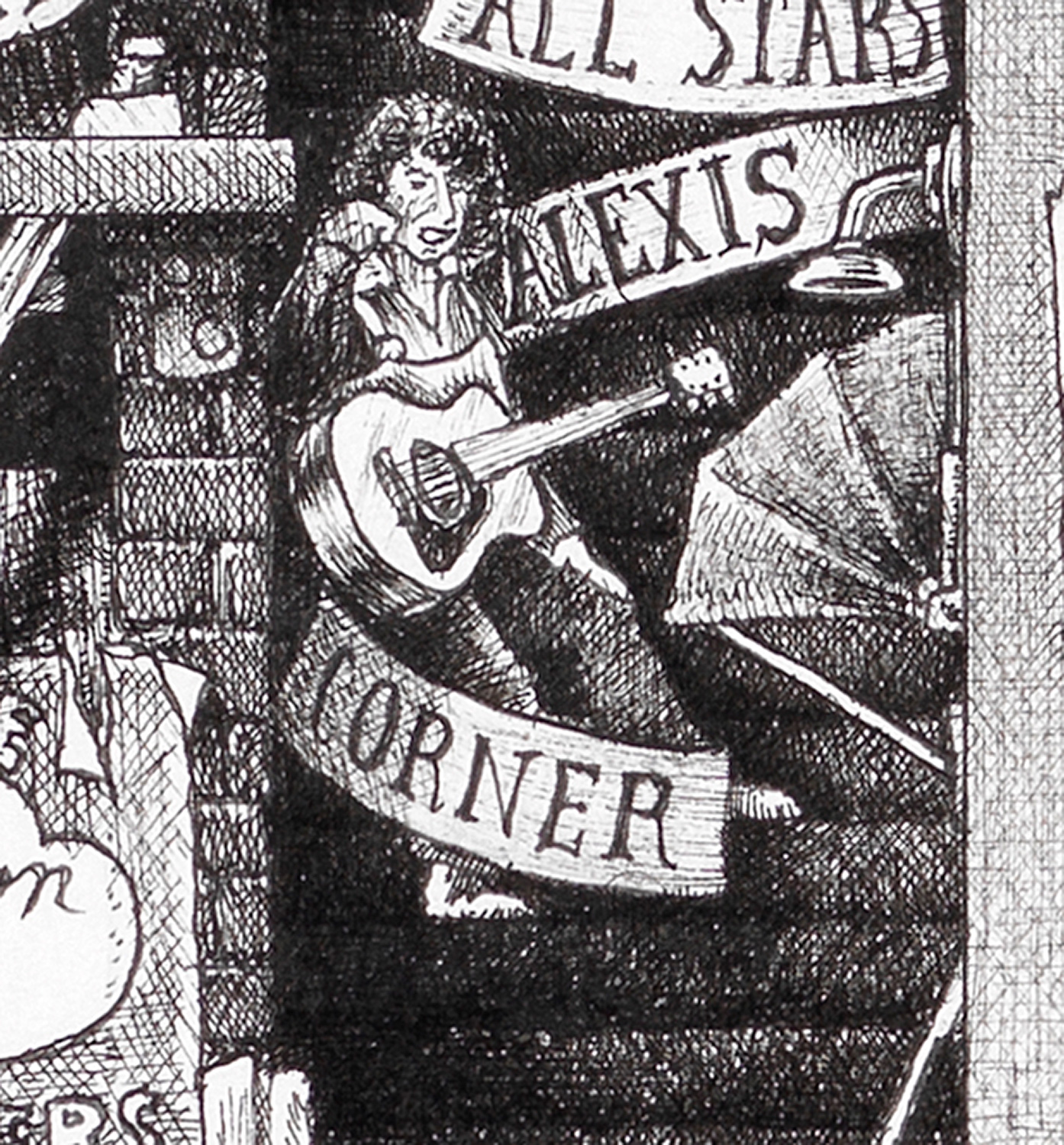
With Blues Incorporated and the Ealing Club nights launched in 1962, Korner built a deliberately fluid ensemble. Charlie Watts, Jack Bruce, Ginger Baker, Long John Baldry and others passed through the band or its wider circle; future Rolling Stones were among those drawn to the scene. Horn arrangements and jazz influences created tensions with Davies, who favored a more strictly Chicago-blues approach. Their split exposed two possible directions for British blues: stylistic fidelity and broader experimentation. Korner continued through larger ensembles, broadcasting and collaborations rather than tying himself to a single group.
His genealogical contribution lies above all in making blues a shared musical practice for young London players. This is not a story of one teacher producing disciples but of a network: African American blues + British jazz and skiffle -> Korner, Davies and Blues Incorporated -> London’s R&B clubs -> the Rolling Stones, Bluesbreakers and later blues-rock branches. The bands emerging from that environment would far exceed his commercial fame, but the openness of his laboratory helps explain the breadth of its consequences.
R&B from the Marquee and the work of Blues Incorporated document the transition from blues heard in jazz clubs to amplified rhythm & blues that would fuel British rock.
Within The Great Rock and Roll History, Korner also shows how musical scenes take shape: a club, rotating players, imported records and a curious audience can alter history more profoundly than a single hit.
Rock Icons: Alexis Korner
Influenced by
- Muddy Waters
- Big Bill Broonzy
- Brownie McGhee
- Sonny Terry
- Johnny Lee Hooker
Influent For
- Rolling Stones
- John Mayall
- Robert Plant and Jimmy Page
- Jack Bruce
- Eric Clapton
- Zoot Money
Related Artists
Cream
John Mayall
Muddy Waters
Linkable Sources
• Rock & Roll Hall of Fame — Alexis Korner inductee page —
https://rockhall.com/inductees/alexis-korner
• Pollstar (Oct 15, 2024) — Musical Influence Award announcement — https://news.pollstar.com/2024/10
/15/musical-influence-award-rock-hall-honors-alexis-korner-john-mayall-big-mama-thorntons-impact-on-
pop-music/
• Wikipedia — Alexis Korner — https://en.wikipedia.org/wiki/Alexis_Korner
• Wikipedia — London Blues and Barrelhouse Club —
https://en.wikipedia.org/wiki/London_Blues_and_Barrelhouse_Club
• uDiscoverMusic — Muddy Waters’ first UK tour / Soho club appearance —
• Wikipedia — Alexis Korner’s Blues Incorporated —
https://en.wikipedia.org/wiki/Alexis_Korner%27s_Blues_Incorporated
• Ealing Club (history) — https://www.ealingclub.com/ealingclubhistory/
• RadioRewind — BBC Radio 1 info (Rolling Stones Story; Blues & Soul show) —
https://www.radiorewind.co.uk/radio1/alexis_korner_page.htm• LouderSound — feature on Korner’s British blues role —
https://www.loudersound.com/bands-artists/alexis-korner-british-blues-singer-story
In rock genealogy, Alexis Korner holds an unusual position: rather than imposing a personal sound on the market, he created conditions in which many others could develop theirs. His openness to jazz and blues, his partnership with Cyril Davies and the Blues Incorporated laboratory connected African American roots with new British rock languages. It is a story of musical transmission, but also of places, encounters and creative differences that make a scene possible.