
Aretha Franklin was one of the defining figures of soul music and one of the greatest singers in American popular music. Raised in gospel, she transformed its vocal and pianistic grammar into a secular language in which blues, rhythm & blues, jazz and religious intensity could coexist.
This illustrated profile explores Aretha Franklin’s musical roots, interpretive technique and influence within The Great Rock and Roll History, tracing the path from Detroit’s Baptist church to the Atlantic recordings that redefined the sound and meaning of soul music.
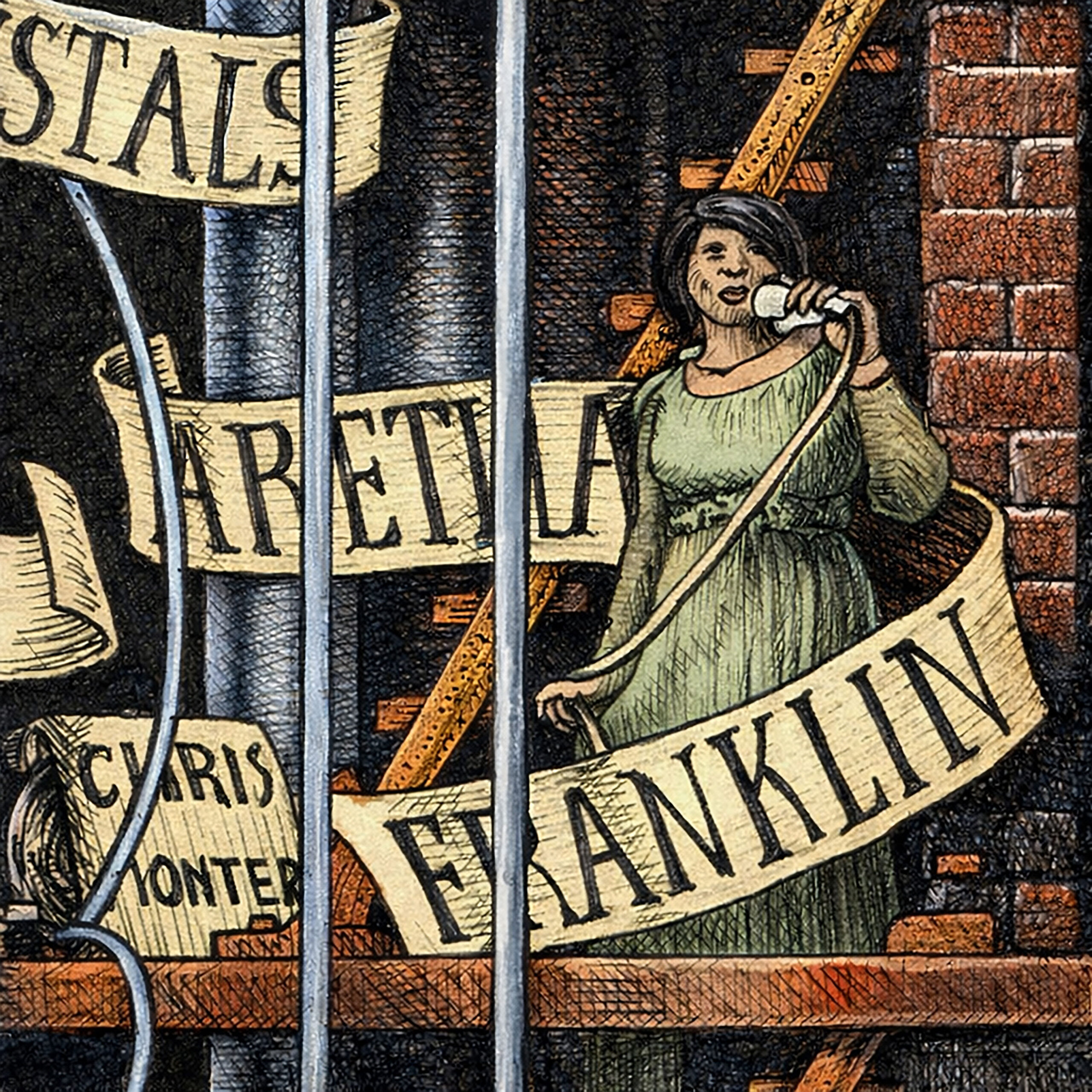
Rock Icons: Aretha Franklin

The voice that carried the power of the church into soul: gospel, blues, piano and rhythmic freedom transformed into absolute musical authority.
From her gospel formation in her father C. L. Franklin’s church to the Atlantic breakthrough with Jerry Wexler, Aretha Franklin transformed songs from pop, R&B; and soul through phrasing, piano, call and response and improvisation, becoming a fundamental model for generations of singers.
Full name Aretha Louise Franklin
Born March 25, 1942 – Memphis, Tennessee, USA
Died August 16, 2018 – Detroit, Michigan, USA
Main instruments Vocals, piano
Main genres Soul, gospel, rhythm & blues, pop, jazz
Key labels Columbia Records; Atlantic Records; Arista Records
Classic Atlantic period 1967-1979
ARTIST RELATED SITE: arethafranklin.net
LISTEN
(You Make Me Feel Like) A Natural Woman
More to discover…
From gospel to soul music: when a voice becomes a language
To understand Aretha Franklin, one must begin with the church. The daughter of Reverend C. L. Franklin, she grew up in Detroit in an environment where gospel was not simply a musical genre but an everyday language. At New Bethel Baptist Church she heard preachers, choirs and major gospel voices; figures such as Clara Ward and Mahalia Jackson belonged to the world around her. She learned piano early and developed a singing style in which melisma, rhythmic variation, call and response and improvisation grew from the same tradition. When she moved into secular music, therefore, she did not need to invent an identity: she carried the emotional and musical architecture of the church with her.
The Columbia years already revealed an extraordinary singer, but she was often placed in arrangements oriented toward jazz and adult pop. The decisive turn came in 1967 with Atlantic and Jerry Wexler. Recordings such as I NeverLoved a Man (The Way I Love You), Do Right Woman – Do Right Man and above all Respect placed her voice and piano at the center of a rhythm section rooted in Southern soul. Aretha did not merely interpret songs: she recomposed them. She could alter accents, structure, dynamics and meaning until a song sounded autobiographical. Her version of Otis Redding’s Respect is the definitive example: through rhythm, backing vocals, spelling and vocal authority, a male request became an assertion of dignity and autonomy.
Aretha’s greatness also lies in the way technique and emotion became inseparable. Gospel piano frequently drove the groove; her voice could move from conversational intimacy to explosive power without losing harmonic or rhythmic control. Her connection to the civil-rights movement and to her father’s world also gave her performances a cultural resonance beyond the record business, without reducing the music to a manifesto. From Chain of Fools and Think to Amazing Grace, sacred and secular remain connected. The genealogy is enormous: gospel and blues flow into soul, soul enters rock and pop, and Aretha’s vocal model becomes foundational for later R&B;, rock and pop singers.
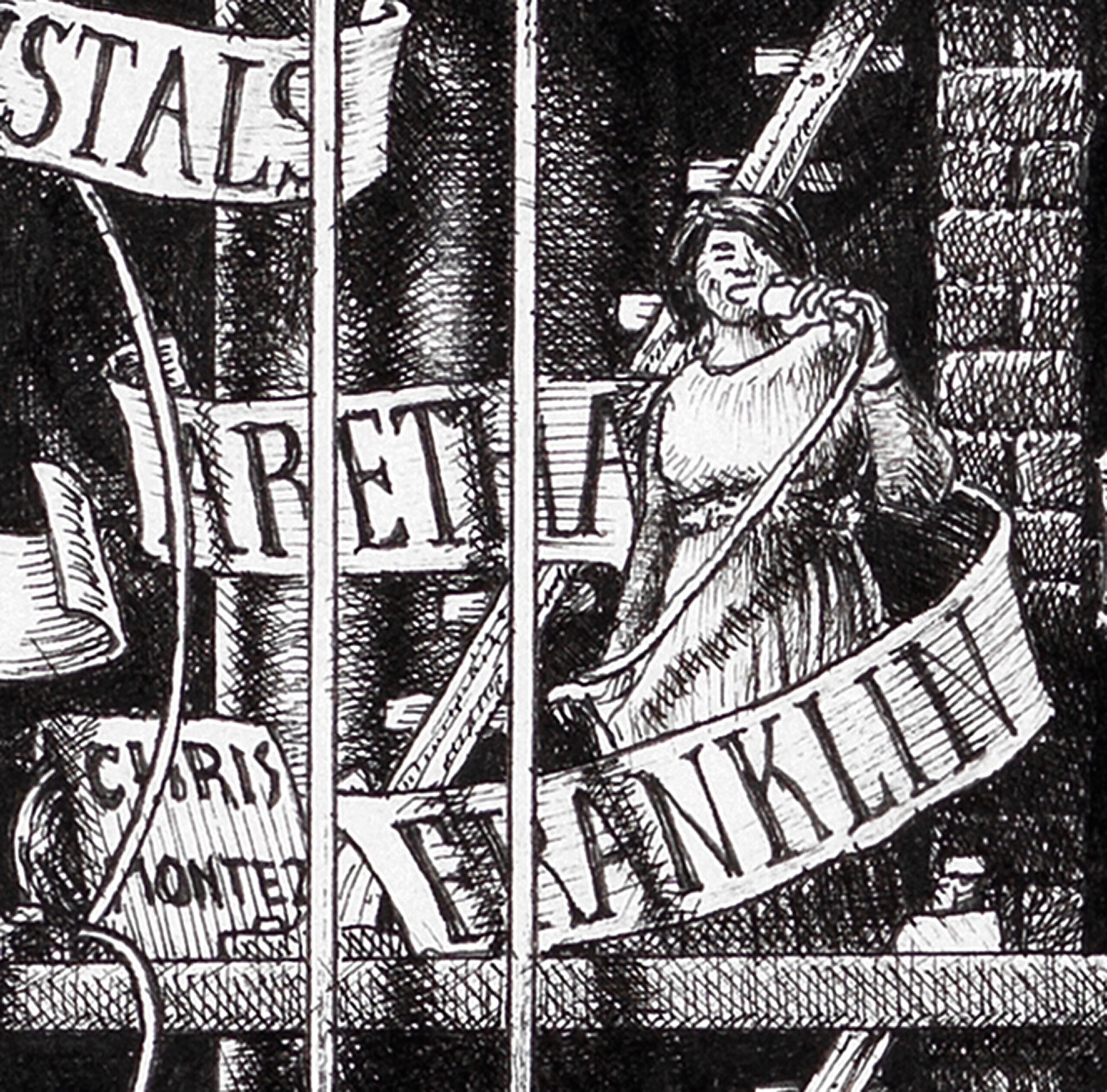
Rock Icons: Aretha Franklin
With Respect, Chain of Fools, Think, I Say a Little Prayer and the gospel album Amazing Grace, Aretha Franklin established a vocal and interpretive standard that crossed soul, R&B;, rock and pop.
Within The Great Rock and Roll History, Aretha Franklin is a fundamental genealogical junction: African-American gospel meets blues and rhythm & blues, becomes modern soul through Atlantic and Southern soul, then directly influences the vocal language of rock, pop and contemporary R&B.
Influenced by
- Clara Ward (Gospel Singer)
- Mahalia Jackson
- Reverend C.L. Franklin (her father)
- Sam Cooke
- Dinah Washington
Influent For
- Whitney Houston
- Beyoncé
- Mariah Carey
- George Michael
- Alicia Keys
Related Artists
- Otis Redding
- Sam Cooke
- Ray Charles
- Wilson Pickett
- Dusty Springfield
Sources
• Wikipedia — Aretha Franklin — https://en.wikipedia.org/wiki/Aretha_Franklin
• Vanity Fair — Trauma and hidden past — https://www.revistavanityfair.es/cultura/articulos/aretha-franklin-el-pasado-traumatico-tras-su-musica/51073
• Infobae — Childhood and early motherhood — https://www.infobae.com/teleshow/infoshow/2020/08/16/el-largo-camino-al-cielo-de-aretha-franklin-una-infancia-dificil-y-una-vida-de-pelicula/
• Factinate — Personality anecdotes — https://www.factinate.com/people/31-iconic-facts-aretha-franklin
• Pitchfork — Spirit in the Dark review — https://pitchfork.com/reviews/albums/aretha-franklin-spirit-in-the-dark/
Rock & Roll Hall of Fame – Aretha Franklin, inducted 1987.
• GRAMMY / Recording Academy – Aretha Franklin profile and discography.
• David Ritz, Respect: The Life of Aretha Franklin, Little, Brown, 2014.
• Aretha Franklin and David Ritz, Aretha: From These Roots, Villard, 1999.
In the history of rock and popular music, Aretha Franklin represents the point at which an older tradition acquired a new modern authority. She brought gospel phrasing, piano, improvisation and spiritual tension into soul, transforming other writers’ material into profoundly personal statements. Her legacy is not simply an extraordinary voice: it is a way of interpreting a song that redefined soul, R&B;, rock and pop.