
Herbie Hancock is an American jazz innovator blending improvisation, electronic experimentation, funk and fusion music. This illustrated profile explores the cultural importance and his influence and heritage within The Great Rock and Roll History, a large-scale illustrated timeline of modern music.
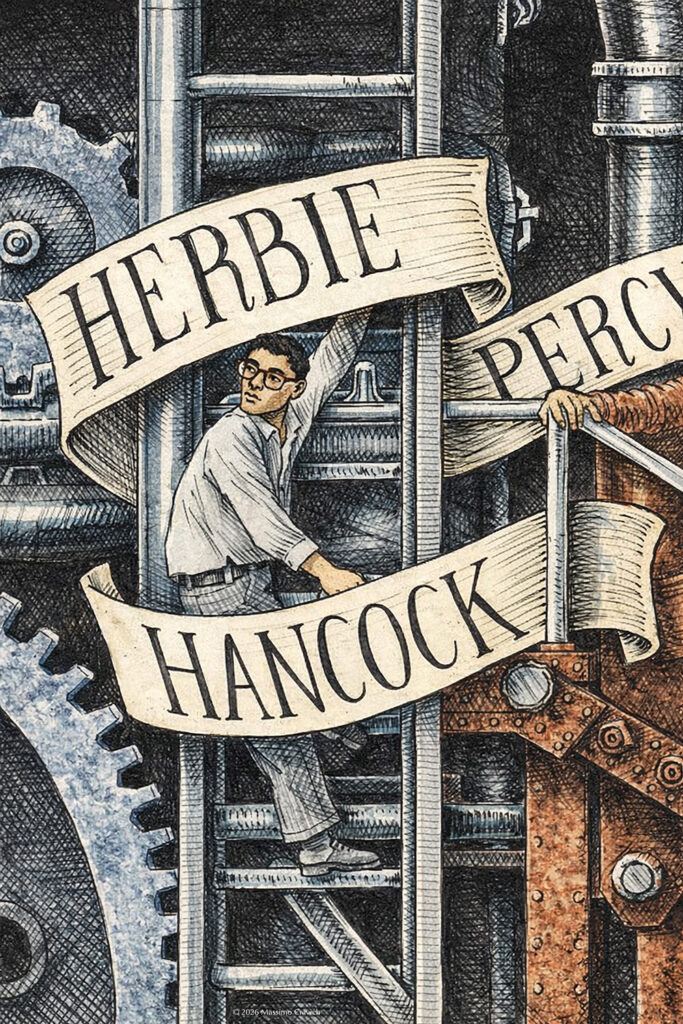
Rock Icons: Herbie Hancock

By combining jazz improvisation, funk rhythms and electronic experimentation, Herbie Hancock helped redefine the possibilities of modern music.
Formed: April 12, 1940 – Chicago, Illinois (USA)
Status: Active
Genres: Jazz, Post-bop, Jazz-funk, Fusion, Electronic, Hip-hop crossover
Instruments: piano, keyboards, synthesizers, composition
ARTIST OFFICIAL SITE: www.herbiehancock.com
LISTEN
More to discover…
The visionary architect who took jazz beyond its borders
Herbie Hancock approached music as a constantly evolving form of experimentation. His work moved fluidly between acoustic jazz, funk, electronic music and technological innovation, creating new musical connections across genres.
Herbie Hancock is one of the rare musicians who cross multiple eras without becoming a museum of themselves. Whenever jazz risks crystallizing into a fixed style, Hancock sheds his skin: from acoustic post-bop with Miles Davis, to electric revolution, funk, electronics, and dialogue with hip-hop and pop culture. He combines the highest musical rigor with almost childlike curiosity forthe new. Rather than remaining within traditional jazz structures, he explored synthesizers, rhythmic experimentation and modern production techniques while maintaining a strong improvisational identity.
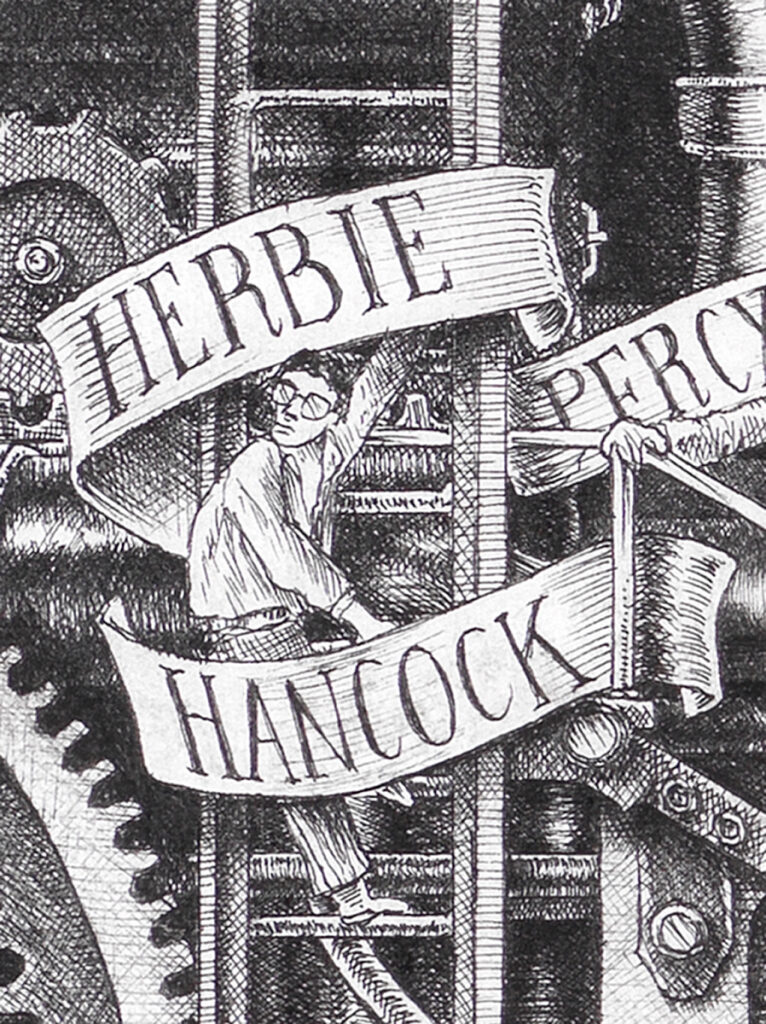
This approach positioned Hancock as one of the central architects of jazz fusion and the broader evolution of modern electronic and groove-based music. Albums such as Head Hunters helped transform jazz fusion into a major force within popular and experimental music during the 1970s.
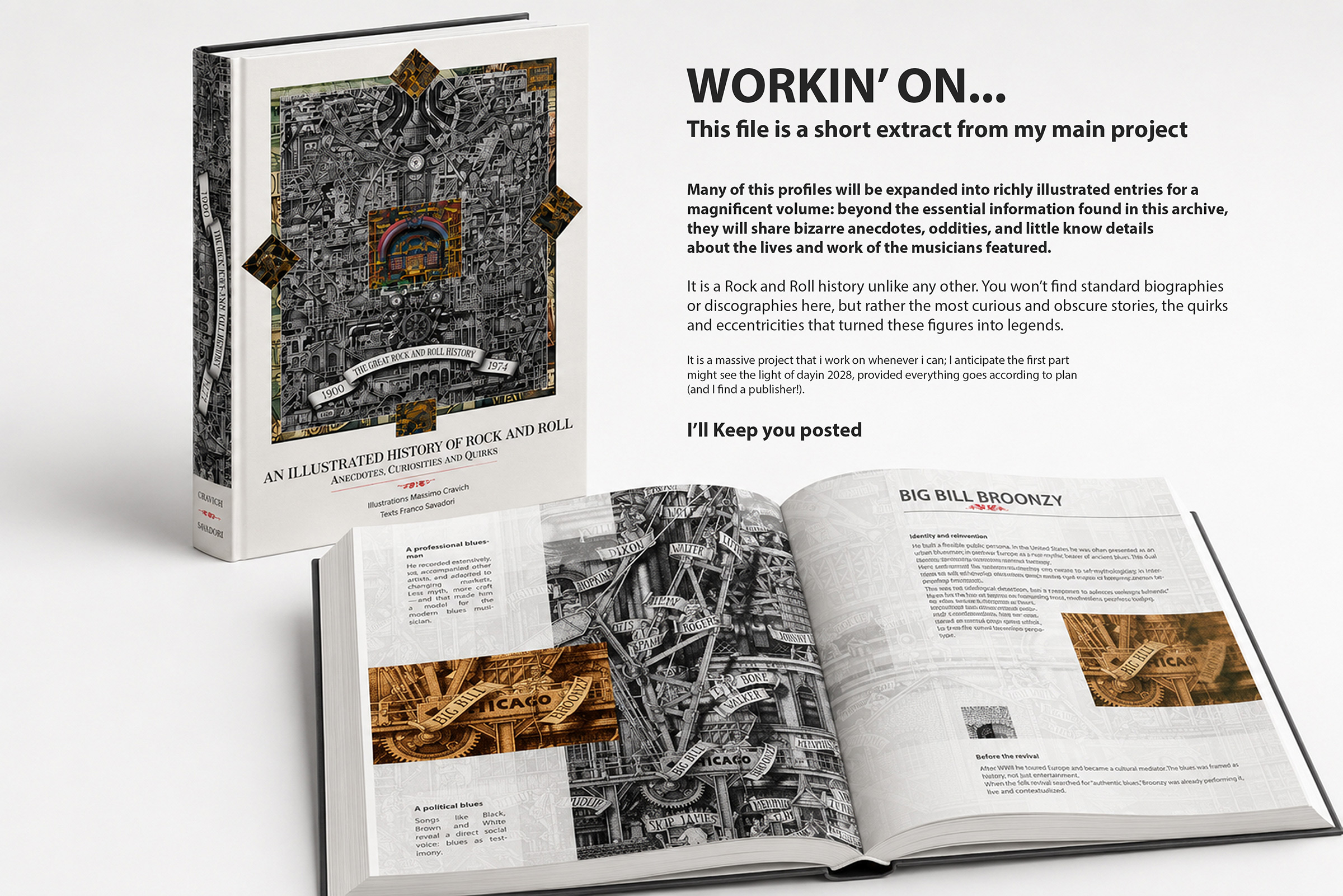
His work occupies a central position within the broader visual narrative of The Great Rock and Roll History.
Influenced by
- • Bud Powell and bebop piano tradition.
- • Miles Davis (risk aesthetics and constant mutation).
- • European classical training.
Influent For
- • Chick Corea and modern electric jazz.
- • Funk and fusion keyboardists.
- • Hip-hop producers and sampling culture.
- • Contemporary electronic jazz.
- • Film scoring sound design.
Related Artists
Chick Corea
Miles Davis
Get Your Rock Icon
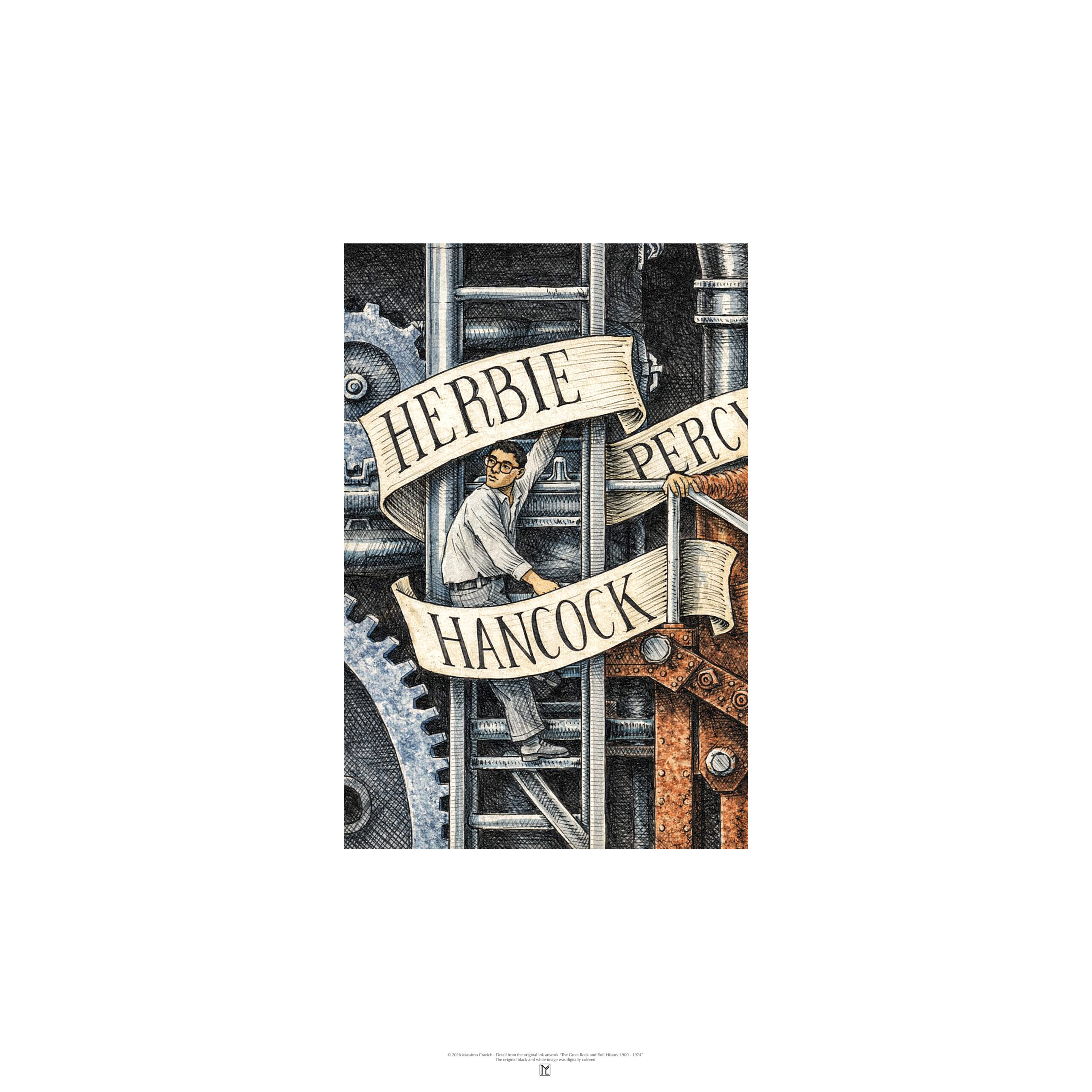
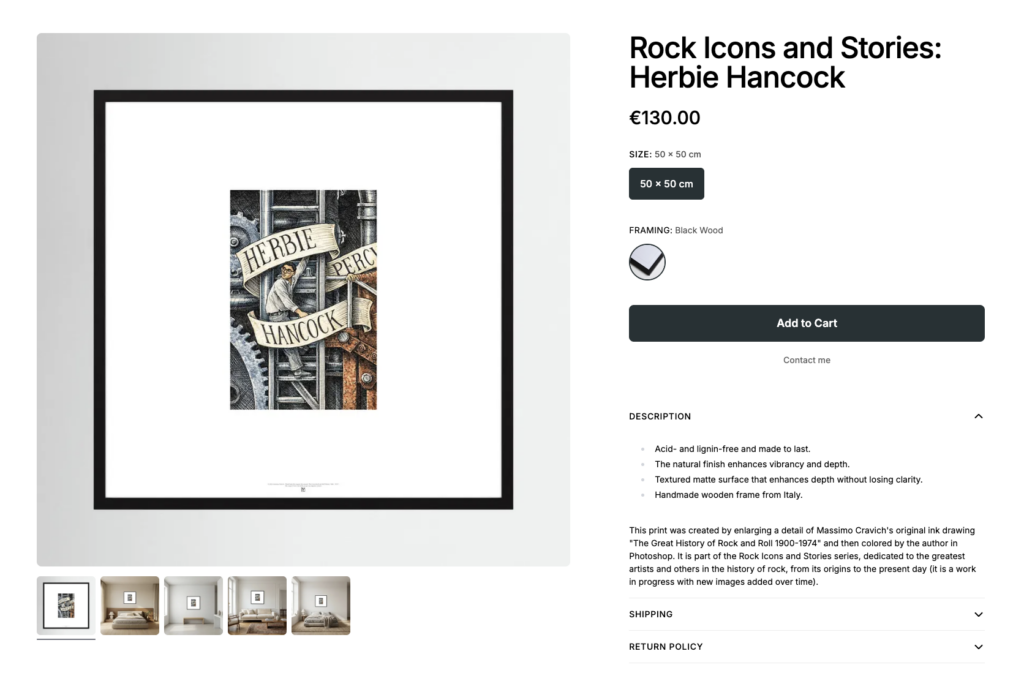
Selected artworks from Rock Icons and Stories are available as high-quality framed art prints. Printed on premium 230 gsm matte paper with excellent detail and colour reproduction, each print is professionally framed and delivered ready to hang.A carefully selected, high-quality alternative to the museum-grade Fine Art Giclée editions, offering an accessible way to own and display a reproduction of the original artwork. Printing, framing and worldwide fulfilment are handled by our specialist printing partner.
Selected sources
• Herbie Hancock — general biography (Wikipedia).
• DownBeat, The Guardian, NPR interviews.
• Documentary: Possibilities.
• Blue Note Records archives.
Within the broader narrative of rock history, Herbie Hancock represents one of the most important expansions of jazz through electronic experimentation, rhythmic innovation and cross-genre musical exploration.
His influence extends across generations, shaping jazz fusion, funk, electronic music and modern approaches to improvisation and production.