
Alan Stivell is a Breton musician, harpist and composer widely regarded as one of the central figures of the Celtic music revival and a pioneering force in the fusion of traditional and modern music.
This illustrated profile explores his musical vision, cultural impact and innovative role within The Great Rock and Roll History, a large-scale illustrated timeline of modern music.

Rock Icons: Alan Stivell

By blending Breton traditions, folk instrumentation and elements of rock, Alan Stivell helped redefine traditional music for modern audiences.
Name: Alan Cochevelou on 6 January 1944)
Birth: 1944, 6 January – Riom (France)
Active: 1960–Today
Genres: Celtic music, Breton music, World music, Prog Folk. folk Rock
ARTIST OFFICIAL SITE: alanstivell.bzh
LISTEN
Tri Martolod (Live at Olympia 1972)
Suite Sudarmoricaine (Live at Olympia 1972)
Pop Plinn (Live at Olympia 1972)
More to discover…
The Renaissance of the Celtic Harp
Alan Stivell transformed traditional music into a contemporary creative language. Through the revival of the Celtic harp and the integration of electric instruments, he opened new possibilities for the relationship between heritage and innovation.
His music moved beyond preservation, turning tradition into a living and evolving artistic force. This approach also helped lay the foundations of what would later be recognized as Celtic rock. His work played a crucial role in the development of Celtic rock and influenced later folk and progressive musicians. This approach positioned him at the intersection of folk revival, progressive music and cultural identity.
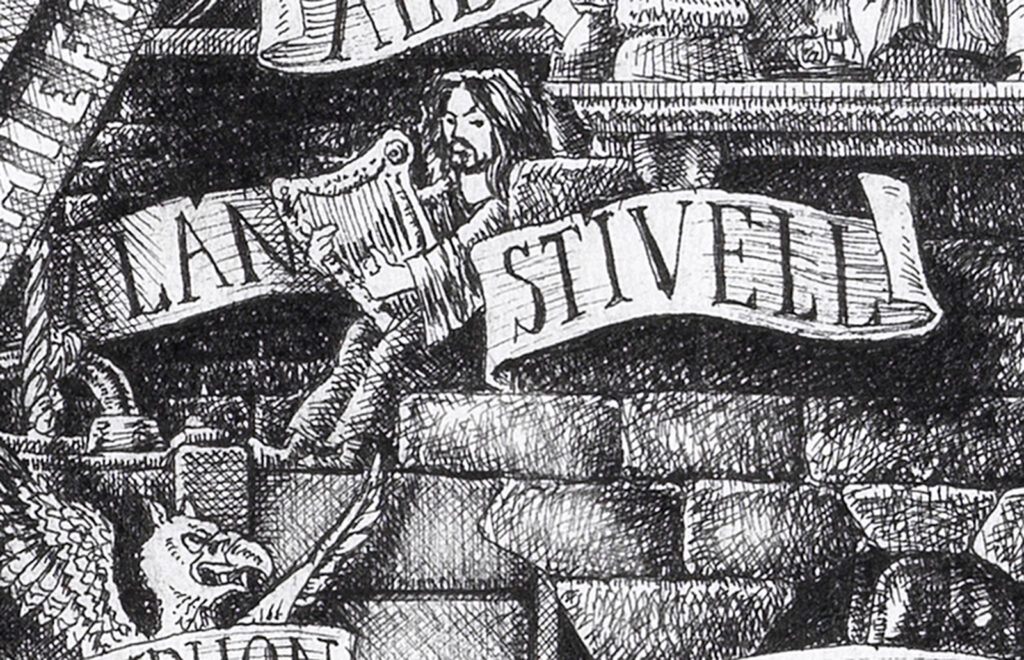
His work occupies a unique position within the broader visual narrative of The Great Rock and Roll History
Influenced by
- Georges Cochevelou (his father, a passionate luthier who rebuilt the Breton Celtic harp in the 1950s, allowing Alan to begin playing it in 1953)
- Denise Mégevand (His Parisian teacher, with whom he arranged traditional melodies and performed.)
- International folk revival: In particular, the traditional Irish arrangements proposed by artists such as Pete Seeger.
Influent For
Related Artists
Key sources
• Wikipedia — Alan Stivell — https://it.wikipedia.org/wiki/Alan_Stivell
• Wikipedia EN — Alan Stivell — https://en.wikipedia.org/wiki/Alan_Stivell
• Wikipedia FR — Brezhoneg ’raok — https://fr.wikipedia.org/wiki/Brezhoneg_%27raok
• Wikipedia — Pop■Plinn — https://en.wikipedia.org/wiki/Pop_Plinn
• BlogFoolk — Autobiografia di Stivell — https://www.blogfoolk.com/2024/06/alan-stivell-il-figlio-di-suo-padre.html
Within the broader narrative of rock history, Alan Stivell represents a unique expansion of musical language, reconnecting ancient traditions with modern forms of expression. His influence extends across generations, shaping Celtic revival, folk experimentation and the dialogue between roots music and contemporary sound.