
On March 21, 1952, Cleveland’s Moondog Coronation Ball revealed the power of music already winning over young Americans. Disc jockey Alan Freed did not invent the expression “rock and roll,” but he played a decisive role in making it the public name for a phenomenon rooted chiefly in African American musical traditions. Alongside his story stands Moondog, the eccentric blind composer whose name Freed borrowed, prompting a legal dispute.
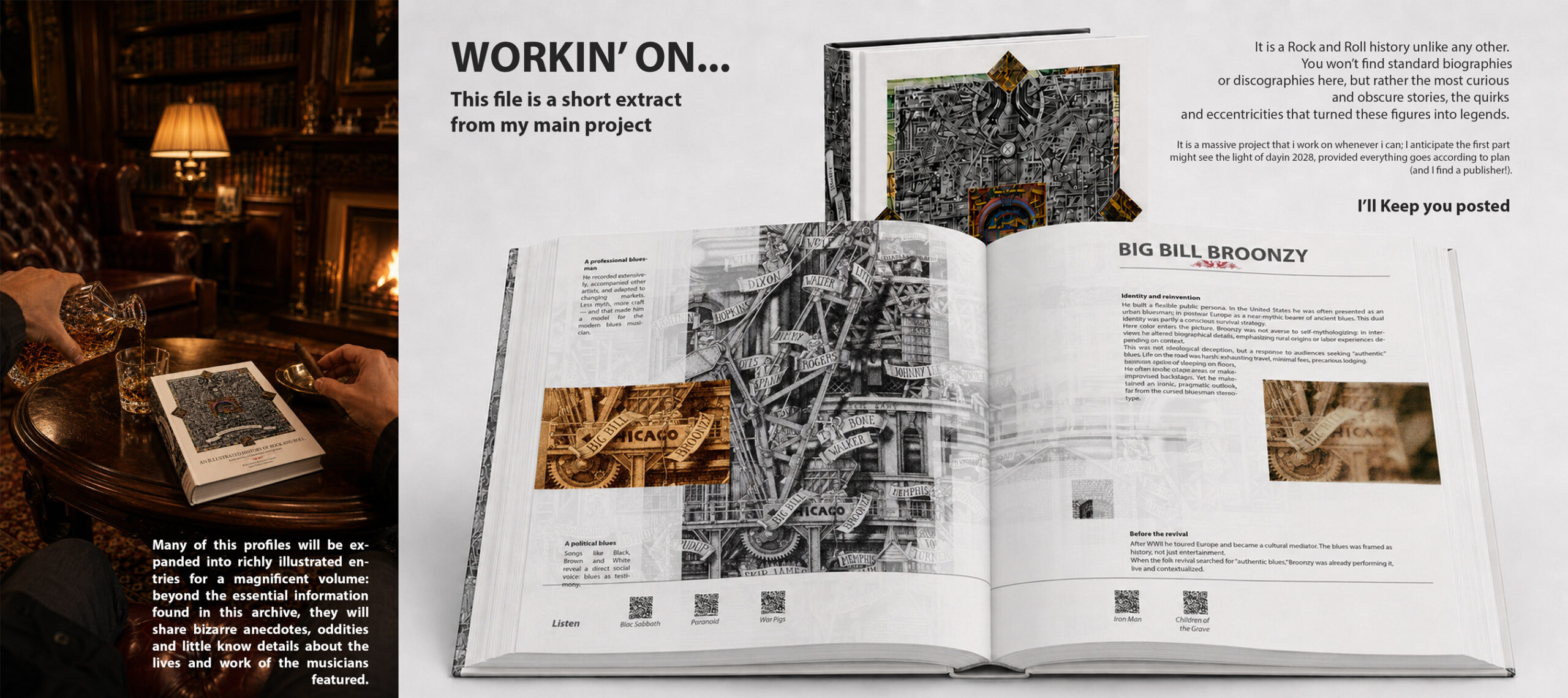
Due to its significance, this episode is automatically included in The Great Rock and Roll History, a large-scale illustrated timeline of modern music.
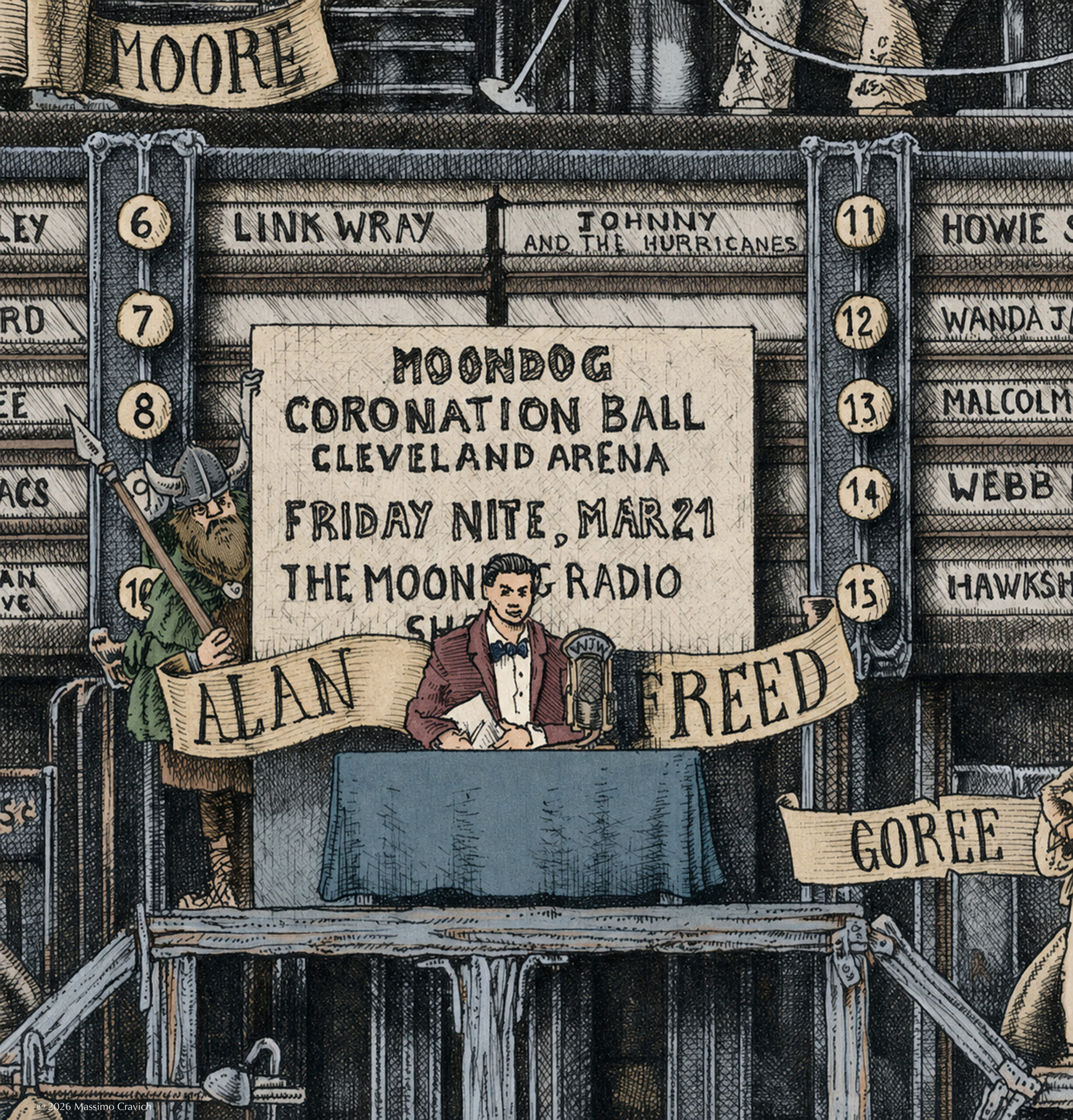
Rock Icons: Alan Freed & Moondog

Key figures Event Alan Freed (1921-1965); Louis Thomas Hardin, known as Moondog (1916-1999)
Event Moondog Coronation Ball, March 21, 1952
Venue Cleveland Arena, Cleveland, Ohio
Organizers Alan Freed, Leo Mintz and promoter Lew Platt
Advertised artists Paul Williams and His Hucklebuckers, Tiny Grimes and the Rocking Highlanders, The Dominoes, Varetta Dillard, Danny Cobb
Central issue The popularization of “rock and roll” and the dispute over the name “Moondog”
Radio finds a name for a revolution already underway
Rock and roll did not emerge from nowhere in the early 1950s: blues, gospel, boogie-woogie, jump blues and rhythm and blues had already developed much of its vocabulary. In Cleveland, record-store owner Leo Mintz noticed that many white teenagers were buying records by Black performers. He encouraged Alan Freed, then working at WJW, to play that music for a wider audience.
Freed possessed a showman’s instinct: rather than presenting the records as exotic curiosities, he introduced them with contagious enthusiasm, making his program a gathering place for young listeners. The expression “rock and roll” had circulated for decades, sometimes with sexual meanings, in African American speech and songs. Freed did not coin it. He did, however, turn it into a powerful radio label, identifying sounds and behavior that the record industry still tended to divide along racial lines.
March 21, 1952: the coronation that never happened
Freed’s radio success prompted him, Mintz and promoter Lew Platt to bring the artists heard on air onto one stage. At Cleveland Arena, the Moondog Coronation Ball advertised predominantly Black rhythm-and-blues performers, including Paul Williams and Tiny Grimes. The title promised a festive coronation, but the evening escaped its organizers’ control almost immediately.
Ticket-printing mistakes, counterfeiting and severely underestimated demand brought a crowd far beyond the venue’s capacity. Forced doors, dangerous overcrowding and official intervention ended the show almost as soon as it began. It is often remembered as the first major rock-and-roll concert: a symbolic designation, not a claim that nobody had performed this music live before. Its real importance lies elsewhere. A youthful audience and music long marginalized by mainstream institutions had suddenly become impossible to ignore.
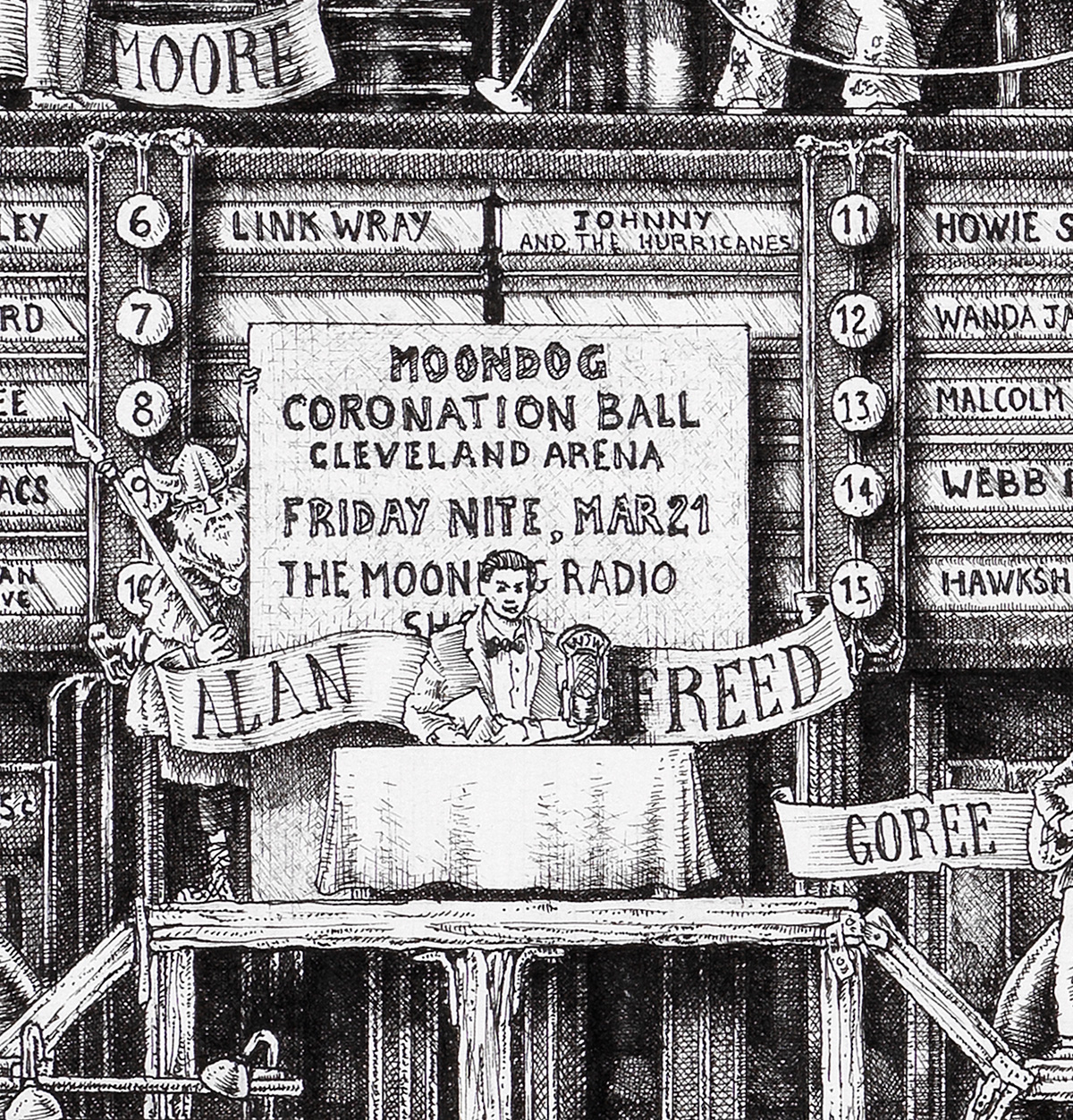
The real Moondog: a Viking on Sixth Avenue
The name printed on the poster already belonged to somebody else. Louis Thomas Hardin, blinded as a teenager, was a New York street musician and composer known as Moondog. His cloak, Viking-inspired headgear and often self-designed or adapted instruments made him look like a figure outside ordinary time.
Behind the striking appearance, however, stood a serious composer interested in counterpoint, rhythm and experimental music. Freed adopted “Moondog” as his radio nickname and used a Hardin composition as a theme. Their connection was therefore not a musical partnership but a dispute over a name, an identity and recognition.
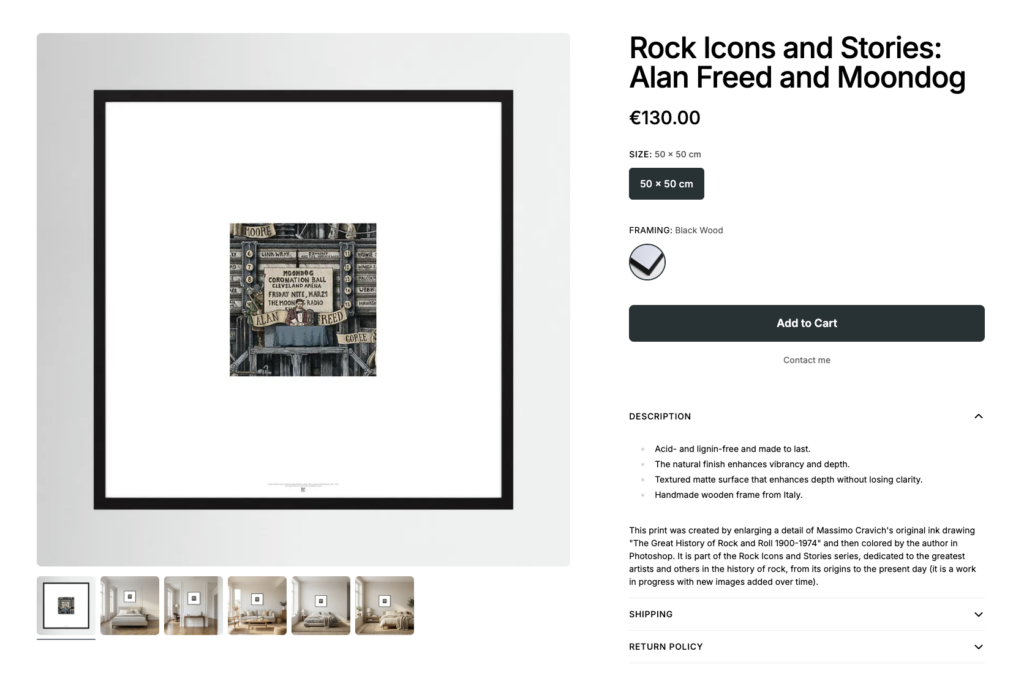
Hardin challenged the appropriation in court and prevailed in the 1950s, forcing Freed to abandon the nickname. The Viking standing beside the disc jockey in the drawing captures this unlikely collision between two artistic worlds.
Who really gave rock and roll its identity?
Freed continued promoting rock and roll in New York through radio, concerts and films, helping bring many Black performers greater visibility in an America still shaped by segregation. His role should not be confused with that of an inventor: the music already existed, developed chiefly by Black performers and communities, while Freed helped give it a recognizable public label, a cross-racial audience and a commercial platform.
His career also contained contradictions: promotion was entangled with record-industry interests, and the payola scandals eventually devastated his reputation. The Coronation Ball remains a founding scene not because the first rock chord was played there, but because it made visible a moment when a musical culture crossed into public recognition. Moondog belongs to a different genealogy, that of experimental composition; in the same drawing, he reminds us how readily show-business history can overlap with another artist’s identity.
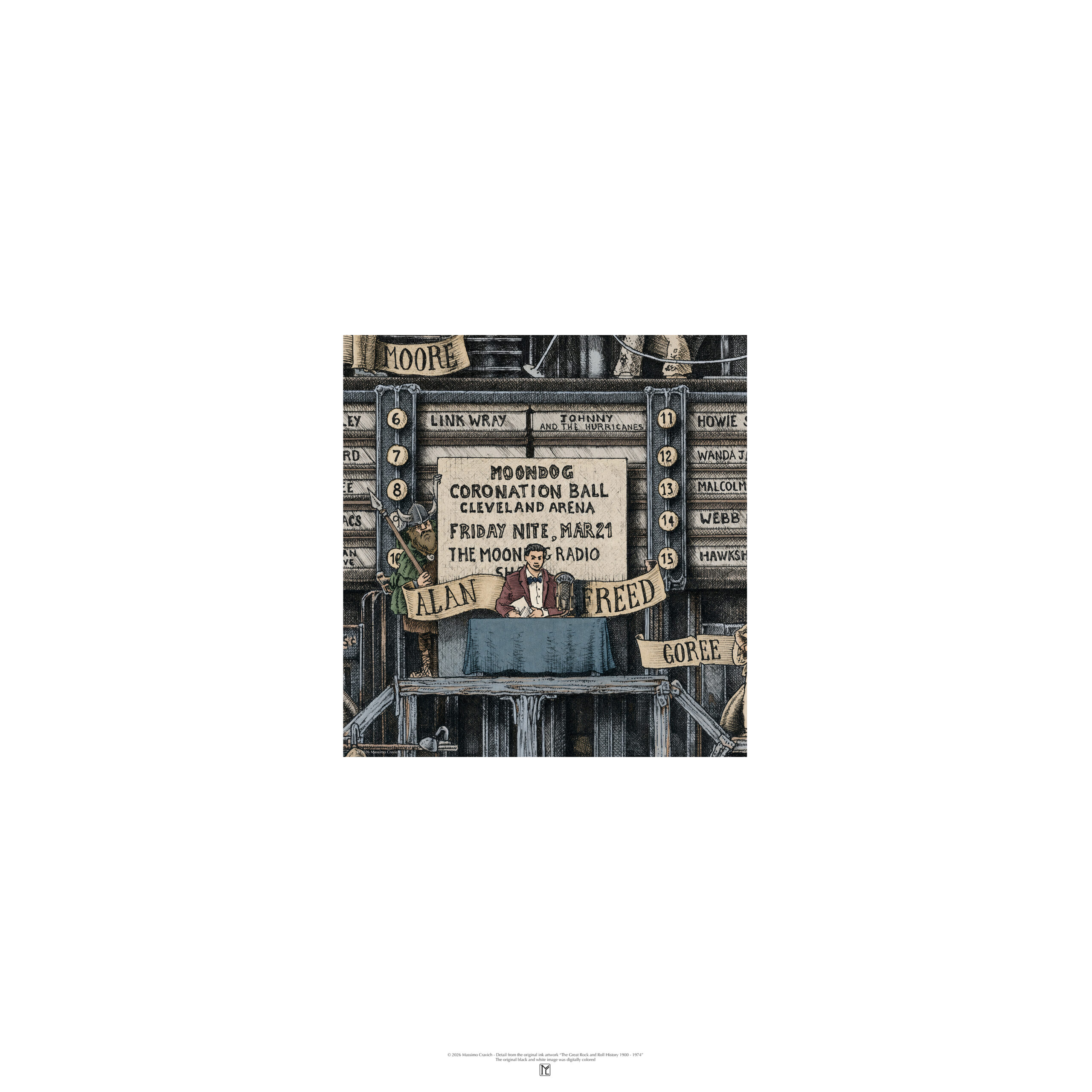
Get Your Rock Icon
Selected artworks from Rock Icons and Stories are available as high-quality framed art prints. Printed on premium 230 gsm matte paper with excellent detail and colour reproduction, each print is professionally framed and delivered ready to hang.A carefully selected, high-quality alternative to the museum-grade Fine Art Giclée editions, offering an accessible way to own and display a reproduction of the original artwork. Printing, framing and worldwide fulfilment are handled by our specialist printing partner.
Historical references:
Case Western Reserve University, Encyclopedia of Cleveland History (Alan Freed; Rock & Roll)
Cleveland Historical, Alan Freed and the Moondog Coronation Ball
AlanFreed.com documentary archive (Louis Hardin); Guinness World Records, First rock ‘n’ roll concert.