
Diana Ross is one of the central figures in American popular music: the voice and public face of the Supremes during Motown’s golden decade, then the star of a solo career spanning soul, pop, film and disco. Within Great Rock and Roll History, her journey also tells the story of a young Black woman rising from Detroit to the center of the global entertainment industry.
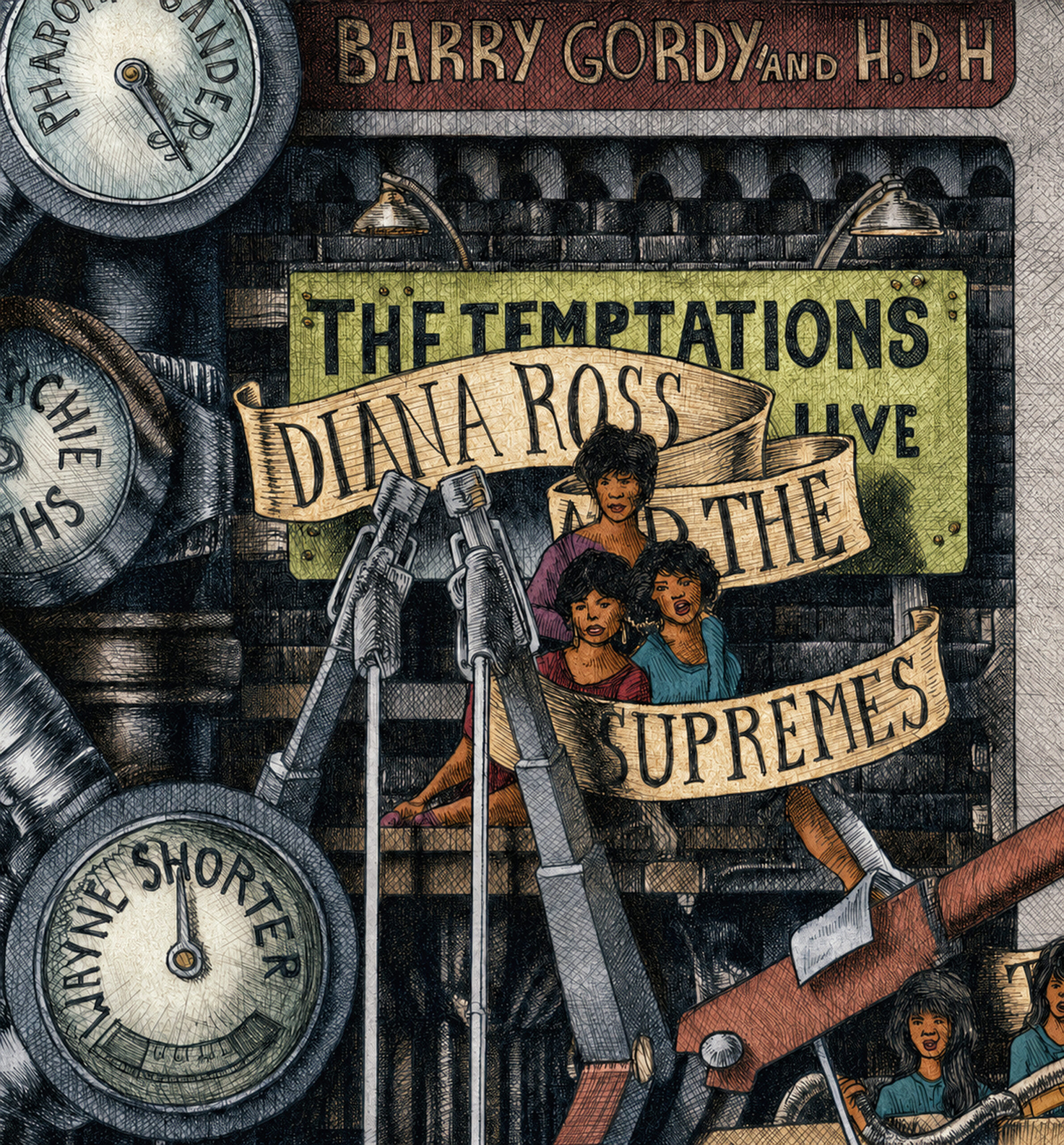
Rock Icons: Diana Ross
From Detroit to the world: ambition, elegance and a voice that became a Motown symbol.

With the Supremes and later as a solo artist, Diana Ross helped carry the Motown Sound into the international mainstream, turning soul into a pop language capable of crossing race, class and generations.
Full name Diana Ernestine Earle Ross
Born March 26, 1944, Detroit, Michigan
Historic group The Supremes
Solo career From 1970
Roles Singer, actress, performer
Genres Soul, pop, R&B;, disco
Historic label Motown Records
ARTIST OFFICIAL SITE: www.dianaross.com
LISTEN
More to discover…
Detroit, the Supremes and the dream factory
Diana Ross grew up in Motown’s Detroit and, with Florence Ballard and Mary Wilson, moved from the Primettes to the Supremes. Success was slow at first; then the trio’s partnership with the Holland-Dozier-Holland songwriting and production team generated an extraordinary run of singles. Ross did not have the most forceful voice in soul, but Berry Gordy recognized that her light tone, precise phrasing and especially her stage presence could reach an enormous audience.
The Supremes became elegant, controlled and television-ready: three young Black women entered white America’s living rooms without surrendering their identity. Behind the immaculate image, however, competition, pressure and internal imbalance were growing.
Diana at the center: success, ambition and fractures
In 1967 the group was renamed Diana Ross & the Supremes, making explicit a hierarchy that intensified existing tensions. Florence Ballard was dismissed and replaced by Cindy Birdsong, while Ross’s relationship with Mary Wilson became increasingly complicated. It would be simplistic to reduce the story to female rivalry: Berry Gordy’s strategy, Motown’s commercial needs and an industry inclined to build around a central star all played roles.
Ross was ambitious and disciplined, but she was also carrying immense pressure. When she left in 1970, the separation ended one balance and began another identity: she was no longer merely the face of the Supremes, but an artist required to prove that she could stand alone.
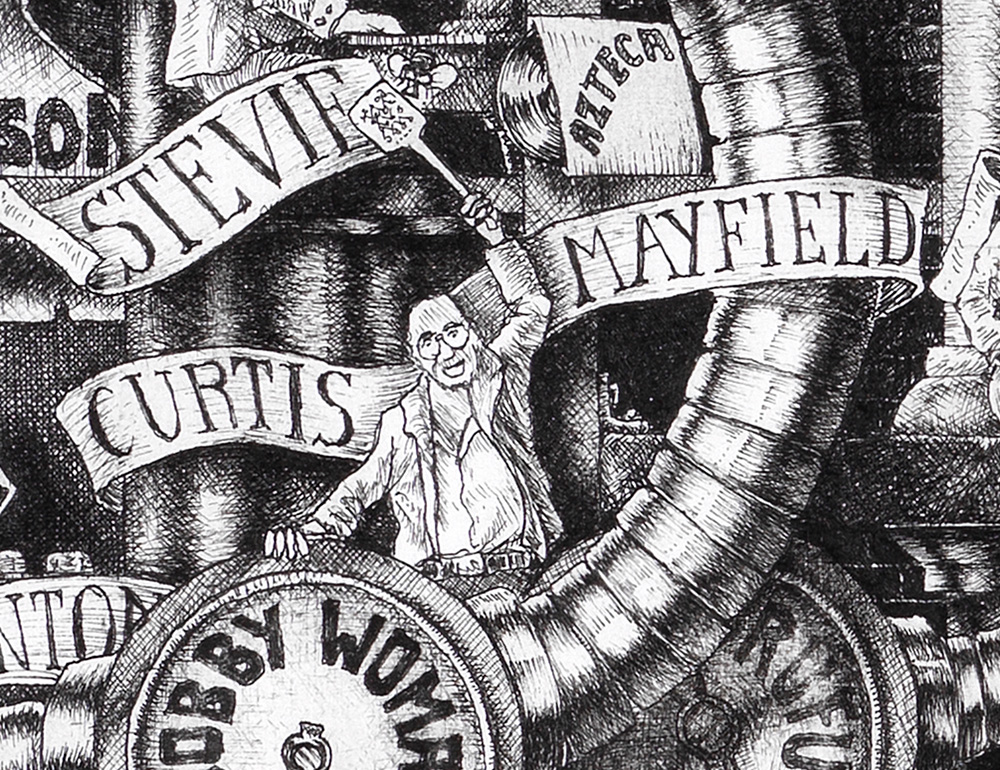
A second life: soul, cinema and disco
Ross’s solo career began strongly, with Ain’t No Mountain High Enough becoming one of her defining recordings. She also moved into film, portraying Billie Holiday in Lady Sings the Blues and earning an Academy Award nomination. The role demonstrated her determination to move beyond the confines of pop stardom, even as the film’s relationship to historical reality remained debated.
During the 1970s her music increasingly embraced polished production and disco, with Love Hangover marking a crucial transition. In 1980, working with Chic’s Nile Rodgers and Bernard Edwards, she made diana, including Upside Down and I’m Coming Out: Ross had become a bridge from Motown to sophisticated pop and dance culture.
Behind the icon: control, vulnerability and independence
The construction of Diana Ross as a diva has often threatened to obscure the person underneath. Her long professional and personal relationship with Berry Gordy, difficult relationships within the Supremes, motherhood and her desire to control her career belong to a story more complicated than glamour alone.
In 1981 she left Motown for RCA in a deal that offered greater autonomy, a symbolic move for an artist raised within a strongly paternalistic structure. In later decades her stature outlasted fluctuations in the charts. Ross remained a model of stage presence and self-determination, opening enormous space for Black women in global pop while personally absorbing many of the tensions created by that achievement.
Diana Ross turned Motown elegance into a form of stage power, helping redefine what a Black female singer could represent within international pop.
In the genealogy of The Great Rock and Roll History, Diana Ross connects gospel and rhythm and blues to Motown sophistication and then to pop and disco, illustrating how Black music progressively moved into the center of the American music industry.

Influenced by
- Billie Holiday
- Etta James
- Dinah Washington
- Jackie Wilson
- Detroit gospel and R&B;
Influent For
- Michael Jackson
- Whitney Houston
- Beyoncé
- Donna Summer
- Mariah Carey
Related Artists
- The Supremes
- Berry Gordy
- Marvin Gaye
- Smokey Robinson
- Chic
Get Your Rock Icon
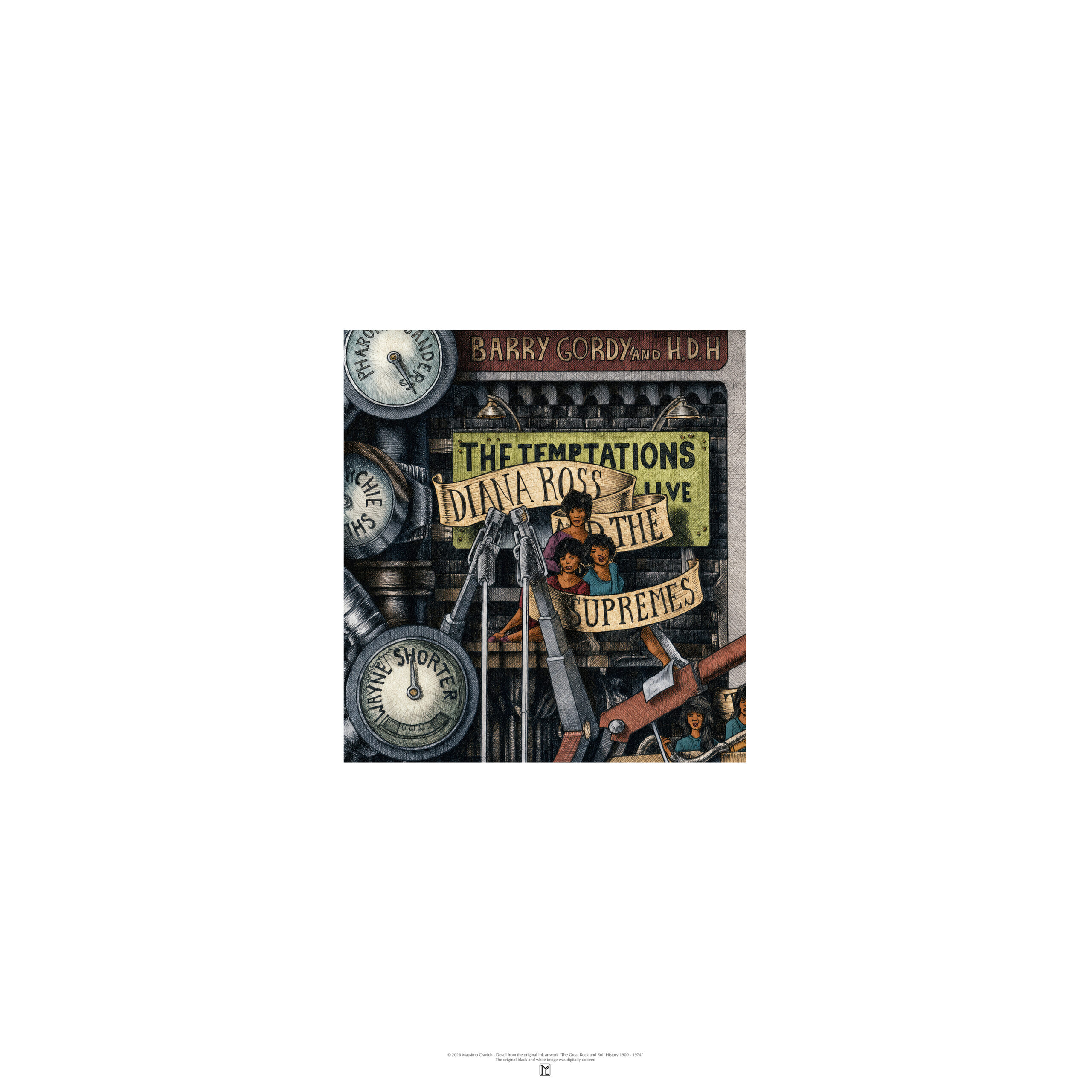
Selected artworks from Rock Icons and Stories are available as high-quality framed art prints. Printed on premium 230 gsm matte paper with excellent detail and colour reproduction, each print is professionally framed and delivered ready to hang.A carefully selected, high-quality alternative to the museum-grade Fine Art Giclée editions, offering an accessible way to own and display a reproduction of the original artwork. Printing, framing and worldwide fulfilment are handled by our specialist printing partner.
Sources
Rock & Roll Hall of Fame – The Supremes
Motown Museum – Diana Ross / The Supremes
Encyclopaedia Britannica – Diana Ross
Diana Ross is more than the singer from the Supremes who became a solo superstar. Her story runs through Motown, the integration of American audiences, soul’s transformation into global pop and the rise of disco. Behind the gowns, lights and stage perfection is the journey of a woman determined to control her identity within an industry that had helped construct it. That tension between the entertainment machine and individual will is precisely what makes her essential to the history of popular music.