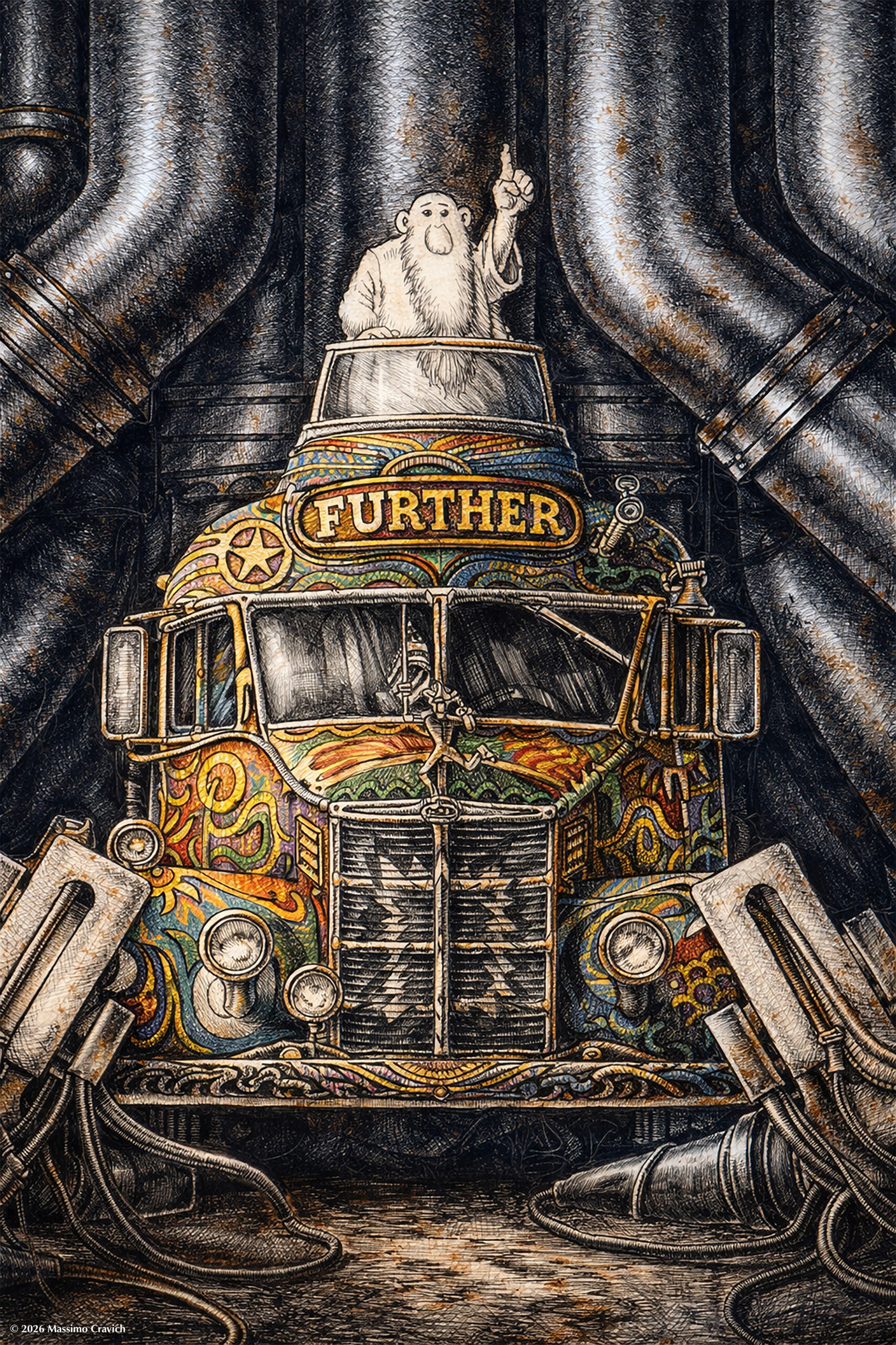
The Merry Pranksters’ psychedelic bus Furthur is one of the most recognizable images of the American 1960s counterculture. In 1964 Ken Kesey, Neal Cassady and a group of friends crossed the United States, turning travel into performance, collective experiment and multimedia laboratory. Placing Robert Crumb’s Mr. Natural on that bus adds a second language from the same cultural season: underground comix, with its corrosive humor toward gurus, conformity and new mythologies.
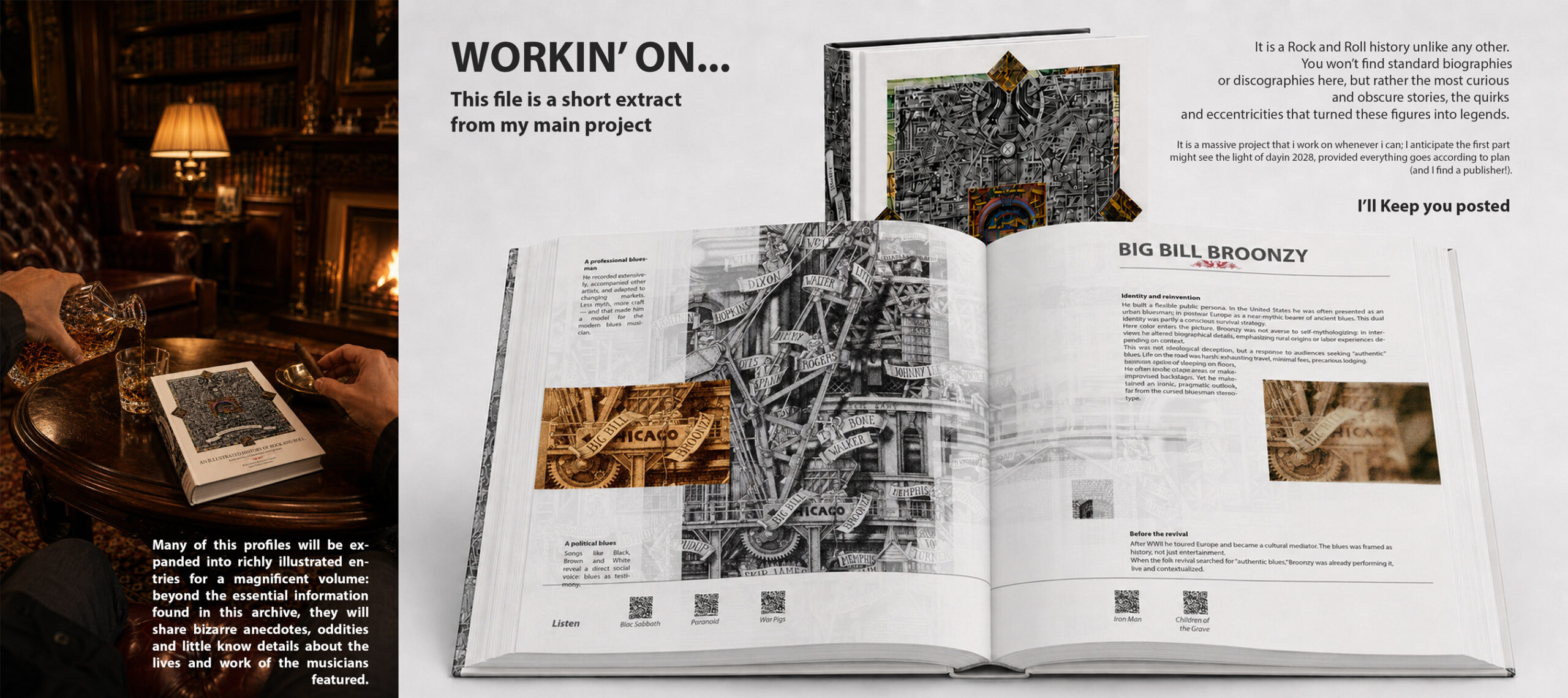
This illustrated profile explores the cultural impact and the legacy within The Great Rock and Roll History, a large-scale illustrated timeline of modern music.
Rock Icons: Merry Prankster, Furthur & Mr. Natural

CORE Ken Kesey and the Merry Pranksters
ICONIC JOURNEY 1964, California to New York and back
BUS 1939 International Harvester, painted in Day-Glo colors
BUS NAME Furthur / Further
EMBLEMATIC DRIVER Neal Cassady
STARTING POINT La Honda, California
1964 DESTINATION New York World’s Fair
MEDIA 16 mm film, audio recording, photography, performance
NEXT PHASE Acid Tests, 1965-1966
MUSICAL CONNECTION The Warlocks / Grateful Dead and the emerging San Francisco psychedelic scene
LITERARY CHRONICLE Tom Wolfe, The Electric Kool-Aid Acid Test, 1968
MR. NATURAL Robert Crumb character; a figure of late-1960s underground comix
NOTE Mr. Natural was not a Merry Prankster: in the drawing he works as a symbolic link between two countercultural worlds.
UNOFFICIAL SITE: furthurdowntheroad.org
Get Your Rock Icon
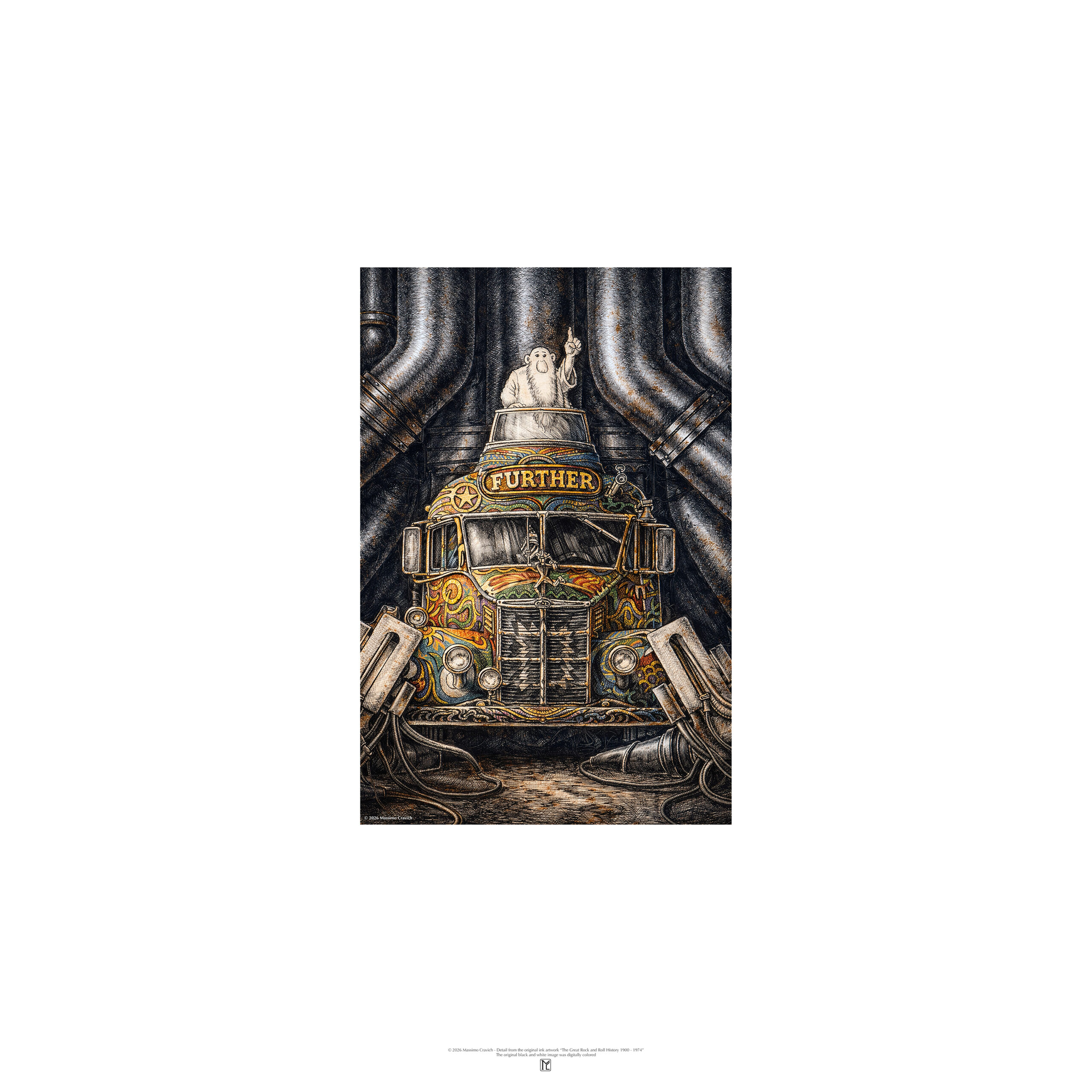
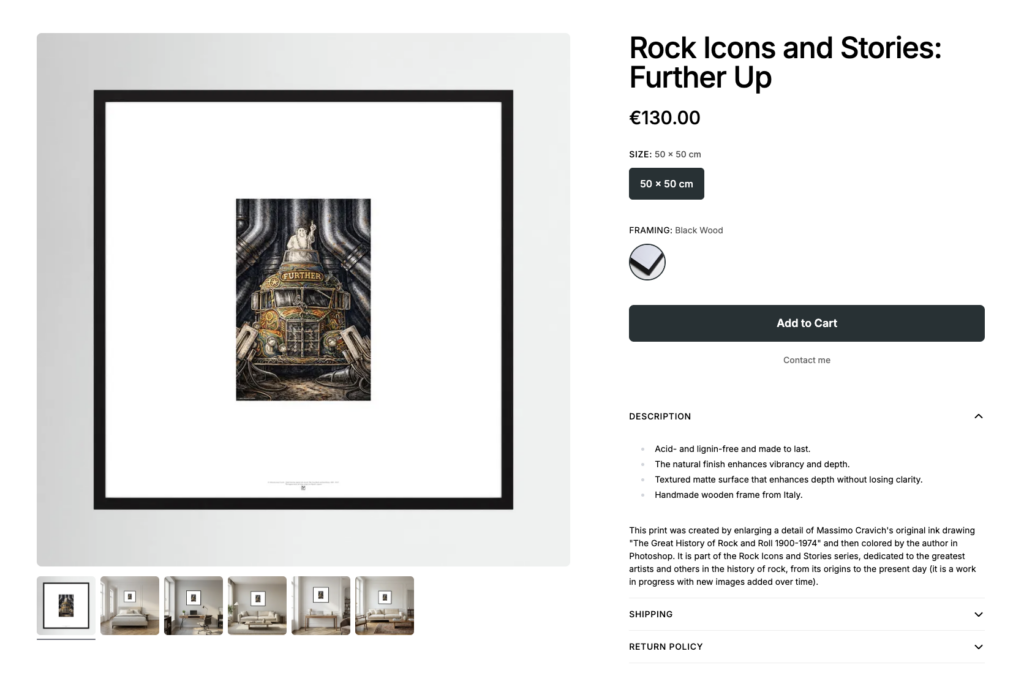
Selected artworks from Rock Icons and Stories are available as high-quality framed art prints. Printed on premium 230 gsm matte paper with excellent detail and colour reproduction, each print is professionally framed and delivered ready to hang.A carefully selected, high-quality alternative to the museum-grade Fine Art Giclée editions, offering an accessible way to own and display a reproduction of the original artwork. Printing, framing and worldwide fulfilment are handled by our specialist printing partner.
FROM THE ROAD TO THE ACID TEST: A MOBILE LABORATORY OF COUNTERCULTURE
Furthur: crossing America before the hippies had a name
In June 1964 Ken Kesey and the Merry Pranksters left California for New York in a 1939 school bus transformed into an object impossible to ignore. Day-Glo paint, lettering, loudspeakers, instruments, cameras and tape recorders made Furthur simultaneously transportation, stage and image-making machine.
Kesey was already the author of One Flew Over the Cuckoo’s Nest; reaching the New York World’s Fair was part of the original plan, but the journey quickly became something harder to define. The Pranksters filmed themselves, provoked reactions, improvised, took LSD – still legal at the time – and treated the road as a place where life and representation could merge.
Neal Cassady, the real-life figure behind Dean Moriarty in On the Road, was often at the wheel. His presence almost physically connected two generations: the Beat culture of the 1950s and what would soon be called hippie culture. When the bus crossed America in 1964, that new identity did not yet possess an established image. Furthur helped construct one: color, movement, clothing, portable technology, collective behavior and rejection of normality became elements of a continuous performance.
From LSD to the Acid Tests: when experiment meets music
Kesey’s relationship with psychedelics predated the bus. As a Stanford graduate student around the turn of the 1960s, he participated in government-funded experiments in which hallucinogenic substances were administered to him. What began in a clinical environment later moved into private life and eventually into a public, collective setting.
In 1965 and 1966 the Acid Tests combined lights, projections, tapes, amplification, dancing, LSD and music in events with no clear boundary between spectator and performer.Here the connection with rock history becomes direct. The Warlocks, soon renamed the Grateful Dead, became the band most closely associated with the Acid Tests. Music did more than accompany the party: duration, improvisation, volume and altered perception began to affect one another.
Before psychedelia was organized into records, posters and concert halls, these events tested a still-unstable form of it. The Pranksters did not single-handedly invent San Francisco psychedelic culture, but they were one of the places where Beat culture, LSD, audiovisual technology, happenings and improvised rock began to mix.
The bus as medium: film, noise and the art of everyday life
Furthur matters also because the Pranksters did not simply want to experience the journey: they wanted to record it. Kesey acquired 16 mm cameras and relatively sophisticated tape equipment; the group accumulated hours of images and sound, often without successfully synchronizing them. The technical failure seems almost consistent with the project. There was no director clearly separated from the actors, and no stable distinction between documentary, diary, prank and performance. The trip produced a chaotic archive before anyone knew how to turn it into a film.
That confusion anticipated an important feature of later counterculture: the idea that a medium need not merely describe an experience but could become part of it. Psychedelic posters, light shows, expanded cinema, concerts and the underground press often used the same logic of overload and contamination. Tom Wolfe’s The Electric Kool-Aid Acid Test later made Kesey’s world a literary subject as well, contributing to New Journalism: to describe a reality that seemed to reject conventional reporting, writing itself had to change rhythm, voice and form.
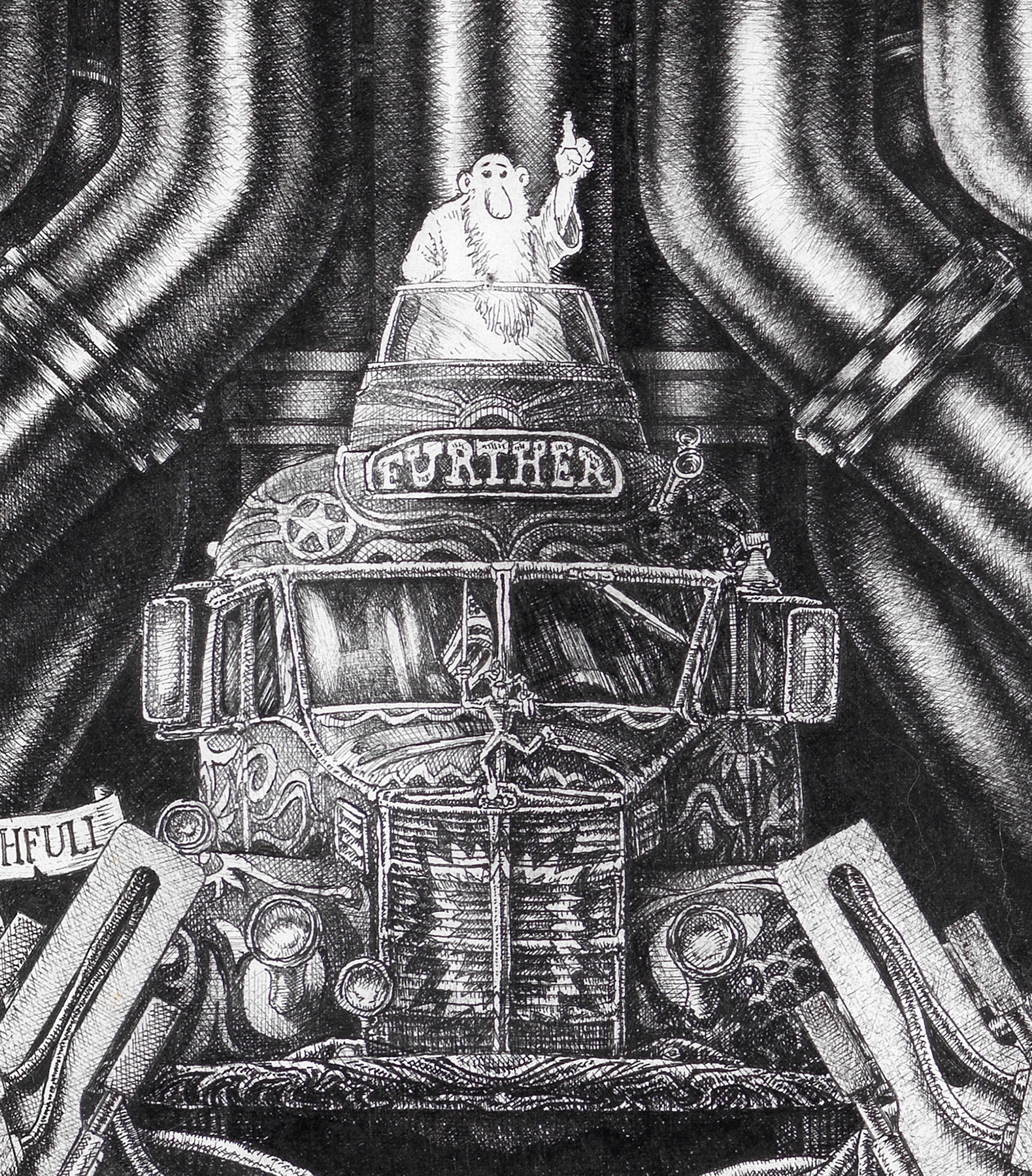
Mr. Natural gets on the bus: Crumb and the comic underside of utopia
Mr. Natural never traveled with the Merry Pranksters, and Robert Crumb belongs to a different history. That is precisely why his presence on your bus works as a visual short circuit. Emerging from the late-1960s underground comix world, Mr. Natural looks like a guru dispensing wisdom while continually undermining the authority of that role. Crumb observed counterculture from within without turning it into paradise: sex, neurosis, ego, consumerism, improvised spirituality and personal contradiction entered his comics with a freedom commercial comic books could rarely allow.
Placing him on Furthur therefore brings together two moments of the same transformation. The bus represents a phase when psychedelic utopia is still movement, experiment and possibility; Mr. Natural already belongs to an underground capable of laughing at its own teachers and illusions. Between them runs a large part of the 1960s: Beats to hippies, Acid Tests to the Grateful Dead, road culture to light shows, underground newspapers to comix.
In rock genealogy Furthur is not a musical instrument, but one of the moving places where the context necessary for new music was changing. And Mr. Natural, perched above it, seems to remind us that every cultural revolution eventually produces its own caricature.
For all this reasons, they occupies a fundamental position within the rock and pop genealogy explored in The Great Rock and Roll History