
The New York Dolls were one of the most chaotic, scandalous, self-destructive and prophetically influential bands in rock history. Long before the Sex Pistols, long before the Ramones and even before codified punk, the New York Dolls had already invented much of the attitude and aesthetic that would ignite underground rock.
This illustrated profile explores their decadent mythology, proto-punk chaos and cultural influence within The Great Rock and Roll History, a large-scale illustrated timeline of modern music.
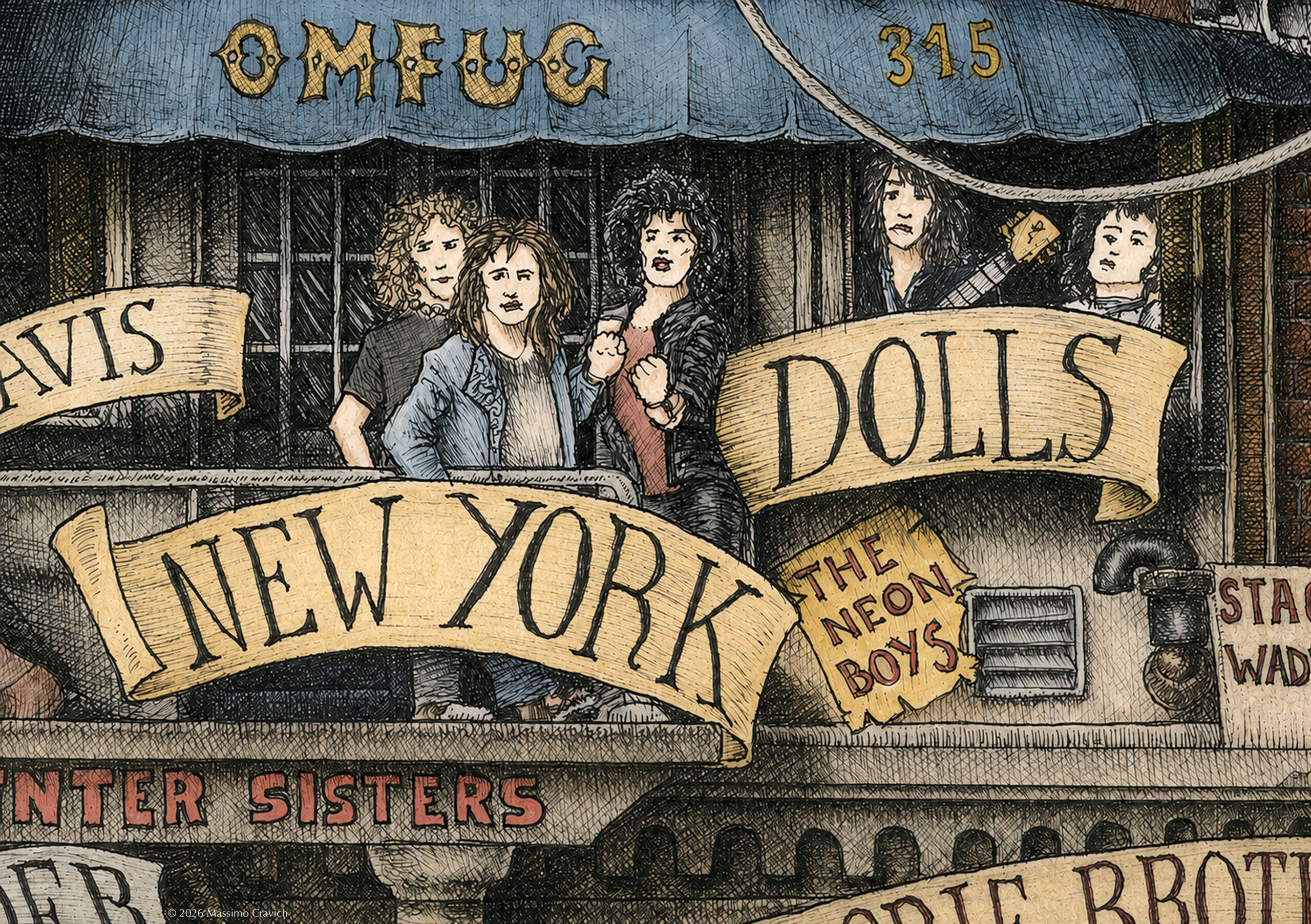
Rock Icons: New York Dolls
High heels, amplifiers turned up and a city that offered no protection

The New York Dolls dragged rock and roll onto the streets of early-1970s New York, mixing the Rolling Stones, garage rock and glam excess with high heels, makeup and dangerously lived lives. Within The Great Rock and Roll History, their story marks the transition from superstar rock to punk urgency: a tale of provocation, friendship, addiction and missed chances.
Between their debut New York Dolls (1973) and Too Much Too Soon (1974), the band turned rhythm and blues, rock and roll and glam into a gloriously ragged, provocative sound that anticipated punk.
Formed: 1971 — New York City, USA
Status: disbanded
Classic lineup: David Johansen, Johnny Thunders, Sylvain Sylvain, Arthur Kane, Jerry Nolan
Genres: Proto-punk, glam rock, punk rock, hard rock
Official website: No official site
LISTEN
• Pills
• Trash
• Jet Boy
More to discover…
The Band That Turned Decadence Into Revolution
A gang, a wardrobe and no safety net
David Johansen, Johnny Thunders, Sylvain Sylvain, Arthur Kane and Billy Murcia never presented themselves as virtuosos. They were kids from a New York of clubs, second-hand clothes and endless nights. Lipstick, platforms and women’s clothing did more than shock: they let the band seize control of spectacle, play with ambiguity and reject the conventional macho rock-star image.
Johansen had the cutting tongue of a streetwise frontman; Thunders could turn a handful of chords into electric jolts; Sylvain helped shape the look as much as the songs. Beneath the costume was a genuine love of Chuck Berry, rhythm and blues and the Stones. Yet their bond grew in the same environment that made losing control dangerously easy.
Missed success: sex, drugs and rock and roll without a filter
Billy Murcia died during a 1972 trip to England, before the band had released an album; Jerry Nolan replaced him on drums. The loss did not stop their momentum. Produced by Todd Rundgren, the 1973 debut preserved the chaos of their shows: Personality Crisis and Trash sounded like vintage rock and roll emerging from a sleepless night.
But excess was more than a publicity stunt. Heroin, alcohol, turbulent relationships and internal tensions disrupted rehearsals, performances and professional dealings. The second album, Too Much Too Soon, produced by Shadow Morton, also embraced the theatricality of 1960s pop, but it could not bridge the gap between their live energy and their inability to build stability. The scandal was real; so was the price they paid.
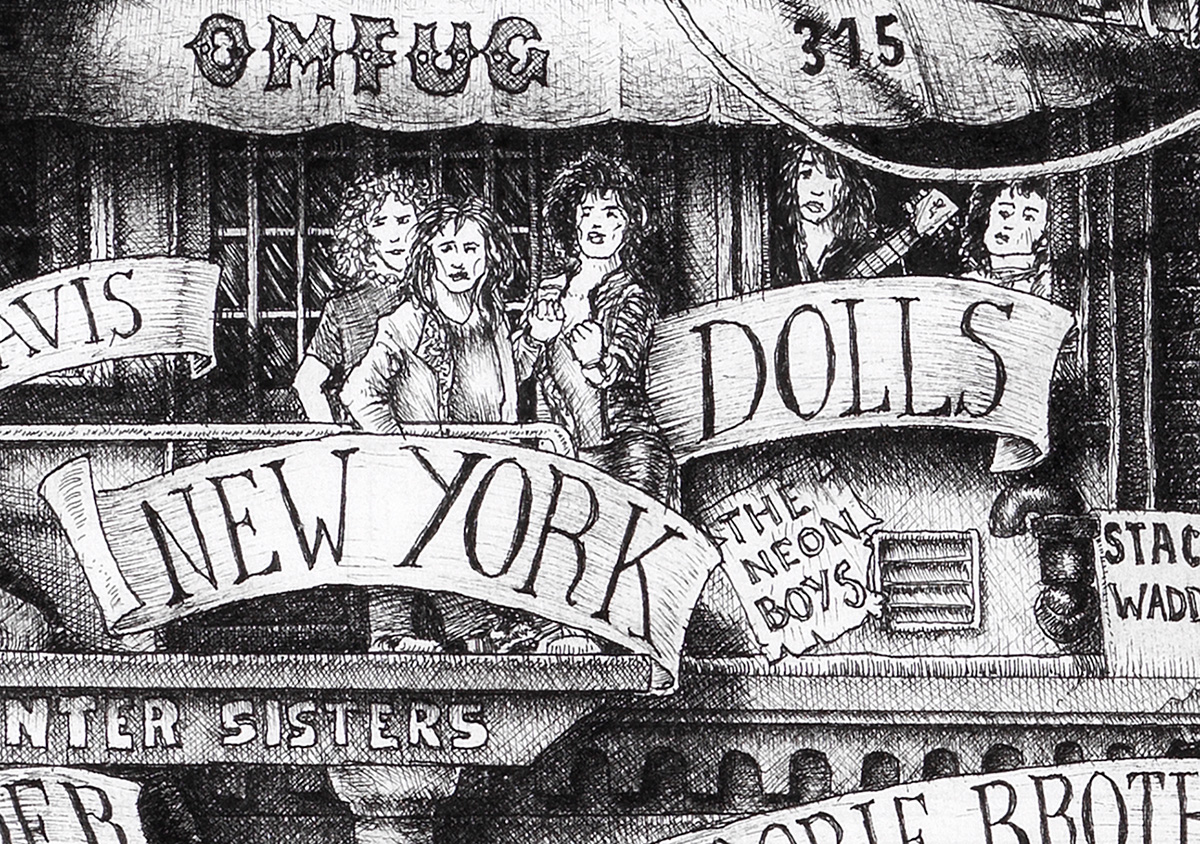
The party ends and punk begins
In 1975 Malcolm McLaren tried to relaunch the band partly through provocative political imagery, but the lineup disintegrated. Thunders and Nolan continued with the Heartbreakers; Johansen pursued a solo career and later reinvented himself as Buster Poindexter. Meanwhile, the Dolls’ influence grew precisely where commercial success had failed: in the emerging New York and British punk scenes.
Their genealogy runs from rhythm and blues and Stones-style rock through garage and glam to punk’s attitude. They were not merely a doomed rock band: they showed how exhilarating it could be to invent yourself as a character – and how destructive it could become when life and performance were impossible to separate.
Songs such as Personality Crisis, Trash and Looking for a Kiss combined elemental riffs, irony, sexual ambiguity and a stage presence that would influence punk and glam metal and became defining landmarks of proto-punk culture and underground rock rebellion.
Within The Great Rock and Roll History, the New York Dolls capture the moment when glam theatricality collided with the grime of New York clubs: rock stopped looking unreachable and once again became something a gang of kids could play, wear and tear apart onstage.
Influenced by
- Garage Rock
- Glam Rock
- Girl Groups
- MC5
- Rolling Stones
Influent For
- Sex Pistols
- Ramones
- Damned
- Punk Rock
- Glam Metal
Related Artists
- Sex Pistols
- Ramones
- Hanoi Rocks
- The Heartbreakers
- MC5
SOURCES
New York Dolls official archives
Punk historical archives
Rock and Roll Hall of FameAllMusic
CBGB historical archives
The New York Dolls did not invent punk, but they helped make it imaginable, returning rock and roll to the street while exaggerating its volume, image and contradictions. Beneath the makeup and women’s clothes were songs rooted in rhythm and blues, played by personalities often unable to separate performance from self-destruction. Their legacy survives in punk, glam and the idea that rock can be music, provocation and a public display of human vulnerability all at once.